
2025 Homestead Magazine

FREE

Homestead Magazine

ORDER NOW

Search Results for: living with nature

Fish Creek Compound // Showcase of Homes

Fish Creek Compound

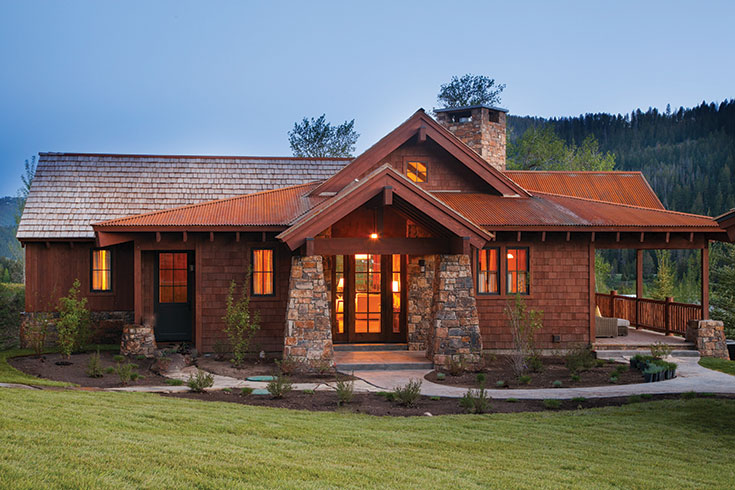
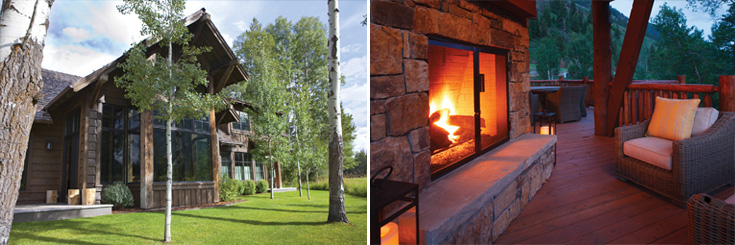
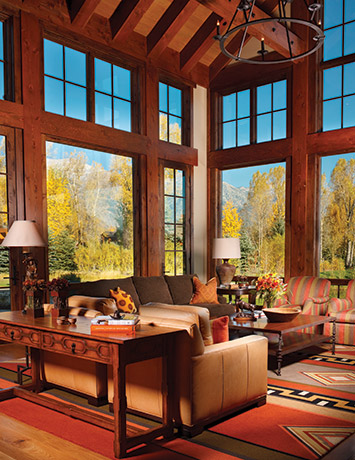
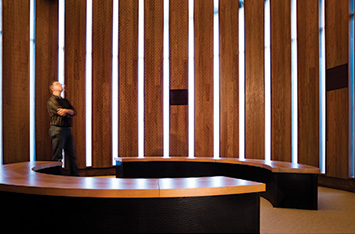
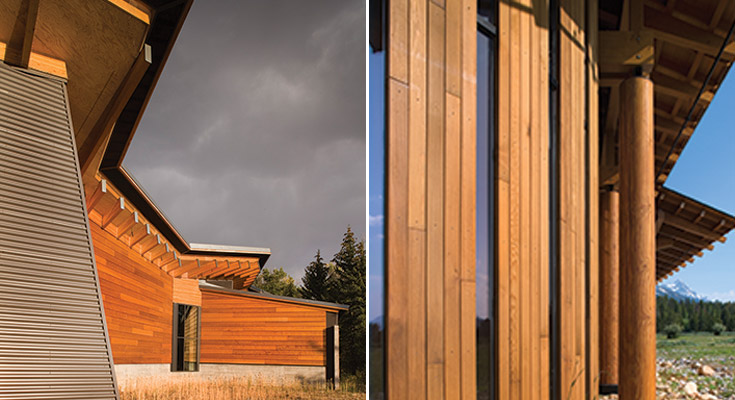
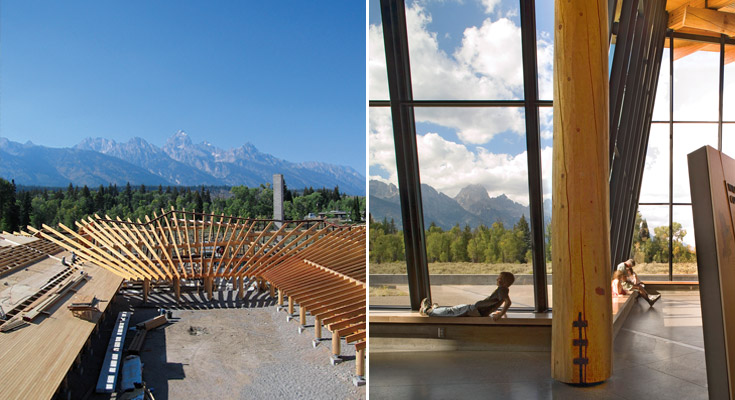
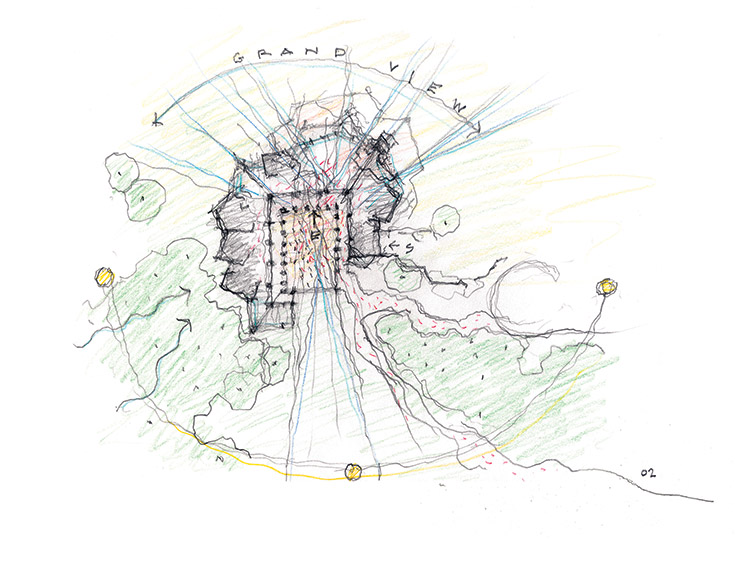
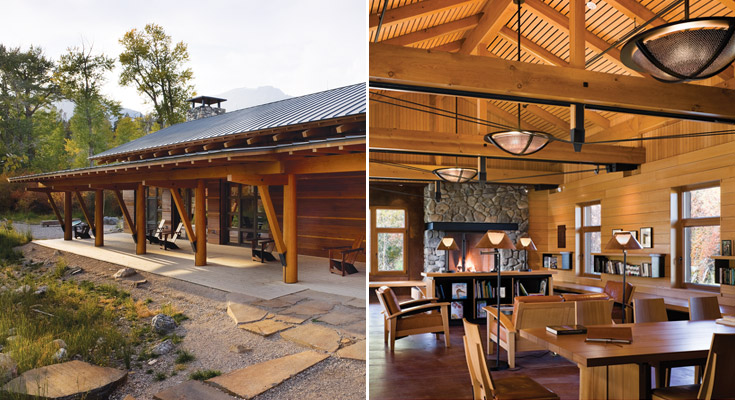
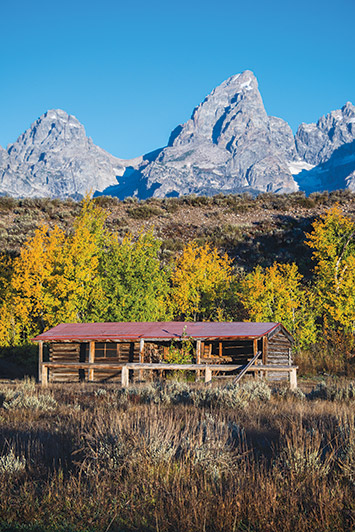
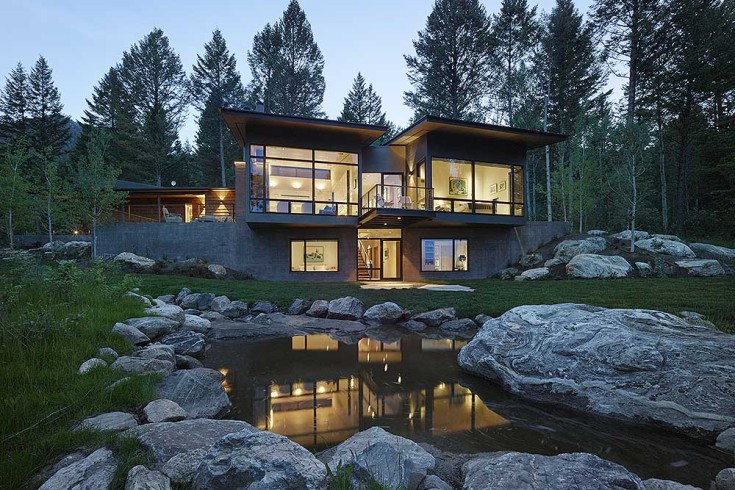
At the Fish Creek Compound, ticket holders have the unique opportunity to peek inside a home designed by an architect as his own personal residence. The main house and guesthouse have been crafted by John Carney of Carney Logan Burke Architects to complement their setting on a lushly forested lot facing the Sleeping Indian mountain.

Conceptualized after careful attention to the light and weather patterns of the site, this modern marvel lets the outside in via a screened porch and primary living quarters on the top floor, while mechanical space and guest quarters exist on the bottom floor. Gently sloping shed roofs mirror the contours of the hill, contributing to the intimate scale of the house, which nestles comfortably in the trees. On its exterior,the Compound keeps to a tastefully simple palette of materials including cedar shingles, board-formed concrete, bonderized steel, and glass.

Equally ingenious from a design perspective is the 950-square-foot guesthouse that shares the Compound’s lot. Designed to encourage complete immersion in the environment of the forest both visually and aurally, the home’s simple shape is oriented to usher in the sound of rushing water, and via its large windows, the dappling effect of the surrounding trees. The architect also integrated boulders excavated during the construction process into the structure’s retaining walls. The use of passive solar energy and a super-insulated frame help to craft a residential space of maximum living impact that maintains minimal energy consumption.

From the cohesion of the building materials to the two homes’ intuitive harmony with their setting, the Fish Creek Compound represents a truly special glimpse into an architect’s contemporary vision for Jackson Hole living.

Featured Non-Profit

the-nature-conservancy

Personal Style: one work

> Story by Katy Niner
> Photography by Latham Jenkins

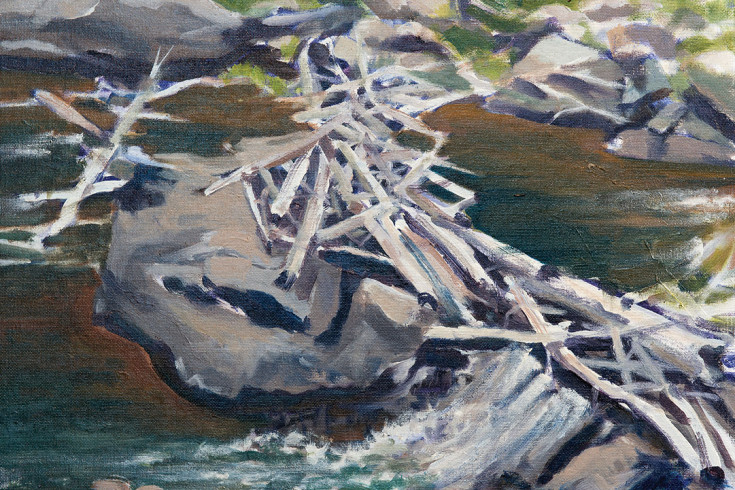
Distillation: Eliot Goss, “Logjam”

14-elliotgoss-38_cmyk-large

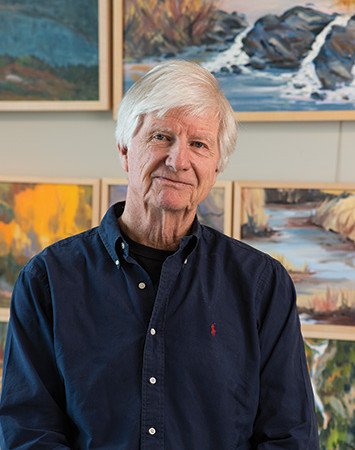
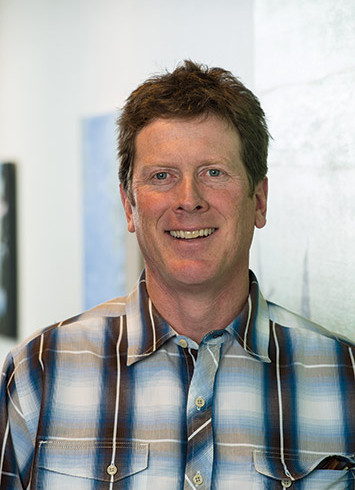
For most of his life, Eliot Goss has pursued two parallel tracks: architecture and painting. Educated on the East Coast (at Princeton and MIT), he moved west, landing first in Denver, then settling in 1990 at the foot of the Tetons. With architecture taking up 98 percent of his time, he carved out 2 percent for painting. Now, the ratio has flipped: He spends the majority of his time making art, reserving a small part for longstanding architecture clients. No longer as driven to sell his work, instead he is “trying to make as terrific a painting as I can.”

“Logjam” evolved over six months and three canvases. Last summer, Goss spotted this tangle above the String Lake outlet, a composition made compelling by the slab boulder, the rushing water, and the deadfall pile-up. He painted a 16-by-20-inch canvas en plein air and let it sit for several months. Come winter, he zoomed in on the log angles and dark flow. By the following spring, he moved up in size, creating the final composition. “I take what I learn from focusing down into the painting and then going large.”

14-elliotgoss-26_cmyk
Goss prefers “to paint right on the dividing line of objective and non-objective painting,” à la his favorite 20th century painter, Richard Diebenkorn, whose Ocean Park series also balances on that knife-edge.

Goss works with a painting advisor, his old friend Joanna Reinhoff in Colorado. An abstract artist early in life, Reinhoff now works in poetry, with an incisive eye she applies to his paintings, approving only a small fraction. Her main advice: Focus. Eschewing the Renaissance ideal of foreground, middle ground, and background, she tells him to zero in on the most compelling idea; disregard the deep space and bring everything to the surface. Goss reconsidered past paintings, magnifying small moments of success into new works. Thirty-four studies surfaced from this exercise, including “Logjam.” He said, “You get an entirely different painting. You abstract it naturally through the process of painting. … It’s changed the way I paint and changed the way I look at landscape.”

Goss paints in two-hour stints—bursts of creativity that suit his “impatient” artistic temperament. Larger compositions begin with an underpainting, often done in purple. Over this, he adds two or three layers. This was not the case, however, with “Logjam”: It worked, miraculously, with only one layer of overpaint.

Goss initially worked in watercolors, but switched to oils 15 years ago. Recently, he began applying a plethora of mediums to portraits, attending the weekly model sessions at the Art Association. His favorites—faces in charcoal and watercolor—line the foyer of his studio; the rest he returns to the models. After so much experimentation, he appreciates the tactile nature of oils.


Magnification: Bronwyn Minton

14-bronwyn-minton-33_cmyk

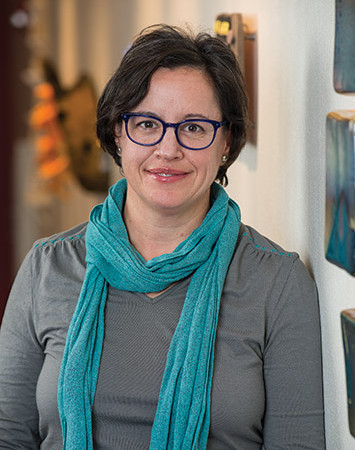
Bronwyn Minton does not abide by classifications of genre; instead, she adventures across disciplines, merging mediums and creating processes all her own. Her latest work, part of a group ceramics show at the Center for the Arts, blends drawing, photography, sculpture, and interactive installation. Creative in all avenues of her life, Minton spends her days working as the associate curator of art and research at the National Museum of Wildlife Art; nights and weekends find her experimenting in her home studio, playing with her son, Odin, or cooking with her husband, Mike.

Minton is fascinated with lenses: mythological, literary, and scientific. Although she studied photography at the Rhode Island School of Design, she has since stepped away from the camera. And yet, the act of looking remains crucial to her practice. Metaphoric in her mind, lenses frame a view, whether magnified or distorted.

14-bronwyn-minton-64_cmyk
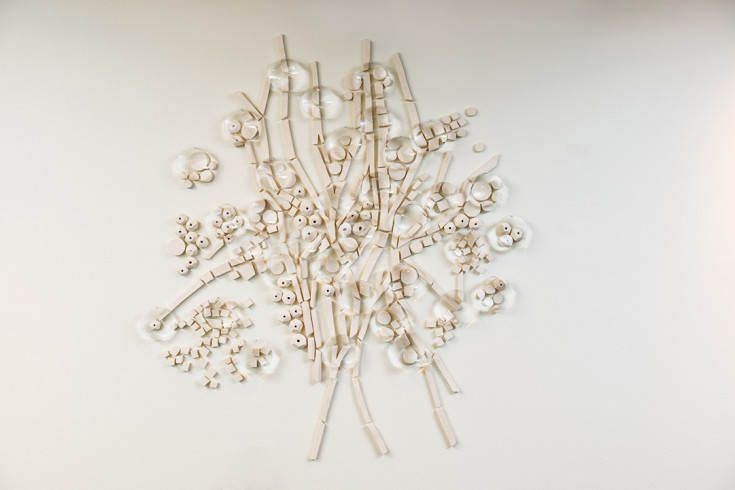
For this piece, Minton sourced micaceous clay. The bits of mica lend sparkle, a dance of light
magnified by the lenses.

The installation’s design emulates the way Minton draws—the doodles she makes, the intuitive marks
on paper, the evidence of hand-to-eye communication. Equipped with components cast in her studio, she
composes her installations on-site.

Growing up with creative parents in bucolic Vermont, Minton’s childhood brimmed with experimenting and making. “I was always encouraged to try things and work with different ideas and media.” She carried this intrepid sense of inquiry with her into the problem-solving art program at RISD.

Minton builds large installations out of small pieces, akin to individuals making up a community or granules forming a beach—all models of magnification. She sees patterns: the play of tiny things, of light on water, of cells in organisms. “I use simple forms derived from nature as a starting point, often exploiting radically different scale, from the microscopic to the monumental.”

Through reoccurring experiments, Minton explores the interface between humans and nature. “I am fascinated by how mythology, literature, and science form lenses through which we have interactions with nature.” On hikes, whether around town or on vacation, Minton collects objects found in nature: seed pods, shed shells, botanical tufts. Her sculpted “specimens” grow from these ground finds, as she plays with scale, making the microscopic monumental, and through simplification, distilling detail into essence.


Look-See: Mike Piggott, “Another Place”

14-mikepiggott-04-(1)

Wander into Mike Piggott’s world and stay awhile. There are no rules for interpretation; see whatever you see. Let yourself experience the art, as he always has: Born in Charlottesville, Virginia, schooled at Virginia Commonwealth University and the Winchester College of Art in England, Piggot now knows the mountains and forests of Jackson Hole.

Piggott observes art as he does nature: ever open to learning. At a recent exhibition of David Hockney’s new work at the de Young Museum in San Francisco, he felt awestruck by the artist’s refreshingly close gaze: One room featured the same stretch of road near Hockney’s Yorkshire home, reconsidered in all four seasons. Piggott felt inspired by how much fun the septuagenarian seemed to be having, pulling big canvases from his trunk and painting en plein air with the enthusiasm of a teenager. “Hockney is someone who actually looks at something,” he said. “He is painting about the process of painting and looking.”

mikepiggott_cmyk
As a painter, Piggott is prone to self-annihilation. “I can have a perfect little landscape and want to stick a tractor tire in it.” “Another Place” gave him an outlet for such instincts.
 
Some paintings are all-consuming and cerebral, where Piggott finds himself engrossed for a weekend. Others grow at their own pace, like “Another Place.”

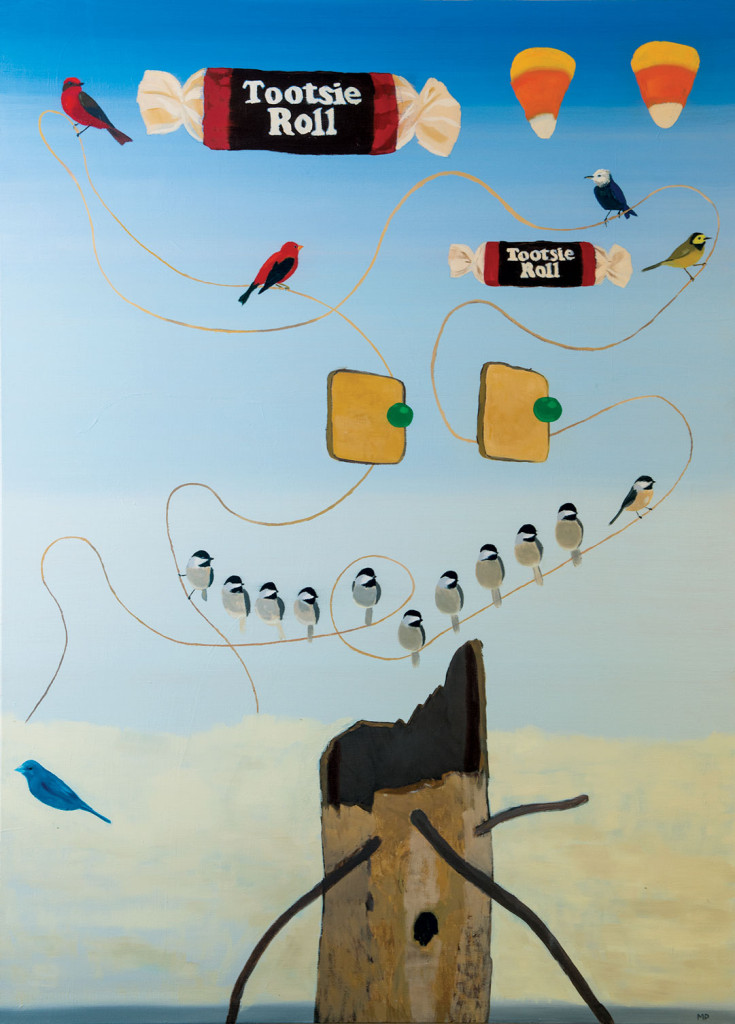
A colorist, Piggott lets his paintbrush wander with associations. “Another Place” began with the log stump, which reminded him of Tootsie Rolls. The looping lasso
arrived soon after, the perfect perch for birds. The butter-colored fog seemed to ground the composition. Ever inventorying the imagery, Piggott describes this process as following his nose. He trusts his instinct to “toss an F sharp in there.”

Piggott paints from looking. “In the process of painting or drawing, you learn about what you are looking at.” While other works in his portfolio give clues to his surroundings, “Another Place” pulls from a place of automatic, almost formalist instinct. Like a collage, it accumulated elements over three years, with parts borrowed or morphed from other canvases. An orange paint mixed for another piece made him think of candy corn, and placing the cones close to birds felt right: Spotting a bird on a walk through the woods is, for him, much like being a kid in a candy shop.


Wild One: Amy Ringholz, “Living Proof”

14-amyringholz-61_cmyk

Ohio born and bred, Amy Ringholz once spent a semester in the mountains of New Mexico and resolved to be as bold as nature in her painting. With her art diploma in hand, she drove west to Wyoming to explore the wildness she imagined. Flash forward 10 years and Ringholz had become a Teton trailblazer as the youngest artist ever featured by the Jackson Hole Fall Arts Festival. Never one to rest on her laurels, Ringholz parlayed her Fall Arts triumph into a new career trajectory: A year ago, she pulled her paintings from most galleries and established Ringholz Studios with the goal of immersing art lovers in inspiration. Through events she produces and scholarships she funds via sales,
Ringholz shares her wild muse with the rest of the world.

The phoenix is the spirit animal of Ringholz Studios, specifically its Middle English variant, Fenix, and all its mythology. Fenixes are female; only one exists at a time; their life cycles are ash-born and blazing. Since launching Ringholz Studios, Ringholz has hosted a series of Fenixes, each event larger in magical scale. Last summer at the National Museum of Wildlife Art, she staged the “Rise of the Fenix” event and exhibition. “Living Proof” was the first piece she painted for her modern menagerie. Measuring 72 by 72 inches, it remains one of the largest canvases she has ever completed.

14-amyringholz-11_cmyk
Three deer initially populated the painting, a trio led by the enduring yearling. Ringholz ultimately found the three too distracting, so she painted the followers out.

Keen to combine fashion and wildlife art, Ringholz imagined her animals as models on a runway. For inspiration, she turned to the pages of Vogue, studying the palettes used in the spreads. Those hues informed the circular forms that set the mood, or attitude, of “Living Proof.”

Another difference at birth: “Living Proof” began with a dark background as a stage for contrast. Quite the opposite: It swallowed the geometric design. Ringholz had to wait days for the painting to dry before she could return with white. Deliberately imperfect, she wanted hints of color to peek through.

Strong and daring. Loose and free. “Living Proof” now hangs at Ringholz Studios, the brand-new gallery manifestation of Ringholz’s vision. In its new habitat, surrounded by modern décor, the deer sings.

Frederick Landscaping

1410-FrederickLandscaping-023_cmyk
“We’re a small, Local business with big goals and accomplishments.”

PO Box 4562
Jackson, WY 83001
307-730-0037
fredericklandscaping.com

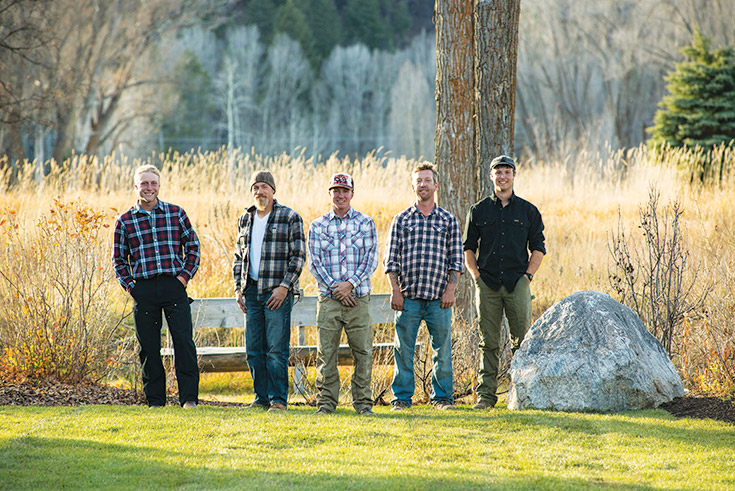
Frederick Landscaping evolved from a mentorship between veteran mountain landscaper Bud Frederick and Sam McGee, who took over the reins of the business of 30-plus years in 2007. Sam moved to Jackson in 2000 with dual degrees in agricultural mechanization and agribusiness from Clemson University. At Frederick Landscaping, he has found a way to put his diverse background and knowledge to work. Along with a team of six close-knit pros, he is proud that “we can take on any task that you can dream up, yet we keep the company very small and personable.”

Tell us more about your team at Frederick Landscaping and what makes you unique.

I’ve got a really smart team of well-educated guys that have decided that they like to live in Jackson Hole and want to find a way to stay here—I feel like we’re all dedicated and loyal, and all quite passionate about what we do and what we build. I also try to be on every job as much as I can from start to finish because I’m very detail-oriented and I don’t like for anything to go overlooked. Our personal integrity and love of nature has driven us to build this business on performance, reliability, and trustworthiness.

Tell us more about your approach to working with clients and meeting their goals.

It always starts with questions. When clients call and ask for my input, I want to sit down and have a long conversation with them about their goals and how they picture utilizing their yards and patios. My ultimate goal is to create an outdoor environment that can become the client’s favorite space. I try to come up with the most unique, most inviting living space for them. You can be on a couch anywhere in the world; you can’t always enjoy this backyard setting everywhere.

What kind of projects do you specialize in?

Our jobs are very wide-ranging, though lately we have been focusing a lot on our stonework and water features—very detailed, custom work. I have been acting as the lead designer on most of our masonry projects. You know, a lot of architects say that patios have a 10-year lifespan, but I believe that ours will be around for the next century because they’ve been built properly. I like the feeling of walking away from something with that kind of long-term accomplishment.

What kinds of projects stand out to you, and why?

I love projects that evolve over time and involve every piece of what we like to do—a lot of masonry and water features, to seed and sod and trees. When clients have trust in our abilities, I relish the opportunity to take creative control and deliver something that’s perfect for them. Please visit our website for many great examples of our work.

WRJ Design

Interior Designer
30 S King St
PO Box 910
Jackson, WY 83001
307-200-4881
wrjdesign.com

OUR BRAND PHILOSOPHY

Consider a contour map: Each line follows a distinct feature; collectively, the lines chart a unique topography. Such is the same with our Exclusive Lines: Each brand contributes its distinct voice of superior craftsmanship and design while coalescing into a singular landscape curated by WRJ Design.

wrj-exclusive-lines-2
Mosaique Dining Plate by Herme?s, Paris.
wrj-exclusive-lines-1
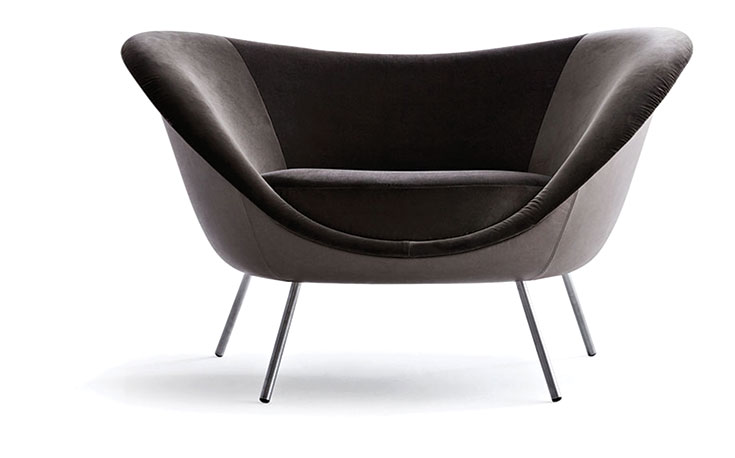
Gio Ponti Armchair by Molteni & C, Italy.
wrj-exclusive-lines-4
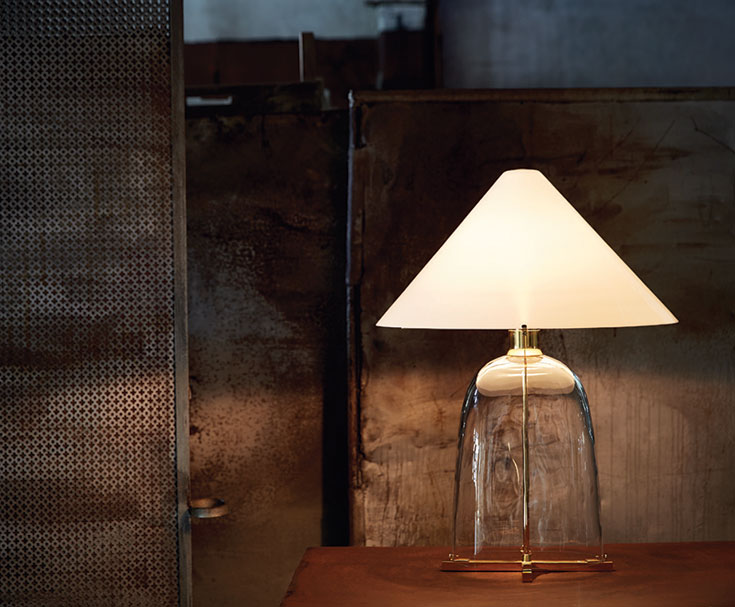
Ovale Lamp by Carlo Moretti, Venice.
wrj-exclusive-lines-3
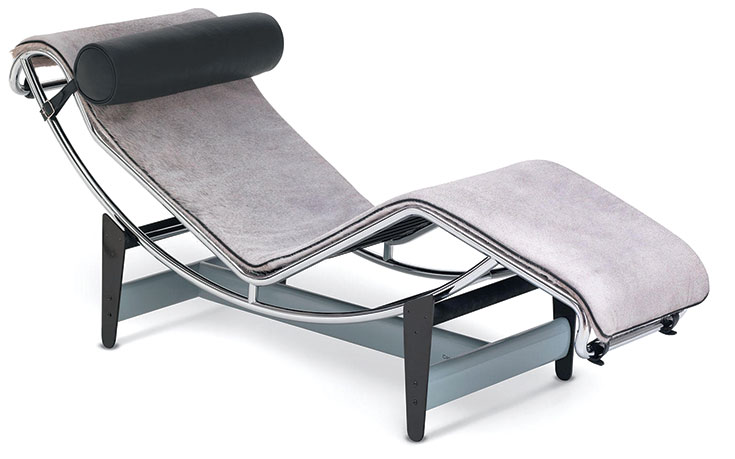
LC4 Villa Church Chaise by Cassina, Italy.


WRJ Exclusive Lines


ARPIN-logo
The Pinnacle of Alpine Elegance
From the spectacular spires of Savoy come the world- renowned woolens of Arpin, a mill employing exquisite techniques refined over eight generations—a perfect reflection of the alpine elegance found in the Rocky Mountains.

loro-piana-logo
Sourcing Nature’s Finest Fibers
Our quintessential collection, Loro Piana travels the globe to find the finest fibers for sumptuous fabrics. A sixth-generation Italian company, its discerning clientele appreciate tradition, beauty, nature, and craftsmanship.
Bolier-Logo
Inspired Modern Living
Working in collaboration with the world’s foremost furniture designers, Bolier produces luxurious furnishings inspired by tradition and designed for modern lifestyles. With an esteemed roster of designers, Bolier boasts a distinctly global sensibility.
Molteni-logo
Fundamental Contemporary
The wide world of design owes much of its modern depth and breadth to this 80-year-old Italian manufacturer. Founded on an obsession with quality, Molteni remains the global leader in modern furniture made well.
Calvin-Klein-Home-logo
A Relaxed, Elegant Lifestyle
The U.S. claims a coven of visionary designers, led by Calvin Klein. By applying a minimalist aesthetic to all aspects of modern living, Calvin Klein has reshaped the landscape of American design and beyond.
Poltrona-Frau-logo
Ageless Expressions of Beauty
Picture intelligent design and expert craftsmanship rich with sartorial savoir faire; picture Poltrona Frau. The legacy brand represents the apex of Italian design, expressed in every impeccable leather piece, be it furniture or a Ferrari.
cassina-logo-BW
International Design Heritage
For nearly a century, Cassina has been synonymous with some of the most important names in 20th-century design, including Le Corbusier, Charlotte Perriand, and Frank Lloyd Wright, and remains the Italian definition of high-end designer furniture.
puiforcat-paris-logo
A Masterful Legacy
As the last remaining silversmith in France, Puiforcat carries forth an exquisite family tradition. The art deco imprint of fourth-generation master silversmith Jean Puiforcat endures in the elegant geometry of current collections.
Carlo-Moretti-logo-mark
Artistic Lineage
Rooted in the glass mastery of Murano, the Moretti brothers scale new heights of functional sculpture by melding their trade with contemporary Italian design. Creativity and innovation converge in their luminous collection—each piece mouth-blown, hand-finished, signed, and dated.
Ralph-Lauren-Home-Logo
The Pioneer of Alpine Elegance
A connoisseur of quality, Ralph Lauren Home sets the standard for alpine elegance inspired by nature. We draw inspiration from Ralph Lauren’s passion for all things beautiful, be it in fashion or furnishings.
hermes-logo
Iconically French
Every elegant piece produced by Herme?s draws upon the deep well of French history. Table settings take on the inspiration of high art with references to art deco friezes, historic mosaics, and Andalusian ironwork.
SL_LOGO_CROWN_BW
Luminous Sophistication
For four centuries, Saint-Louis has channeled history and creativity into crystal manufacturing. Each piece represents an evolution of Saint-Louis’ luminous legacy and technological advancements, thereby representing sophistication in all forms.
Janus-et-Cie-logo
Attuned to Environment
Janus et Cie encourages outdoor living by aligning style and values in designs at once materially innovative and environmentally sustainable. Befitting its eco-conscious aesthetic, a Janus et Cie piece
lives as effortlessly indoors as out.
sempre-logo
Parisian Flair for Furnishings
Sempre expresses Parisian style through the finest European materials: Belgian bluestone and Italian white marble. As one of only several dealers in the U.S., we work with Sempre to customize pieces for our clients.

A Frontier of Collaboration

> Story by Katy Niner
> Photography by David Agnello, Latham Jenkins, Ed Riddell, and David Swift

15-srsc-bridge-088_tonemapped

The Property
Snake River Sporting Club

Real Estate Team
RE/MAX Obsidian Real Estate

Interior Design Team
WRJ DESIGN

Artwork
Altamira Fine Art

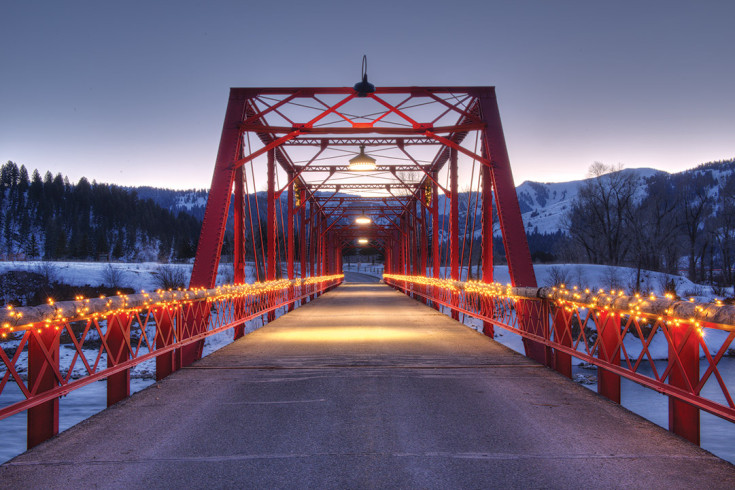
The red bridge signals the shift. As you follow the single lane across the Snake, you approach a limestone ridge rising from the riverbed, bending toward sights unseen. Whitebark pines pepper the slopes, sheltering wildlife. The river rushes on, tempting with rapids and trout. A bald eagle arcs above, scanning the canyon. The historic red bridge is the threshold. Discovery awaits.

This discovery defines Snake River Sporting Club: the discovery of exploring a large tract of land, the discovery of exploring new ways of doing business. To realize the sporting club’s renaissance, four local businesses came together toward a collective goal: to make the peerless property as refined as it is rugged. Working in concert, the quartet created a sophisticated world greater than the sum of its parts. They forged a new frontier of luxury inspired by landscape, defined by a full-service approach to the Western lifestyle.

Snake River Sporting Club, WRJ Design, RE/MAX Obsidian Real Estate, and Altamira Fine Art are now linked by shared success and committed to future collaborations beyond the bridge. Within this trailblazing paradigm, the sporting club has become an arbiter of valley entrepreneurialism, of vision honed by experience.

18thSnakeRiverSportingClub_09262007_MG_4253

“Crossing the bridge becomes symbolic,” says Klaus Baer, principal of WRJ Design. “You are driving into history and heritage. You are moving from one time and place into another.”

THE DESTINATION

A day spent at the Snake River Sporting Club is a transporting, all-encompassing experience.

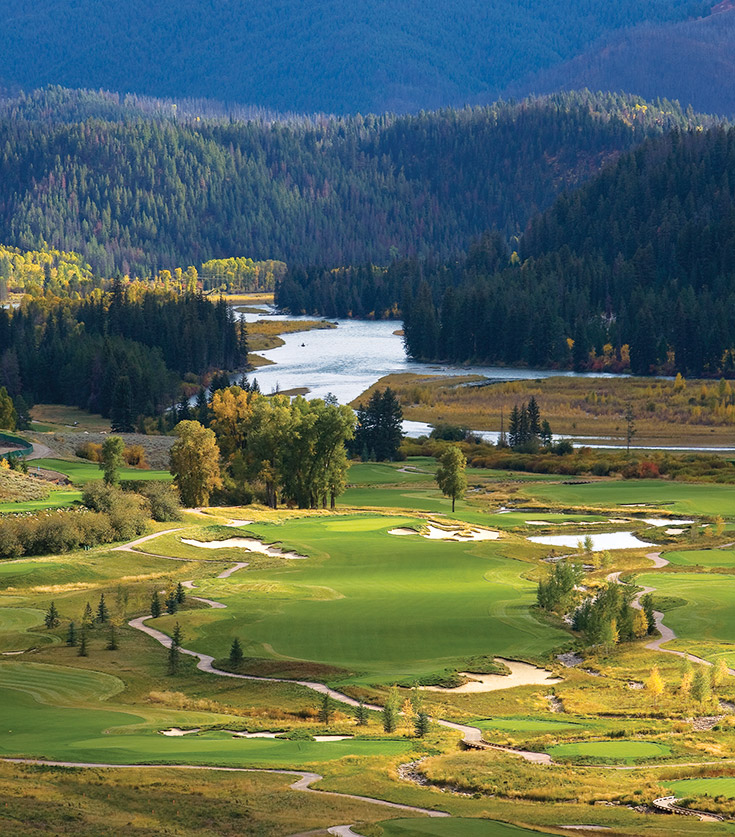
Hit the road early to make the most of your adventure. The real world melts away as you drive the 12 miles south from Jackson. Park at the clubhouse, warm up at the driving range and then play 18 holes of championship golf, an experience envisioned by Tom Weiskopf.

imageWall-1x2a

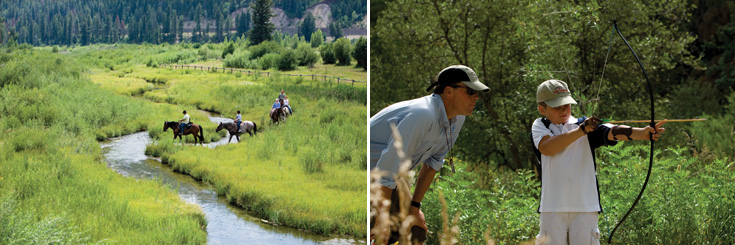
Break for lunch at the clubhouse overlooking the Snake River. Post-feast, head to the barn and saddle up for a trail ride through the cottonwoods and willows. Or, borrow a compound bow and practice archery with life-sized targets. Spend the late afternoon with your kids or grandkids at the beaver pond using the club’s kayaks, canoes, and paddleboards.

imageWall-1x2b

Dusk finds you casting into pools along a 6-mile stretch of the Snake River. Cap the day with cocktails on the deck, watching the waning sun paint Wolf Mountain pink. Days like this are de rigueur at Snake River Sporting Club. “We have created an authentic Jackson Hole experience within a private club setting,” says Chief Operating Officer Jeff Heilbrun.

SRSC_3145

THE TEAM

The collaborative approach adopted by Snake River Sporting Club extends to the team spearheading sales. RE/MAX Obsidian Real Estate’s boutique nature belies its robust standing: Since forming three years ago, it has become one of the largest firms in Wyoming, and the global Web presence of RE/MAX lends a reach that extends far beyond the valley itself. With nearly 40 agents, RE/MAX Obsidian has adopted a collegial approach to selling real estate, a results- and service-oriented focus that benefits the clients, says associate broker Chip Marvin.

Martin-Creek_main
Martin-Creek_6360

As with all properties RE/MAX Obsidian represents, the sporting club team tries to connect person to place. (The firm’s downtown office even features a 3-D model of the club). The club appeals to a buyer who is “genuine and grounded,” says Marvin, adjectives which also describe the Obsidian team.

imageWall-1x2c

A club homeowner must appreciate contrast. Consider the four new Tall Timber Cottages. The golf course unfurls from their back decks, deer and elk graze along the rough, and the mountains loom above. “We are down there because we believe in the project,” Marvin says. “The Club has such an appealing combination of amenities.”

Bedroom-and-butterflies

The Design

Snake River Sporting Club exemplifies the creed adopted by WRJ Design: “Inspired by the natural world, informed by the rest of it.” Both the club and WRJ are distinguished by their parallel attunements to nature and sophistication. Embracing the club’s intrinsic contrasts, WRJ has introduced aesthetic discoveries that harmonize with the outdoor bounty. Indeed, natural inspiration has defined the trajectory of WRJ.

Country-Club-Home-Living-Rm
“A house should unfold like a story. It should unfold with some mystery,” says principal Rush Jenkins. “There should be discovery. And there should be beauty.” On these pages, WRJ Design presents a range of their work in Jackson Hole and beyond. Every project is united by the same goal of expressing client lifestyles through their environment.

After building their design careers in New York and London, WRJ principals Rush Jenkins and Klaus Baer moved west to reorient their lives and work in the magnificence of the mountains. Since opening their flagship showroom three years ago in downtown Jackson, the two have become tastemakers in the valley and beyond. Drawing upon their diverse backgrounds in residential, landscape, and exhibition design, they bring rare insight into the creative and collaborative process required to make their clients’ design ideas extraordinary.

Whether approaching the private collections of Laurance Rockefeller and Bunny Mellon or considering a new Tall Timber Cottage, WRJ translates the vibrancy of people’s lives into spatial experiences. The interiors designed by WRJ become timeless reflections of people and place, evocative rooms at once refined and reflective.

The Art

When curating a site-specific collection, Altamira Fine Art considers the defining characteristics of the space and its surroundings: colors, forms, and values. Snake River Sporting Club presents a rich palette from which Altamira curates a compelling assemblage of art.

grey-horse-nine-cw
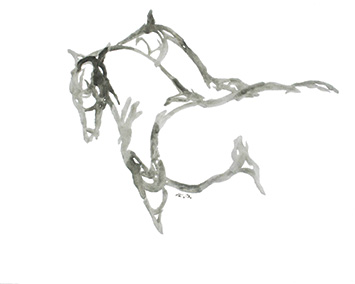
“September is a rarity in the art world, having command of charcoal, watercolor, and oil, all the while creating lyrical signature works that engage the eye and move the soul,” says Dean Munn, the gallery and exhibitions director at Altamira Fine Art. “Her paintings demonstrate a spirituality and life force that are native to the environs of the Snake River Sporting Club and are well-suited to exemplify the vision of the club itself. Exceptional art in an exceptional locale.”

Paintings depicting the essence of nature resonate in the clubhouse, and no body of work better speaks to this organic resonance than Jackson-based artist September Vhay’s Red Horse series. An architect by training, Vhay turned to painting as an expression of her profound connection with animals. Equine and Western essentialism converge in her gestural red horses: Pairing the flow of sumi-e painting with the minimalism of abstract sculptures, she hones in on the horses’ innate elegance. What began as an exploration in watercolor has grown into a fulsome series including large oil paintings—a breadth that belies the intimacy she achieves in each individual composition.

Contact Information

Snake River Sporting Club Membership
Jeff Heilbrun • 307-201-2560
jheilbrun@srsportingclub.comsrsportingclub.com

RE/MAX Obsidian Real Estate
Chip Marvin • 307-690-2657
chipmarvin@gmail.comjacksonholeobsidian.com

WRJ Design
307-200-4881 • wrjdesign.com

Altamira Fine Art
307-739-4700 • altamiraart.com

Celebrating 10 Years of Community and Friendship

> Story by Jenn Rein
> Photography by Ryan Sheets, Allen Kennedy, Dan Tolson, and Staff

3Creek-JHMR-85
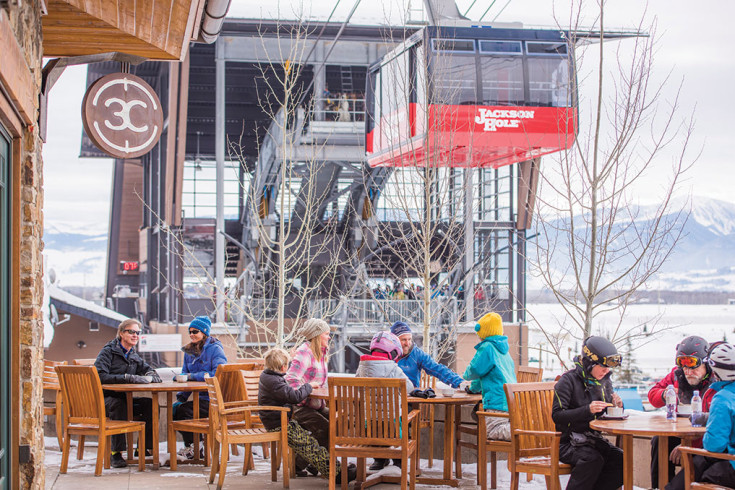
Slope Side: The Ski Club at Jackson Hole Mountain Resort is a significant perk for 3 Creek members.

Membership opportunities
Jill Moberg
Membership & Marketing Sales Director
307-732-8921 • jmoberg@3creekranchgolfclub.org
3creekranchgolfclub.org

Nestled only a short distance from downtown Jackson, 3 Creek Ranch Golf Club is a reflection on both thoughtful living and community engagement. This year marks its 10th anniversary, and ongoing success is evident in its reputation and growth. The club is closing in on its ultimate goal: to reach maximum capacity for memberships. When that happens, 3 Creek will become a fully member-owned endeavor.

Community outReach

3 Creek Ranch Golf Club has made its mark with special events that exemplify a love of Jackson Hole. Of these, the Rees Jones Invitational is a shining example. Named for the world-renowned architect who designed the 3 Creek course, this event raised $45,000 in 2014 for the Community Foundation of Jackson Hole.

Putting-on-the-16th-Green
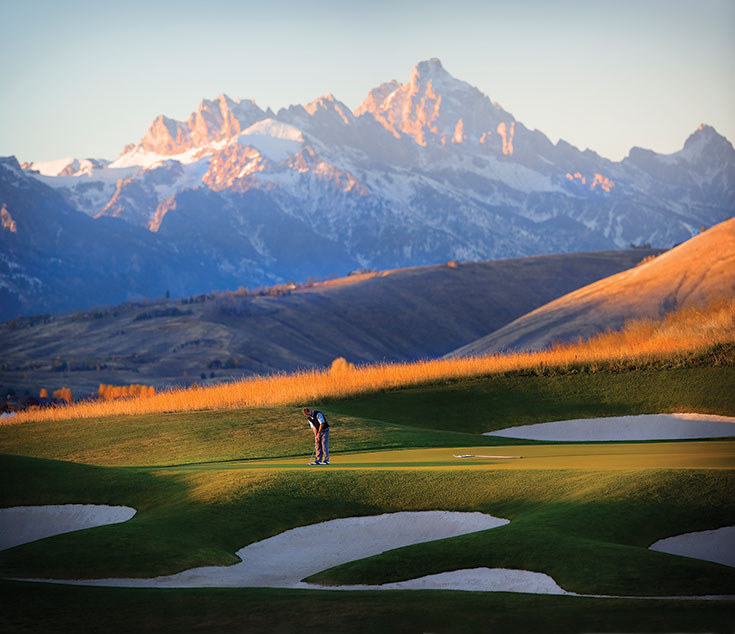
Tee Off: 3 Creek’s golf course is not only enhanced by the meticulous attention paid to it, but by expansive Teton views that steal the show.

Club member Tom Holland praises this effort and much more about 3 Creek: “While we joined the club for its amenities, we quickly discovered it is the people associated with 3 Creek who motivate us to continue our membership. Folks here are driven by cause and community. You can see this in how they come together to support Bras for a Cause, St. Jude Moonlight on the Mountains, and the Rees Jones Invitational. The invitational brings us all together for a fun event to support Jackson Hole. … Events like these make a positive, collective impact. This makes 3 Creek a special place.”

World-Class Golf

The golf course at 3 Creek has been listed as the No. 1 course in Wyoming by Golf Digest multiple years in a row, and has been praised extensively by the golf industry as a whole. Director of Golf Greg Glover was named Teacher of the Year for the PGA’s Rocky Mountain section in 2014, proving that accolades extend to staff as well. The care that is taken with regard to the course is commendably obsessive, and the payoff is significant. With great attention to detail and advanced pest-management strategies, Superintendent Dan Tolson has managed to prevent establishment of a common invasive species of grass that affects ball roll on the green. It is uncommon to find a golf course free of this grass. Anyone with the good fortune to play the 3 Creek course will notice the exceptionally smooth, pure greens.

Setting the Table for Excellence

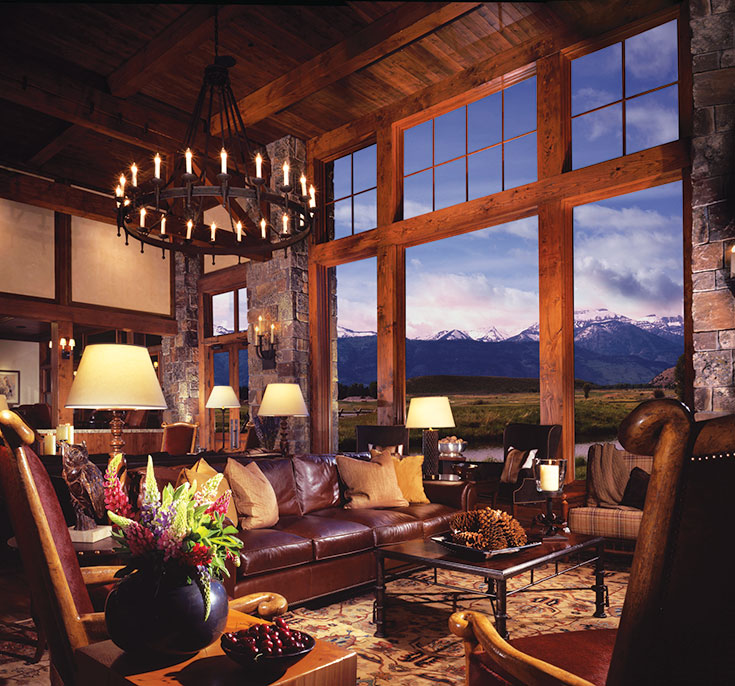
The interior of 3 Creek’s clubhouse itself is a stellar example of what can be accomplished when design finishes have been selected for both style and comfort. Spectacular views of the Teton Range and abundant mountain light dominate the great room. Within these walls, there are one-of-a-kind moments to be savored, and impeccable meals to be shared.

Fire-Pit-view-of-Clubhouse
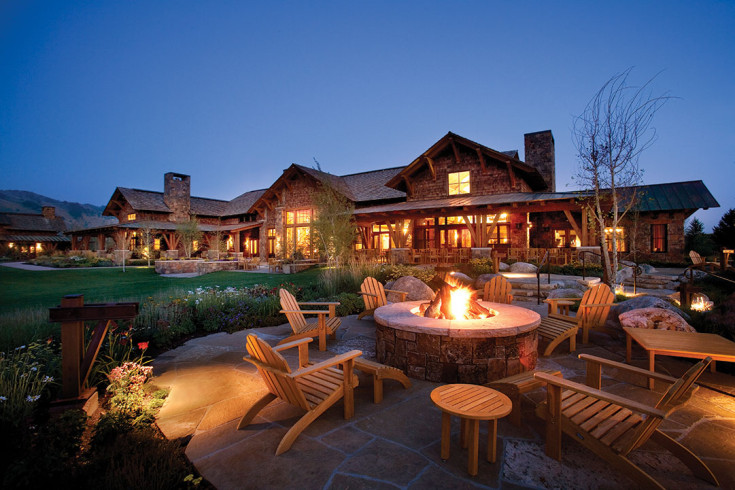
Indoor/Outdoor Flow: The club’s outdoor patio is a favored retreat for members during the summer season; a place to enjoy the superb menu and feel refreshed by the mountain air.

3-Creek-Ranch_Lobby

The culinary team has earned kudos as one of the best in Teton County, and opportunities to cater to the club members are numerous. Functions are held throughout most of the year, with meals carefully planned for each event. An outdoor living space complete with fire pits and crisp Teton vistas is often the first choice of club members for dining during the summer months.

A Feeling of Inclusion

A golf game isn’t necessary to enjoy both the services at this club and the attentive staff that has, it seems, thought of everything. Member Ellen Sanford explains, “There are so many choices that many call it ‘Camp 3 Creek’ because of the opportunities for children and adults to learn and have fun.” She further elaborates, “3 Creek has a great spirit! The atmosphere in the club is very welcoming and inclusive.”

imageWall-2x1

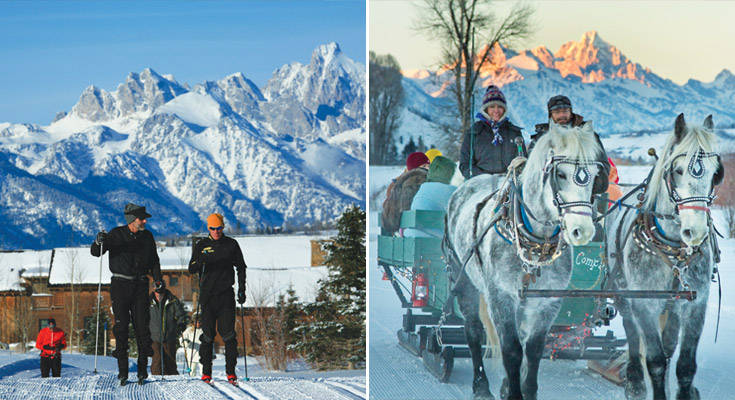
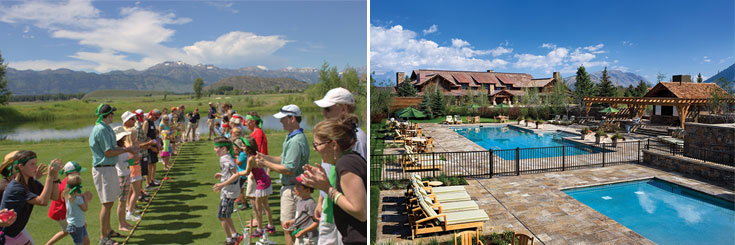
It’s All Here: Numerous amenities distinguish the exceptional nature of 3 Creek. From clubhouse accommodations to an always-bustling event schedule, this community enjoys the best that Jackson Hole has to offer. In the summer months, aquatic facilities provide relief from the high mountain sun, while club-hosted outdoor activities bring families together. Abundant opportunities to enjoy the glory of Jackson’s winter months also prevail. Nordic skiing on the ranch allows for wildlife viewing in a serenely contemplative environment, as birds of prey, moose, and elk frequent many parts of the property. This is the sweet spot, just a short distance from downtown Jackson: nature’s majesty outside the front door paired with the trademark thoughtful attention paid to every member at 3 Creek Ranch Golf Club.

imageWall-1x2a

Holland echoes Sanford’s enthusiasm, “Our family is taking advantage of these great amenities every day of the year. Whether it is the pool in the summer, the workout facility in the fall, or the skiing amenities in the winter, the club has been great for our family.” Platform tennis and tennis courts, programming for kids, swimming, wildlife viewing, the Ski Club at Jackson Hole Mountain Resort, and Nordic skiing—among other activities—all speak to the multitude of options here.

The member-ownership milestone will only further strengthen the feeling of community and welcome at 3 Creek. When this quota has been reached, the close team that ensures an uncompromising and distinctive experience at 3 Creek Ranch Golf Club is looking forward to setting the bar even higher.

A Firm of Many Faces

> Story by Kirsten Rue
> Photography by Latham Jenkins and David Swift

large2x1
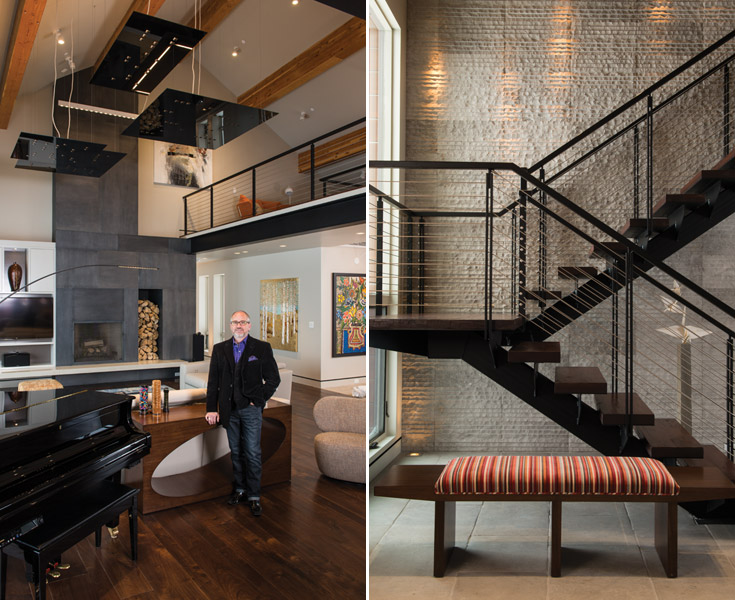
Sleek Spaces: Goff’s modern great-room design achieves a simple, clean approach to entertaining, lit by black, tiered LED light panels that nicely offset the slight blue patina of the metal-paneled fireplace.

Juxtaposition: The textured backdrop of Ann Sacks chiseled stone enhances the geometric lines of an iron-and-wood floating staircase.

“I’m very diverse in what I do.” This describes Brian Goff’s portfolio of work and also an interior design career stretching back 25 years to take in residences around the country, many in Jackson Hole.

The diversity in tone—contemporary, traditional, Western-inflected—wells from Goff’s approach to design itself, which is centered in listening and calibrating interiors to each client’s unique mode of living. “I try to sit down and evaluate room by room,” he says of his process. “How do they live? How do they use each space and the items in those spaces? Being a designer is also about function—too often we confuse beauty with function. First and foremost, the space has to be lived in and utilized in a proper manner.”

Niedermeyer_1659

Gathering Room: The warm tones of this great room create a seamless flow between inside and outside spheres, all anchored by a custom, modern rendition of a Navajo rug.

This emphasis on creative, custom approaches to functionality makes perfect sense for Jackson Hole, where large family groups often converge on residential spaces and need a welcoming interior that both nurtures them and accommodates a lifestyle that might include the donning and doffing of wet ski boots, free-form gatherings of all ages, and large-scale entertaining.

“Designing for Jackson Hole lends itself to crafting warm, comfortable environments so that you reflect the area, the landscape, and the mentality of where we are. We’re in a beautiful part of the world that’s somewhat of a playground—it’s year-round man vs. nature, so when you come home, you want to be extremely relaxed. You want to come into an atmosphere that’s completely enveloping you.”

imageWall-1x2
Winning Tradition: A one-of-a-kind, hand-screened wallcovering imparts a muted elegance to this classic dining-room space.

Mélange: Singular, artisan pieces and the interplay of materials (stone, wood, textiles) endow the master suite with cozy cabin warmth.

For Goff and his team at BGID, collaboration between architect, client, and contractor makes every project one he remembers—each one replete with considered touches that anticipate client needs while crystallizing their tastes.

“I cover the gamut of design,” Goff explains, “and I try to always come up with personalized, custom designs that set one house apart from another.” In fact, he doesn’t have a favorite portfolio project; they all stand out as a translation of one family’s lifestyle into a setting that embraces it.

“Through creativity, knowledge, and expertise, I can bring my clients’ vision to fruition. That’s how I measure my success.”

Architecture for the People

> Story by Kirsten Rue
> Photography Courtesy of Bohlin Cywinski Jackson, Latham Jenkins, Nic Lehoux, and Paul Warchol

GrandTeton_NL_363002_e2
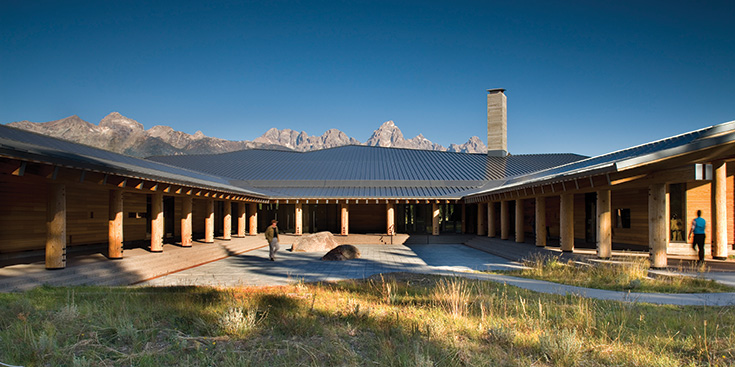
The 23,000-square-foot Craig Thomas Discovery & Visitor Center was completed in 2007. Designed by Bohlin Cywinski Jackson, the project represents a partnership between the National Park Service, Grand Teton National Park Foundation, and Grand Teton Association. Its courtyard, featuring hand-selected boulders, is pictured here. © Nic Lehoux

The historic homesteads of Grand Teton National Park have attained the same iconic status of the mountains looming behind them. Buffeted by winds, the sweep of snow, and a century of blazing summers, their wood is silver, beams of sun bar wizened floorboards, grass grows from their roofs, and porches lilt precariously on spindly beams of lodgepole pine. To some, their romance is in decay, but that view disregards what they have to tell us.

352.029
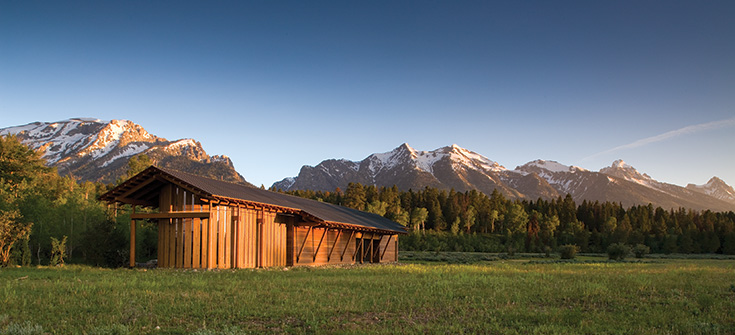
The Laurance S. Rockefeller Preserve began with a 2007 gift from the Rockefeller family of 1,100 acres on the shore of Phelps Lake. After the 35 buildings of the family’s 75-year-old JY Ranch were removed, local firm Carney Logan Burke designed the preserve’s new structures to support Laurance Rockefeller’s message of stewardship, conservation, and nature’s power. © Nic Lehoux

Through their design, two recently built structures in our own backyard craft a new story about national park wilderness and our powerful encounters within it. The Craig Thomas Discovery & Visitor Center and the Laurance S. Rockefeller Preserve are on the vanguard of what national park architecture can be: Representing, in one case, a public-private partnership and, in the other, a significant gift of private land and resources, these modern structures draw on the landscape and inculcate a sense of wonder for a whole new generation of park visitors.

Frame

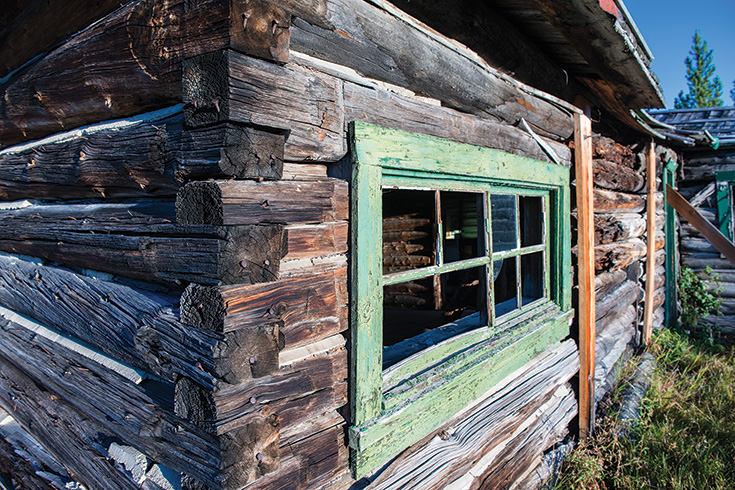
Despite their undeniable poetry against the raw shear of the mountain range, original homesteads lying within Grand Teton represent an urge more basic: slapping up four walls and a roof against the elements. Katherine Wonson, cultural resources specialist at Grand Teton National Park, explains that, “People built here in order to survive. It’s vernacular architecture in its prime, which is non-architect designed.” This leads to the fiercely idiosyncratic barns and cabins that pepper the open vales of the park—touchstones such as the Moulton Barn or the Cunningham Cabin gained their distinctive look from the individuality of their composition.

1409-barbcranch-grandteton-060
An early-20th-century double-hung, or “lazy,” window at the Bar BC Ranch. For ease of construction, these store-bought frames were hung on their sides, which required cutting fewer logs. In contrast to current park buildings, homestead and dude ranch cabins were usually south-facing to harness the most light.

In the first wave of tourism to the valley, the era of the “dude” was inaugurated, personified here by the Bar BC Ranch. Hewn to mimic the stirring lyricism of the original homesteads, the guest cabins and outbuildings of the ranch date from 1912 onwards, but far more closely resemble rustic structures of the 1890s. They were built via hog trough construction, a method Wonson calls “over-the-top simple.” She points out that this same simplicity and roughness was entirely intentional. Walking a fine line between “working ranch” and an “overly pioneer aesthetic,” this era of building was the first of many waves in the park to consider the experience of the visitor.

GrandTeton_NL_363004_edit-HN

A New Experience of View

In their own ways, both the Craig Thomas Visitor Center and the Rockefeller Preserve take some crucial cues from park structures, even while encapsulating differing goals. Ray Calabro, architect and project manager from Bohlin Cywinski Jackson, explains the entrance of the Craig Thomas Center like so: “You’re in this vast landscape with these incredibly tall, vertical mountains and this flat valley and you come to a place that feels quite familiar in a way. It feels like a porch, the lodge. It has a scale that makes you feel comfortable.” The intimate scale broadens as one enters the building, adding “something that I haven’t experienced before—not only in National Park Service architecture—but in some ways in American architecture.” That added element? An experiential quality.

Wonson notes that in this pullback from the view, the Craig Thomas Center gestures towards Mission 66-era park architecture. In Grand Teton, Mission 66 is exemplified by Jackson Lake Lodge. “You walk in and originally the staircase was actually even more narrow than it is today. … You were supposed to have this experience where at first you felt shut in.” At the top of the stairs, however, one is no longer sheltered; the entire range is revealed in a sudden evaporation of indoor/outdoor borders.

08-059-31A
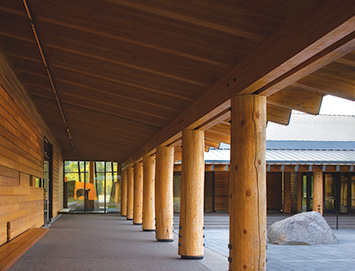
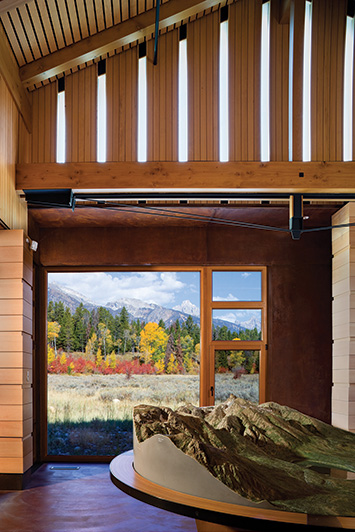
A colonnade at the Craig Thomas Center’s entrance; slatting reminiscent of historic barns; picture window and diorama display inside the Rockefeller Preserve. © Nic Lehoux, © Paul Warchol

This same intimacy of approach is felt in the porch-style entrance of the more modestly sized Rockefeller Preserve. “It is an L-shaped building … and two gable forms have been pulled apart. In between those two principal gable forms is a very low-slung porch roof,” says Kevin Burke, principal of Carney Logan Burke Architects. Mimicking the traditional gabled roofs of homesteads, this initial entrance into an interpretive experience of place is human-sized, drawing back from the grandeur of the national park’s open spaces for an effect more personal and reflective.

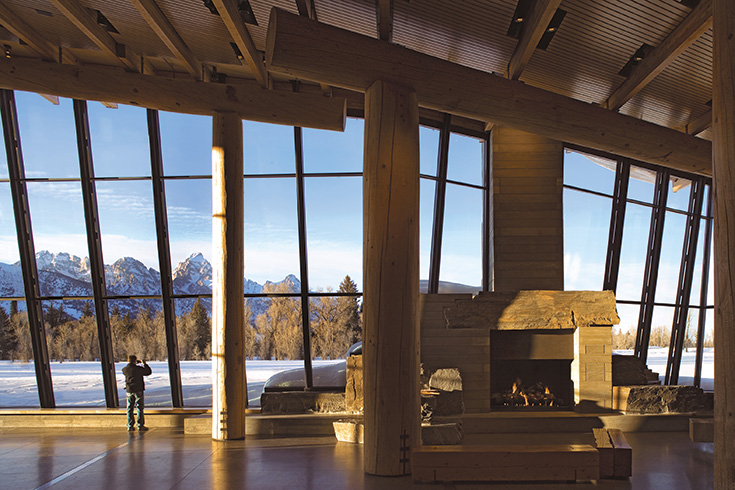
For both buildings, a deliberate choreography drives the visitor experience—architectural choices inform and illuminate the richness of the Teton views. In fact, a dance with the view itself was a crucial design focus for BCJ’s team. Calabro describes the approach sequence to the visitor center from a removed parking area along the meadow path, across the colonnaded courtyard, and through the front doors: “You’re compressed in a more narrow vestibule with a lower ceiling, and then as you come through and into that big, light-filled space, the roof kicks up and the view is re-presented to you in that way. … There’s a little bit of drama that we set up as part of that.” In fact, the slender steel mullions of the roof support an echo of the peaks to the west; the line soars and guides the
gaze upwards.

In the case of the Rockefeller Preserve, Burke notes that a 3-D diorama and map greet visitors after entry. Beyond them, sun filters in, as does a beckoning north-facing peak view. Anticipation builds here, he says, as visitors grasp the ecosystem they are about to encounter on the preserve’s 8-mile trail system.

GrandTeton_NL_335_037_edit2
Looking Out: The Craig Thomas building’s hearth—fabricated of concrete and sandstone—centers visitors before the 30-foot glass-and-steel wall, which unveils an always-changing mountain panorama. Regional company Intermountain Construction Inc. served as the general contractor on the project. © Nic Lehoux

Moments of Contemplation

The best architectural choreography does not only reveal and guide—it also makes us feel. Within the Rockefeller Preserve, sensory exhibits emphasize the history of the Rockefellers themselves and Laurance’s mission to cultivate an environmental awareness that park visitors will carry home. Chief among these experiences is a chance to sit still and simply listen within a chapel-like space. The curved room silences with acoustic-dampening ceilings while a soundtrack of rain patter on leaves and birdcalls tunes us to the frequency of the outdoor environment. The tone here is introspective. Burke explains, “Because the light levels are dimmed, it is very evocative of an old barn where boards have pulled apart and you see the sunshine coming through the slats. There’s a really powerful feeling in that space.”

BCJ worked closely with Ralph Appelbaum Associates, the interpretive designers for the Craig Thomas Center, to completely meld the architectural experience with the interior exhibits. Calabro and his team recognized immediately that, for many, their time within the center would provide the primary door to understanding the park. He describes how the exhibit design was based on creating a “grand hall” that could encompass educational, contemplative, and social gathering spaces. Rather than a series of separate rooms, the interpretive spaces of the hall are reminiscent of canyons, allowing visitors to focus both inwards and outwards.

08-059-07A
Restorative Space: The Laurance S. Rockefeller Preserve’s sanctuary-like sound room embodies its namesake’s ethos: “How we treat our land, how we build upon it, how we act toward our air and water will in the long run tell what kind of people we really are.”
© Paul Warchol

All of the surfaces, even the floors, are activated with potential meaning; on the back patio, the precise alignment of each visible Teton peak is introduced via inlaid lines that list names, elevations, and stirring quotes from famed mountaineers.

Neither building operates as visitor centers commonly do—ushering us from box to box and enclosing us as we absorb information without its context. In contrast, the architecture is partner to the program, and we remain linked to the exploration that beckons right outside the window.

Structure Born of Environment

While a reverence for place certainly characterizes our experience within these buildings, their modes of construction draw most directly from the lineage of the park’s built environment.
The tumble of the Tetons’ igneous rocks seems at home in the Craig Thomas Center’s courtyard, where two large, granite boulders emerge from a bed of concrete—one of Calabro’s favorite aspects of the completed building. Each one was hand-selected from a Wyoming quarry and then carefully oriented. “We had this idea about these boulders in the courtyard being pieces of the Tetons that people could touch.”

imageWall-2x1
Craig Thomas Exterior: Access to 65 years of climate data from the neighboring Moose weather station led BCJ to design concrete shield walls better suited to snow drifts, as well as angled walls and roof planes to filter sunlight.
© Nic Lehoux

Rockefeller Exterior: Custom-composite wood and steel king post trusses support a sawn-timber frame roof—a subtle homage to the original JY Ranch’s boathouse.
© Nic Lehoux

The beams within the center invoke the same emotion. The Forest Stewardship Council-certified Douglas fir beams were also hand-selected. Calabro says of their effect, “The tall columns that you’re standing in are a great forest, and you have this prospect out over the meadow and you see the mountains. There’s a composition there and a way of connecting people to the landscape that is important.”

As the first national park structure to gain Leadership in Energy & Environmental Design Platinum status, the Rockefeller Preserve’s team was required to source its materials from a radius no greater than 500 miles from the site of the build. Choices were equally constrained and considered. Burke describes a process of harvesting the fireplace stone on-site and sourcing “highly crafted and refined” western red cedar. “The material palette is kind of sparse in a way. … If you think about those early park structures—any one of the Park Service’s—they’re utilizing what’s available to them in that place.”

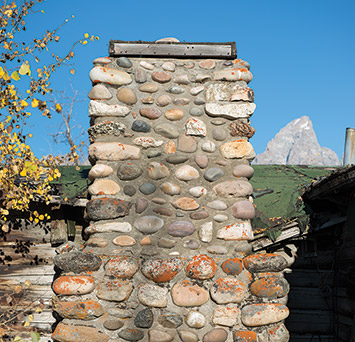
One look at the Bar BC’s hand-daubed river rock chimneys certainly reflects this.

1409-barbcranch-grandteton-247
Bar BC Chimney: River rock chimneys and sod roofs are hallmarks of building in accordance with the materials available in the surrounding landscape.

Both architecture firms were also serious about something else: allowing for a natural wood-weathering process. The western red cedar siding on both buildings (clear-heart grade, in the case of the Craig Thomas Center) will be left untreated. As years pass, they will gain the same patina as the heritage barns that already distinguish Antelope Flats—a variegated hue that takes on the blush of sunrise and sunset.

New Solutions for Old Problems

Snow loads and the sapping effect of the bright western sun have been eternal challenges for builders in Jackson Hole. Both architecture firms approached these concerns with the power of technology and simplicity to create environmentally sensitive solutions.

The Craig Thomas Center’s ridged rooflines serve double duty: distributing the snow load evenly while the steel supporting the window wall provides a louver system to shade the interior of the center. Shield walls allow snow to deposit on concrete instead of directly on wood, and a wainscot around the perimeter of the building helps to collect snow as well, leading to a building that is as durable and maintenance-free as possible.

imageWall-2x1a

“We thought it would be nice if you could sense where the loads were by spacing the beams closer together only in those places, so the structure sort of tells you a little bit about what it’s doing and what it’s supporting,” Calabro says.

For Burke and his team at the preserve, the goal was a building that could be day-lit without sacrificing the delicate technologies at work in the interpretive displays. To meet this challenge, Burke says, “we did extensive daylighting studies early. That’s partly why you see the big, broad 12-foot overhang on the east window. One, it helps protect the architecture from all the snow, but it also helps eliminate a lot of daylight coming through.”

GrandTeton_PQB_plan_river
From the original sketch to the raising of laminated Douglas fir beams, to the installation of a maple bench inside the center, BCJ’s design responds to place, weather, and visitor experience. © Bohlin Cywinski Jackson, © Nic Lehoux

Frit glass in the Family Story Gallery reduces 40 percent of the sunlight transmitted and allows all exhibits to function as intended. “Again, it was this really tough interplay in terms of us wanting to create a space that was naturally day-lit and ventilated, but with a program that didn’t want those things. We had to grapple with that in just about every single space we had,” he adds.
Situated on lots that had already been disturbed by human presence, both facilities are surrounded by reclaimed and re-seeded vegetation; species like sage and hawthorn have taken root again. Sitting quietly on the land, the two buildings are holistically connected to it.

A Leap Forward; Look Backwards

Wonson points out that Grand Teton National Park’s historic buildings are not going anywhere. They represent a vital legacy that belongs to park visitors in the same way that the glacial lakes, wildflower meadows, and bugling elk belong to them.

imageWall-2x1b
Rockefeller Porch and Living Room: The building’s materials are echoed in furnishings within and without. Carney Logan Burke custom-designed all of the furniture and light fixtures for these spaces. “It allowed you to distill all the parts and pieces of the architecture and take out the most critical pieces and allow that to then form the DNA of the model furniture pieces,” Burke says. © Paul Warchol

“We have 45 historic districts and about two-thirds of them are in use by park or partners,” she says. The other one-third comprises homesteads and structures that have since been turned over to the Park Service. “They’re some of the most beautiful properties and they have really high integrity,” but it can be difficult to maintain each one. In autumn 2014, the park put forth a historic preservation plan to address some of these concerns; it looks forward to future public-private partnerships that will breathe new life into potentially neglected structures.

In the preserve guest book, page after page of scrawling script attests to the building’s resonance. “Although the landscape will change constantly, this beautiful center will hold fast for so many people to reflect and inspire generations,” writes one family. “The architecture and place are perfectly matched.”

1409-barbcranch-grandteton-006

Cultural Inheritance: Listed on the National Register of Historic Places, the Bar BC Ranch is just one of the park’s historic districts with conservation efforts underway. Its founder, author Struthers Burt, referred to Grand Teton National Park as “a museum on the hoof.”

Calabro describes the joy of going incognito and observing visitors in the space he and his firm designed: “No one knows that I was the architect. Standing by the entry and watching people as they come in—the look on their faces; their jaws drop. The kids immediately run to the exhibits. Seeing that kind of reaction is so satisfying as an architect.

“The parks are such an important part of American history and culture. They are a resource that is precious and should be valued. Certainly our contribution to the park is one that I hope heightens that sense of experience and value for people. It’s immeasurable.”

Entertaining with Simplicity

> Story by Kirsten Rue
> Photography by David Agnello

CROP-FOR-CRISTINE
You’ve just left a fabulous party. What do you remember most? Is it the wine? The décor? The appetizers? Chances are, it is none of these, but rather the conversations that stick with you—the jokes told and the pleasure of meeting new friends.

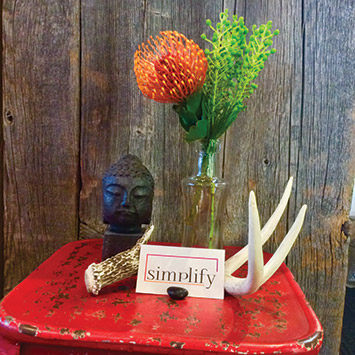
This is exactly what Janet Munro emphasizes in her approach to entertaining. As the founder of Simplify, she works with clients to help them organize, stage, and design spaces to unlock a stylish, organic simplicity. “Throwing a party in your home doesn’t have to be stressful or overwhelming,” she says. “The point of having a party is to get together with your friends and have a memorable time together. Let’s focus on what’s most important: creating a welcoming atmosphere for all your guests to enjoy.”

Follow her simple tips to throw a warm and beautiful gathering of your own.

Getting Started

Prepare a few things ahead of time, whether it’s organizing flowers and candles, or throwing together the ingredients for a great appetizer so it’s oven-ready.

150122_2823

Décor

Less is definitely more! If things are too busy, your guests won’t be able to set down their drinks or take a breather. “For me, candles are a must. Harsh ceiling lights make us feel like we’re still at the office, whereas the toasty glow of lamps and candles are very mood-inspiring.”


150122_2817

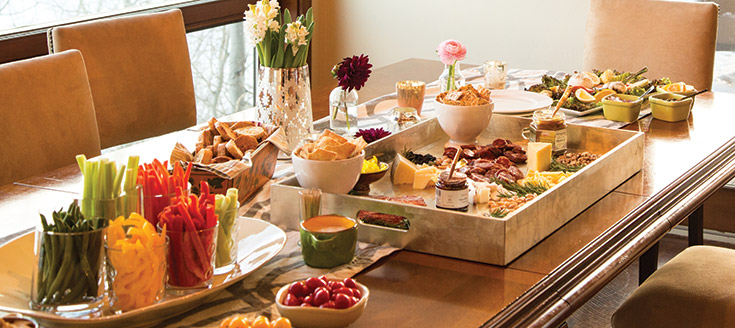
The Food – Put together your own classy spread full of variety.

Choose food options that are easy to prepare, taste great, and satisfy any dietary restrictions. “Gone are the ‘Mad Men’ party days of cigarettes, ashtrays, and martinis during the work day! This is the era of vegetarian, vegan, and paleo diets. Make your menu inclusive so no one is stuck with an empty plate.”

150122_2636

Charcuterie Platter

3 CHEESES
Manchego
a mellow and slightly nutty sheep’s milk cheese
Hard cheese
aged cheddar or Gouda
Soft cheese
Brie, chèvre, or crumbled blue For wine pairings: Drunken Goat, Midnight Moon, or Humboldt Fog

Hard salami
chirizo, a bit on the spicy side
Prosciutto
Thinly-sliced sausages, easy to grill the day before

Select your accouterments:
Sweet or spicy mustard

3 meats
Hard salami
or chorizo
(a bit on the spicy side)
Prosciutto
thinly sliced
Sausages
grilled beforehand

ACCOUTREMENTS
Sweet or spicy mustard,
fig or quince jam, honey
Crackers, flatbreads
Sliced pears or apples,
grapes, figs
Walnuts, marcona almonds
Olives

150122_2558
Pressed for time? An even easier option is to order items to be served. “My insider tip is to order up a gorgeously presented charcuterie platter from Aspens Market on the West Bank—delicious, and bam, you’re done! Sometimes I also pick up my favorite appetizers from restaurants in town: I love the tuna tartare at Rendezvous Bistro and the smoked trout platter from The Blue Lion.”

The Bar

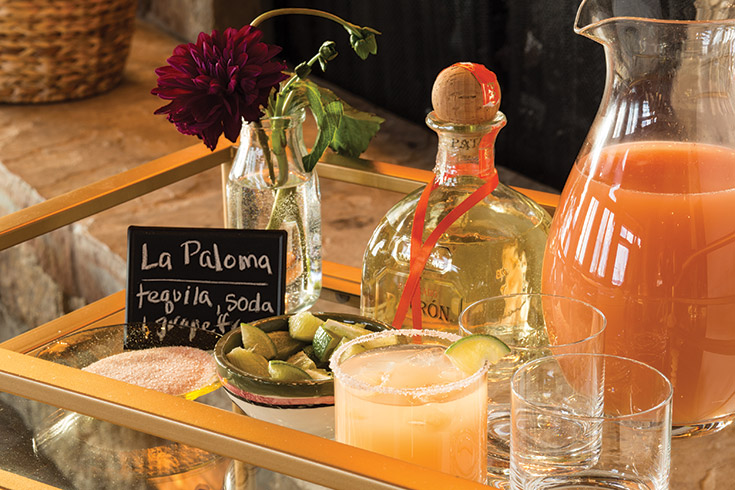
Keep the bar streamlined—offer two types of wine, beer, and a signature cocktail. Fewer options mean less stress for guests, and work well with space limitations. The signature cocktail pictured to the right is a paloma, a refreshing combination of tequila, lime, and grapefruit.

150122_2592-Edit

150122_2598

Flowers

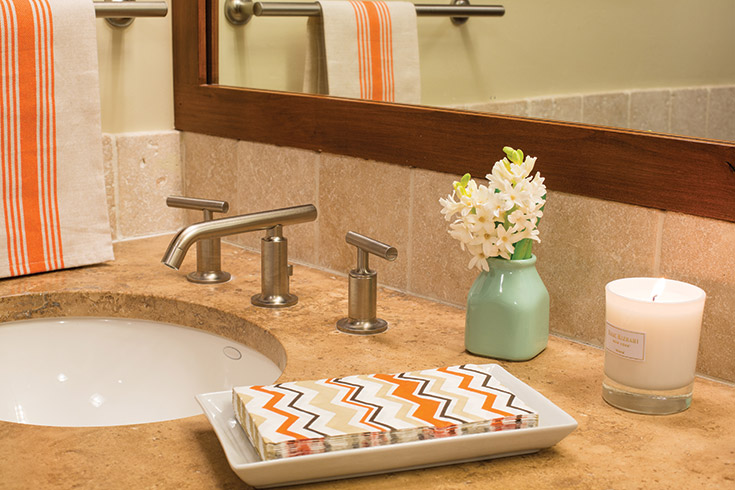
Flowers bring immediate comfort to social settings, and are a lovely and affordable way to add a splash of refinement to the home. Arrange your flowers around different seating areas. “I always recommend flowers and a candle in the entryway and guest bathroom. This welcomes your friends into the home.”

150122_2807

Munro recommends the Jackson Hole Flower Co. in Wilson or Jackson Whole Grocer for great quality flowers. Once more: Don’t overwhelm your spaces. Keep flowers and candles low so that guests can see over them while they converse. The single stems pictured in this kitchen and on the bar cart are pretty and vibrant on their own.

flowersonwhite

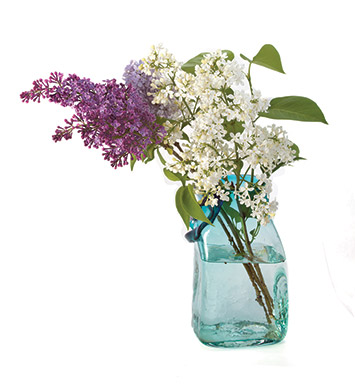
Other ideas? Bud vases with one graceful stem, or embrace the current trend for a small succulent in a quirky container, such as a teacup or under a glass bowl.

Mingling Space

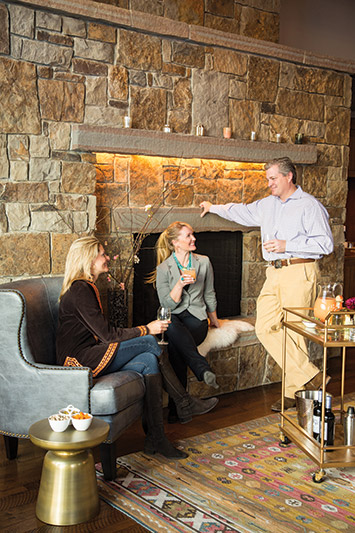
Facilitate relaxing areas for a large group by moving furniture around and creating small seating areas that encourage conversation. “The kitchen always has a buzz of activity around it, so make some other comfortable areas for groups to chat. At this party, I created seating arrangements around the fireplace, at the kitchen bar, and at the dining table.”


FullSizeRender-1

CRISTINE-2-EDIT

About Simplify

Janet Munro: “I started Simplify in 2011 after I had a series of life event changes and subsequently downsized my living space. I enjoyed it so much more! Since then, I’ve made the personal decision to live a more simple life all around. After all, you are not your stuff. If you’re at a point where too many materials are weighing you down, Simplify your life. It’s not about getting rid of your treasured possessions, but rather accessing what is important to you and keeping only those things. I love combining cherished heirlooms with modern pieces: This expresses my clients’ personalities and makes their environments so much more comfortable.”


150122_2718

For luxury rentals and real estate in Teton Village, as seen here, contact Meredith Landino at 307-690-8028 or meredith.landino@jhsir.com

Toast of the Town

Jackson Hole Fall Arts Festival | September 10-20, 2015

> Story by Jenn Rein
> Photography by Latham Jenkins, Courtesy of Western Design Conference and Jackson Hole Chamber of Commerce

After the high summer season has waned, there remains much more to look forward to with the start of the annual Jackson Hole Fall Arts Festival. Showcasing work from all over the West, it continues to be a benefit for the artists that make it thrive and the community that provides enthusiasm for their talent. Now in its 31st year, this art and design rendezvous has witnessed a distinct evolution in the themes of the Western art genre. Depictions of expansive vistas, majestic wildlife, and the mythical cowboy will remain the foundation on which Western art thrives. But in the genre’s current state, artists tackling the subject matter from a fresh perspective are thriving, and more unique events than ever allow patrons and collectors from all over the country to sit in the front row.
Schenck_13-Minutes-to-Eternity

Jackson Sets the Stage

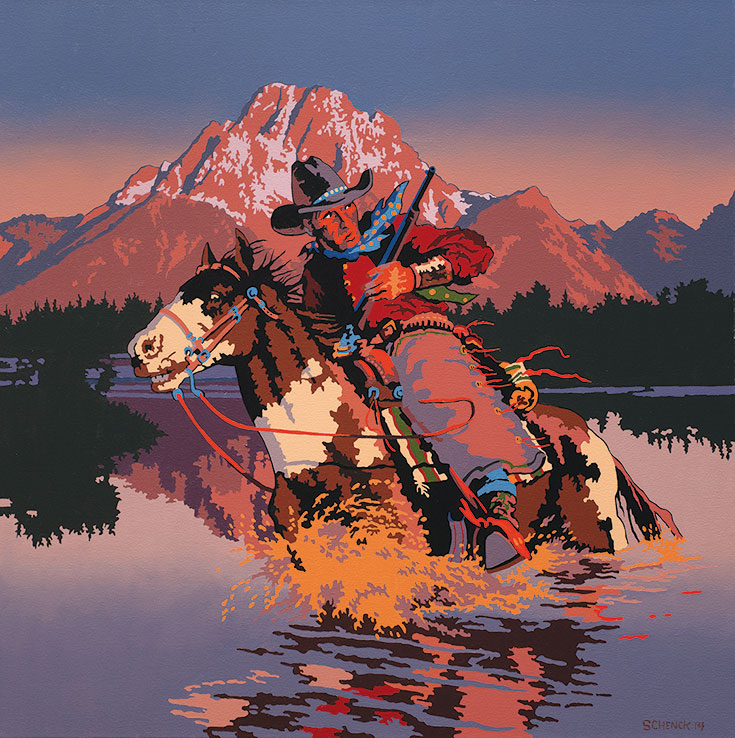
The Jackson Hole Chamber of Commerce plays the role of ringleader throughout the FAF. The selection of this year’s featured artist is a reflection on the thoughtful work that goes into planning each year. Bill Schenck, the first artist to design a poster for the FAF decades ago, carries the torch this year. His image, “13 Minutes to Eternity,” depicts the cowboy and mountain culture in vivid contemporary realism.

Schenck, whose work can be found in major collections throughout the world, will be available to sign this year’s image at Altamira Fine Art. Providing a collectible takeaway for art lovers, a signed copy of the FAF annual poster has become a beloved souvenir of the event. The pull does not stop there.

_LGV6061
The-Peak-Antler-Company

FALL ARTS FESTIVAL
CALENDAR OF EVENTS

SEPTEMBER
10 | THURSDAY
Western Design Conference Gala Event:
Opening Preview Party + Fashion Show
6pm – 10pm Snow King Center
WesternDesignConference.com

11 | FRIDAY
Western Design Conference Exhibit + Sale
10am – 5pm • Snow King Center
WesternDesignConference.com
Palates & Palettes Gallery Walk
5pm – 8pm • Various gallery locations
JacksonHoleChamber.com

12 | SATURDAY
Western Design Conference Exhibit + Sale
10am – 5pm • Snow King Center
WesternDesignConference.com

13 | SUNDAY
Western Design Conference Exhibit + Sale
10am – 5pm • Snow King Center
WesternDesignConference.com
Taste of the Tetons
11am – 3pm • Jackson Town Square
JacksonHoleChamber.com

18 | FRIDAY
The Jackson Hole Showcase of Homes
11am – 4pm • Various locations
JacksonHoleShowcase.com

19 | SATURDAY
QuickDraw Art Sale and Auction
9am • Jackson Town Square
JacksonHoleChamber.com
The Jackson Hole Showcase of Homes
11am – 4pm • Various locations
JacksonHoleShowcase.com

20 | SUNDAY
Art Brunch Gallery Walk
11am – 3pm • Various locations
JacksonHoleChamber.com

FORM MEETS FUNCTION

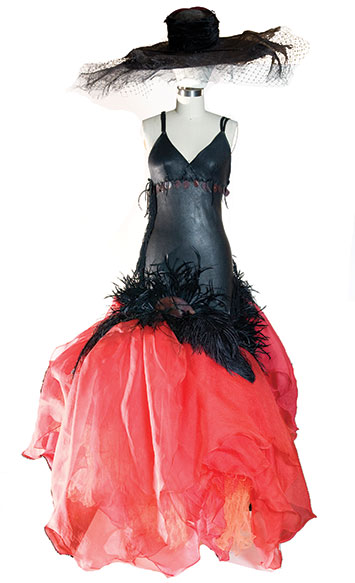
The Western Design Conference Opening Preview Party kicks off these 10 artful days in September with a bang, allowing a select few the opportunity to meet the artisans that have been juried into this year’s WDC. Other highlights of the evening will include a jewelry and fashion show that features both established designers and those that are new to this long-held event. Guests will be able to shop the finely crafted pieces while enjoying creations by the culinary team at Café Genevieve.

WESTERN DESIGN CONFERENCE GALA EVENT:

OPENING PREVIEW PARTY + FASHION SHOW
September 10 | 6pm – 10pm

EXHIBIT + SALE
September 11-13 | 10am – 5pm

Lia-Kass-Glass-Design_cmyk
ATW-J_TeripelioDesigns

The Western Design Conference Exhibit + Sale presents functional art throughout the opening weekend of the Falls Arts Festival. Many tastes are accommodated through the exploration of Retail Row—a reflection on current trends in fashion and accessories for the home. The return of the WDC’s Designer Show House will emphasize local architecture and interior design in a home setting that establishes its own atmosphere through innovation on theme.

_LGV9944_cmyk

Many-Tears_381

Dining-In-Catering
TASTE OF THE TETONS
September 13 | 11am – 3pm

CULINARY EXPLORATION

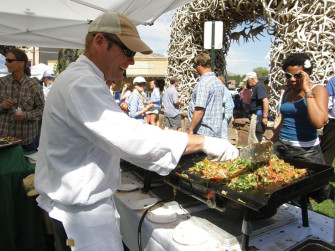
Palates & Palettes pairs art with flavor. Restaurants serve signature tastes while foot traffic flows from one art gallery to another. Often, the pairing of a restaurant and gallery may create a scene of its own with the addition of wine and music. This walk around downtown Jackson is a locals’ favorite, with good reason.

Two days later, the open-air, juried art fair, Takin’ It to the Streets, will feature Jackson’s finest artists selling their work to a public with discerning taste. With the fair now in its 16th year, the art that is provided to purchase on the Town Square during these few hours is both exceptional and varied in its composition. After the artists pull up their stakes, the party continues as the eateries, private chefs, and caterers that define the food landscape in Jackson have their time to shine during the Taste of the Tetons. A savory journey, it is accompanied by a wine tasting, silent auction, and live music.

14-jacksonholeshowcaseofhomes-074
JACKSON HOLE SHOWCASE OF HOMES
September 18-19 | 11am – 4pm

The Allure of the Valley

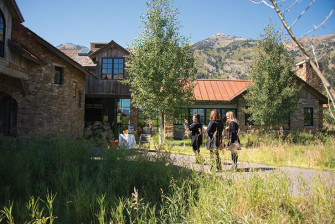
Away from the Town Square and hidden in the dramatic topography that surrounds Jackson, magnificent views are glimpsed from within some of the finest homes in the country. These residential spaces are often an ode to the craft of design-build; their artful interiors a reflection on sublime living.

A unique element to the FAF schedule, the Homestead magazine-hosted Jackson Hole Showcase of Homes will allow a limited group the chance to explore a handful of private residences during the festival’s final weekend. Representing the diversity of residential styles that reflect the New West, this self-guided, two-day tour of custom architecture and design also provides interaction with the team members who helped to create the spaces. Questions ranging in subject from site selection to architectural finishes to choices in art can be answered by the artisans and craftsmen on hand. This is a rare opportunity, and has the added appeal as a fundraiser for the charitable organization of each homeowner’s choice.

QD15-2012
QUICKDRAW ART SALE AND AUCTION
September 19 | 9am

Art in Motion

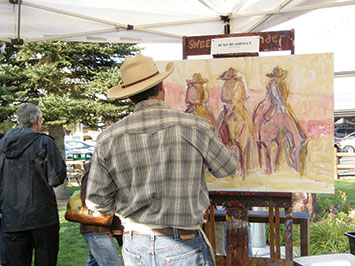
The QuickDraw Art Sale and Auction lends high drama to the proceedings during the last Saturday of the FAF. Artists of local, regional, and national caliber gather in the Town Square to accomplish a finished work in 90 minutes. As they attack their medium, art lovers are welcome to witness the process. With the artists fully engaged in their method, knowing that their art will be auctioned off upon completion, the suspense can be palpable.

Once the QuickDraw items have been auctioned to their new owners, the true highlight of the FAF is at hand: the sale of the featured artist’s original work. In 2014, featured artist Nancy Dunlop Cawdrey’s brilliantly colored portrait of a bull moose, done with dye on silk, sold for $50,000. Each year, these proceeds contribute to the largest revenue stream for the organization that continues to make the FAF a success—the Jackson Hole Chamber of Commerce.

The selection of Bill Schenck as 2015’s featured artist is surely an homage to how this annual celebration of Western art has grown. His reputation as an artist has only expanded since he designed the very first poster for the Jackson Hole Fall Arts Festival in 1985. Now, Schenck’s talent makes the perfect match for a tradition that continues to flourish with time.