
2025 Homestead Magazine

FREE

Homestead Magazine

ORDER NOW

Search Results for: living with nature

Boutique Property Management

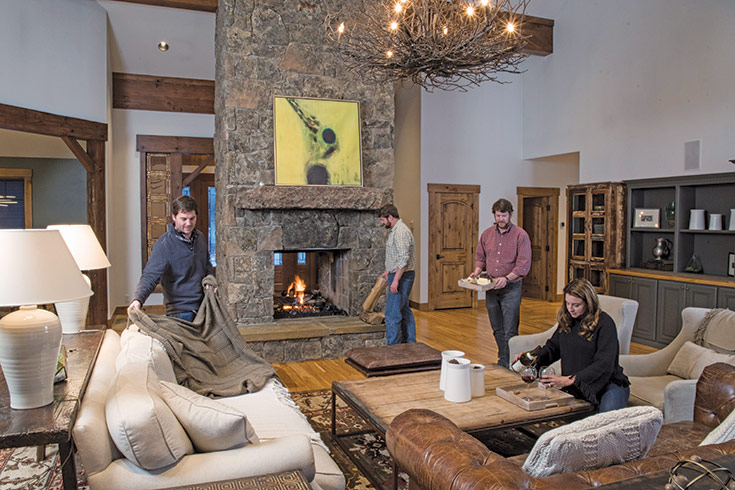
The Abode team: (left to right) Rob Alday, Wes White, Brook Parker and Rachel Alday are hands-on every step of the way.


LUXURY RENTALS
ABODE Jackson Hole
abodejacksonhole.com

Story By
Kelsey Dayton


Many luxury property management companies grow too big, too fast. Not Abode Jackson Hole. A family-owned business, it is committed to staying small and specialized, offering sophisticated service—simplified. The company’s top priority is property management; it doesn’t sell real estate. Clients know it is focused entirely on managing their properties.

“We do one thing and we do a really good job at it,” says Rachel Alday, one of the owners. She and her husband, Rob, started Abode in 2010 in Park City, Utah, after companies they’d hired to manage some of their properties had grown and lost the personal touch that had originally drawn their business.

The couple did everything in the early days of the business, including caretaking, maintenance and rescuing guests who accidentally locked themselves out of their vacation rentals. Even then, they were selective in their clients and calculated in their growth.

“We always knew we wanted to stay boutique,” Alday says.

The Jackson arm of the company, which the Aldays started in 2014, is managed by Wes White and Brook Parker, but the Aldays visit once a month from Utah. They want to maintain the family-company feel, where clients can interact directly with the owners.

Abode also offers a customizable concierge service, which includes transportation arrangements, pre-arrival grocery shopping and booking of activities, babysitters and dinner reservations.

Homeowners trust Abode Jackson Hole to manage their multimillion-dollar homes. But guests who stay in the homes also trust them with something valuable: their vacation time.

OPEN MEADOWS
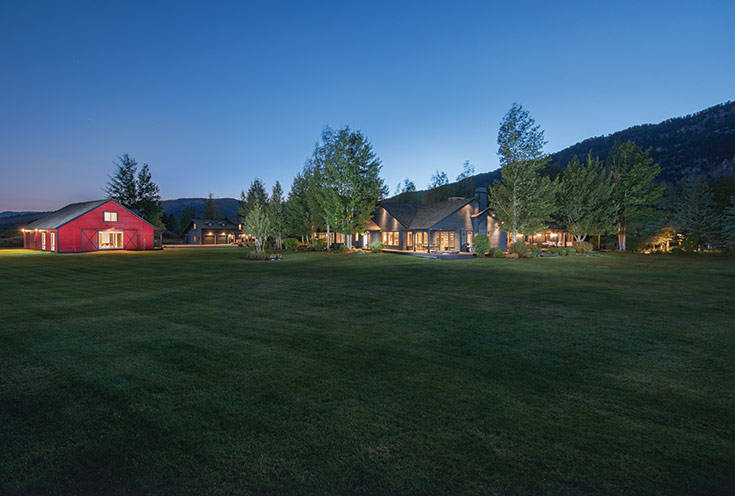
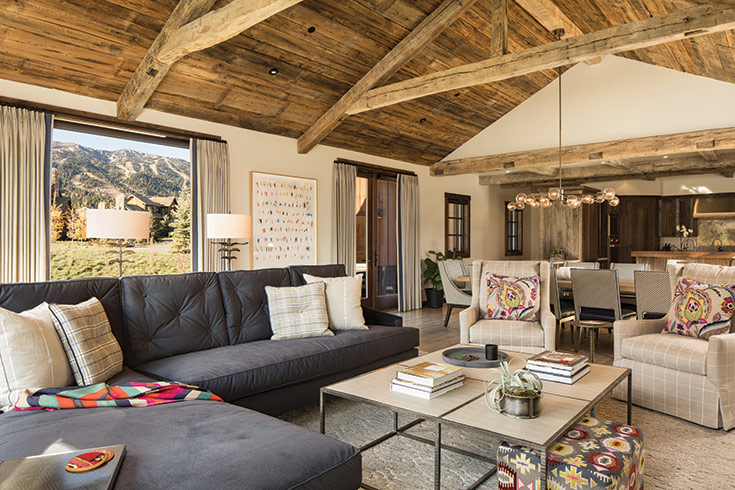
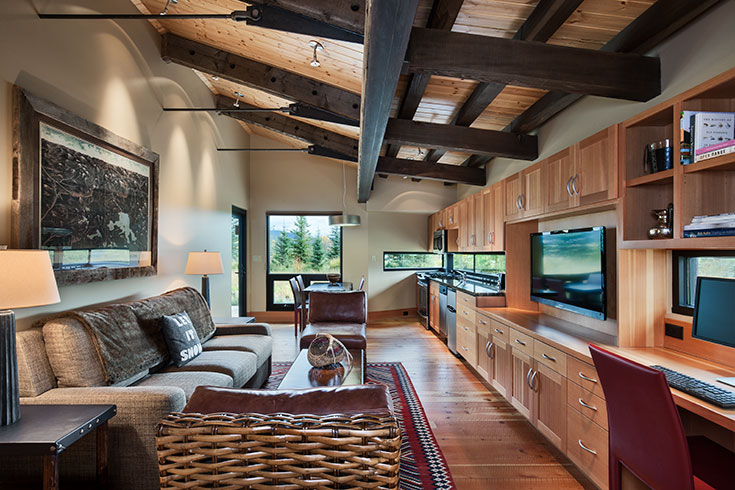
Abode at Open Meadows is a private, 11-bedroom ranch in the heart of Wilson. The estate includes a 5-bedroom home along with a 4-bedroom cabin and a 2-bedroom “barn” with a large office space for meetings and retreats. Sitting on 25 acres, there is plenty of room to spread out. The open floor plan creates an easy living flow. Cowboy chic style welcomes you to the Jackson Hole experience. A 5-minute drive to skiing too. It is all here for an amazing experience.

WILLOW HAVEN

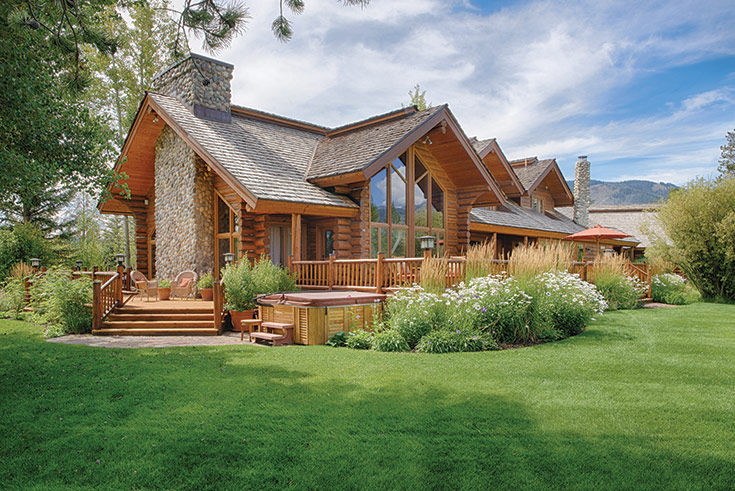
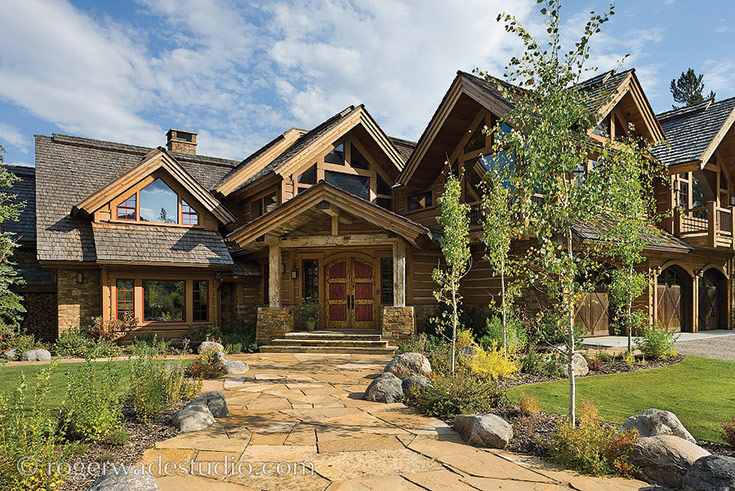
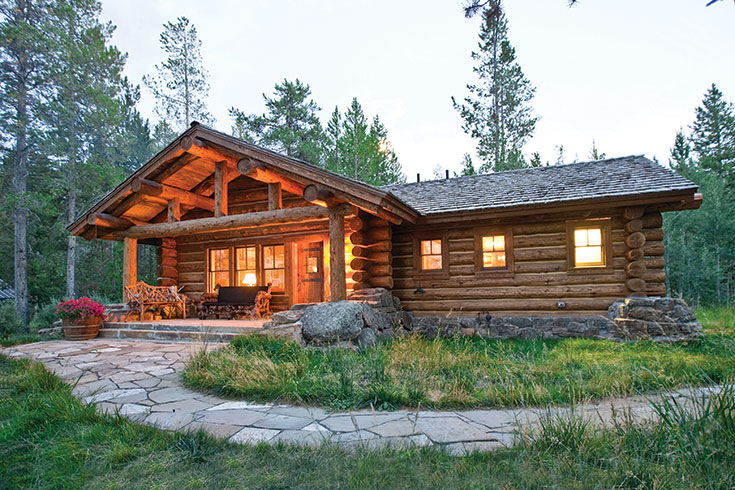
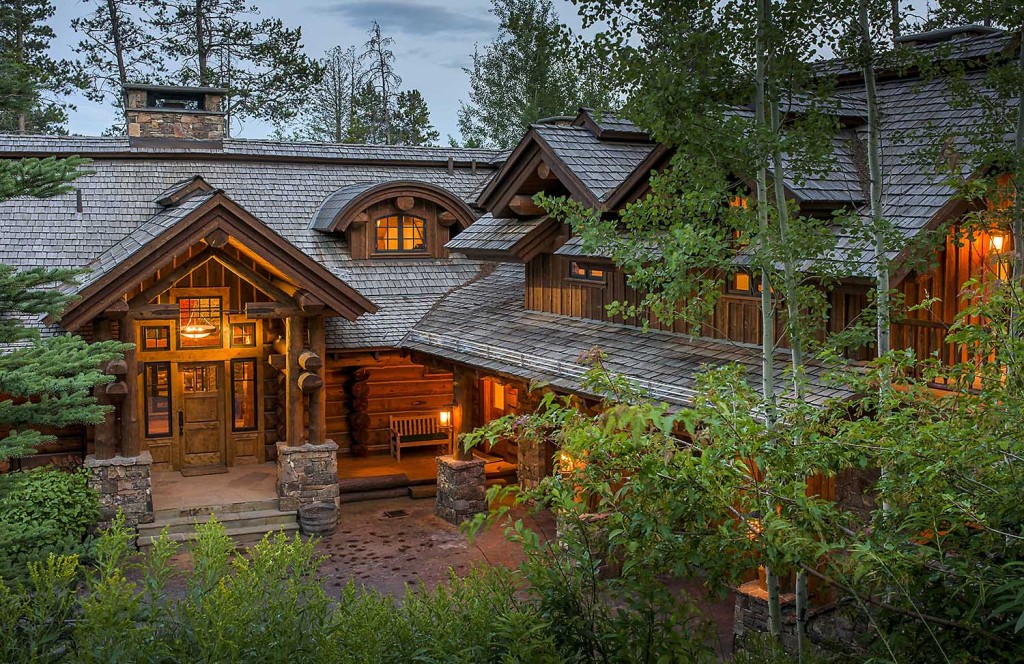
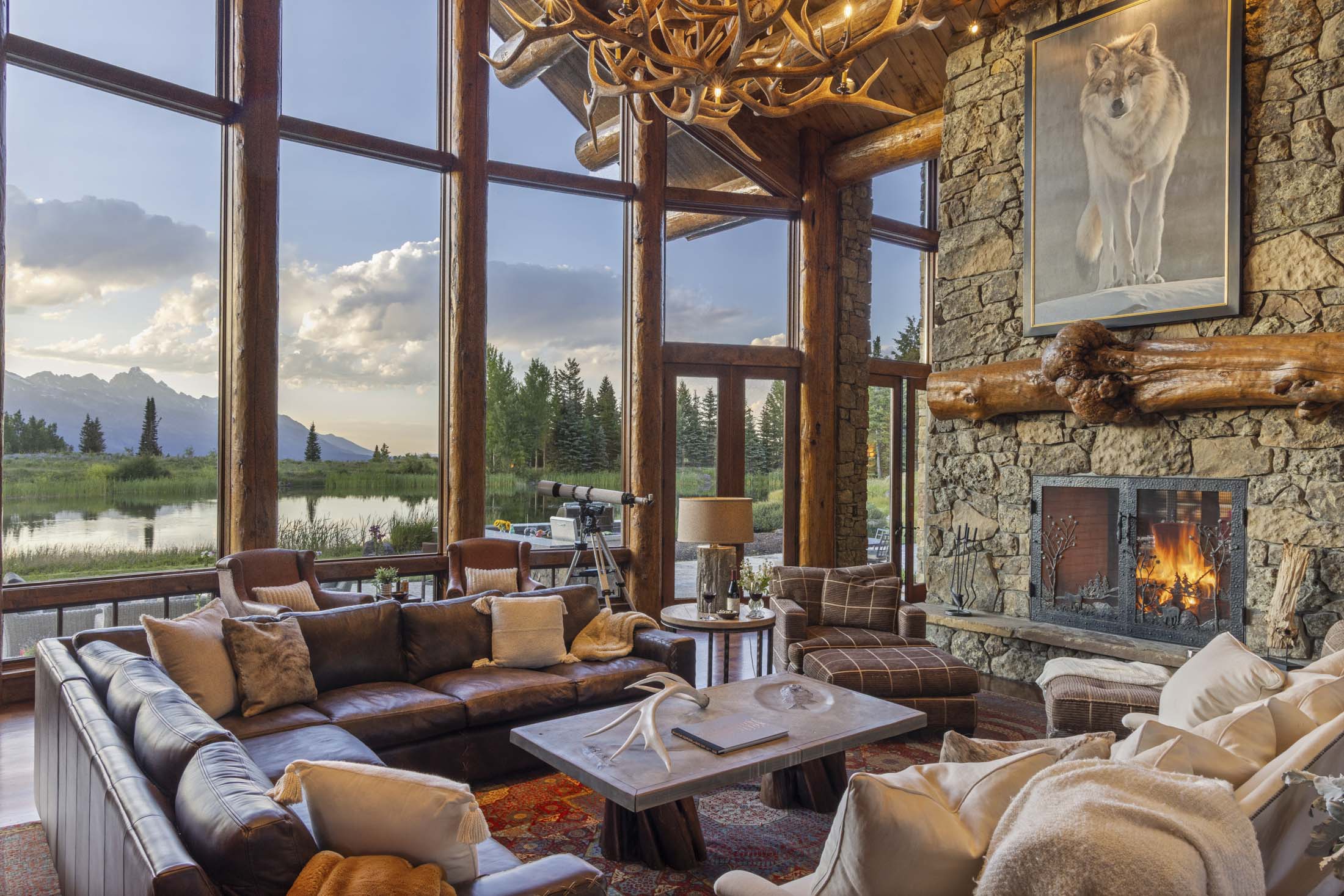
For a traveler who likes to feel at one with nature, nothing compares to staying in an authentic Wyoming log home. Sequestered far away from the hustle and bustle of city life yet only a 10-minute drive from Jackson town and the Jackson Hole Mountain Resort ski slopes, at Willow Haven you’ll discover the perfect balance of seclusion and convenience.

BLUE HERON — A WILDLIFE SANCTUARY
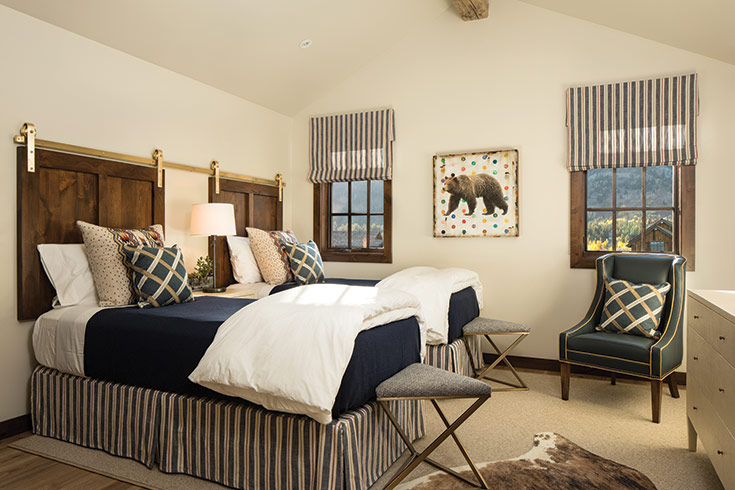
Nestled among willows and wildflowers, the Heron House is secluded luxury. The house has been furnished to the standards of a world-class, luxurious home with great taste and enormous attention to detail.

The Art Of Getting Everything

Exposed barnwood beams and reclaimed timber hold this “Western Bohemian” home together. Vibrant interior design brings it to life.


INTERIOR DESIGN
JACQUE JENKINS-STIREMAN
jjstiremandesign.com

Story By
Shannon Sollitt

Photos By
Tuck Fauntleroy


At client-based design studio Jacque Jenkins-Stireman, no two projects are the same. JJS doesn’t have a signature design style, but it does have a signature design approach: “Listen first, design with purpose.”

This fundamental philosophy, which makes for comfortable, livable, long-term properties, established the JJS team as one of the “oldest and freshest” design studios in Jackson Hole. From architectural consulting through interior planning, all the details of a custom-designed Jenkins-Stireman home are carefully thought out.

Jacque Jenkins-Stireman can “envision rooms coming together without blinking an eye.”

“Every single property has a unique ‘tailored’ finish,” says Director of Operations Ashley Cadwalader. “Most of the firm’s work is completely customized. We decided long ago that the traditional showroom approach didn’t work for our business model. Instead, we spend time with our clients, understanding their lifestyles and helping them realize their Mountain West dream.”

If there is one unifying theme in Jenkins-Stireman’s work, it’s juxtaposition. The firm is known for taking two seemingly opposing styles and piecing them together in ways that are at once stylish and innovative. Take Four Pines Cabin #14. This Shooting Star property “exemplifies sophisticated, whimsical design while embracing the Mountain West spirit and the homeowners’ lifestyle,” Jenkins-Stireman says.

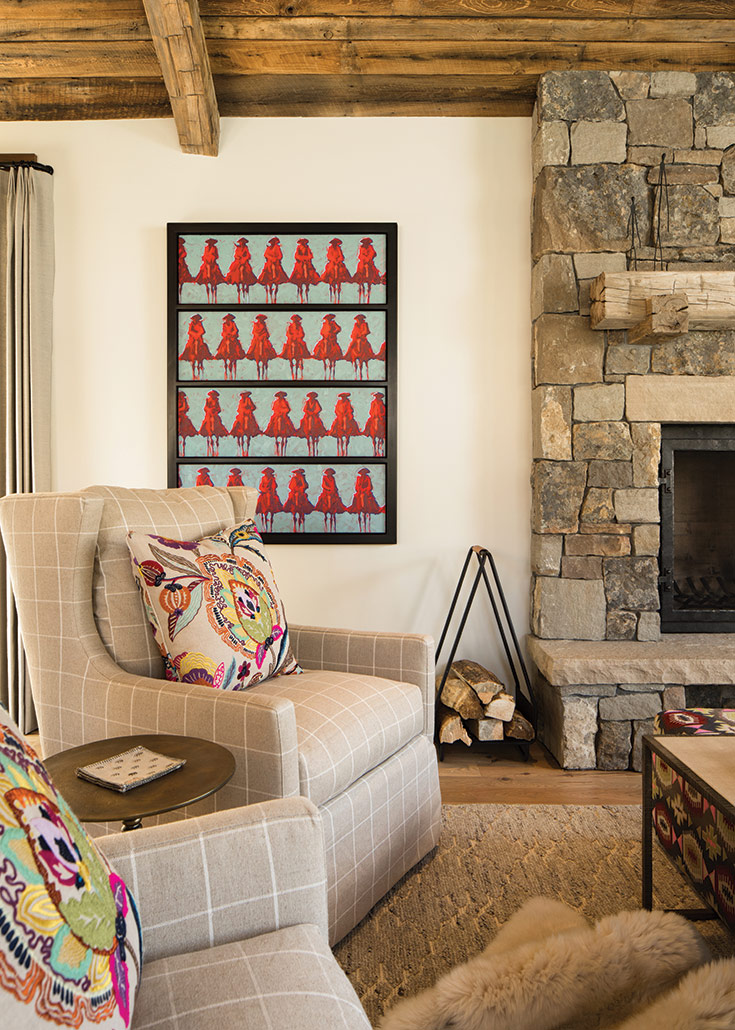
West meets Warhol: Accents like the pop-art style cowboy painting blend traditional Western themes with contemporary flare.

The accents, like reclaimed timber and cowboy paintings, “nod to Jackson’s mountain history,” Cadwalader adds, “but the furnishings celebrate the homeowner’s personality.”

Each room pops with color and vibrant patterns. The cowboy painting displayed proudly in the living room is far from traditional Western. Instead, it is a Warhol-esque pop-art piece that at once complements and stands out from the traditional wood-and-stone architecture. Jenkins-Stireman calls the home “Western Bohemian”—fitting for its Bay Area owners, who wanted a home that felt comfortable and livable, but also would have international appeal for prospective renters.

“Both can be challenging to accommodate,” Cadwalader says, but the JJS team thrives in such creative environments.

A Housewarming

a-housewarming-01

INTERIOR DESIGN
WRJ DESIGN
WRJDesign.com

ARCHITECTURE
RICHARD KEATING
KeatingArchitecture.com

LANDSCAPE ARCHITECTURE
VERDONE LANDSCAPE ARCHITECTS
VerdoneLandArch.com

Story By
Katy Niner

Photos By
Ed Riddell

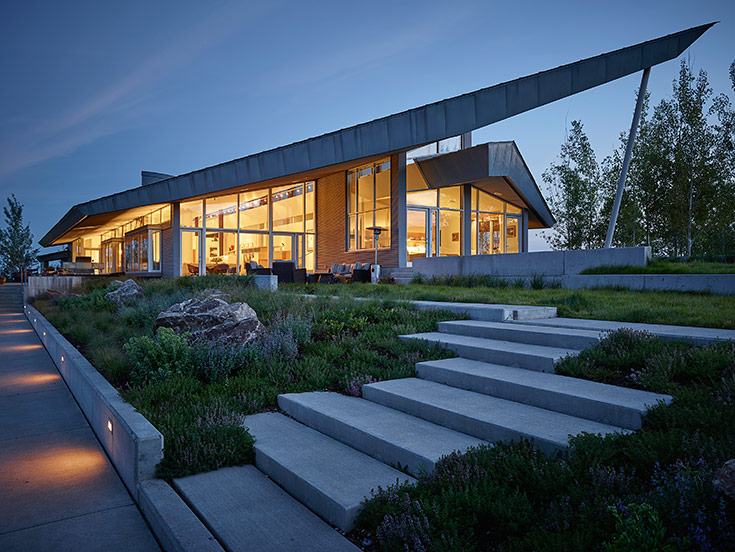
Is contemporary intrinsically cold? That was the concern of a couple when they found an architectural masterpiece in Alta, Wyoming. Designed by skyscraper architect Richard Keating, the striking structure felt like a stretch for them, their East Coast roots and their predilection for mission-style furniture. “I thought it was absolutely gorgeous, but the house was essentially all steel, cement and glass,” one of the homeowners says.

They turned to their friend Rush Jenkins, CEO of WRJ Design, for advice. His counsel ultimately became the deciding factor in their decision to purchase the 70-acre estate.

“Our caveat was: Can modern be warm?” the homeowner says. “Rush assured us that it can be. He told us: ‘I promise you I can make your house feel like a home.’ That’s what convinced us to pursue a purchase.”

From the moment Jenkins glimpsed the house—cutting a daring silhouette above the rolling Teton Valley—he knew it would become a capstone project. Drawing on his background in both landscape architecture and interior design, he believed the residence represented a singular opportunity to design a holistic schema in communion with the setting.

a-housewarming-02

“We consider every element in our design by envisioning a world that transcends the distinct components,” Jenkins says. “Everything must come together to create a calm, tranquil environment in harmony with their surroundings.”

Contextual complement

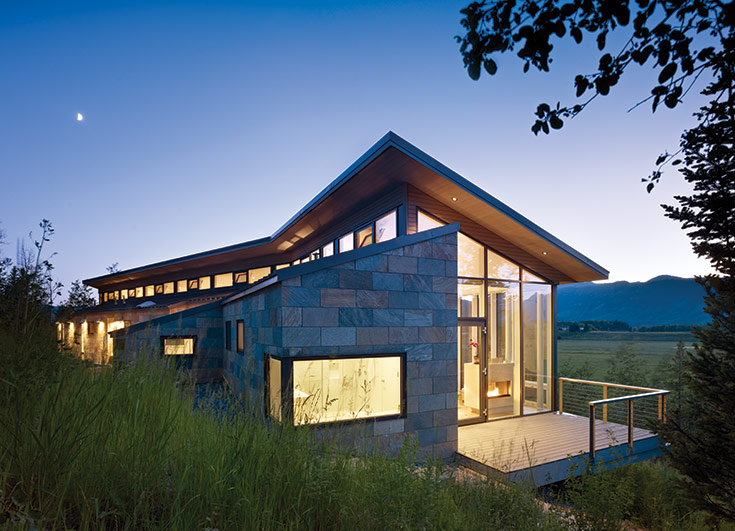
Honoring Keating’s angular architecture and its roofline reflection of the jagged Tetons, Jenkins imagined the interiors as a warm complement by channeling the wheat fields below the bold home. Also conscious of context, Keating had referenced Alta’s agrarian setting by using the corrugated metal sheathing silos and sheds to create a clean, minimalist stage for an interior vision.

Jenkins and WRJ Design Director Nida Zgjani rose to the occasion with an eloquent plan that proved worthy of the architectural statement Keating had made. Upon installation, Keating wrote Jenkins: “I wanted to relate how much I appreciate your firm’s work and the quality of interior design that the house never achieved in the prior owners’ time. … Please pass on to your team my appreciation and thanks.”

Harmony is the essence of WRJ—the foundation of our design philosophy.
~ RUSH JENKINS

Keating had sited the house in a particularly dramatic location, with endless views west and south. By his placement, the house serves as an amphitheater for nature: storms rolling in from the west, the wind whispering through the tawny waves of wheat, the fields changing hues with the seasons. “The house is immersed in the beauty of movement and seasonal change,” Jenkins says.

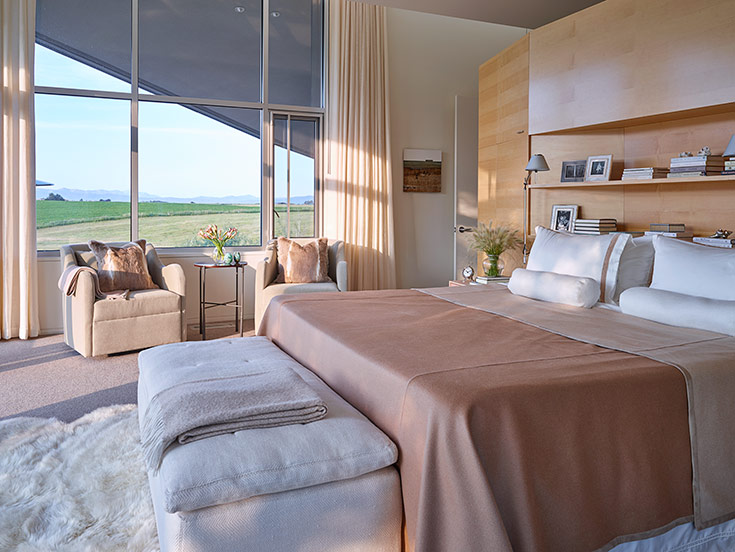
Thus inspired, he pulled this palette inside: the whites and grays of winter as upholstery, the wheat color from the fields as wood finishes, the azure of the endless bluebird sky as accents, the rich brown of the fertile soil as anchoring elements.

a-housewarming-03

“The architecture is obviously a statement,” Jenkins says. “The interiors must communicate with the architecture, but also the landscape. All three elements must speak to each other and, through this open dialogue, achieve an overall harmony. As a designer, I consider the full circle: the architecture, the landscape, the interior. If you get that dynamic right, the house feels harmonious. Harmony is the essence of WRJ—the foundation of our design philosophy. It’s an extraordinary opportunity to have a place where you can retreat and feel nurtured.”

Graceful sanctuary

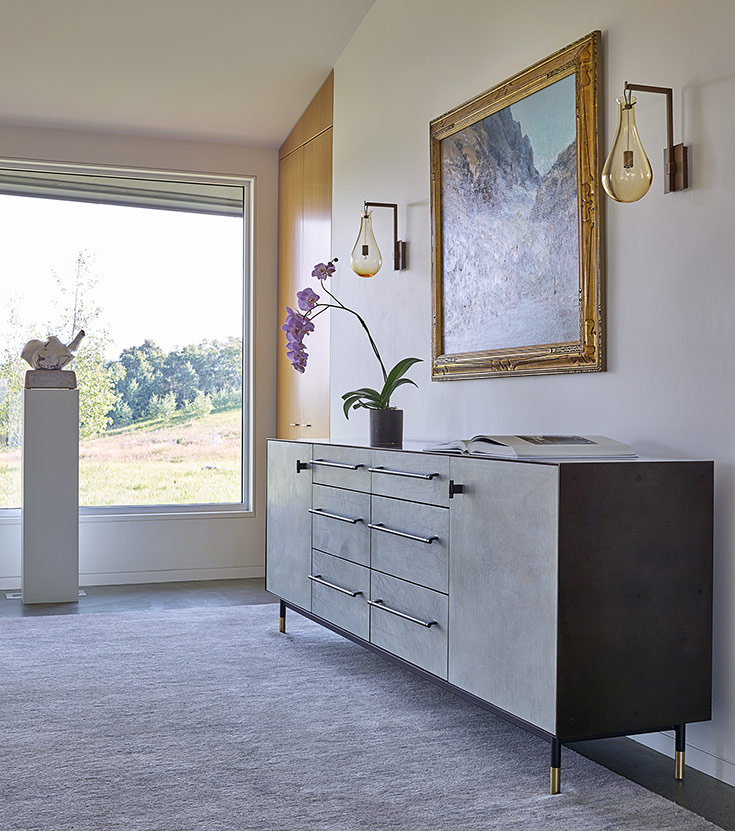
Attuned to art, Jenkins incorporated key pieces from the homeowners’ collection, including a landscape painting by their friend and Teton Valley neighbor Scott Christensen. The lustrous oil painting now lives within the entrance hall, its rich composition tying into the textured leather-and-bronze BDDW console—one of the first pieces picked for the house—and a pair of bubble sconces from Paris found at Ralph Pucci in New York. This serene vignette serves as an interior threshold, setting the tone for the rest of the house: for the majesty to unfold in the open living area, for the tranquility achieved throughout the interior. “Like the unfurling mystery of nature, the house reveals itself in moments,” Jenkins says.

a-housewarming-04

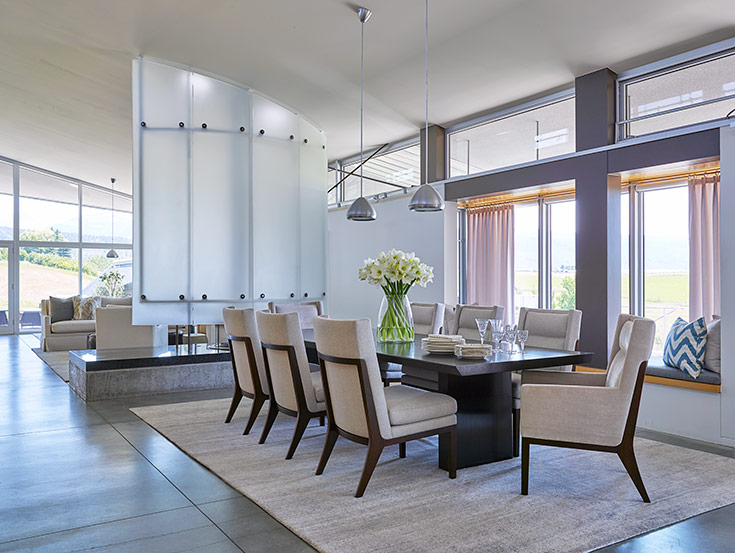
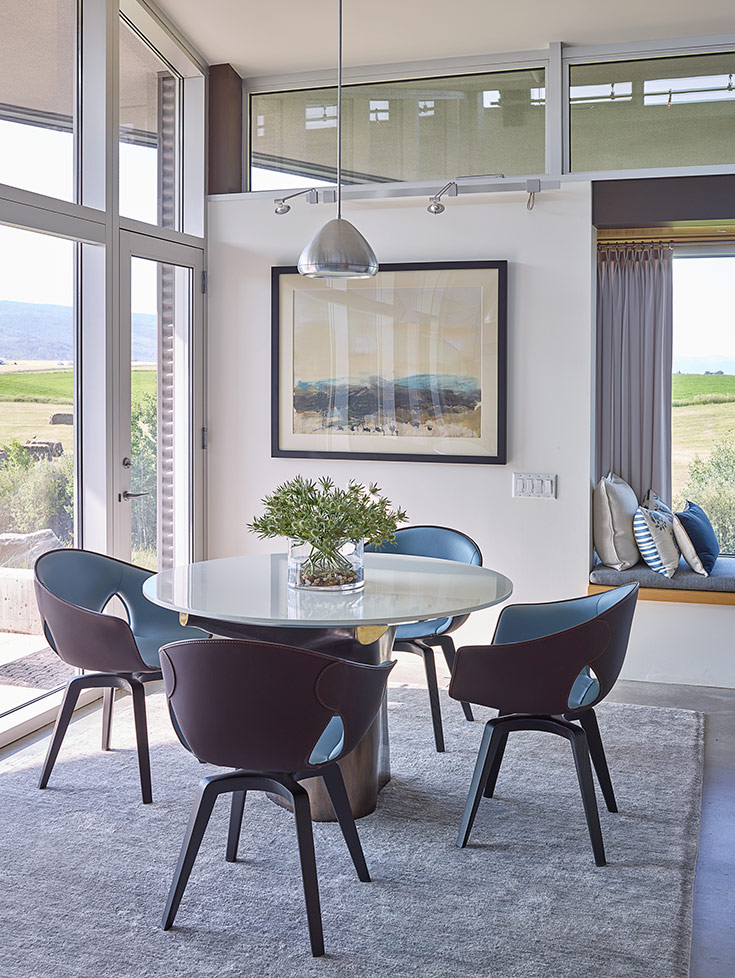
Generous philanthropists, the homeowners needed living spaces capable of staging charitable events with many guests, but also cozy evenings with their family. The resulting living room flows with grace between seating and dining areas. Honoring their more traditional past, Jenkins chose several key pieces that translate the gravitas of classic furnishings into sleek shapes, such as the Holly Hunt seamless dining table in a deep walnut and the June Ho game table with its solid bronze trunk and white top.

To complement the concrete floors, Jenkins blended in gray, bamboo-silk rugs by Ralph Lauren, low-pile masterpieces that nearly disappear. Rife with such careful pairings, the home feels harmonious. “Your home is your sanctuary, the place you go to escape the troubles of the world,” Jenkins says. “Your home should rejuvenate you.”

a-housewarming-05

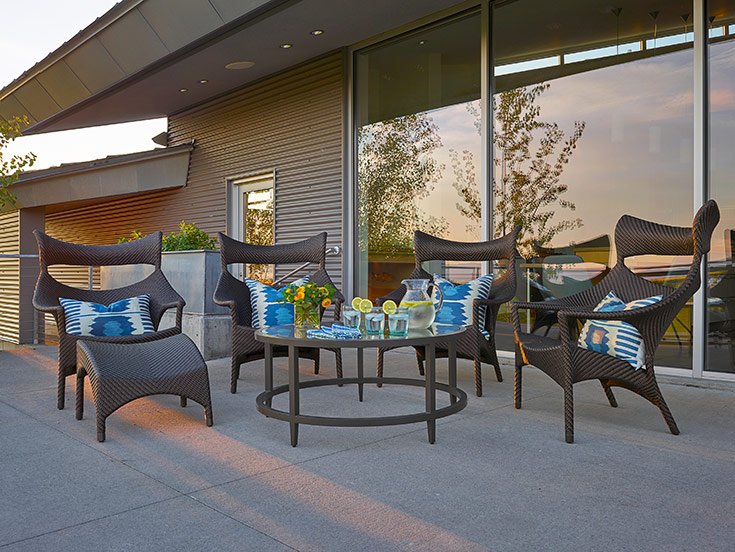
Two enclaves, in particular, issue invitations to relax and restore. The first is the circle of Janus et Cie handwoven armchairs on the veranda, ergonomic designs that encourage sinking into (no pillows necessary). Guests can sit, sink and soak up the vista with a cup of tea or glass of wine, listening to the owls perched on the fence posts, tracing the pathway that leads to a fire pit imagined by WRJ’s COO, Klaus Baer. The other memorable moment lives inside, in the window bays Jenkins upholstered and plumed with pillows from Turkey. Loro Piana silk-and-linen drapes frame the bay, creating the perfect place to page through a book.

Luminous landscaping

Echoing WRJ’s approach, Brannon Bleggi, of Verdone Landscape Architects, set out to ground and soften the concrete, steel and glass structure without tethering its transcendent architecture. “We wanted to make it seem like it was floating in a sea of native grasses and plants, so that you see bits of the concrete poking up above, like waves lapping against a boat.” This sense of soft movement honored the structure’s form while simultaneously better integrating it with its surrounds. “The big thing was to showcase what the site had to offer,” Bleggi says.

The original overgrown shrubbery had made the house feel dark and cold, so Bleggi prioritized light. Rather than break up the geometric lines of the structure itself, he allowed filtered sunlight through aspen stands to soften the angles.

a-housewarming-06

The element of water was further cultivated by revealing the brook to the south, a natural waterway previously heard but not seen. “We went in and surgically plucked out and poked holes within view of this mass of willows. We opened up peekaboo views into the brook which changed the whole liveliness of the house.”

Like WRJ, Bleggi considered texture and palette. “The native plants played well with texture, while allowing sprinkles of color to rotate throughout the seasons.”

Your home should rejuvenate you.
~ RUSH JENKINS

Such intrigue endures: Having lived in the finished home for several years now, the homeowners feel entirely at peace in the space. The warmth they hoped to see in the final product was actually achieved throughout the process. “All projects like this are fun, but there’s always a certain amount of stress involved,” the homeowner says. “This project turned out to be just fun. Rush and Klaus removed the stress for us.”

a-housewarming-07

Natural Integrity

natural-integrity-01
McIntosh residence
Story By
Katy Niner

Photos By
Bruce Damonte + Roger Wade +
Paul Warchol

A series of female patrons has defined modern architecture in Jackson Hole as a spirited solution to the challenges of Teton properties. Over the past 80-plus years, their timely patronage of visionaries has ushered a modern infusion in Jackson.

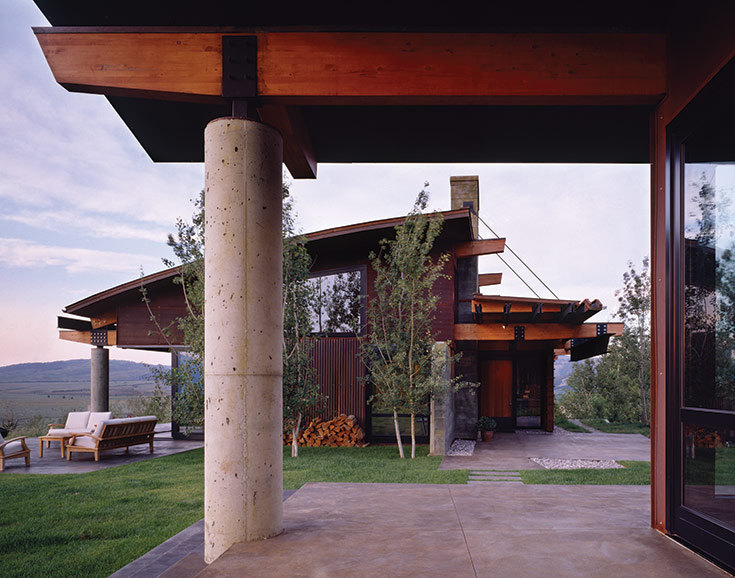
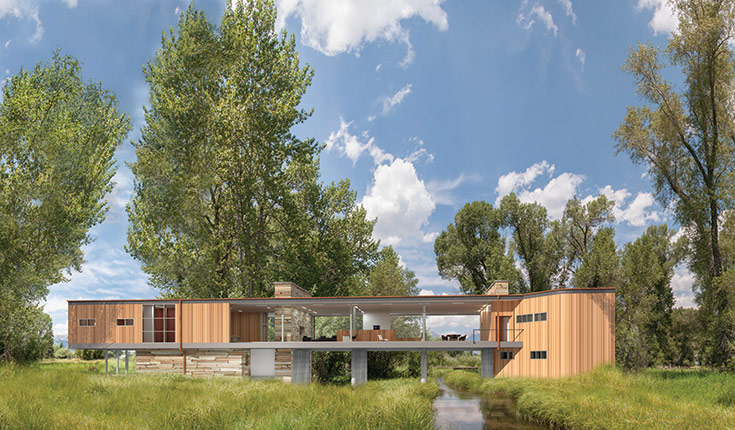
In the 1930s, Helen Resor recruited German architect Mies van der Rohe to create a summer house on her property at the foot of the Tetons. Responding to the rugged surrounds, he designed a conceptual and physical bridge between the site and his structure by perching the living space on cement pylons above a stream and sheathing the pavilion in floor-to-ceiling glazing bold moves at the time which made for complete visual immersion in the landscape. Redefining the relationship between architecture and nature, the modernist pioneer established a new vernacular in the valley by offering a contemporary silhouette as a quiet complement to the spectacular. In his lexicon and legacy, the Snake River site dictated early modern, clean lines à la his Bauhaus background.

You are impressed with how the mountain range meets the valley floor in a very abrupt landing that creates a horizontal emphasis.

~ stephen dynia

natural-integrity-02
Craighead residence

Although the building never came to full fruition, van der Rohe’s concept remains an inspiration to valley architects, particularly in the case of two seminal structures. Like Resor, Sophie Craighead enlisted a new-to-Jackson architect, Stephen Dynia, to design her Kelly home; Doyen McIntosh recruited Casper Mork-Ulnes to realize her residence on West Gros Ventre Butte. In both instances, Craighead and McIntosh extended their connection to place into empowerment of their architects, allowing them to deploy their talents to most effectively respond to the strictures of the sites. Both homes thus honored the landscape itself through responsive structural solutions that proved to be vanguards for Jackson Hole.

Uncompromised views

The Kelly property drew Craighead and her husband, Derek, from Missoula, Montana, to Jackson in 1996. Set on the hill above town, the spectacular site contained a traditional post-and-beam home, which they initially intended as a summer house. They spent a year in it before deciding to remodel. Having worked on an office project with Dynia, a simpatico former New Yorker, Craighead sought his expertise. Her East Coast roots translated into a traditional English countryside style, whereas Dynia had a distinctly modern aesthetic, having worked at Skidmore, Owings & Merrill in Manhattan. “I had never done anything modern,” Craighead says. And Dynia had yet to do a significant residence in Jackson.

The couple decided that the property deserved a responsive, dramatic design. “Not just any structure would fit this lot,” Craighead says. “It’s a powerful spot and it deserves a strong, powerful house.”

Before committing to a new construction, the Craigheads traveled to their rustic house on a remote island in the Caribbean. Completely open to nature, the house makes no delineation between outdoors and indoors. They realized they wanted the same in Jackson. “No line, no separation: We wanted the outside inside,” Craighead says. They returned from that trip and set Dynia loose to design in situ. “We pretty much gave him carte blanche,” she says. “We told him: ‘We think you are talented. Take it from here.’”

natural-integrity-03
In 1943, flooding washed away the under-construction dining hall Mies van der Rohe designed for Helen Resor, forever stymieing the project.

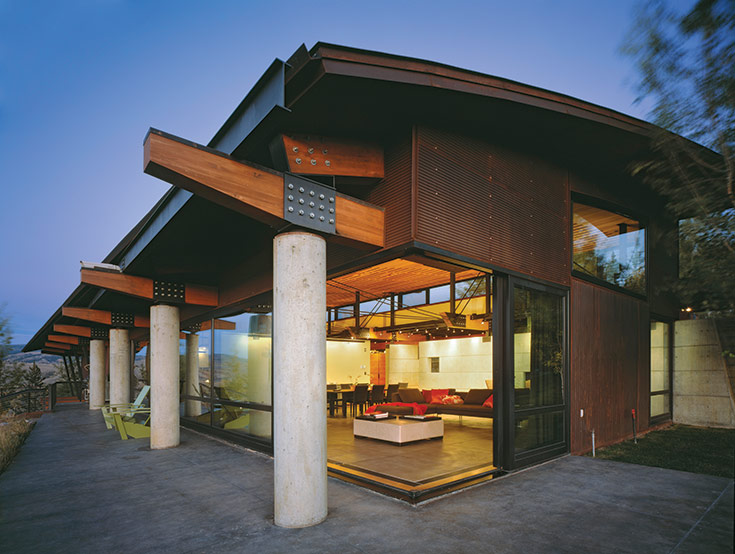
Channeling the natural eloquence of van der Rohe, Dynia distilled the primary characteristics of the site into a structural schema: Elevated above the valley, facing the Tetons, the property encompassed the alpine drama. “You are impressed with how the mountain range meets the valley floor in a very abrupt landing that creates a horizontal emphasis,” Dynia says. That horizontality—“that desire for the building to somehow parallel the mountain range”—drove the organization of the house into a grid, with each space existing as “its own lens on that view.”

natural-integrity-04

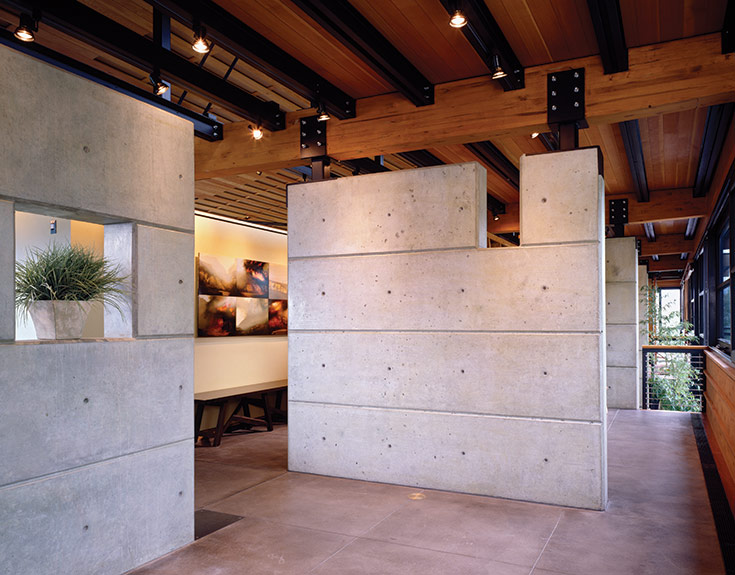
The grid grew from a series of 16-foot bays, each framed by a concrete slab and column. Because the walls do not extend to the perimeter of the house and the rooms are only separated by pivoting or sliding doors, the windows and ceiling are continuous, which means “getting the most out of the view from every room,” Dynia says. This dynamic simultaneously achieves an intimacy throughout the open layout. The grid also achieves a gravitas which he traces back to the grounded ethos of traditional log homes.

To this day, Dynia sees the Craighead home as his crowning achievement. “The house was trying to be stable and heroic by that grid,” Dynia says. “I still consider it, within the context of my work over the last 20-plus years, as the most important house because of its integrity. The structure is evident, and the way it exists in the landscape is effective. I don’t know if I have done another project with as much integrity—and it has to come back to Sophie herself.”

natural-integrity-05

Steep integration

McIntosh had experienced firsthand the connection to place fostered by a log house, having decamped from California to live in a Crescent H log cabin. In 2007, she decided to live out her interest in contemporary architecture, so started scouting properties with realtor Mercedes Huff. After much searching, she found a parcel perched on a 30-degree slope overlooking the Walton Ranch. Before contacting an architect, she spent time getting to know the site, unfolding a chair in different spots. Enraptured by the panorama, she set out to honor the site with a house integrated into its surrounds.

McIntosh knew Mork-Ulnes as the son-in-law of her oldest friend. A bit wary of segueing personal into professional, she was impressed by his international portfolio spanning San Francisco and Oslo—work reminiscent of Renzo Piano. In his initial presentation, Mork-Ulnes referenced Mies van der Rohe’s Resor house as a benchmark by which he would measure his modern contribution, particularly in terms of the relationship van der Rohe forged between the stream and the structure. McIntosh was sold.

natural-integrity-06
The horizontal orientation of the Craighead house—inspired by the abrupt landing of the Tetons on the valley floor—unfolds in a natural flow, “a continuum of interior and exterior spaces that gives you a sense that you are in the landscape, but also the comfort of a sense of intimacy,” Dynia says.

Thus inspired, Mork-Ulnes embraced the rugged lot, exploring every inch before selecting a building site. Instead of imagining a bulldozed pad at the hilltop, he chose to nestle the house into the slope, an orientation that “maintained the quality of the site,” Mork-Ulnes says.

Mork-Ulnes’ low-slung design follows the natural contours of the landscape, a continuous volume that kinks at the corner to honor the profile—a key moment suggested by McIntosh’s son, Montgomery, a landscape architect who also added several native pocket gardens within the house’s skinny silhouette. Even the roofline follows the slope, titling with the angle, rather than away from it, which “helps compress the view a bit by creating a horizon line and framing the sky,” Mork-Ulnes says. Beyond aesthetic alignment, the parallel pitch provides natural lighting and ventilation: A row of clerestory windows facing uphill funnels in morning sun and allows the climbing breeze to course through the house.

natural-integrity-07

Mork-Ulnes achieved simplicity amid the complications—as is his way, as was McIntosh’s desire. Eschewing a signature style, he follows a signature approach: By embracing and responding to each project’s challenges, he comes up with unique, often surprisingly simple solutions. “We let the challenges surrounding the project inform the architecture,” he says. “We let the challenges be the solution.”

This charge to integrate architecture into nature proved foundational for the young architect. Arising during his early-career throes of commercial projects, the McIntosh home served as his first foray into rural, residential design. “It was a predecessor for a lot of the work we are doing now.” As an avid outdoorsman, he says, “I’ve always had a keen interest in touching the earth lightly. Working in Jackson Hole was a dream commission.”

Six years since its completion, McIntosh remains enamored with her home. As she had hoped, the house exists in harmony with its habitat. “It’s part of the property,” she says. “It’s not obtrusive. It lets the outdoors in.” She describes it as a “seasonally changing painting,” cued by light and nature. “I’m just so enthralled with the view.”

Natural connection

Craighead and McIntosh both empowered their architects at pivotal points in their careers. The McIntosh commission came only a year after Mork-Ulnes had founded his own firm. “Doyen was a pretty amazing client in terms of the trust that she put in me at a relatively young age,” he says. “She had thought a great deal about this house, but she wasn’t prescriptive in any way. Even though we had challenges to deal with, she gave us a lot of creative freedom in terms of how to resolve the whole house. It was a fantastic experience working with her.” A glowing review mirrored by McIntosh.

For Dynia, the Craighead residence proved seminal as well, providing him with an opportunity to manifest an integrity of place and person. “The challenge and fascination of having the confidence of the owners allows for that kind of emotional response to the site,” he says. “I let the right solutions emerge from the schematic design, the right balance of strength and subordination to the site, a nuanced balance between the power of the house and the power of the landscape.”

Dynia equates the character of the house to Craighead’s character. “It’s determined and powerful, thoughtful and considerate,” he says. “It’s a commentary on the nature of the person.” House and human both ameliorate the experience of environment. “Sophie has been so effective in understanding the values of the community and helping it,” Dynia says.

Both projects testify to the integrity of place attainable when clients of integrity are involved. “If there is commonality, understanding and mutual respect, the product speaks to that condition,” Dynia says. The homes endure as homages to their rare settings and their visionary occupants.

The very characteristics that drew Doyen McIntosh to the site—the drama of the steep lot, the way the view spreads out—became an architectural conundrum, ultimately resolved through responsive design. “It all became quite logical,” Mork-Ulnes says. “In the end, the house became an honest response to building on a steeply sloped site and the desire to capture the views.”

Welcome Home

welcome-home-1

EVENT
Showcase of Homes

STORY BY
Jenn Rein

PHOTOS BY
Latham Jenkins

During the Fall Arts Festival’s final weekend, the Homestead magazine-hosted Jackson Hole Showcase of Homes features multiple properties that have hit the sweet spot: a marriage of finely honed design and expert craftsmanship. With talent culled from local builders and design pros, the resulting spaces exist beautifully in concert with Mother Nature’s gift.

MORE THAN MEETS THE EYE

A successful showcase is also a philanthropic one. Each year, the individual homeowners choose a nonprofit that will benefit from the proceeds. The 2015 showcase homeowners chose to support the Jackson Hole Land Trust, Grand Teton National Park Foundation, and The Nature Conservancy.

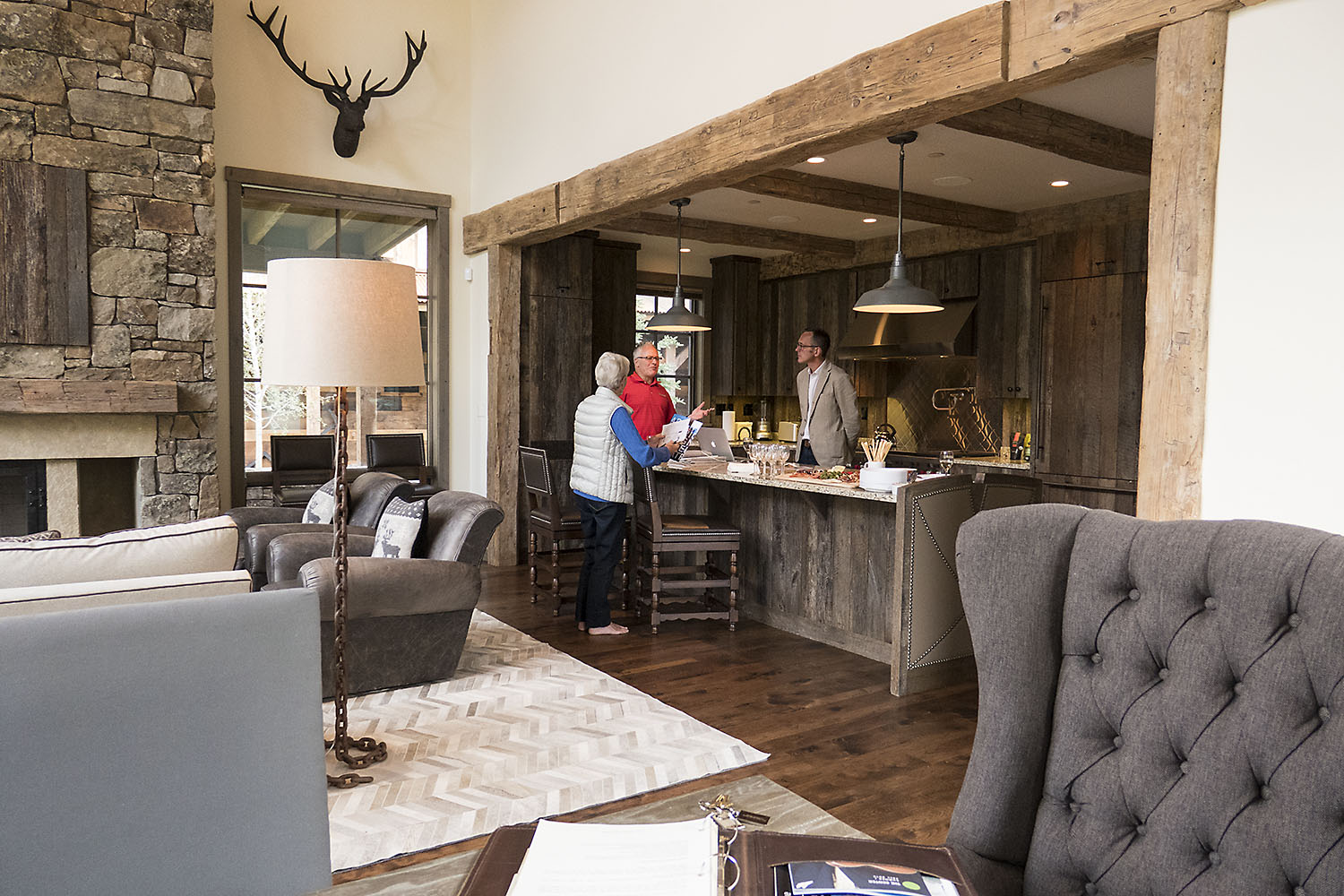
The Showcase of Homes offers a unique twist for patrons as well: At each residence, the design and build professionals who created it are on hand to discuss the property and their work. Take the time to explore your curiosity regarding structure and design while engaging with experts.

CHASING THE VIBE

Following the map of homes around Jackson Hole offers a chance to soak in the narrow gap of autumn that occurs at high altitude. Lit with yellowing aspens and turning cottonwoods, the hills take on a special kind of magic.

At each location, these views can be enjoyed with small bites or wine. Rockin’ Dogs and Ice Cream cart won the hearts of 2015 attendees as the culinary pairing to beat at the Ridgetop Pavilion on North Gros Ventre Butte. From driveway heaters to automated shades to remote cameras, the “living technology” team at Xssentials has put its impressive expertise to full use at this modern marvel of a home. Teton Heritage Builders constructed the contemporary residence.

Homestead Looks Forward to its Annual Residential Showcase

welcome-home-2
To the left, architect John Carney chats with guests at the home he designed for his family off of Fish Creek Road. On the right, representatives from Xssentials and Teton Heritage Builders host a stop on the tour at North Gros Ventre Butte.

EXPLORATION IN DESIGN

The 2015 showcase took this writer on a journey in aesthetic contrast. Snake River Sporting Club’s Tall Timber Cottage proves that Western interiors can get a fresh take. An elegant reflection of WRJ Design’s signature style where heritage meets contemporary, the design choices displayed in this home bear the surrounding landscape in mind.

Ellis Nunn Architects’ Teton Village Retreat features ski-in/ski-out access to the legendary slopes of Jackson Hole Mountain Resort. Western finishes—Doug fir, dramatic stone masonry, and custom ironwork—reflect the manner in which this architectural firm has made its name.

Within a forest sanctuary in Wilson, Fish Creek Compound exemplifies Carney Logan Burke’s style and serves as the personal residence for founding partner John Carney. His own design, it is accented by the use of bonderized steel and board-formed concrete, while a natural stream flows through the property, providing the tranquil soundtrack.

SEEDS OF INSPIRATION

The 2016 event will take place on September 16th and 17th, promising further peeks into innovation and tradition. For all future showcase explorations, coordinator Megan Jenkins hopes the takeaway for an attendee will include “exposure to the unexpected.” She explains, “To have homeowners open their doors like this is so generous, and the added bonus of meeting the team that helped to build the home—it puts this tour over the top for anyone who hopes to explore design possibilities and stretch their own perspective.”

For more information and to purchase tickets, visit jacksonholeshowcase.com

Three Takes on the Guesthouse

three-takes-on-the-guesthouse-1
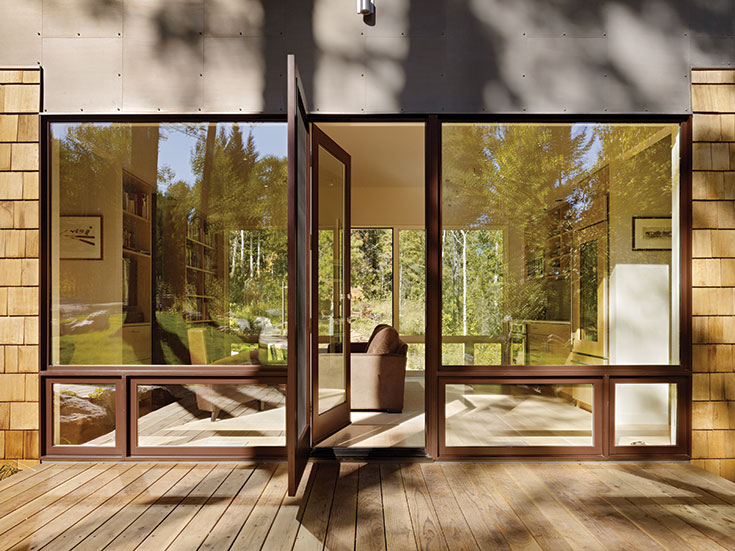
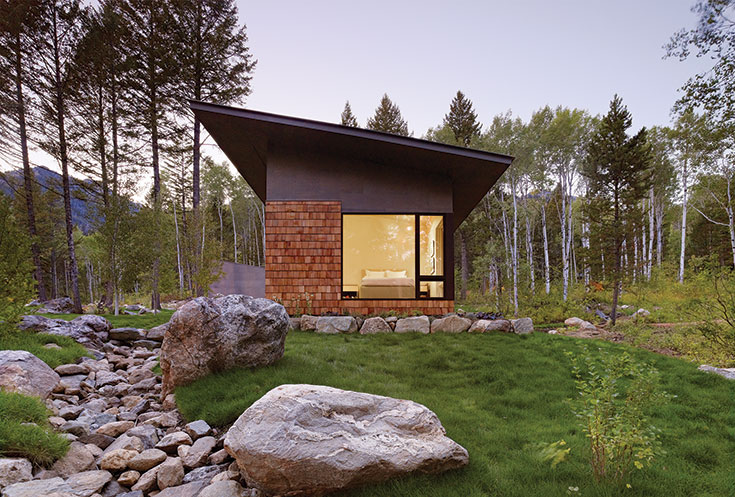
“It’s a see-through house,” remarked one of John Carney’s clients when he visited the couple’s Fish Creek Compound and saw their guesthouse for the first time. The architect clustered two bedrooms and bathrooms on either corner of the slim structure, leaving the central living space transparent and sensorially open to its setting.

Story By
Kirsten Rue

Photos By
Tuck Fauntleroy
Matthew Millman
Roger Wade

When you live in Jackson Hole, friends and family will want to visit you. That’s simply a fact. And, indeed, for many homeowners, expanding families are exactly what lead to the need for a place to house them—comfortably, in privacy—on one’s own property. Enter: the guesthouse. Constrained by zoning requirements that usually limit a secondary building on one lot to 1,000 square feet or less, Jackson Hole architects must find ways to work innovatively within the restraints of size and site to create harmonious buildings that meld with the main house and the lifestyles of family.
Here are three altogether different—altogether successful—approaches.

three-takes-on-the-guesthouse-3
The guesthouse complements the original home in material selection, orientation, and shape. “The roof slopes are all evocative of the main house—extending them off to the east. It’s the same vocabulary, the same organic flow,” says Ward.

1 | THE JUMPING-OFF POINT

Carney Logan Burke principal John Carney’s guest home began with a wooded lot on Fish Creek Road. An irrigation ditch slanted through the property and a rich bouquet of aspen, pine, balsam, and fern—plus Sleeping Indian views— gave the lot a sense of lightness and boreal texture that differed from a dark pine forest. “We just fell in love with the site,” Carney says.

Usually, a homeowner begins first with the main house, but in this case, Carney and his wife, Elaine, began with the guest home. From the beginning, they’d referred to the project as their “Fish Creek Compound,” so a variety of structures were always in the master plan. The two walked the site frequently, sometimes surveying from a boulder to get a real sense of the lay of the land. “We knew we wanted the stream to play a major part in the house,” he says.

three-takes-on-the-guesthouse-2
“You can’t just open up your whole house, but we try to have this balance between shelter—feeling protected—and being able to have views and this connection to nature,” Carney says.

three-takes-on-the-guesthouse-5They settled on an orientation that runs against the contours of the sloped site rather than with them. After a series of designs, the team narrowed it down to one building spanning 16 feet in width, crowned by a simple, angled shed roof. Goal No. 2 was to introduce the sensations of the forest as much as possible. “We came up with the ultimate design that came out of the hill as a long, thin building and is totally symmetrical—completely open in the middle with the living-dining-kitchen—so you just see light through it,” says Carney.
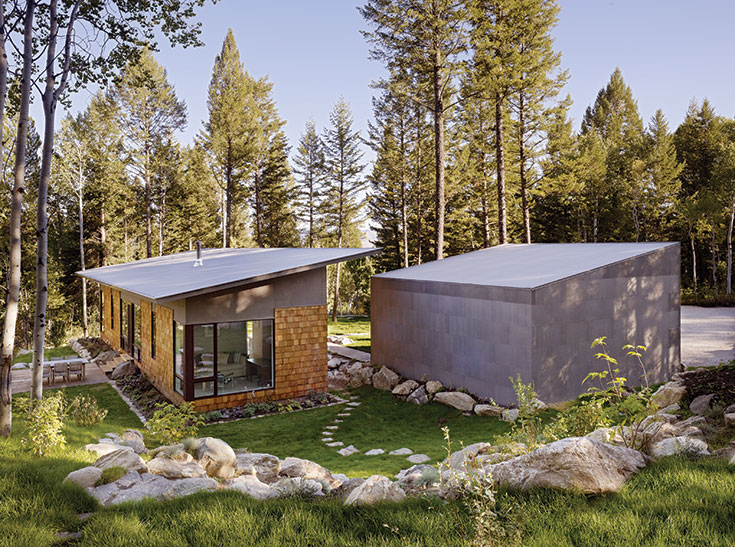
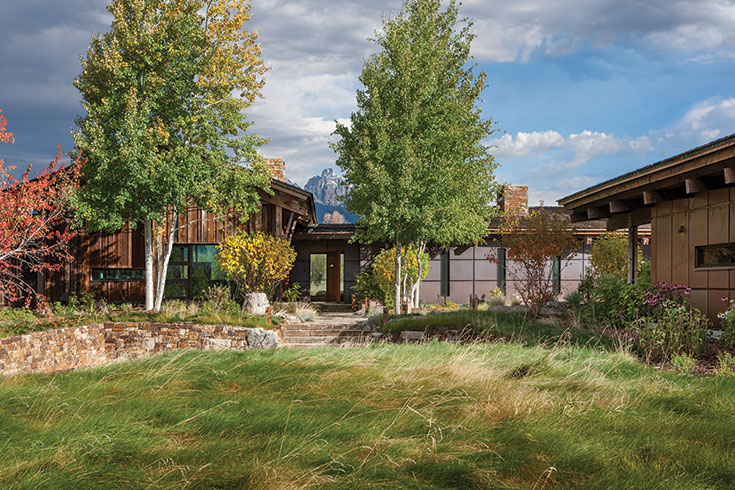
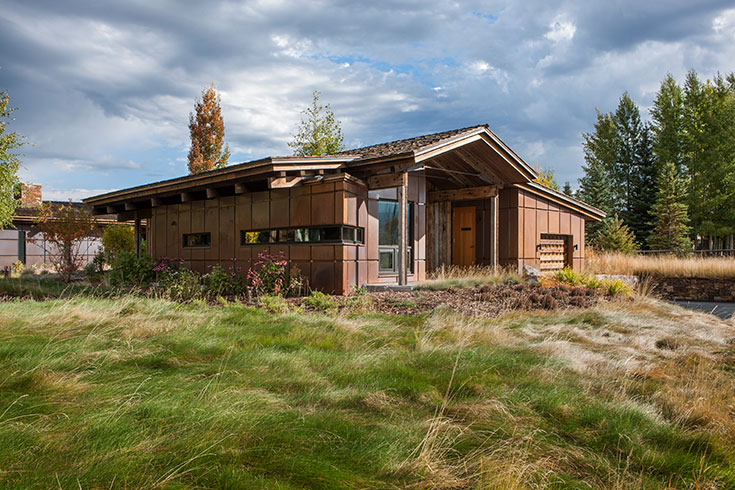
The guesthouse feels anything but small. Sun paths brushing the walls and floors add grain and depth to the airy primary living space. Because the Carneys planned to live in the house themselves while designing their main house, they installed more closet space in the bedrooms that mirror each other on either side of the column and devoted a full 12 feet to the open kitchen lining one wall.

“We just had a very disciplined approach to design. All the windows and doors stop at 8 feet. All the windows go all the way to the ground, except for the punched openings in the hallway and bathrooms.”

three-takes-on-the-guesthouse-4

The materials of the guest home and detached garage are also simple: board- formed concrete, cedar shingles, bonderized steel, and glass. The slant of the roof and a 6-foot overhang on all sides distribute snow loads and protect the structure, despite the roof’s thinness.

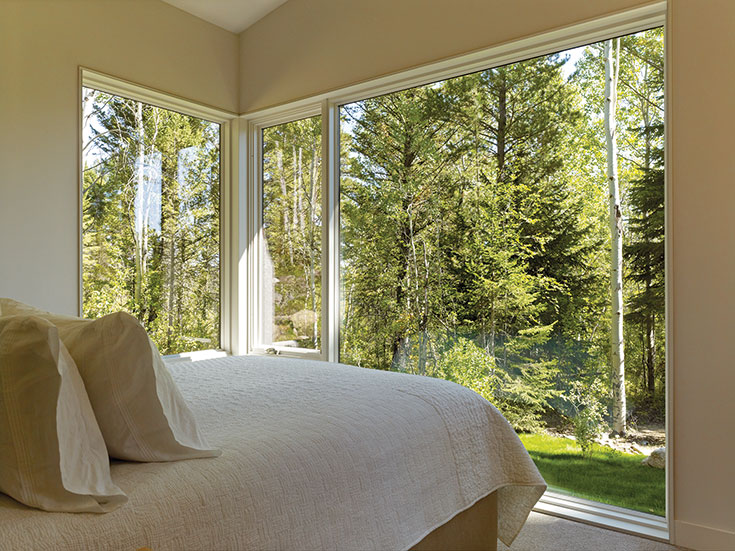
“I think the connection to nature is the thing that people love about the house,” Carney says. “When you’re in those corner bedrooms, the window is less than 3 feet from the foot of the bed. You really feel like you’re camping in the woods.”

The Carneys lived in the guest home for three years while their main house was designed and constructed—now, they have ceded it to visiting guests and grandkids, but its lessons in focused living continue to resonate.

“I think that having the discipline of designing for small spaces makes you better even when you’re not constrained,” Carney says. The dictum to be reductive in the selection of materials, to simplify spaces, and think about what a structure should do—what it should welcome. All of this contributes to the serendipitous quality the home has, perched at the crook of a stream in the bucolic woods.

2 | THE LATER ADDITION

For this guest home designed by Ward + Blake Architects on 3 1?2 acres of open prairie land, the story is a classic one: After seven years, the homeowners’ family simply outgrew the main house. “Our goals were to finish what was an embryo of a design idea when we originally designed the house, which was to complete the existing courtyard,” explains architect Tom Ward. As a result, they envisioned a design that would in fact cut about 4 1?2 feet below the existing grade of the property to create the driveway that approaches the guesthouse, leaving pristine view corridors undisturbed.

three-takes-on-the-guesthouse-6

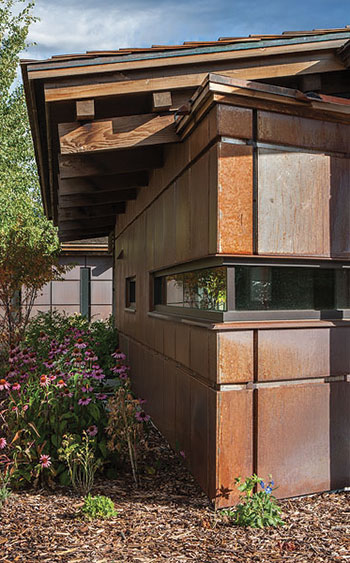
Ward + Blake considered the guest home and existing home as a unified pair, and selected the same reclaimed- wood exteriors and hand-fabricated steel cladding for the guest home; over time, the unfinished steel will mottle to a patina that calls back to the fac?ade of the primary residence.

“If you’re working with a small amount of floor area, there’s a need to unify the spaces to create a sense of spatiality—break the functions into discrete rooms,” Ward says. Ward + Blake combined living room, office space, dining, kitchen, and entry into one simple, linear shape, which served the dual purpose of completing the square of the original compound’s design. Cabinetry of vertical-grain Douglas fir helps to demarcate the spatial transitions and give a sense of seamlessness to the great room’s flow. This creates one big, lifted space that “you can transition through at your own pace.”

The guest home’s entry forms another hub where doorways to bedrooms and bathrooms are located—the rest simply stretches forward in front of the eye, inviting an evolving generation of family living.

three-takes-on-the-guesthouse-7

If you’re working with a small amount of floor area, there’s a need to unify the spaces to create a sense of spatiality.”
– Tom Ward of Ward + Blake Architects

three-takes-on-the-guesthouse-8

3 | THE CABIN HOMAGE

One historic national park structure in Yellowstone inspired this log cabin guest home addition—the Madison Museum designed by Herbert Maier in 1929 and since designated part of a National Historic Landmark. The homeowners fell in love with the National Park Service rustic look, and Ellis Nunn Architects delivered on a classic, 1,000-square-foot, two-bedroom, one-bath cabin, complete with massive stone corners and a stone fireplace.

three-takes-on-the-guesthouse-9

As project architect John Kjos explains, the firm made many intriguing discoveries as they updated the 1920s aesthetic for 21st-century occupants. “Instead of peeling the logs,” he says, “which can give you a uniformly light-colored look,” they chose to use a skip peel. The process of prying off the bark instead of peeling it is “more like the techniques of 100 years ago—that helps achieve a really rustic, authentic feel.”

Another detail that lends historic authenticity is the use of real wood windows instead of aluminum-clad panes. However, Kjos says, “I went for a thin roof profile,” which is an advantage of modern building in contrast to the museums that served as the cabin’s inspiration. Historically, the need to batten in from the elements meant much thicker and more substantial roofs on log buildings.

three-takes-on-the-guesthouse-10
The cabin Ellis Nunn Architects designed has two porches—one facing south and one facing north. The team placed the larger rocks at the base of the structure, decreasing in size as they got closer to the building. Yellowstone National Park builders and architects often used rubble at the base of the buildings they designed to organizationally tie them to the landscape.

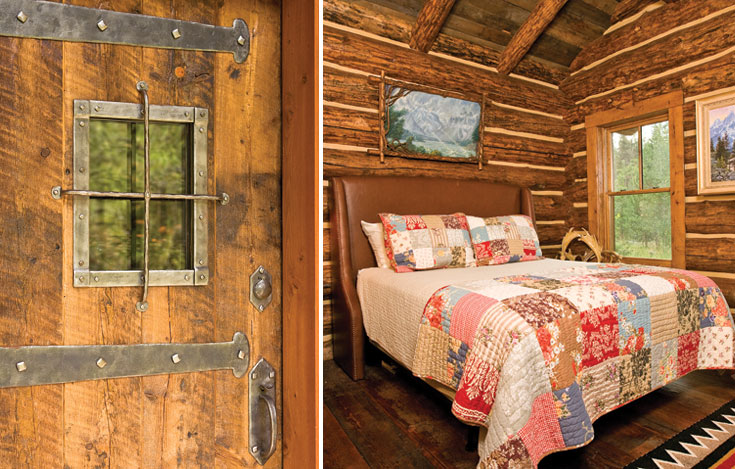
Ceilings of reclaimed wood with a small gap between the ceiling and the wall logs; Montana fieldstone (in place of the rhyolite that Yellowstone builders once sourced on-site); and a beautifully crafted door made by Yellowstone Traditions continue the guest home’s aesthetic of rugged warmth, perfectly suited to its wooded setting. In fact, the master bedroom was voted one of “20 Coziest Bedrooms” on Houzz.com.

Bigger? Not always better—as these three ingenious interpretations of extra living quarters so amply demonstrate.

What’s On Your Walls?

Today, we’re excited to introduce a guest blog by Jennifer Prugh Visosky, the owner of local interior design firm Grace Home Design. We’ve long been fans of Jennifer’s funky, fresh style in a variety of Jackson Hole residential projects. In our “A Home in Tune” Dream Home piece from the 2015 issue, we covered an extensive remodel she completed in partnership with Jackson Hole Contracting. In that home, fantastic wallpaper selection made a big impact. To learn more, we asked Jennifer to weigh in with tips and snippets from her portfolio. The message? Don’t fear introducing new textures to your home designs. It just might bring the music of your room to life.

In the mountains, there is an odd, yet understandable, aversion to wallpaper. Perhaps designers don’t want to offend the “majestic views,” or maybe they feel that pattern and texture will overwhelm log walls and reclaimed wood floors.

The truth? Wallpaper is perfect in the mountains, and (when done properly) it actually compliments all of the beauty outside our front doors.

Think about it. The outdoors are a riot of color. Mother Nature isn’t drab and brown, she’s bright, fresh and a little garish—greens, reds, yellows, purples and blues mixed with texture and grit. When we want to “bring the outdoors in,” wallpaper just makes sense.

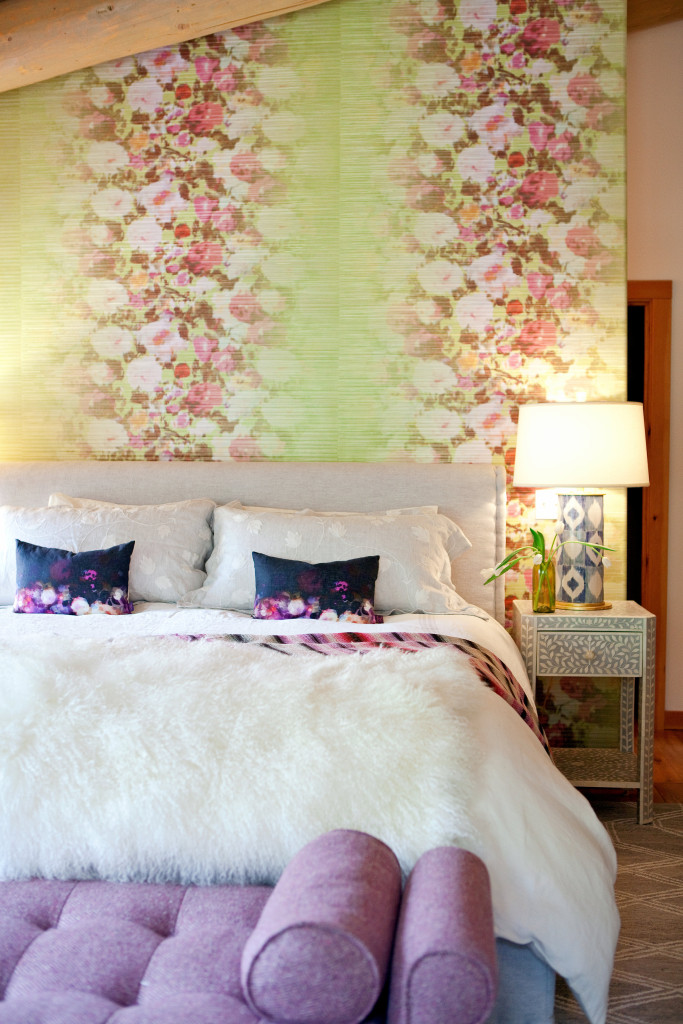
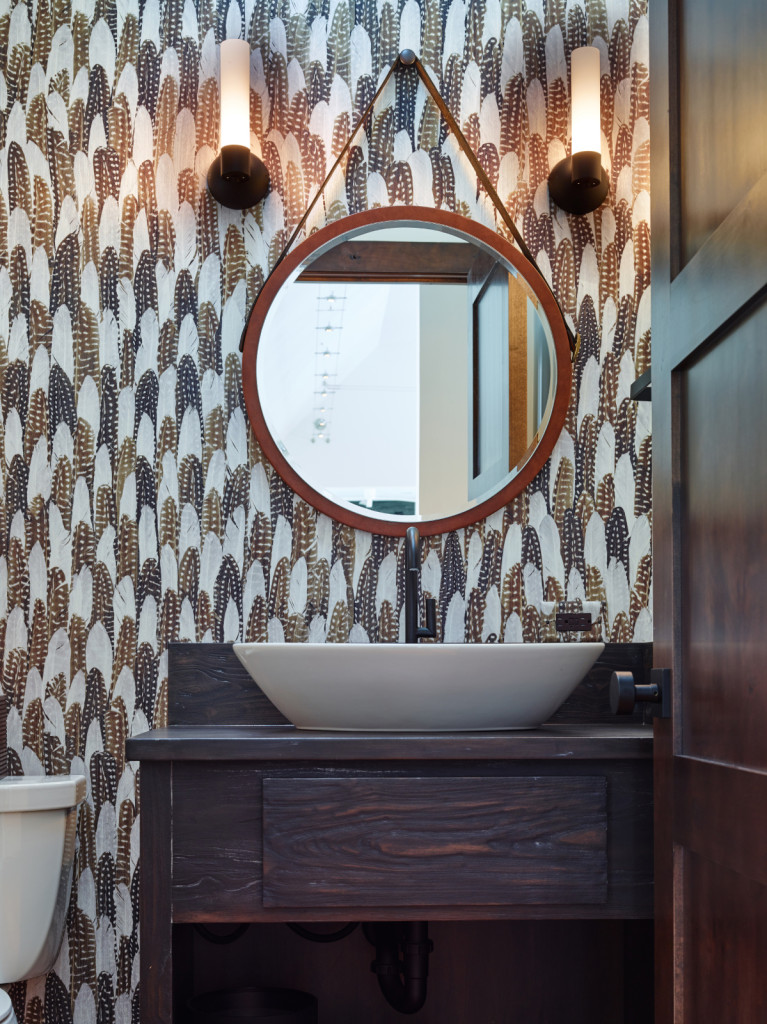
Of course, you don’t want a wall of dark, moody blooms next to a wall of windows looking out onto the Tetons, but a feather pattern in a powder room? Yes please. Or how about a bedroom with a headboard wall of flowers?

The key is choosing a pattern that is reminiscent of your surroundings. You don’t want palm trees in Jackson or aspen trees in Key West. But whimsical, colorful, bold? As long as the pattern or texture or color makes sense, run with it.

The only other rule? Create calm among the patterns by pulling out some of the colors for accents, furniture and lighting to create a classic, yet thought-provoking balance.

Here Are a Few Examples of Mountain-Appropriate Wallpaper

Headboard Wall
Headboard Wall
This master suite is a study in balance—girly without veering too close to “man repeller” sweet. The depth of the acid-green floral Elitis “Opulence” wallpaper requires that the rest of the room be steeped in calm with solid fabrics and layered neutrals. A dusty pink herringbone wool daybed keeps the room from floating away on pastels, fluffy pillows, and dainty furniture.

Powder Room Grace Home Design
Wallpaper in a Powder Room
This exceptional feather paper from Elitis makes the powder room a complete showstopper. Not only is the color palette spot on for a mountain home, the pattern is a bold twist on traditional mountain design. I love using wallpaper in powder rooms because it transforms a potentially dull space into a jewel box.

Contemporary Child Grace Home Design
Grown Up Little Girl’s Room
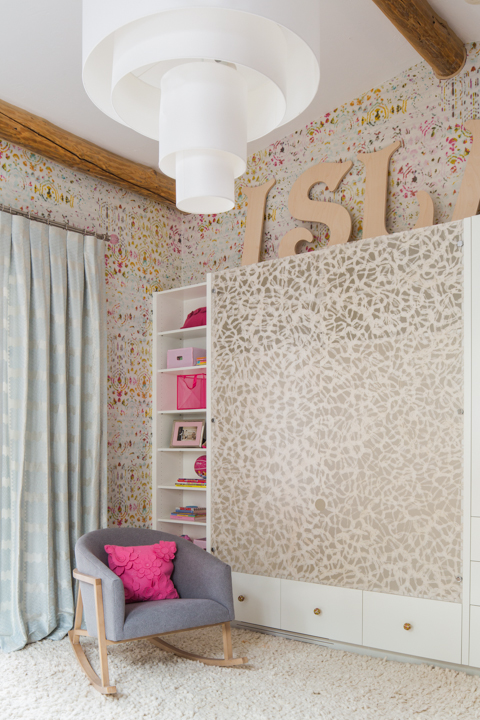
The two patterns in this space are a combination of metallic and cream, and a mottled pattern of bright pinks and yellows on a cream background. Again, the motif nods to mountain neutrals, with a delicate splash of color…kind of like a Wyoming meadow dotted with bright flowers. With so much pattern in the space, we kept everything else simple and neutral with a couple of pops of bright pink to bring out the color in the walls.

My Favorite Resources
With all of the advances in printing technology today, there are endless possibilities for wild designs, super vibrant colors and 3-D texture. This is truly artwork for your walls. Here are a few of my favorite new resources that will make you reconsider wallpaper.

Elitis: Excellent patterns, colors and innovative ideas.

Wall & Deco: Love using their outdoor wallpaper for bringing pattern to a bathroom or outside space.

Flat Vernacular: Truly some of the best patterns in the business with witty and often humorous prints.

Your 4 Walls: This company designs great papers with a lot of texture and more neutral colors. If you are looking for understated, this is the place to shop.

Flavor Paper: Edgy, urban and very artistic. This company has some really outstanding patterns that you won’t find anywhere else.

About Grace Home Design & Life’s Too Short For Beige

Life’s Too Short for Beige is a fresh, feisty, audacious resource for vibrant, colorful, playful living. It’s a place to ignite your passion for design, get you excited about discovering new ideas and then show you how to infuse these ideas into your own homes.

Grace Home Design is the brainchild of Jackson Hole interior designer Jennifer Prugh Visosky.

Interested in guest posting on the Homestead Blog? Contact us!

The Jackson Hole Showcase of Homes Raises Funds; Inspires Patrons

Imagine your home inspiration Pinterest board brought to life.

This is the access that Homestead Magazine’s Jackson Hole Showcase of Homes gives ticket holders each year during the Fall Arts Festival: entree into multiple outstanding residences in diverse regions of the valley; a full team of professionals on hand to answer your questions about just how that home automation system was installed, how those light fixtures were custom-made, or how the architect designed the perfect space to suit the family’s needs; and as an added bonus, the opportunity to give back to the local community via your ticket sales.

For the team at Homestead, the third annual self-guided home tours made it clear that this event has become a staple of many home-and-art lovers’ yearly calendar. We were honored to welcome back many repeat patrons and professionals, all while bringing new, truly special homes to our ticket holders.

Note the rustic reclaimed barnwood at the Lodge at Fish Creek.

“The home tour is one of my family’s favorite events of the [Fall Arts Festival],” wrote one returning patron. “Our tradition is to spend Friday visiting the homes and having lunch in between visits. I honestly can’t think of any improvements–the homes this year were very different in style & location and we loved seeing each of them. Had never been to the Fish Creek area and especially loved seeing that new area. Thank you for all the hard work put into the home tour – we wouldn’t miss it!”

Another returning patron with a second home in Jackson noted that she met her interior decorator at the first Showcase of Homes event; now, she was back, bent on grilling John Carney, architect and homeowner at the Fish Creek Compound, about the finish on the treated cement floors in his home. Another group of friends tackled their tour via bicycle, enjoying a leisurely day of pedaling in Teton Village. Whether participants planned a full afternoon of exploring the valley, or spread their self-guided experience out over more than one day, the beautiful fall weather and spectacular destinations made for a plethora of newly discovered design resources.

From serenely wooded lots to ski-in/ski-out solitude; contemporary open floor plans to rustic lodge seclusion, the six homes presented during the Showcase of Homes presented a vital cross-section of Jackson Hole living. At the Snake River Sporting Club, two residences with interiors by WRJ Design were featured, allowing for a breathtaking drive along the river with fall colors on full display.

For the professionals involved in designing, decorating, and building each home, the tour has retained its value as well.

“It was an honor to have two Carney Logan Burke houses on the Showcase of Homes 2015 Tour. I only regret that I could not be in two places at once. It was truly gratifying to hear all the positive comments about our house on Fish Creek Road, and the appreciative ‘ooh’s and ah’s’ as visitors entered the living room and saw the view of the Sleeping Indian. I was impressed at how thoughtful and thankful the nearly 200 people who came were that we had opened up our home,” recapped John Carney of Carney Logan Burke Architects. Showing his personal residence and guest house meant that patrons received a rare glimpse of how an architect translates his own design principles and lifestyle into fully realized vision.

Teton Heritage Builders and Xssentials, who partnered to host a stop of the tour at the Ridgetop Pavilion, hope to show another home in a future tour as well.”Teton Heritage Builders was happy to have had two homes on the tour this year: the Ridgetop Pavilion and Teton Village Retreat (designed by Ellis Nunn Architects). It was a pleasure to have spent two fantastic days treating the 200 plus folks who joined us to a hot dog and a great home tour. The compliments were well received and we look forward to the potential of partnering again with Xssentials on another home for the Showcase tour. Thanks to all the folks that made this a charitable event to remember.”

The third boon to enjoying the Showcase of Homes? That would be the over $6,000 raised to benefit non-profits chosen by our homeowners. These donated funds can now be put to good use in the local community via the important conservation work of the Nature Conservancy (Wyoming Chapter), the Jackson Hole Land Trust, and the Grand Teton National Park Foundation. For a community where landscape and living space are so intimately connected, it makes sense to give back to the very organizations that preserve this precious–and limited–resource.

The Homestead Magazine team is now hard at work producing our next annual print issue. Often, our Dream Homes provide a sneak peek into the roster of exclusive properties that will be featured during upcoming Showcase of Homes tours. Stay tuned by reading back issues and subscribing on our site today!

Thank you for joining us. We hope to see you next year.

Learn more about the six homes and professionals featured in the 2015 tour: Ridgetop Pavilion, Fish Creek Compound, Lodge at Fish Creek, Fairway Haven, Tall Timber Cottage

Teton Village Retreat

Jackson Hole Showcase of Homes

If you’ve ever wondered what it would be like to experience a magnificent home with the slopes beckoning outside your own front door, the Teton Village Retreat offers a glimpse into a masterpiece.

Situated on a wooded hillside lot with ski-in/ski-out access to world-class Jackson Hole Mountain Resort, the Retreat has been expertly designed by Ellis Nunn and Associates to use quintessentially Western materials such as oversized Douglas fir rounds and imposing dry-stacked stonework both within and without the home. Inside, captivating features such as an ornate log and wrought-iron staircase—custom-built by Teton Heritage Builders—add a grand sense of occasion. At the same time, a floor plan that emphasizes intimate gathering areas provides the perfect counterpoint.

With six fireplaces throughout, an en suite bunkroom and living room, plus a master suite with spa-worthy soaking tub and floor-to-ceiling hearth, every visitor to the Retreat is sure to feel wrapped in luxurious mountain solitude.

The Teton Village Retreat’s multiple rooflines are meant to connote a cabin that has been added onto over time. Truly, this classic Rocky Mountain residence feels timeless in every way.

Featured Non-Profit

the-nature-conservancy


The Western Design Conference Showcases Homestead Partners

Western Design Conference WRJ Design

Interior by WRJ Design


For our team at Homestead Magazine, the annual Jackson Hole Fall Arts Festival represents the kick-off of a new season of design innovation and national attention to our homegrown hotbed of professional talent. We host our own Showcase of Homes on September 18th and 19th, and we encourage all of our readers and lovers of local home design to attend the Western Design Conference the week before. Spotlighting work by some of our partners–such as WRJ Design, Fighting Bear Antiques, Forsyth & Brown, and Xssentials–this year’s Designer Show House represents a chance to be inspired in rooms completely curated by the participating designers. Get your tickets today for both events and experience a double whammy of Jackson Hole architecture and interior design!

More information on the Western Design Conference below. All ticket proceeds from the Homestead Magazine Showcase of Homes are donated to local charities selected by our homeowners.

Design enthusiasts have even more to look forward to this year at the Western Design Conference (WDC) in Jackson Hole, Sept. 10-13, 2015. In addition to the four-day annual Exhibit + Sale and the Live Auction + Fashion Show at the Opening Preview Party, this year’s WDC – the world’s preeminent exhibition of handcrafted Western furniture, fashion and accessories – will feature an all new Designer Show House at the center of the exhibit space inside the Jackson, Wyo., Snow King Events Center.

Featuring six professionally designed rooms by Jackson Hole interior designers for guests to explore, the Designer Show House “gets Western Design Conference guests thinking beyond the remarkable individual objects and onto the idea of creating entire rooms,” says WDC Executive Director Allison Merritt. Guests of the WDC Opening Preview Party on Sept. 10 will have the additional opportunity to meet and talk with the show house interior designers who will be in their rooms and available to discuss their work.

Western Design Conference Victoria Scarlett

Interior by Victoria Scarlett

“I am thrilled with the inclusion of the Designer Show House in this year’s event,” says Merritt. “We have such incredibly talented designers in Jackson, and to give each of them a life-size platform to showcase their work is exciting for the Western Design Conference Exhibit + Sale. We’re pleased to be able to provide attendees such a visual and interactive design experience in real room settings.”

The Designer Show House foyer will be designed by Rush Jenkins and Klaus Baer of WRJ Design. Inspired by the natural beauty that surrounds its Jackson headquarters, the firm is known for imparting the special harmony and serenity of its Teton setting to interior designs in Jackson Hole and across the country. WRJ also designed the exterior facade and floor plan of rooms for the WDC Designer Show House in collaboration with JLF & Associates and Big-D Signature.

The great room of the show house will be designed by Terry and Claudia Winchell of Fighting Bear Antiques, who specialize in furnishings by Thomas Molesworth, rustic furniture, American Indian beadwork, Navajo rugs and textiles, and other fine antiques. The Winchells’ expertise includes discovering special historical Western pieces by early craftsmen whose work now serves as inspiration for some of the WDC’s contemporary functional artists.

“The participating interior designers were allowed to choose the function of their rooms in the Designer Show House and incorporate pieces from WDC juried artists,” explains Merritt, “so this year’s setting includes two dining rooms.” One dining room will feature the work of EK Reedy Interiors. Believing that interiors are an expression of beauty and performance, EK Reedy founder Katherine Reedy takes her years of New York experience and applies her design processes to the vast spaces in Wyoming and around the country. Forsyth & Brown will also design a dining room for the WDC. For more than 18 years partners Jodi Forsyth and Amy Brown have been designing homes for a highly discerning national clientele as well as working locally in Shooting Star and the Jackson Hole Four Seasons.

The show house’s bedroom will be designed by Victoria Scarlett Interior Designs. With more than 25 years of experience in both commercial and residential design, Victoria Scarlett has managed the production and installation of projects all over the world. And Xssentials, a Jackson Hole firm known for designing home technology solutions and automated systems, will create a music room to complete the floor plan. The Western Design Conference Designer Show House is sponsored by LintonBingle Associate Brokers and Spring Creek Ranch, as well as by all of the participating interior design firms.

The Western Design Conference Opening Preview Party and Ward + Blake Architects-sponsored Fashion Show take place Sept. 10, 2015, at the Snow King Center. The WDC continues Sept. 11 –13 with the Western Design Conference Exhibit + Sale, the Designer Show House, and Retail Row shopping. Three-day passes for the Exhibit + Sale are $15; tickets for the Opening Preview Party, Live Auction and Fashion Show are $50/person; $125/person for limited reserved seating. For tickets, visit http://westerndesignconference.com/events/.

About the Western Design Conference:
The 23rd annual Western Design Conference Exhibit + Sale is a four-day, multimillion-dollar event that brings together craftspeople, collectors, interior designers, architects and fashion designers with a love of the West, sponsored by Mountain Living magazine. The Western Design Conference was founded 23 years ago in Cody, Wyo., as a way to promote contemporary artists working in historical American craft methods. The WDC moved to Jackson in 2007. Allison Merritt, who purchased the WDC in 2014, after seven years acting as event manager, continues the strong commitment to Western arts in Wyoming while expanding the reach of the show. From documented American craft, to home design, to couture fashion, the show encompasses all aspects of the best of Western design. Additional information on the WDC, including schedules and tickets, is available at www.westerndesignconference.com and on Facebook and Twitter @WesternDesign.