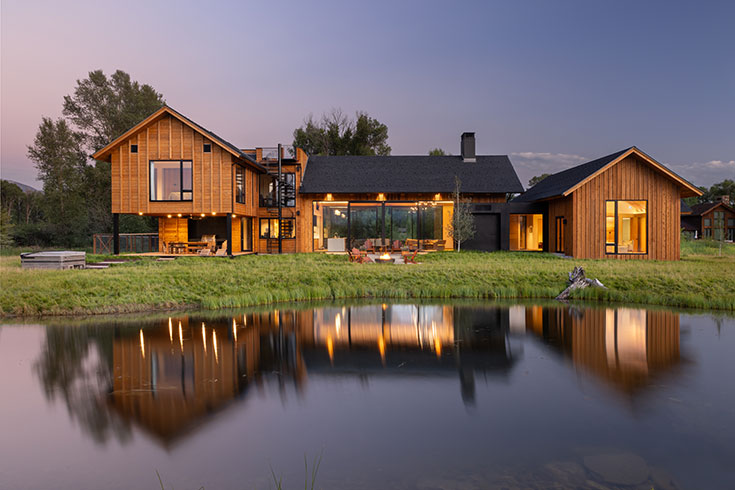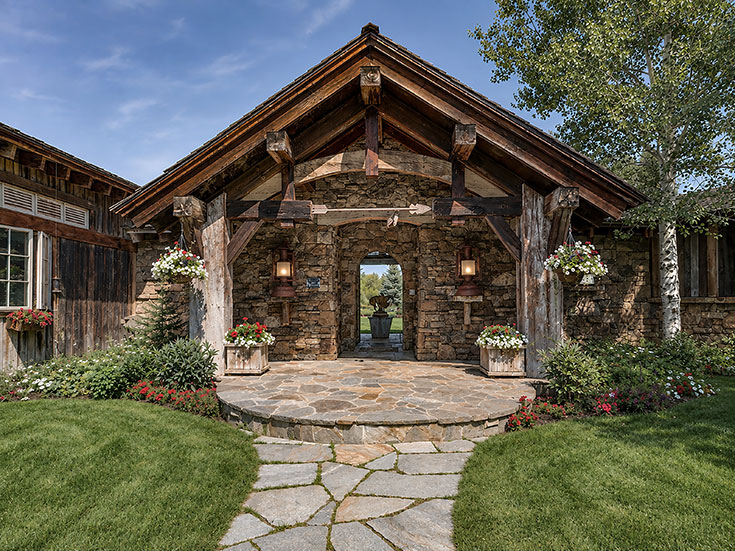

Lessons from Jackson Hole’s historic built environment inform good design today.
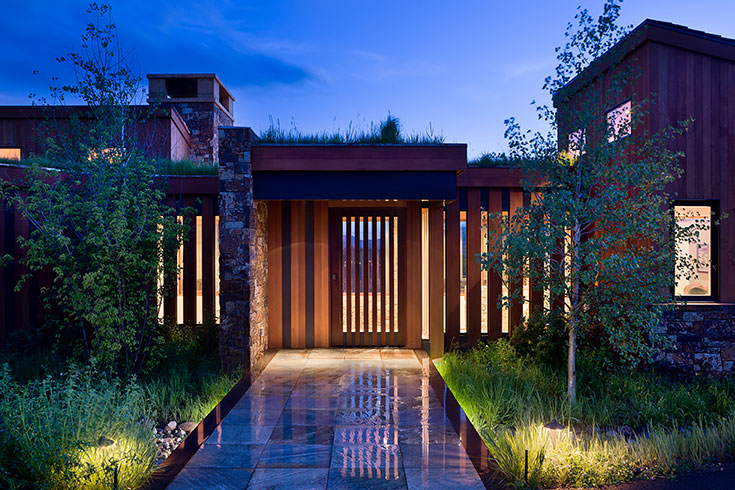
Roofing materials were not readily available in the late nineteenth century in Jackson Hole; instead, homesteaders relied on sod roofs to insulate, waterproof, and protect their homes. Today, architects use them for those same attributes, as well as for their beauty and the link they create to the land.
Story
Katherine Wonson
Jackson Hole’s homesteading builders relied on traditions brought from their home countries or other regions of the United States—traditions that emphasized minimizing heat loss, maximizing solar and thermal gain, and reducing time-consuming maintenance. This knowledge was rarely documented formally; instead, vernacular building techniques evolved through a shared, almost crowd-sourced understanding of what worked and what did not.
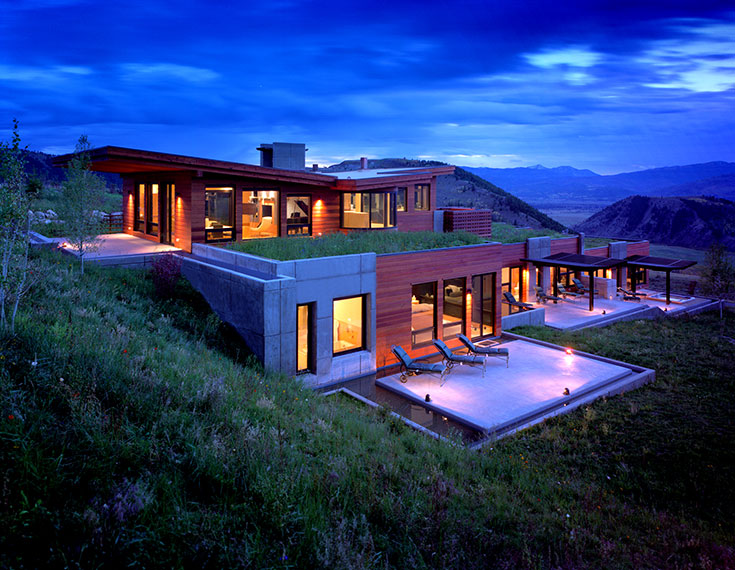
As access to materials, skilled labor, building technology, and affordable energy steadily increased through the latter half of the twentieth century, Jackson Hole’s architecture became increasingly divorced from environmental realities. Not surprisingly, the valley’s time-tested building traditions were often dismissed as quaint and irrelevant.
For some architects today, however, these building traditions hold the key to creating a comfortable, livable, and sustainable house—an asset that is anything but quaint and irrelevant.
SOD ROOFS
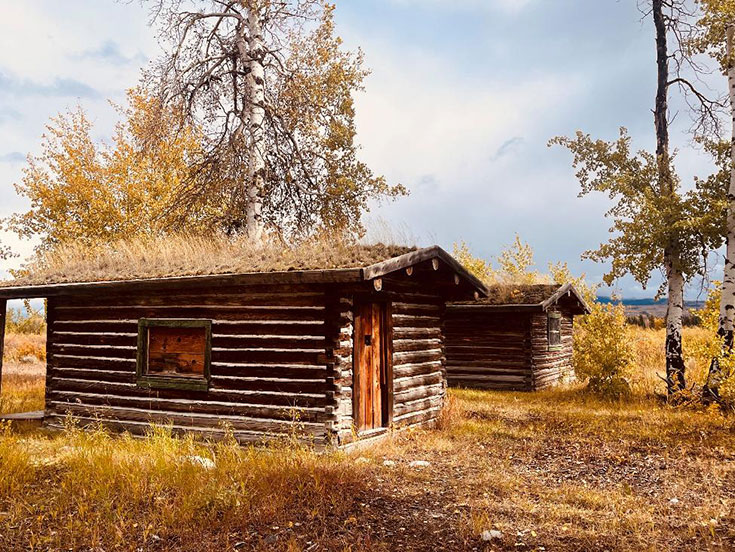
Long before “green roofs” became an architectural buzzword, they were a frontier necessity. Rooted in Scandinavian, Plains, and Rocky Mountain building traditions, they were a strategic solution for building quick shelter, especially in locations where sod was abundant and timber scarce. Thick layers of earth and native grasses provided exceptional insulation against Wyoming’s extreme temperature swings, buffering interiors from summer heat and bitter winter cold. Sod roofs also absorbed rain and snowmelt, reducing runoff and helping stabilize lightweight log structures.
The photographic record suggests that historic sod roofs in the Greater Yellowstone Ecosystem were probably not simply cut from the ground and laid on roof structures, like traditional sod roofs (due to the abundance of sagebrush). Instead, they were likely constructed by creating dirt roofs that gradually became covered with native vegetation.
“Sod roofs were nature’s insulation. Today we reinterpret that idea with deeper roof assemblies, better air sealing, and protective overhangs that manage heat, snow, and weather just as effectively.”
—Architect Alison Price,
Price West Architecture
Unfortunately, because an unmaintained sod roof retains moisture, which accelerates rot in the roof membrane, very few historic buildings with sod roofs remain in Teton County. In 2012, in partnership with the University of Pennsylvania and funded by the National Park Foundation, Grand Teton National Park installed two sod roofs at the Bar BC Dude Ranch, which can be seen today.
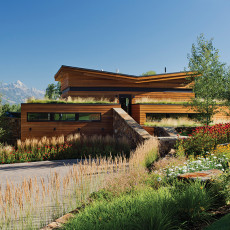
Some local architects have revived the tradition, adapting historic principles, such as the use of hardy native grasses and custom detailing, to contemporary buildings. These modern sod roofs echo a long-standing building tradition and place the buildings in a dialogue with the land.
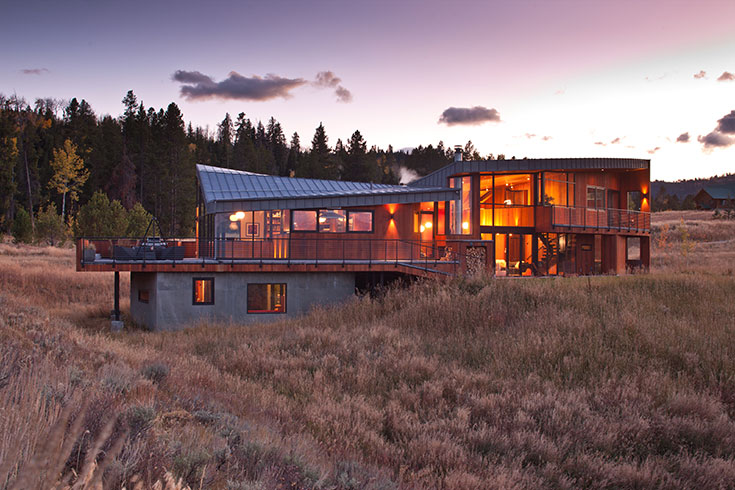
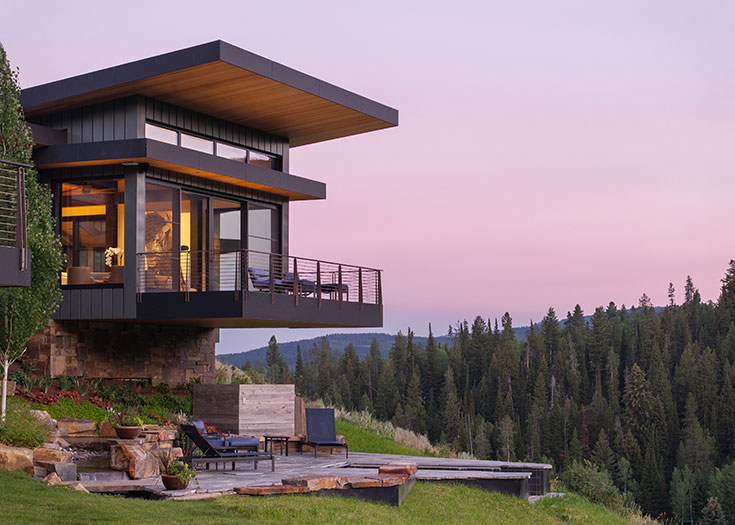
In climates like Jackson Hole’s, traditional building wisdom dictates orienting a house to capture the maximum amount of the sun’s warmth. But architects can tip and fold rooflines in ways our cabin-bound predecessors never imagined, allowing for solar gain and eye-catching views all at once, as seen at W House.
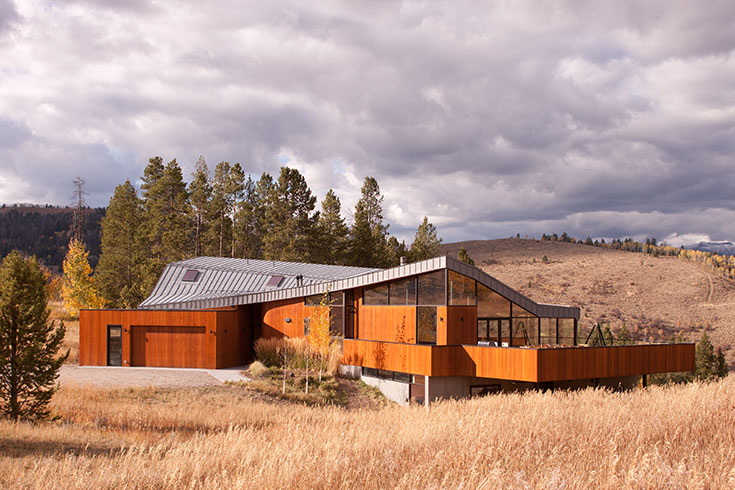
While the architectural outcomes are a far cry from the low-slung, dark cabins of yesteryear, the building traditions that once shaped Jackson Hole’s historic built environment continue to inform good design, demonstrating that traditional building knowledge remains as relevant today as it was to our predecessors.
Site Your House Wisely
On many building sites in Teton County, architects face a design dilemma: prioritize north-facing views of the Tetons or the south-facing orientation most beneficial for optimal building performance and efficiency. Nona Yehia, principal of GYDE Architects, notes that while a north-facing glass wall is possible with today’s technology, “it creates a really flat light that’s not very efficient.”
GYDE Architects has found a creative way to thread the needle and achieve both aims. At the W house, Yehia created a curved northern exposure that takes full advantage of the western afternoon sunlight, creating its own microclimate and a dynamic movement of light throughout the house. Southern-facing clerestory windows let in light to warm the concrete radiant heat floors, which, in turn, release the stored energy once the sun goes down. For Yehia, light really drives the primary design. She says, “Natural light is so limited in Jackson Hole that you have to feel engaged with the outside. And that’s the selling point: ‘do you want to be in a house where you never want to go outside, or don’t even have to shift rooms because, within a given room, you can experience different times of day really pleasantly?’” Orientation is no longer an issue of survivability, but one of livability.
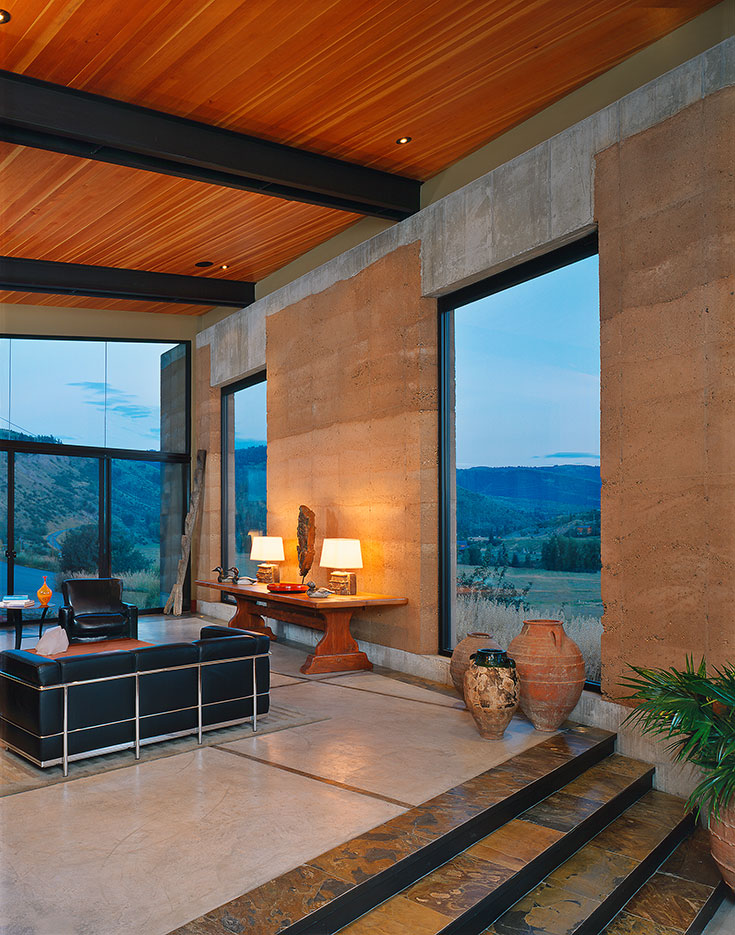
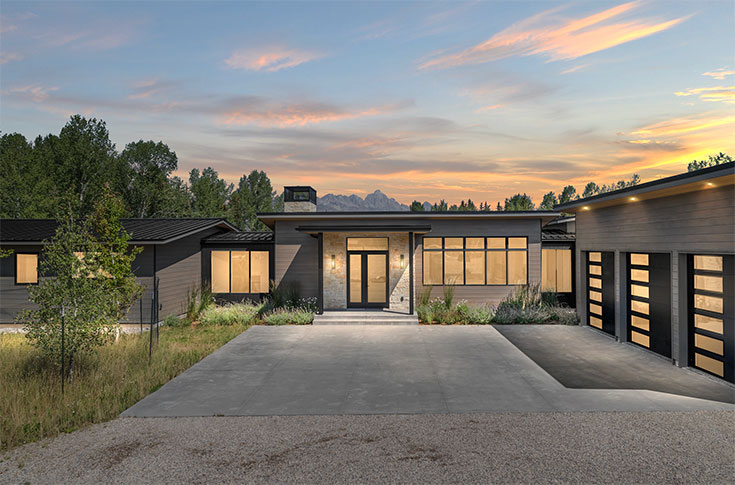
Much like builders a century ago who gathered materials from the local landscape, architect Tom Ward, a principle at Ward | Blake Architects, also used on-site earth for the rammed-earth construction of his own home, TK Pad. The exposed walls reveal the stratified layers that match the colors of the surrounding bluffs.
“We should all buy the highest-quality materials we can afford. Because if you’re going to build a house for yourself and you use heirloom-quality materials, there’s an inherent sustainability.”
— Architect Tom Ward, Ward | Blake Architects
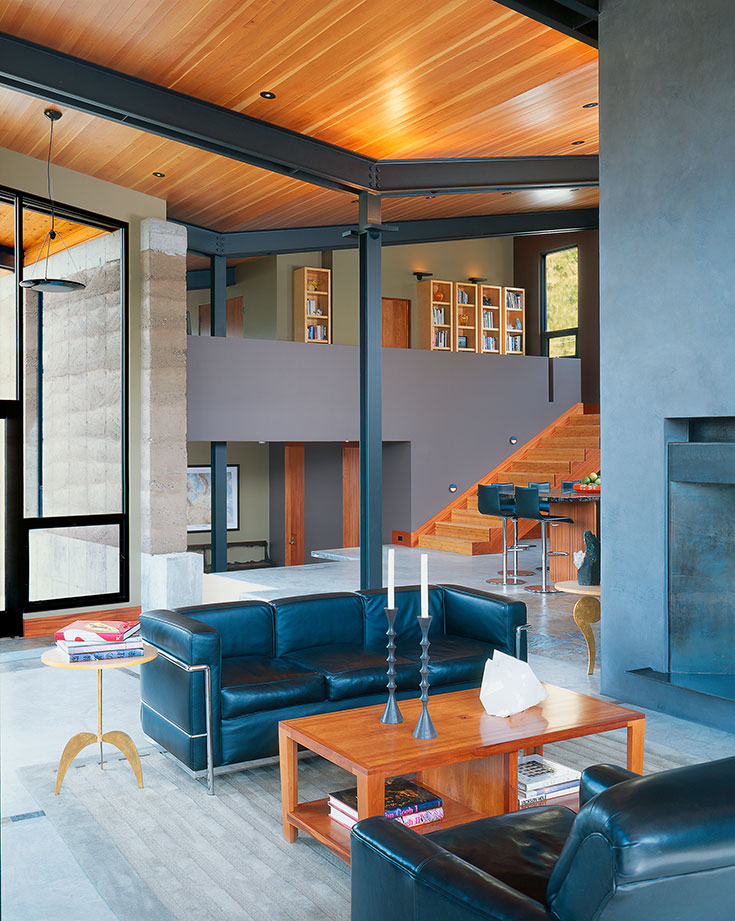
Strong, durable materials were paramount for early builders who lacked the time or resources to replace failing building components. Likewise, TK Pad uses a palette of durable, sustainable, and natural materials throughout to create an heirloom-quality house that blends with the natural environment.
Materials Matter
Long before the term “heirloom” came into vogue, the valley’s early builders used high-quality, durable materials such as old-growth Douglas fir and lodgepole pine, granite, and river rock. These locally sourced materials, with their 100-year-plus lifespans, proved invaluable in creating rugged structures that could endure the harsh Wyoming winters. Modern materials, by contrast, have far shorter lifespans and are often factory-produced, so they cannot be repaired; they can only be replaced.
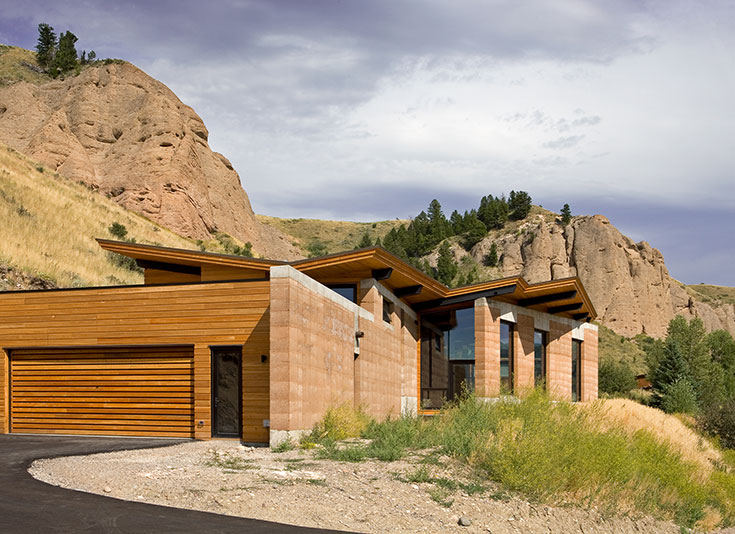
Tom Ward, principal of Ward | Blake Architects, is a believer in investing in long-lasting materials. “We should all buy the highest-quality materials we can afford,” he says. “Because if you’re going to build a house for yourself and you use heirloom-quality materials, there’s an inherent sustainability.” Ward recently remodeled a house he designed 30 years ago, where he found the original Amish-crafted mahogany windows still functioning beautifully. “But, you know, the windows were excellent when they were built, and they still are today.” For the remodel, Ward upgraded the glass to enhance energy efficiency but left the sash and the German-made hardware as is until the next remodel.
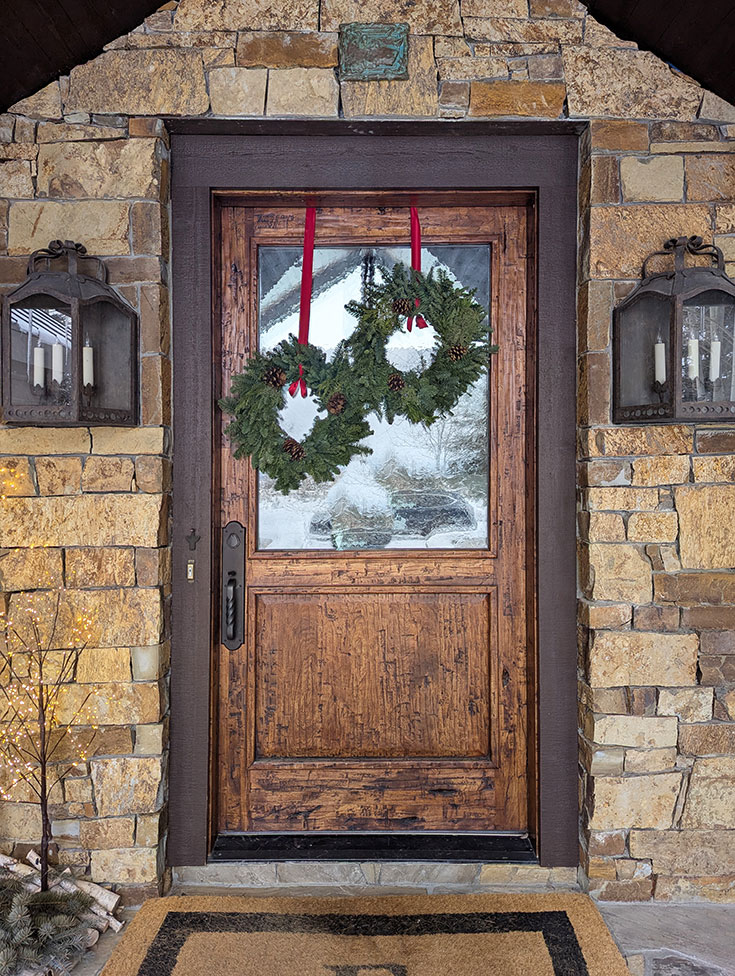
In a recent remodel, architect Alison Price reused the home’s original entry door, but removed the solid-pane upper half to replace it with waterseed glass to admit more light.
Ward | Blake is so committed to durable materials that they’ve patented a seismically stable rammed-earth wall construction technique. TK Pad, Ward’s own home and shown on the prior spread, utilizes rammed-earth walls, an ancient building technique of tamped layers of earth and sand with the modern addition of post-tensioned rods for the seismic stability required by Teton County’s building codes. The walls are not only highly durable, but because the materials are sourced from the site, they weather along with the surrounding environment.
Waste Not Want Not
Since building materials needed to be harvested rather than simply ordered, and labor was limited, homesteaders frequently reused, repurposed, and tacked on to their homes to meet changing needs. Alison Price, principal of Price West Architects, is a firm believer in this tradition. “There’s a saying that the greenest building is the one that’s already standing,” she says. “Homesteaders lived that truth long before it had a name. They repaired, added on, and let their homes evolve. I try to design with that same sense of care and continuity, honoring what came before while creating space for what’s next.”
Price found her ideal renovation project for a client in the waste management industry who wanted to reuse all materials. She recalls, “Renovations are harder than new builds, but they’re also more meaningful. A home already holds memory. When you work with what’s here, you’re honoring that lineage instead of erasing it.” In this project, Price West Architects breathed new life into an aging home, leveraging Price’s creativity and eye for second chances for building materials (in one case, literally reusing the hearth as stepping stones to a new porch and outdoor grill area).
While the through line between Jackson’s early-twentieth-century and early twenty-first century architecture grows hazier by the year, the building traditions that paved the way for today’s architects are not lost. As Price, a member of the younger generation of architects working in the valley, reminds us, “I’ve always believed the future of building is rooted in the past. The homesteading vernacular still teaches us how to design with restraint, resourcefulness, and respect for place.”
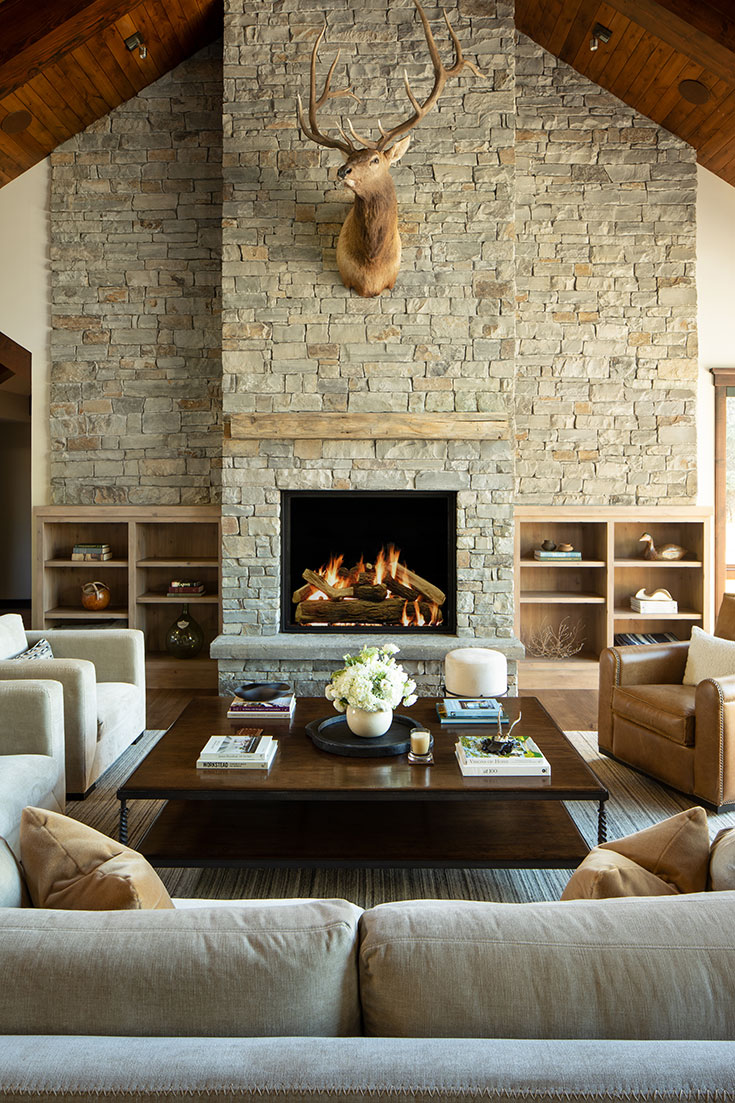
The Solitude 2 project exemplifies the thrifty reuse of existing materials that characterized building in Jackson until WWII. The original hearth was painstakingly disassembled, and all of the rocks were repurposed into a new hearth configuration.