
Rigorous planning and design create a guest house that lives big.
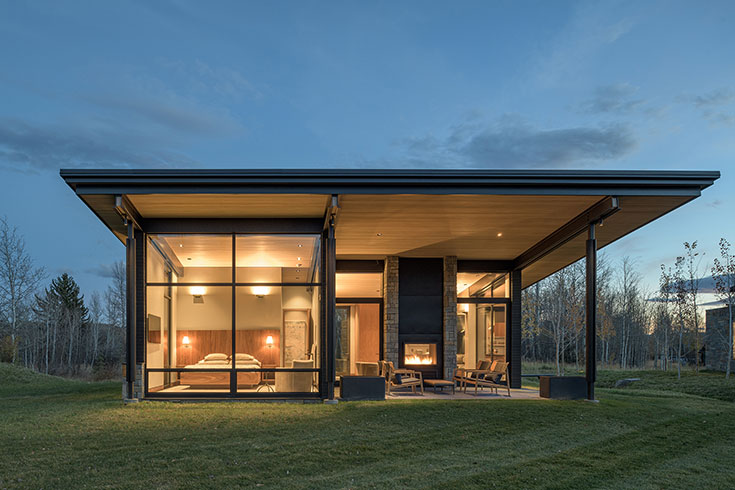
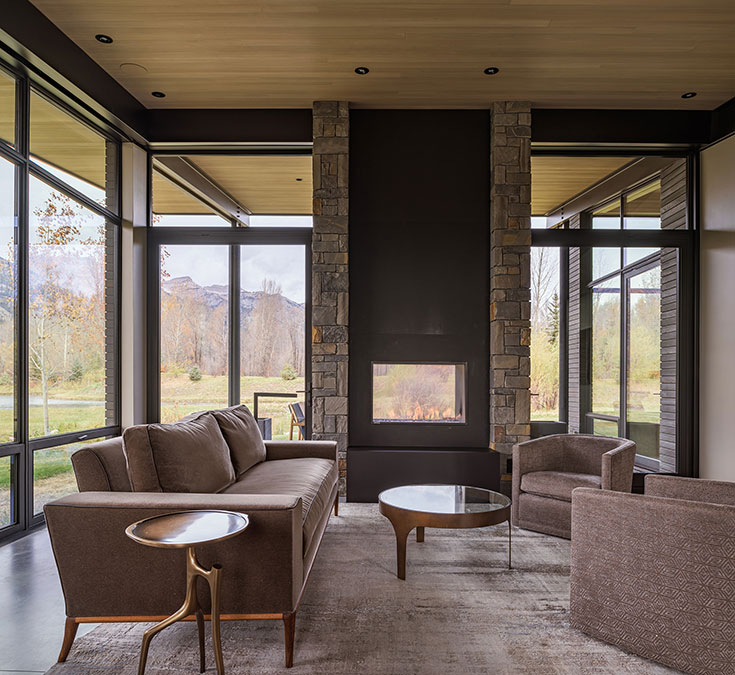
This guest house’s bedroom suite brings the outside in thanks to a wall of floor-to-ceiling windows. The goal was different with the adjacent covered porch. “Here, we wanted to bring the inside out,” says architect Tom Ward. The porch, which is heated, is off the living room and doubles the size of that space. Both living rooms—indoor and out—are connected via a see-through, double-sided fireplace.
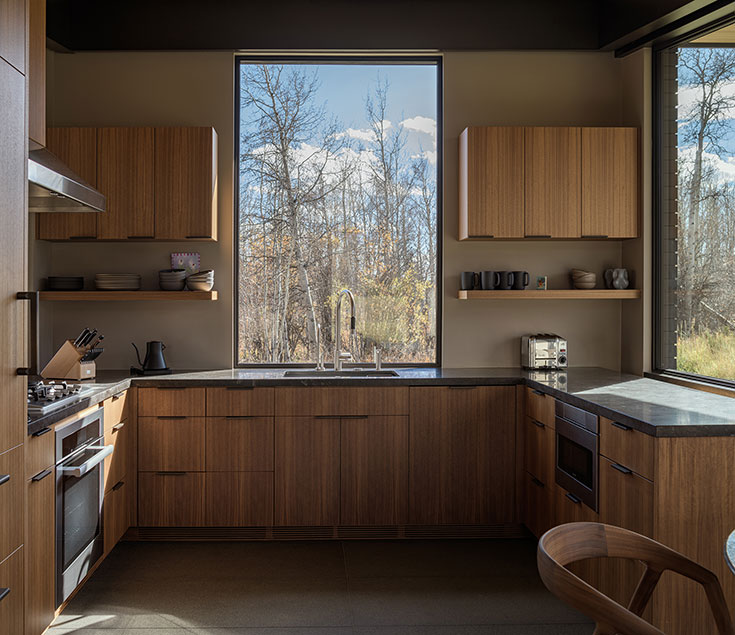
“It has absolutely everything you need, but in a small package,” says Blake, who co-founded Ward | Blake Architects with Tom Ward in 1996. Ward adds, “For all of the rigor and attention to detail in the design process, [this guest house] is very wearable. It’s not an uptight space, but a relaxed one. Even the owner talks about living in it instead of in the main house for a while.”
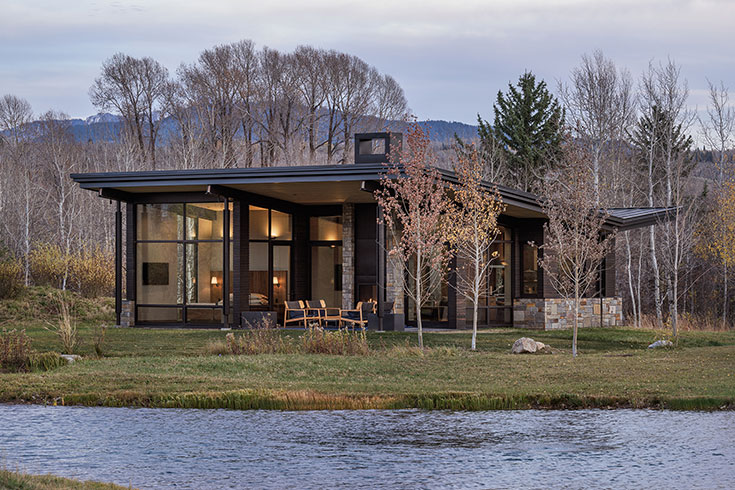
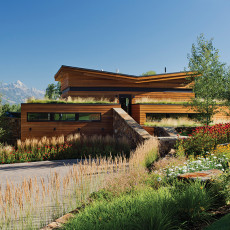
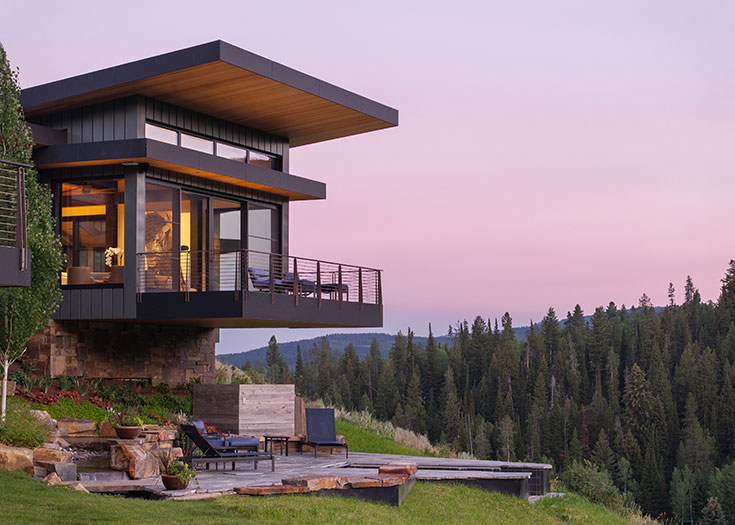
A butterfly roof allows for maximum mountain, and sky, views. “We didn’t want the roofline coming down and blocking the views,” architect Mitch Blake says. “The mountains are close. Tilting the roof up allowed us to capture the blue sky above the mountains.”
Joined, but not subservient
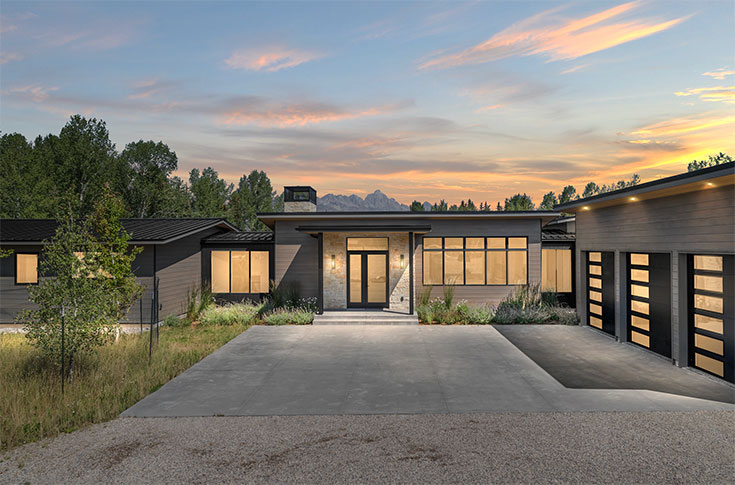
Like all well-designed guest houses, this one relates to the main house, which is 6,750 square-feet. “The two structures, and also the barn, have the same rhythms of structure and are similar in their architectural language,” Blake says. Additionally, the two houses are finished with the same materials and have the same type of windows, and the exposed exterior steel columns on both houses are the same design. “They were designed as a unit—to talk to each other,” Ward says.
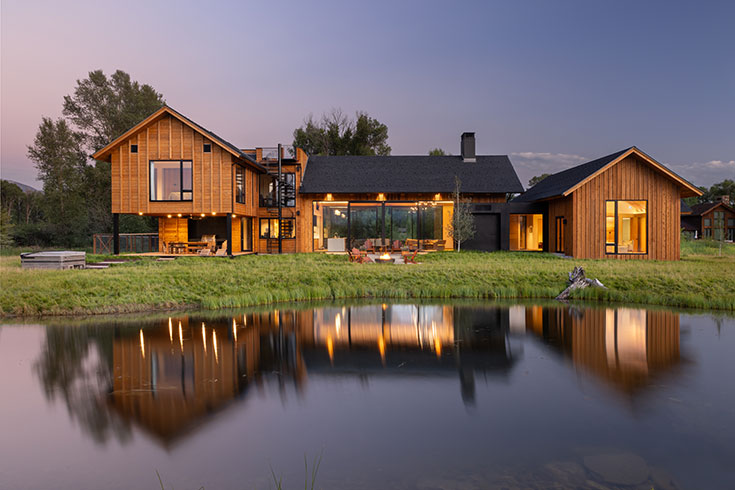
But, barely visible from the main house and sited on the shore of a pond, the guest house also works on its own. Unlike most guest houses, it has views equal to those of the main house and, thanks to an irrigation ditch that Ward | Blake worked with landscape architects to turn into something closer to a creek, feels wholly separate. “I think you can be in the guest house and feel like you’re all by yourself on the property,” Blake says. “And the guest house itself feels like it belongs exactly where it is on the site.”
“Everyone talks about bringing the outside in, but here we wanted to bring the indoors out. The windows allow the space to flow outside.”
—Architect Tom Ward
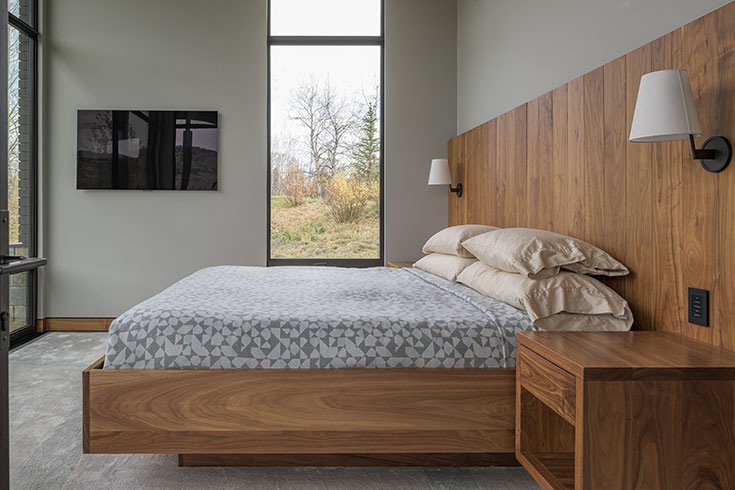
Laying in bed in the sole suite in the guesthouse, you can open the shades to expose a wall of windows that frame the Tetons
Cataloging and capturing the views
Before starting the design process, Blake did what the firm always does: spent hours on the six-acre site at different times of the day over several months. The goal of this is not only to discover the range of views available, but also to get a sense of where and how the different buildings might engage with and utilize natural light. “I wanted to get a feel for what the light was like and how we might best capture views of the Teton Range and Wilson Faces, and the feeling of the way mountains surround the property,” Blake says.
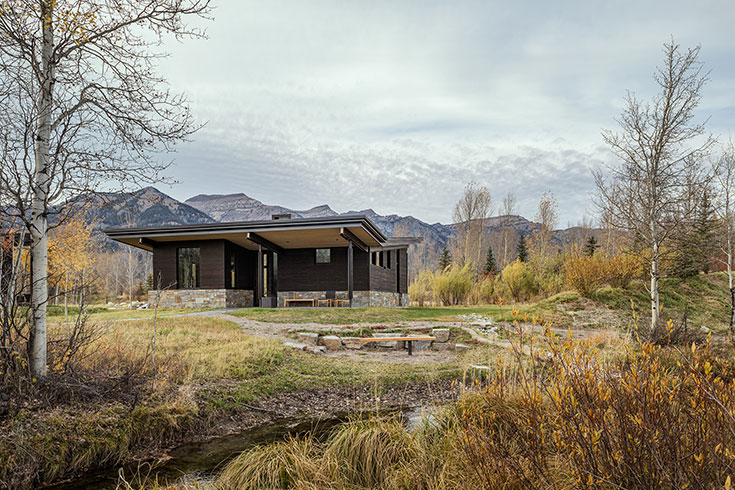
Thoughtful site design gave the guest house the same expansive Teton views as available from the main house.
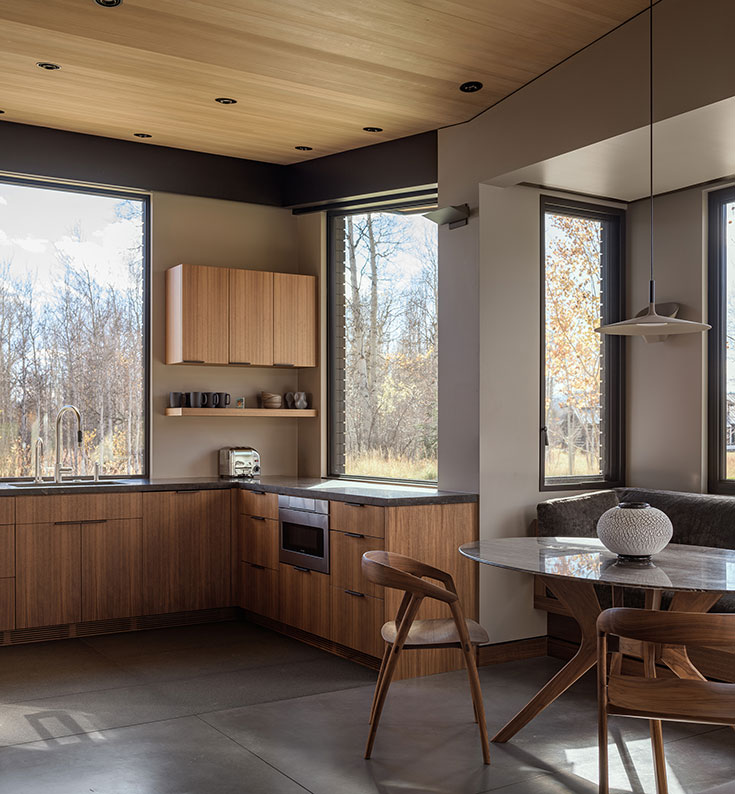
While the initial focus was on how the main and guest house would capture the property’s big views, the opportunities, and potential, offered by the foreground—the pond that helps make the guest house feel like its own experience and an existing berm—were also considered. “What we created with the pond and after we beefed up the berm, suddenly we developed an incredibly strong foreground,” Ward says.
While the guest house has mountain views, including of the ski slopes at Jackson Hole Mountain Resort, when you’re in the living room, it is the pond and the wildlife that often wanders past it, that is most visually compelling. Ward | Blake designed this room with floor-to-ceiling glazing. These open to a heated porch. Just beyond the porch is the pond. “Here there is all this action in the foreground,” Ward says.
The End Result
“This guest house really gets used,” Blake says. “It is self-sufficient and feels so much bigger than it is because of the open plan and the floor-to-ceiling windows.” Ward adds, “Everyone talks about bringing the outside in, but here we wanted to bring the indoors out. The windows allow the space to flow outside.”
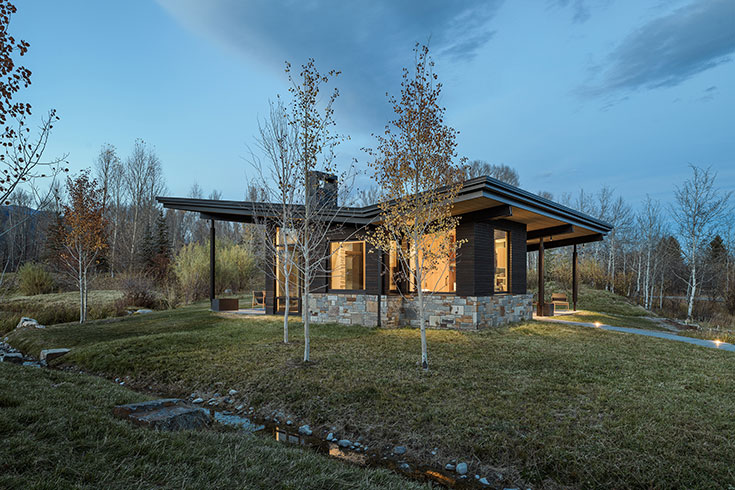
A small creek between the guest and main houses reinforces the feeling that the former is autonomous, a precious gift to guest.