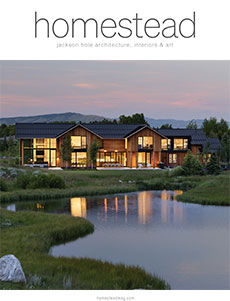

A full renovation of a legacy property in Teton Valley, Idaho, preserves a strong sense of home while making spaces feel lighter, more open, and better connected to the landscape.
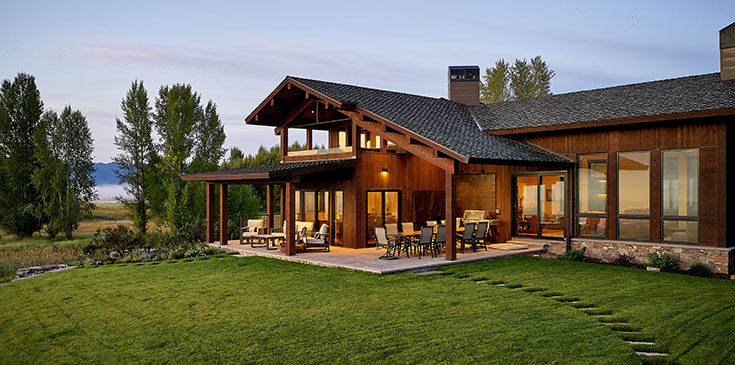
The architectural renovation of Darby Creek Ranch, a legacy property in Idaho, was informed by the surrounding landscape—and the diverse wildlife that moves quietly through it.
Story
Helen Olsson
Photos
Dan Price Photography
ARCHITECTURE
Price West Architecture
pricewestarchitecture.com
CONSTRUCTION
Fulcrum Builders
fulcrumbuilders.group
INTERIOR DESIGN
B&B Design
b-bdesign.com
Built by the homeowner’s father in 1988, Darby Creek Ranch has since passed to the next generation. The renovation expanded the original footprint in multiple directions, adding a relatively modest 1,550 square feet of habitable space to the existing 7,356 square feet. The team changed a two-car garage into a three-car garage, expanded the kitchen, dining room, and great room, created a three-bedroom guest oasis on the garden level, reimagined the entryway, and reclaimed old second-story decks for indoor space. Outdoor spaces were built out, adding 2,000 square feet of outdoor living and creating a stronger connection to the surrounding 15 acres, a landscape that doubles as an informal bird sanctuary.
Rugged Rustic Exteriors
The home’s exterior underwent a complete transformation. “We removed all the siding, windows, roof—we took everything down to studs,” says Derek DiVenere, who in 2022 founded Fulcrum Builders and teamed up with the highly experienced superintendent Steve Comeau on this project.
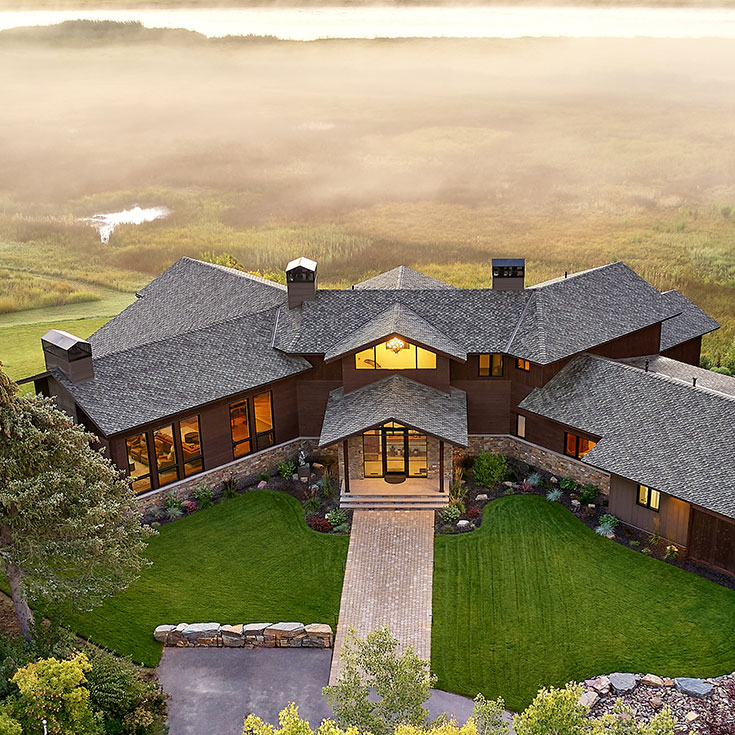
Top: The footprint of the home expanded in multiple directions to capture views and create gathering spaces for family.
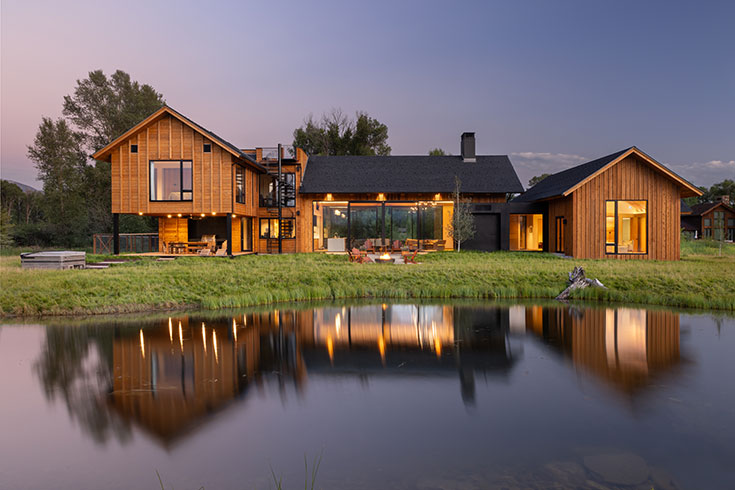
New cedar siding was placed in shifting directions to break up the facade’s scale. Montana Chief Cliff Stone surrounding the base of the house anchors the forms, while vertical standing-seam metal on the garage and the fireplace’s chimney adds visual interest. “The metal accents were a way to play with the proportion of the exterior wood paneling,” Price says.
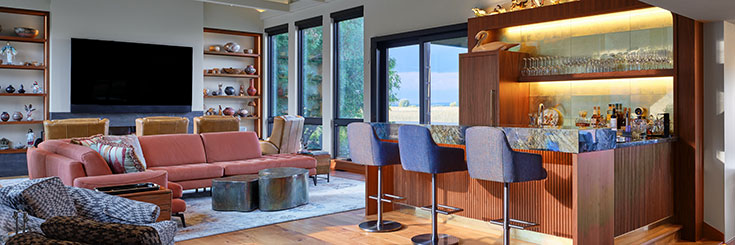
The solid-surface slab with waterfall edge topping the bar serves as a key design element in the living room.
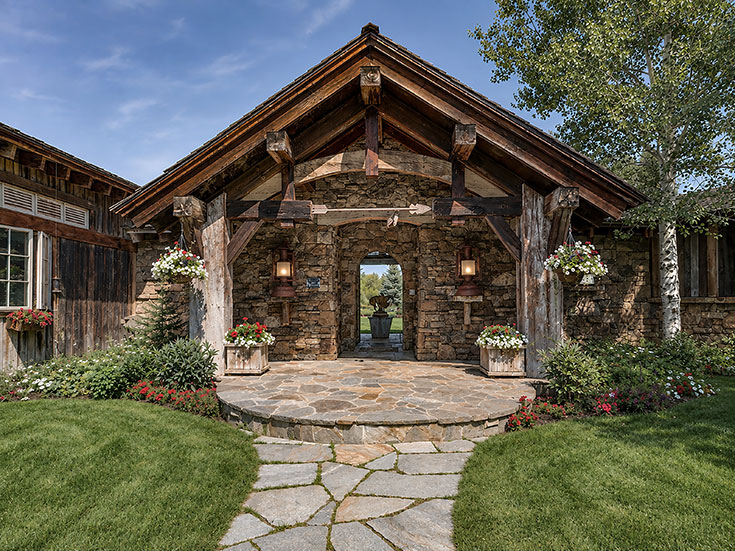
The original entryway consisted of a simple wood panel door. To create a more welcoming and formal arrival, the team added 120 square-feet to the entry and a new roof and incorporated natural stone, log timbers, metal tension rods, and a new Loewen glass door with sidelights. “The glass gives it a more modern aesthetic, and it glows beautifully at night,” Price says. “When you approach the entryway, you know you’ve arrived.”
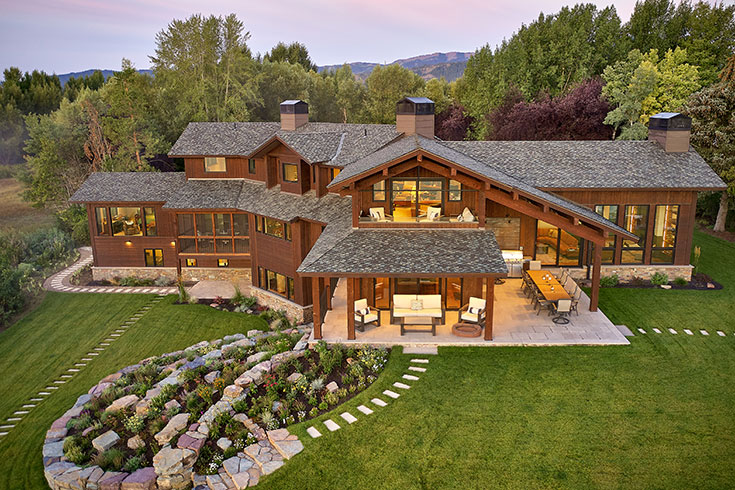
The renovation added a back porch for dining and extended the landscaping outward, enhancing the home’s indoor-outdoor sensibility.
Contemporary Interiors
While the rustic exterior is rooted in natural materials, interiors are a refined departure from the usual rugged masculinity found in the valley’s design aesthetic. Spaces feel intentional, inviting, and deeply lived-in.
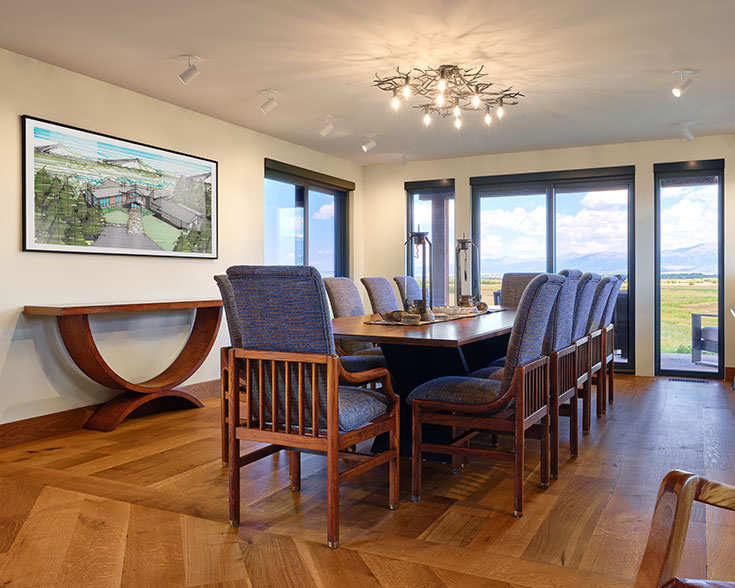
The dining room was enlarged to create a more substantial space for entertaining.
“The glass gives it a more modern aesthetic, and it glows beautifully at night when you approach the entryway, you know you’ve arrived.”
— Alison price, Architect
The interior layout was shaped by where the homeowner’s furniture and art collection would live—and where light would land. “From the beginning, the client knew where certain pieces of art would go, including a beautiful pair of ancient scrolls,” Taylor says. Heavy forms were replaced with gentle curves. Layers of pattern, texture, and warmth give each room its own personality while staying connected to the whole.
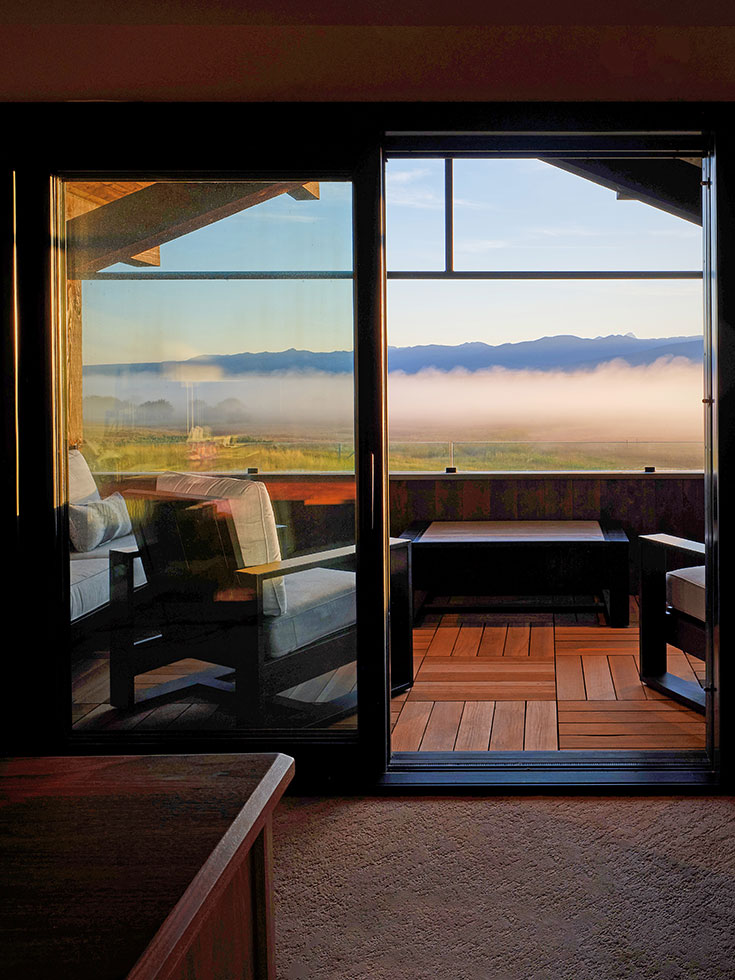
The second-floor outdoor deck offers the perfect perch for watching wildlife go by.
“I focused on ensuring the interior movement worked functionally with the homeowner’s vision for living in the space,” Taylor says. To complement their eclectic collection of Native American, Chinese, and Indian artwork, Taylor employed a timeless neutral palette layered with warm tones—reds, blues, greens, and coppers—along with walnut cabinetry, white oak flooring, and brass accents. “We had to create a neutral base that allowed the artwork to pop, but that also matched its richness,” she says. “The wife leans to a midcentury Art Deco style, and the husband has a more outdoorsy, traditional sensibility. It was interesting melding those two styles together.”
Structural Challenges and Improvisation
Sometimes the most impressive architectural work is invisible. Extending spaces out and capturing more Teton views meant removing load-bearing walls. To support the newly imagined forms, Fulcrum shored up the house with helical piers and concealed massive steel beams inside the flooring system. “Getting 1,400-pound, 30-foot-long beams into the floor without using heavy equipment was a monumental structural challenge,” Comeau says. The solution? Using hydraulic jacks to crib the beams into place.
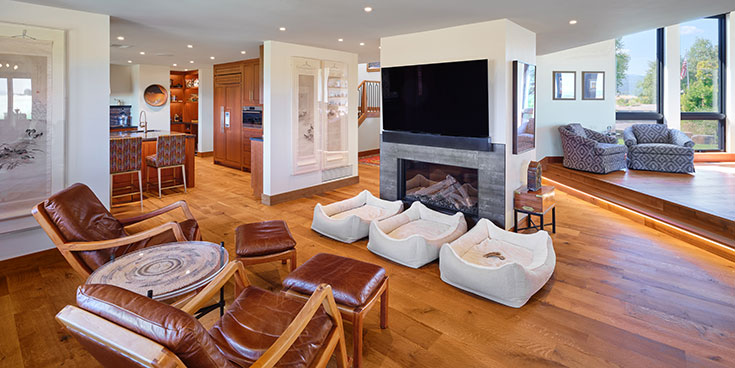
Carving out a dedicated space by the fireplace for the owner’s beloved dogs was a priority.
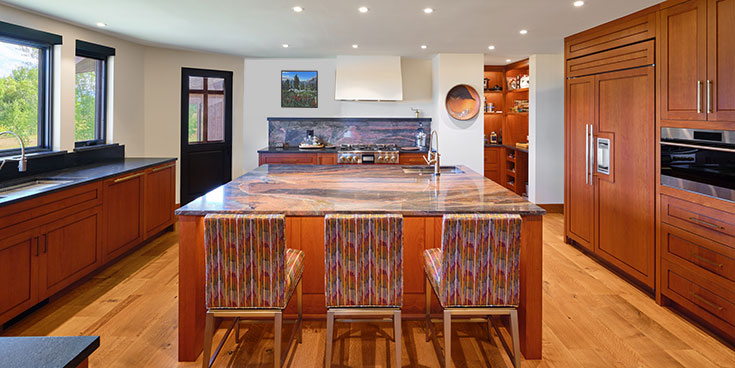
The team designed the kitchen around a richly toned stone slab the owners had sourced early in the project.
“We get a set of plans, but sometimes we need to improvise,” DiVenere says. During construction, the team realized a new roofline over the back deck would block views of the Tetons. “We made a game-day decision to eliminate part of the roof to open up sightlines.”
Realizing the Vision—and Expanding on It
Located off the primary suite’s office-lounge, the second-story outdoor balcony is an enchanting space where you can pick up a pair of binoculars and watch for coyotes and sandhill cranes moving along the riparian corridor. “The ‘perch’ began as a small idea in our first concept sketch, and even though the clients hadn’t asked for it, it’s become the husband’s favorite spot,” Price says. “Creating moments like this is one of the great joys of being an architect.” It was also an opportunity to build more sustainably. “We salvaged redwood deck material from the original home and reconfigured it in the new deck in a more intriguing parquet design,” Comeau says.
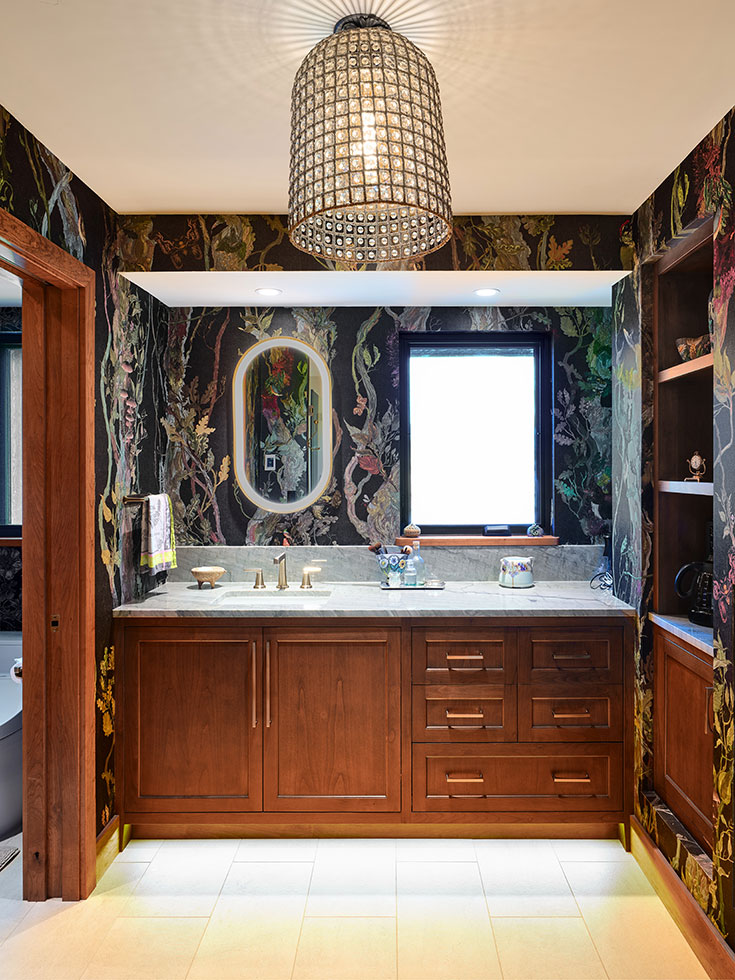
The interior design embraces color, as seen in the primary bathroom’s rich wallpaper, festooned with birds and foliage.
Ultimately, the clients wanted a home that supported their everyday rituals. “Our role wasn’t to reinvent the house, but to help carry forward its history, creating space for its future,” Price says. The renovation deftly balances shared living spaces with contemplative moments of retreat—places to linger and watch the world go by, binoculars within reach, dogs asleep at your feet.
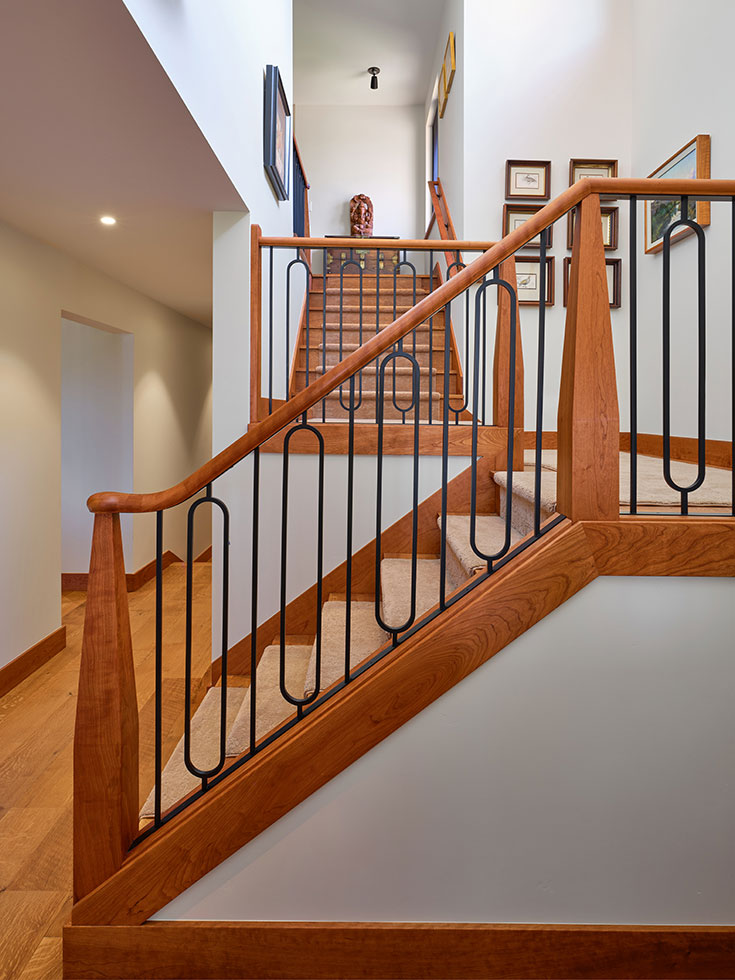
Local artisans crafted this custom stairway with powder-coated steel and cherry balusters.
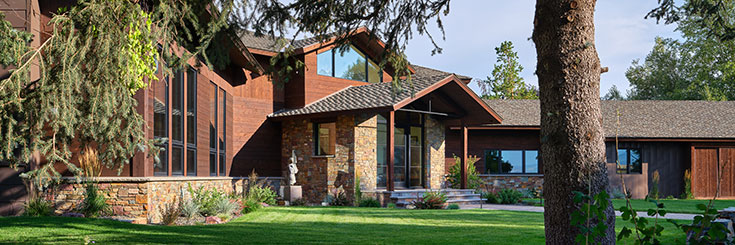
Price reimagined the entryway in stone, glass, and metal, evoking a true sense of arrival.