
2025 Homestead Magazine

FREE

Homestead Magazine

ORDER NOW

Search Results for: living with nature

A SLICE OF BEAUTY:

FORM MEETS FUNCTION

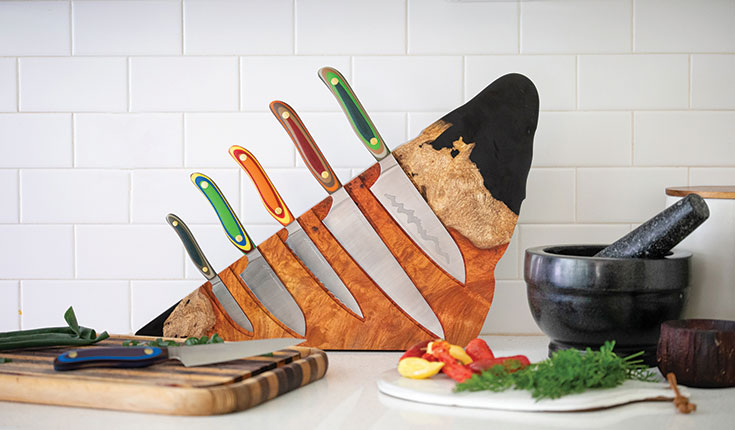
The Rock Block from New West Knifeworks is functional art for your kitchen.

Story
JENN REIN
Photos
SHANNON CORSI, JILL GOODSON + LUKE DOLAN

NEW WEST KNIFEWORKS
ARTISAN KNIFE MAKER
NEWWESTKNIFEWORKS.COM

2022 marks 25 years in business for New West KnifeWorks. The space from which this innovative outfit operates is a far cry from owner Corey Milligan’s humble start in a spare bedroom in his home. At the current factory in Victor, Idaho, a team of craftspeople hone the components that make up the specialty blades and artisan pieces that surround the brand.

Among those team members is Sarah Gage. A native of Michigan, Gage joined the New West KnifeWorks family to work on one specific item: the Rock Block. Made of stone native to the Tetons, wood and epoxy, this kitchen accessory serves as a showcase for the highly praised knife line that the New York Times has said is, “as beautiful as it is useful.”
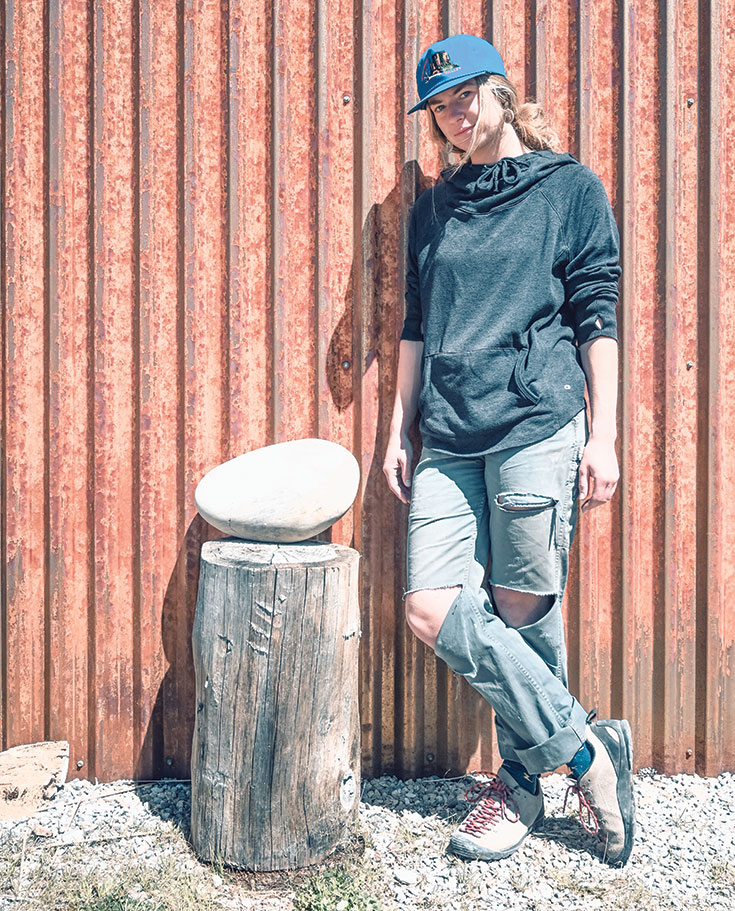
Sarah Gage is a Rock Block maker at New West KnifeWorks. Finding the perfect rock sparks the start of each sculptural journey.

Gage found her roots as a maker early on as she embraced woodworking in high school. Her college curriculum included welding. When hired to work full- time using her artisan skills as a sculptor and woodworker in order to shape the Rock Block, she understood this would be her opportunity to create beautiful, functional sculptures. “My passion for making art is molded into one really cool product,” she says. No two Rock Blocks are alike, making each of them unique to the kitchen in which they are featured.
A set of New West knives fit snugly into a Rock Block. Craftsmanship and entrepreneurial spirit are the marks of this Teton-based company.

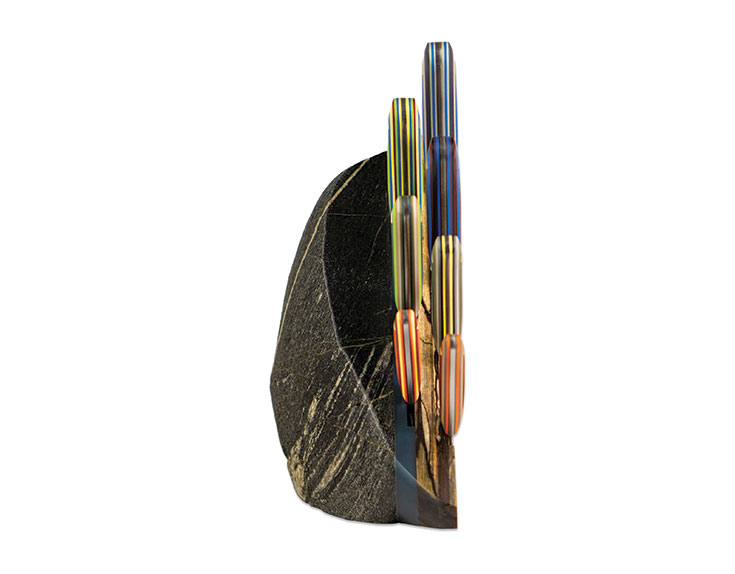
The custom nature of the Rock Block lies in its unique composition, and shaping the piece.“My favorite part of the process is finding and cutting the rock,” Gage says. When a rock is chosen, it leads her to envision how the other components will come into play. Selecting the color or grain of the wood is inspired by the stone itself, as is the epoxy. The rocks that are used often include granite, which is found locally in abundance. But sourcing basalt or soapstone is not out of the question. “No matter the choice in rock, we try to maintain its ruggedness. We want to feature that natural edge. Getting a view of the natural world in your kitchen is so special.”

GETTING A VIEW OF THE NATURAL WORLD IN YOUR KITCHEN IS SO SPECIAL.
—SARAH GAGE, NEW WEST KNIFEWORKS
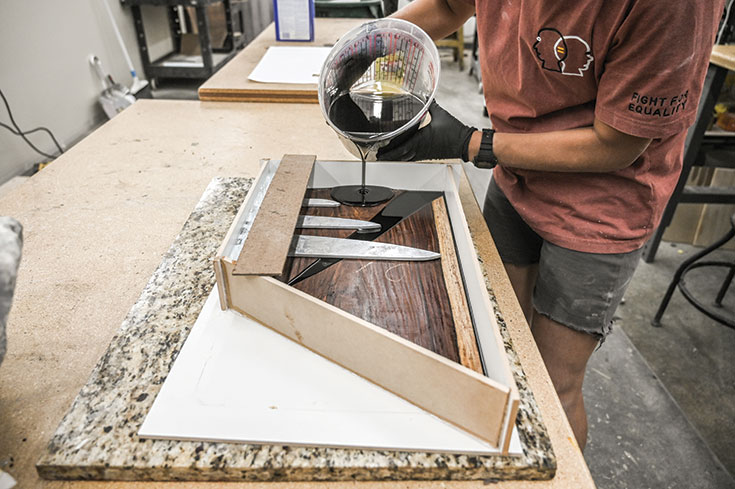
Crafting the Rock Block means marrying together stone, wood and resin. All of this is accomplished in the New West KnifeWorks facility in Victor, Idaho.

Gage extols the virtues of living an aesthetic life. A lover of architecture and a student of design, she believes, “When you are in your home, you always want it to be happy, healthy and inspiring. It’s the place where well-being starts.” The Rock Block is part of that equation, allowing a kitchen to feature a focal point of beauty, while at the same time, serving a practical purpose. A New West KnifeWorks Rock Block is fine art crafted for everyday use.
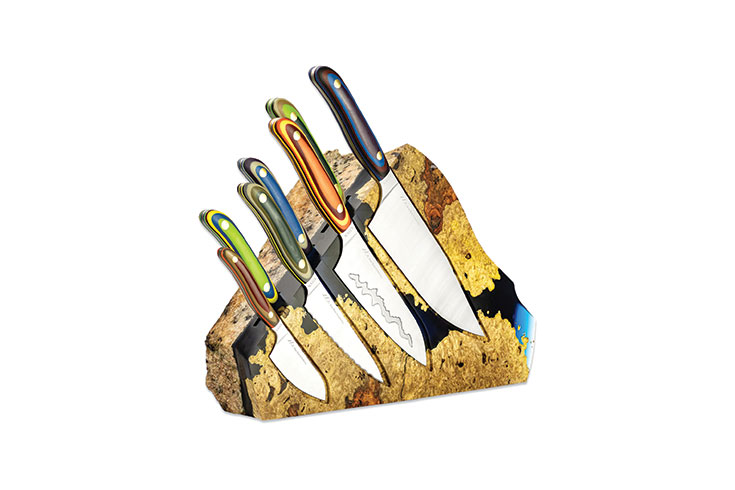
A Rock Block elevates the presentation of the hand finished blades by New West KnifeWorks—tools described as having “perfect balance” by Bon Appetit.

Welcome to the neighborhood

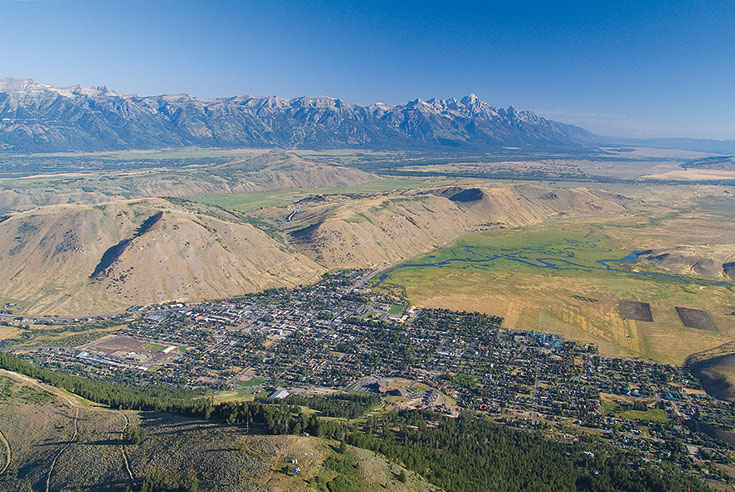
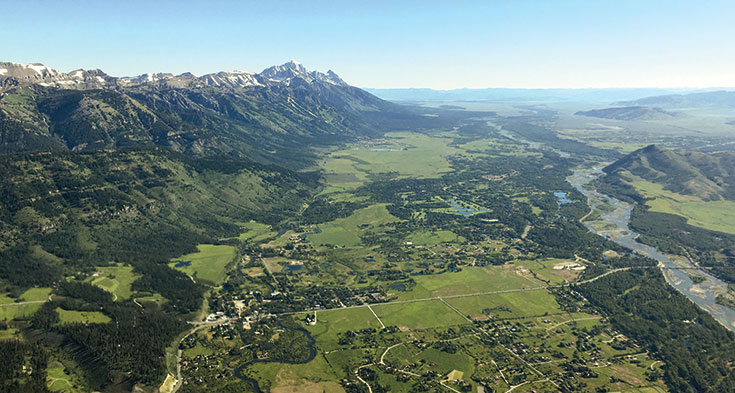
CLICHÉ AS IT SOUNDS, IT’S TRUE: THERE IS NO PLACE ON EARTH LIKE JACKSON HOLE. Less than 3% of the county’s land is privately owned, and it is adjacent to over 22 million protected acres of pristine nature. Add that to one of the lowest tax rates in the nation, world-class culinary and cultural resources, and excellent educational resources—it’s no wonder so many of us are thrilled to call this place home.

NORTH OF JACKSON

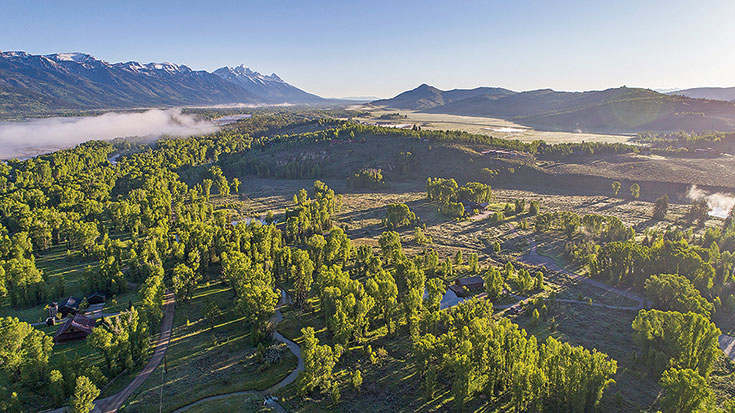
This area enjoys easy access to hiking, biking, fly fishing, the airport and more. It’s only 10 minutes to downtown amenities and hosts some of the most expansive, exclusive, wilderness- immersed properties along the Snake River. A thoroughfare for a diversity of wildlife, it’s as close as you can get to living in the pristine landscape of GrandTeton National Park.

TOWN OF JACKSON

This part of the valley offers subdivisions and single-family homes that are situated near the vibrant cultural center of the community. These properties range in age and size, and all enjoy convenient access to bike paths, public transportation, schools, parks, restaurants, shopping, theTown Square, nightlife and more.

WEST OF JACKSON

Ideally situated to offer equally easy access to downtown and the West Bank, this area encompasses distinctive ridgetop subdivisions with stunning views. Multiple gated neighborhoods boast ultimate exclusivity, large lots, spectacular views and an ambiance of Western seclusion, while still within minutes’ drive of Jackson.

SOUTH OF JACKSON

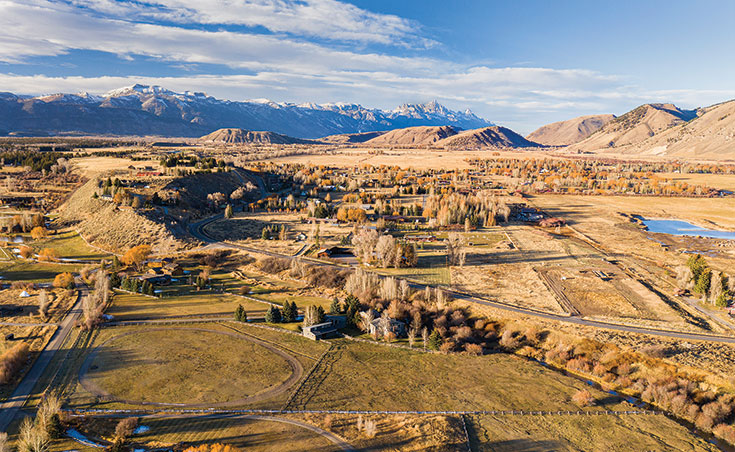
This area offers a wide variety of unique property options. Discover a Western version of classic family neighborhood life—playgrounds, paths, open spaces and convenient access to multiple schools.The area also includes exclusive properties at luxury clubs offering private fly fishing, golf, pools, restaurants and more. If horse ownership is part of your Western vision, you’re likely to find an equine-friendly property in this part of the valley.

NORTH OF WILSON
WESTBANK NORTH

Large homesites in private luxury neighborhoods provide unique opportunities for expansive homes with custom water features and lush, mature native vegetation; some offer private river access.The Aspens neighborhood offers a mix of single-family homes and condominiums as well as a cluster of excellent restaurants and boutique shops. Only a few minutes’ drive north, residents have access to Jackson Hole Mountain Resort and the westernmost entrance to GrandTeton National Park.

SOUTH OF WILSON
WESTBANK SOUTH

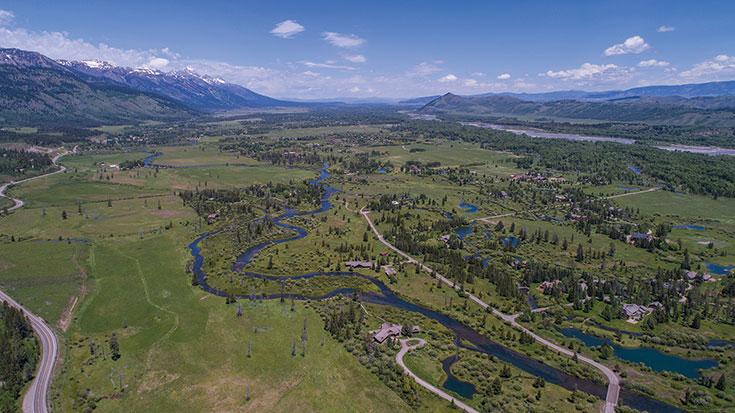
Just south of the small town of Wilson, these neighborhoods offer access to fly fishing, hiking, skiing and mountain biking, as well as the amenities of the West Bank. Some subdivisions are tucked into the hills above the river, offering an ambiance of seclusion, while others sprawl into the river meadows among the pristine waters of private spring creeks. Though these properties feel remote, they’re only a short drive to the heart of Jackson Hole or to world-class skiing.

TETON VILLAGE


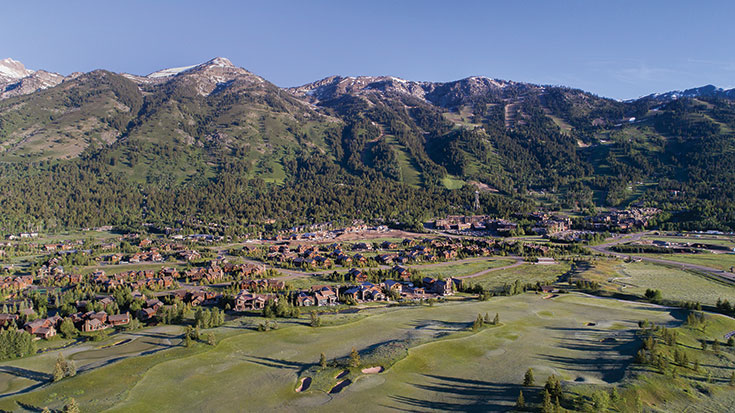
Situated at the base of one of the world’s best ski resorts,Teton Village offers a wide variety of real estate opportunities within a stone’s throw of the neighborhood’s abundant amenities. From
the valley’s most luxurious condominiums with ski-in/ski-out convenience, to one-of-a-kind single-family homes along the base of the mountain, the options are diverse. In addition to winter sports, the area also offers an abundance of summertime activities.

Fall Arts Festival


FOR A SCHEDULE OF THE VAST ARRAY
OF CULTURAL EVENTS—OPEN GALLERIES,
PALATES AND PALETTES, QUICKDRAW
ART SALE + AUCTION—GO T0
JACKSONHOLECHAMBER.COM

LOCAL EVENTS
FALL ARTS FESTIVAL
JACKSONHOLECHAMBER.COM

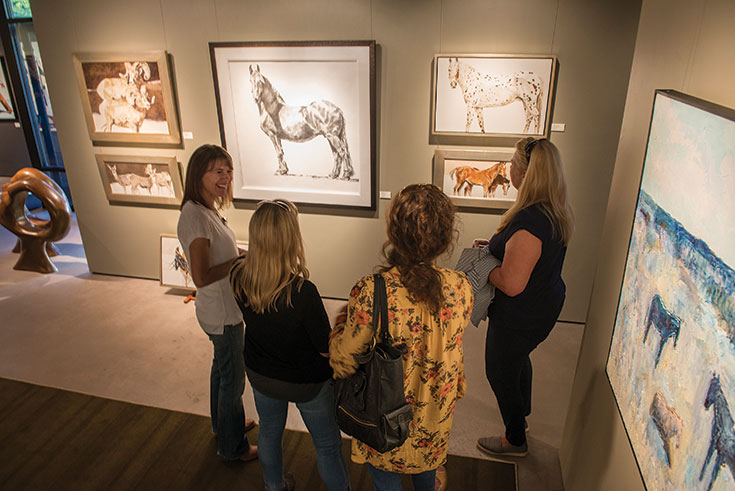
In September, as summer ends and the cooler nights of fall arrive, the town of Jackson celebrates its love of the arts with the Jackson Hole Fall Arts Festival. After the challenging year of 2020, living virtually and online, Jackson is excited to host its 37th Fall Arts Festival and take its place once again as a world-class destination for the arts. From September 8 to September 19, the town will be alive with artists and designers from all over the country who share a love for the American West and are here to display their work. Throughout the year, the Jackson Hole community shows its commitment and support of the arts with over 15 fine art galleries in town; the Center for the Arts, a nonprofit organization with a dedicated campus that is the hub for artistic, cultural and creative activity; and the National Museum of Wildlife Art. It is the Jackson Hole Fall Arts Festival that unites everyone interested in the creative arts, interiors, fashion, architecture, music, local cuisine and locally created beverages.

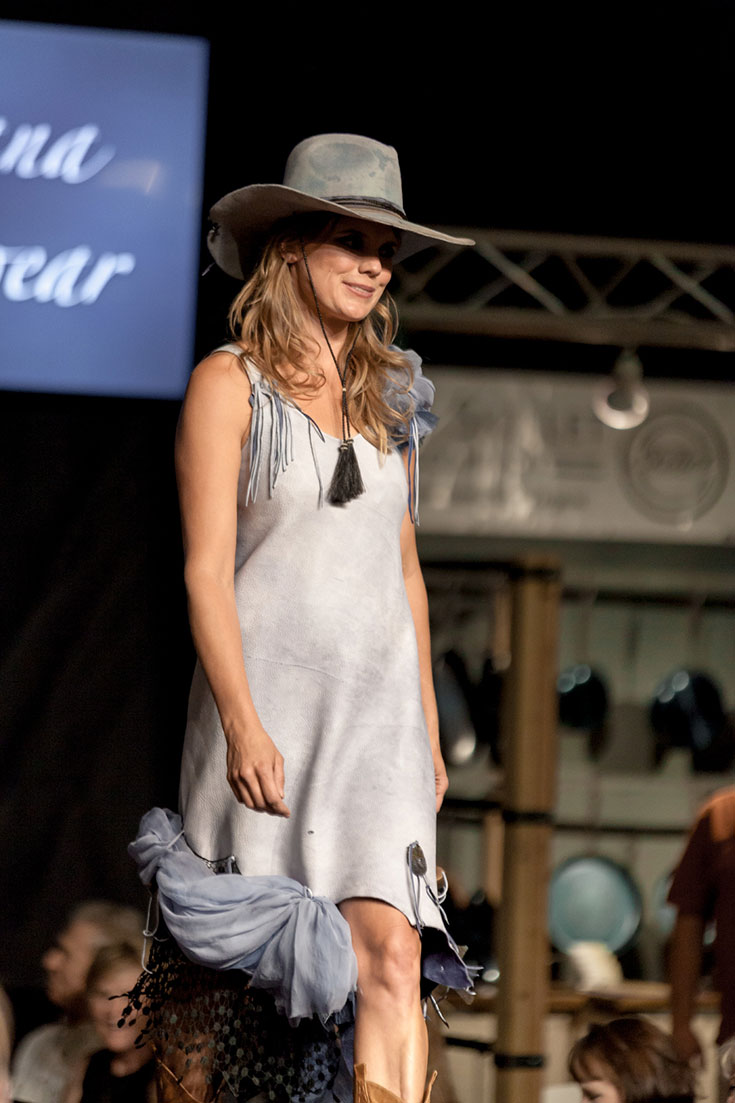
The Western Design Conference Preview Night + Fashion Show is a must for locals and tourists alike. Showstopper Montana Dreamwear returns this year.
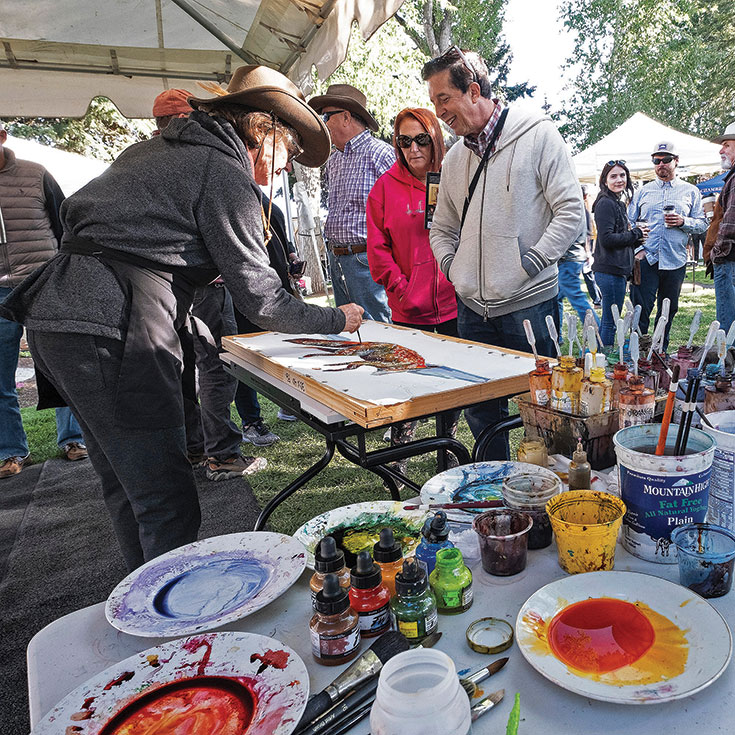
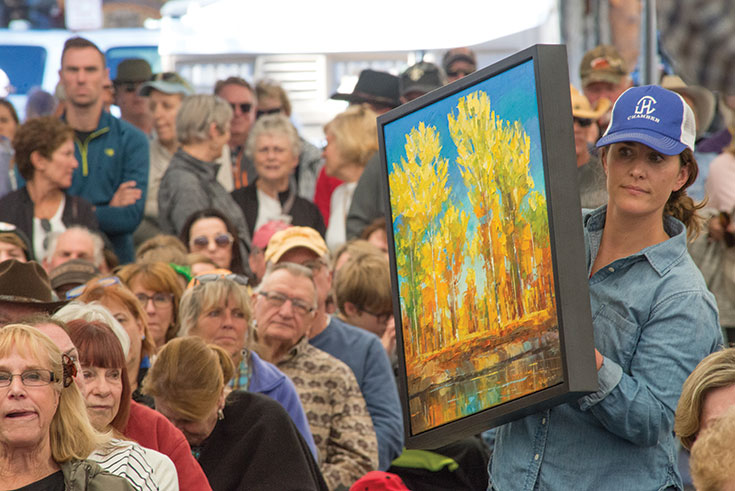
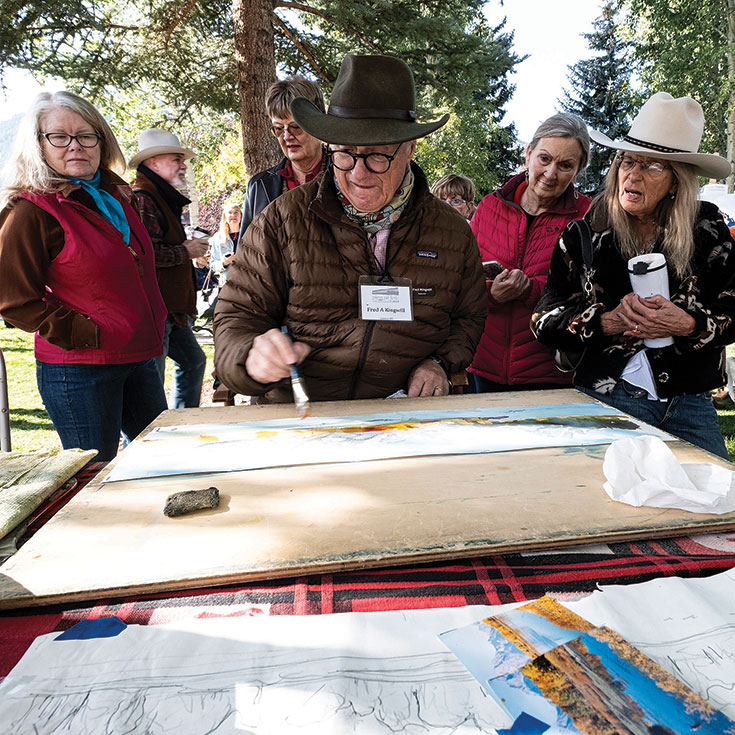
Paintings are auctioned immediately following the 90-minute QuickDraw session.

FEATURED ARTIST

This year’s Fall Arts Festival featured artist is Gary Lynn Roberts, a third-generation artist living in the Bitterroot Valley of western Montana. He trained with many of America’s finest artists, developing a style of painting that is a combination of realism and impressionism. His spiritual connection to the West and his experience with rodeos and training horses are evident in his paintings of life in the historic West—cattle drives, Indian encampments, cowboys and Western wildlife. Roberts’ large-scale oil painting created for the Fall Arts Festival is of Jackson’s Wort Hotel in the 1940s. Posters and Jackson Hole Winery wine with artwork labels are available for sale and signing by the artist.

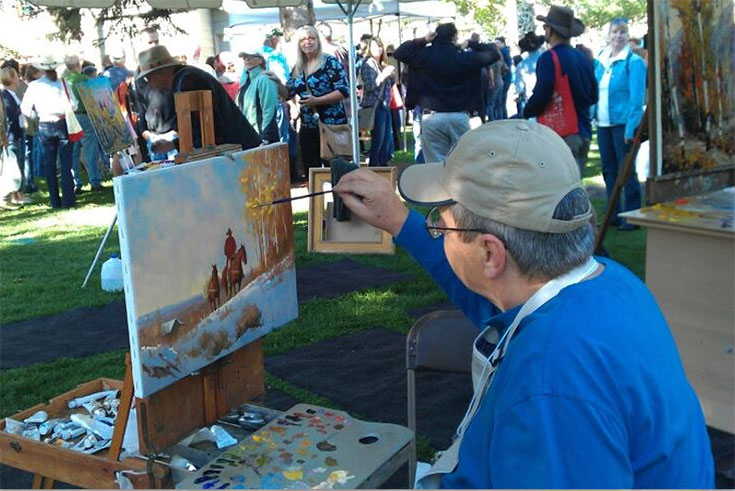
2021’s featured artist, Gary Lynn Roberts, is a longtime participant in Jackson Hole’s Fall Arts Festival. Roberts is pictured here, painting in a previous Jackson Hole QuickDraw.

JACKSON HOLE SHOWCASE OF HOMES

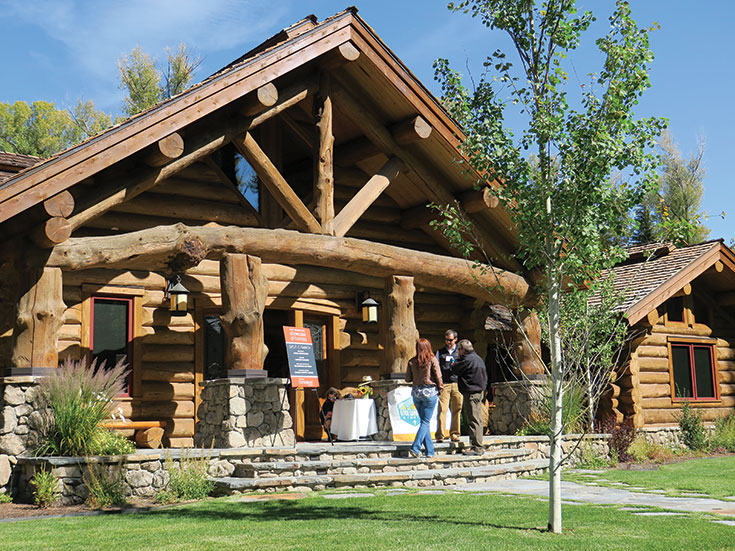
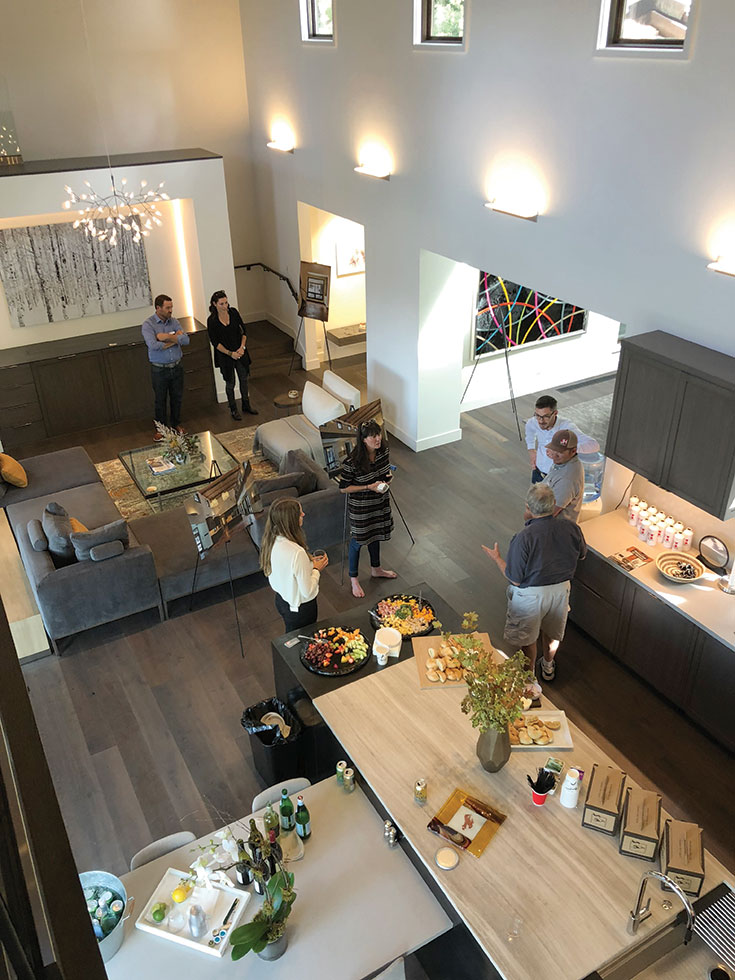
On Friday, September 17, Jackson Hole Showcase of Homes
is a one-day, self-guided tour of some of Jackson Hole’s most spectacular new homes, inspired by the natural beauty of this valley. Attendees personally engage with the talented professionals who designed, built and furnished the residences, getting an intimate view of their creative genius. In addition
to providing a firsthand look at the work of the accomplished professionals, this unique tour is a fundraiser for the community, with all proceeds going to local charities.

WESTERN DESIGN CONFERENCE EXHIBIT + SALE

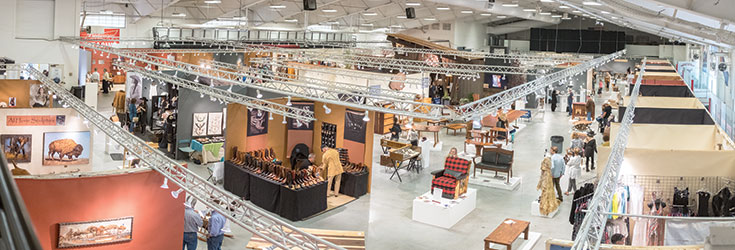
The Western Design Conference Exhibit + Sale kicks off the Jackson Hole Fall Arts Festival with its Preview Party on Thursday, September 9, from 6 to 10 p.m. Snow King Event Center is magically transformed to host a party like no other—cocktails and wine, hors d’oeuvres, artists’ and designers’ booths to shop, museum-quality art displayed on pedestals competing for $20,000 in cash awards, an art auction, a live runway fashion show and a six-room designer show house. Over 100 artists and designers from all over the country who love the West come together to showcase their work in furniture, fashion, jewelry, leather, interior design and more. The Exhibit + Sale continues Friday through Sunday.
Western Design Exhibit + Sale floor

QUICKDRAW

Jackson Hole is famous for its QuickDraw, the premier live, fine art event of the Fall Arts Festival. On the town green the public can watch internationally recognized artists create masterpieces in 90 minutes, which immediately go to live auction. Midway through the auction, Gary Lynn Roberts’ oil painting of the Wort Hotel is up for bid. The QuickDraw can be viewed and bid on either in person or online.

PALATES & PALETTES

Many other events—Palates & Palettes, Takin’ It to the Streets, Sunday Brunch Art Walk, to mention only a few—are taking place during Jackson’s 12-day Fall Arts Festival. Check the calendar of events for details and contact information. After the long year of isolation and quarantine, this is the year to again celebrate in person and share your love of art and nature!

FALL ARTS FESTIVAL CALENDAR OF EVENTS


Western Design Conference Preview Party + Fashion Show
September 9th
6–10 p.m.
Snow King Event Center

Western Design Conference Exhibit + Sale
September 10th-12th
10 a.m.–5 p.m. Snow King Event Center

Palates & Palettes
September 10th
5-7 p.m.
Various Jackson galleries Free event

Western Visions Opening
September 10th
National Museum of Wildlife Art

Takin’ It to the Streets
September 12th
Downtown during the afternoon

Poster Signing with Gary Lynn Roberts
September 15th
4-6 p.m.
West Lives On Gallery Free event
Posters available at the gallery

Western Visions Artist Panel
September 16th
10 a.m.–12 p.m.
National Museum of Wildlife Art

Western Visions Show & Sale
September 16th
5-8 p.m.
National Museum of Wildlife Art

Jackson Hole Showcase of Homes
September 17th
10 a.m.–4 p.m.

Jackson Hole QuickDraw
September 18th
8 a.m.– 1 p.m.
Town Square

Jackson Hole Art Auction
September 18th
1-8 p.m.

Sunday Art Brunch
September 19th
10 a.m.–2 p.m.
Various galleries Free event

A Cabin in the Woods

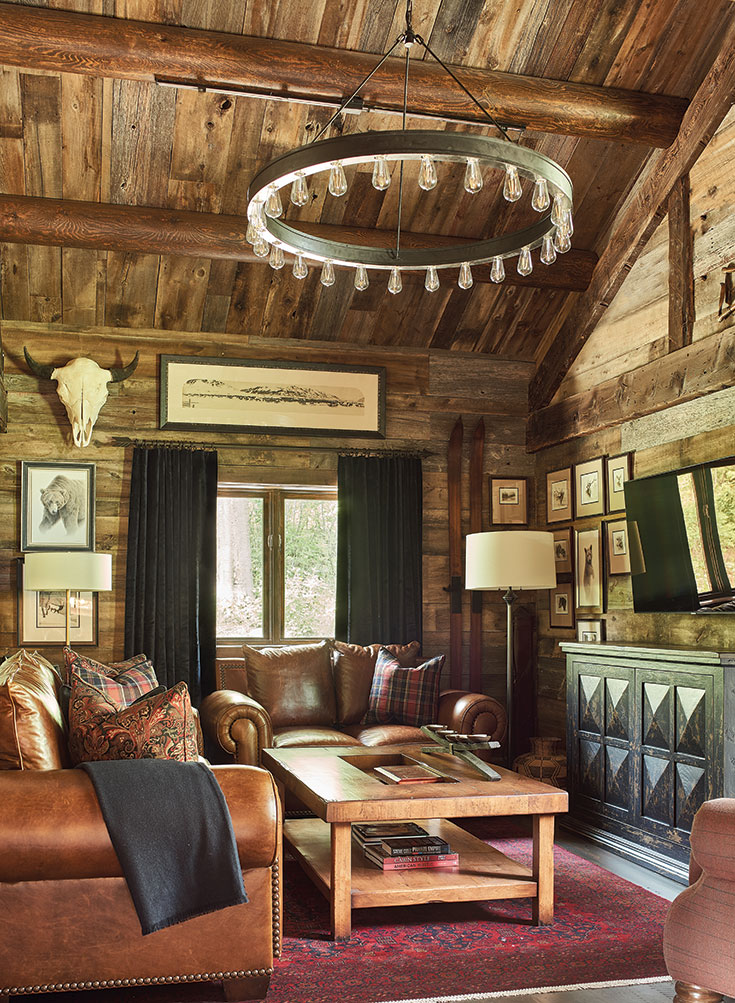
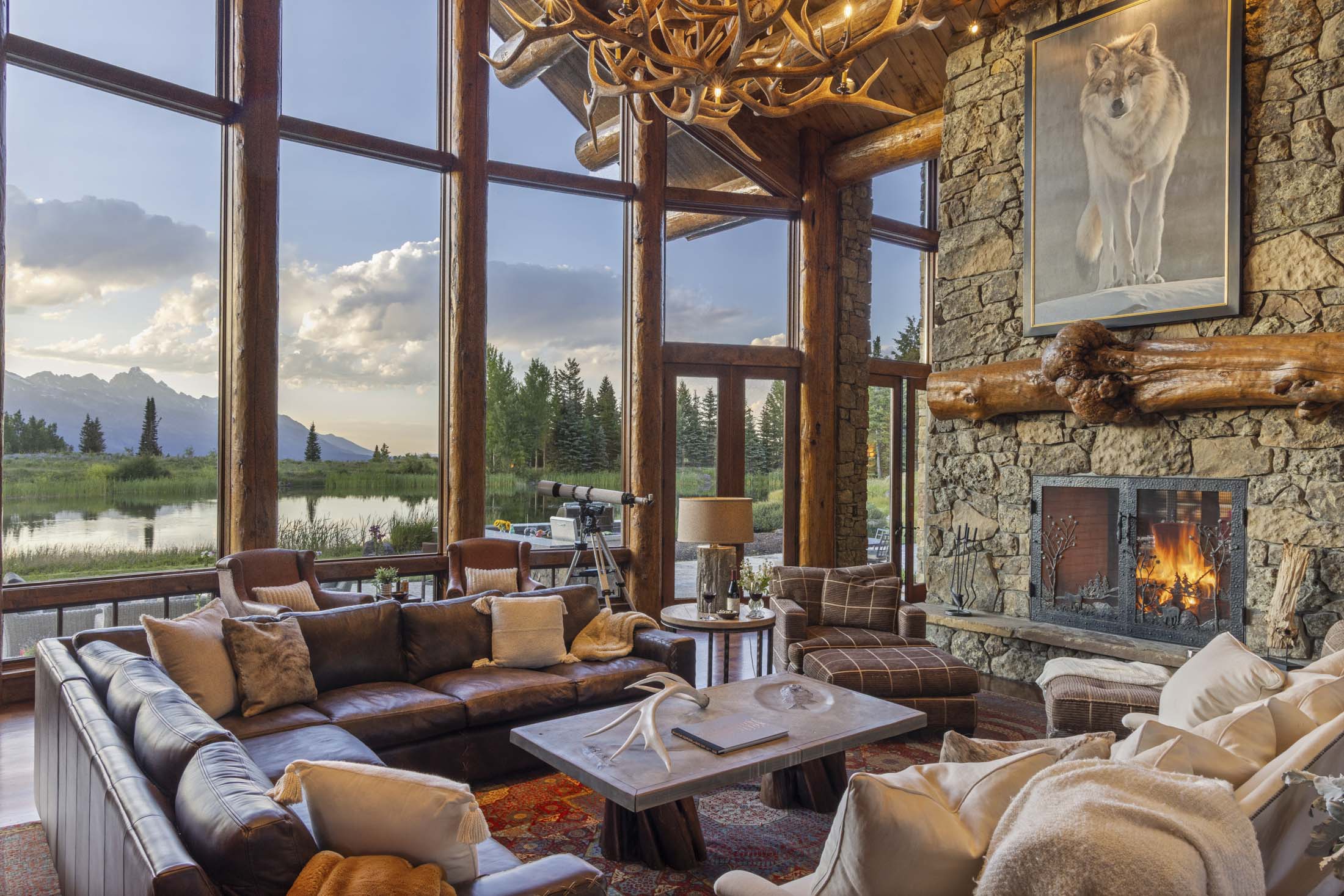
A custom coffee table anchors the overstuffed array of leather seating defining the living area.


Story By
KATY NINER
Photos By
DAVID AGNELLO

INTERIOR DESIGN
WILLOW CREEK DESIGN GROUP
WILLOWCREEKHF.COM

CONSTRUCTION
SERENITY BUILDERS
SERENITYINC.COM

LANDSCAPING
GROWIN’ GREEN
GROWINGREENJH.COM

In the sea of contemporary projects permeating the valley, one couple’s clear vision for the old shelter on their new Fall Creek property stood out as singular. Immediately evocative, Ryan and Kristy Rans’ design decree was: Transform the humdrum structure into a classic rustic cabin, with every surface sheathed in barnwood and every room filled with commodious, overstuffed furniture.

Rising to the challenge, interior designer Colleen McFadden-Walls, of Willow Creek Design Group, builder Steve Stuchal, of Serenity Builders, and landscape architect Ben Bartlett, of Growin’ Green, reimagined the wooded property into a throwback refuge reminiscent of a historic hunting and fishing lodge. For this first phase of the property’s redevelopment, the Ranses charged the team to think Ralph Lauren luxury meets mountain functionality.

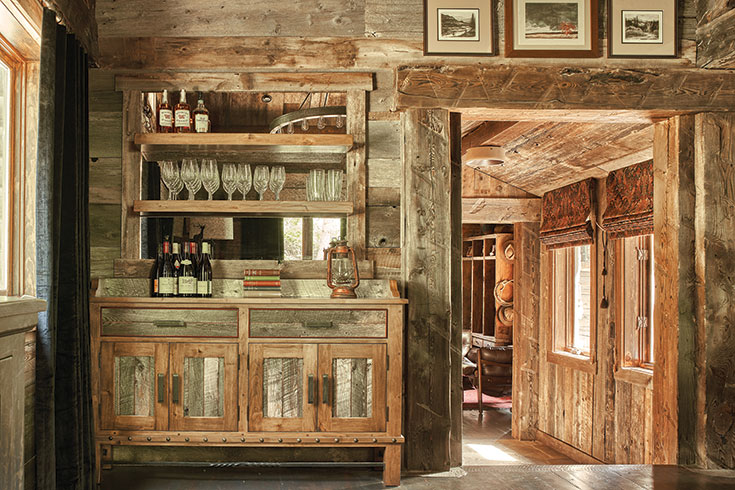
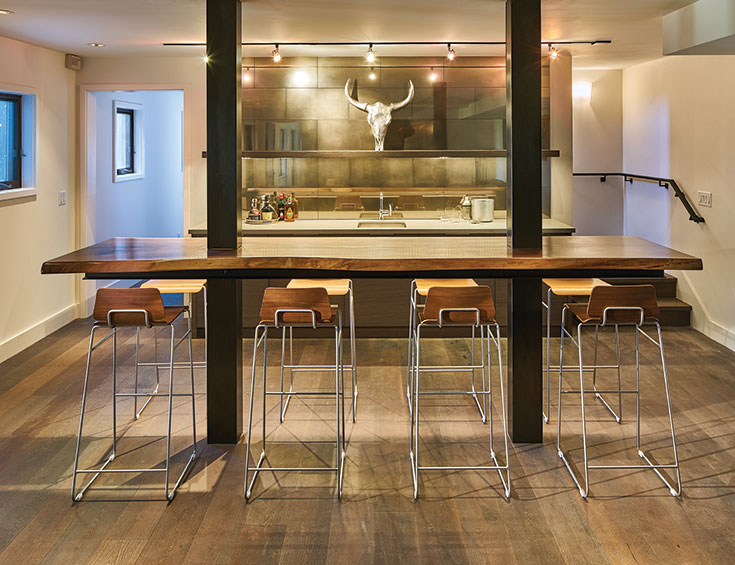
A barnwood bar cabinet and custom floating shelves, backed in antique mirrors, take cocktails up a notch.

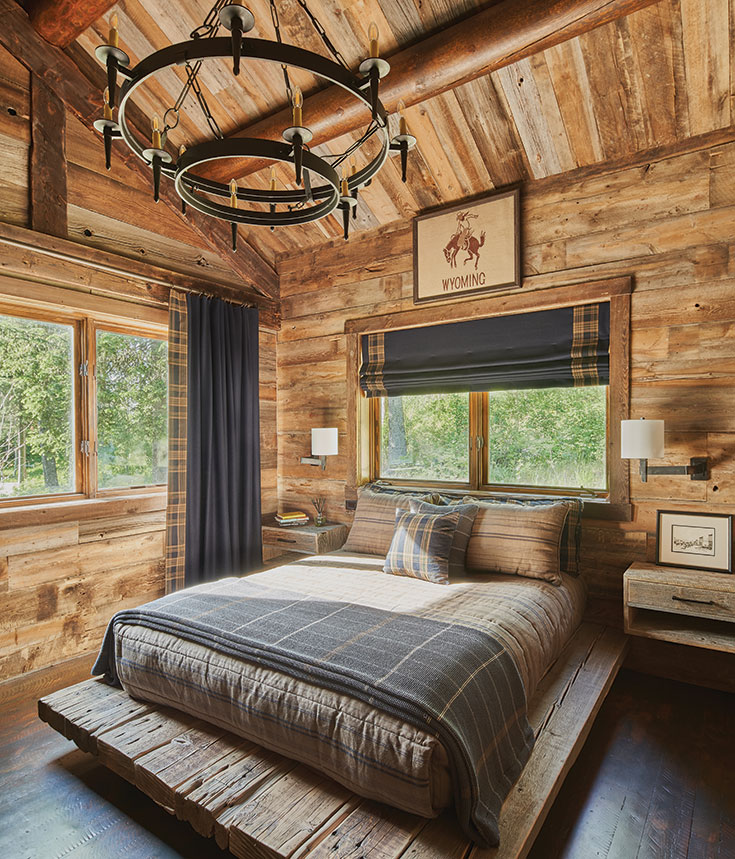
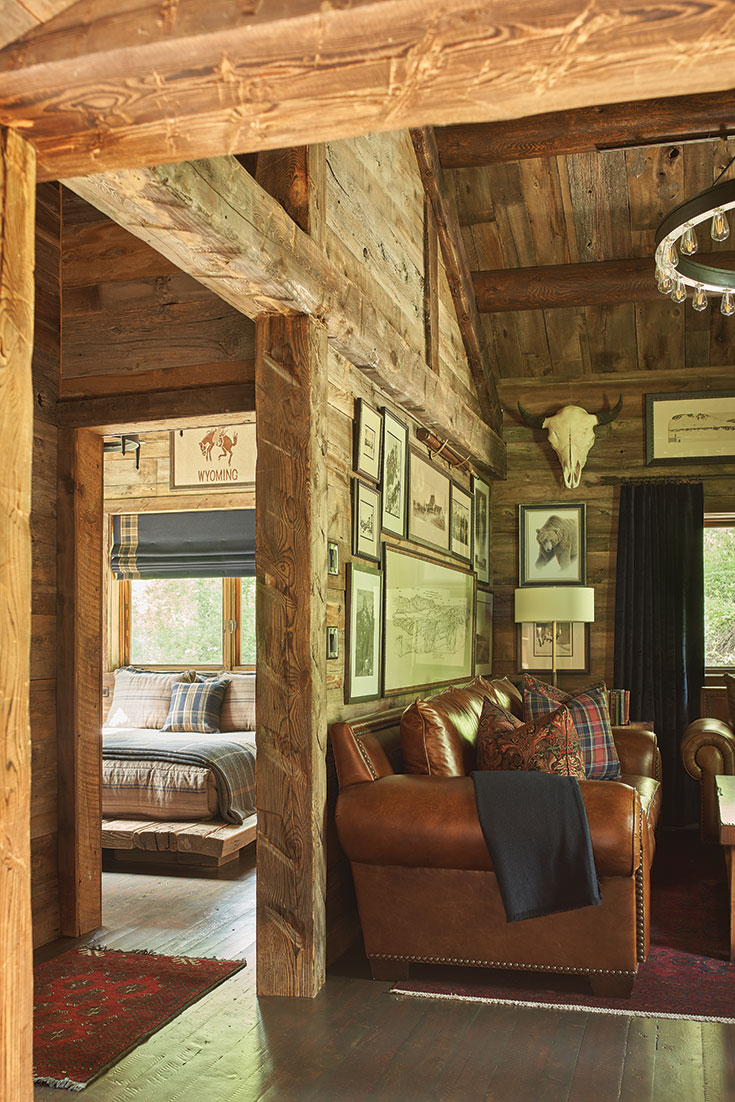
Sourcing reclaimed timber from Ridgeline Log and Timber, Stuchal covered every structural surface in rugged planks and refinished the hardwood floors, removing the original red to match the dark brown of the barnwood. To complement such texture and tone, McFadden-Walls applied a warm, dark palette to the custom furnishings, all designed by local artisans: a rich brown, studded leather sofa and matching loveseat made all the more plush with tartan and paisley pillows; striped natural linens tucked over the king bed, which sits atop a barnwood platform frame; navy drapes bordered in plaid folding graciously over the big windows in the master bedroom.

An equestrian-inspired chan- delier hovers above the custom barnwood platform bed.

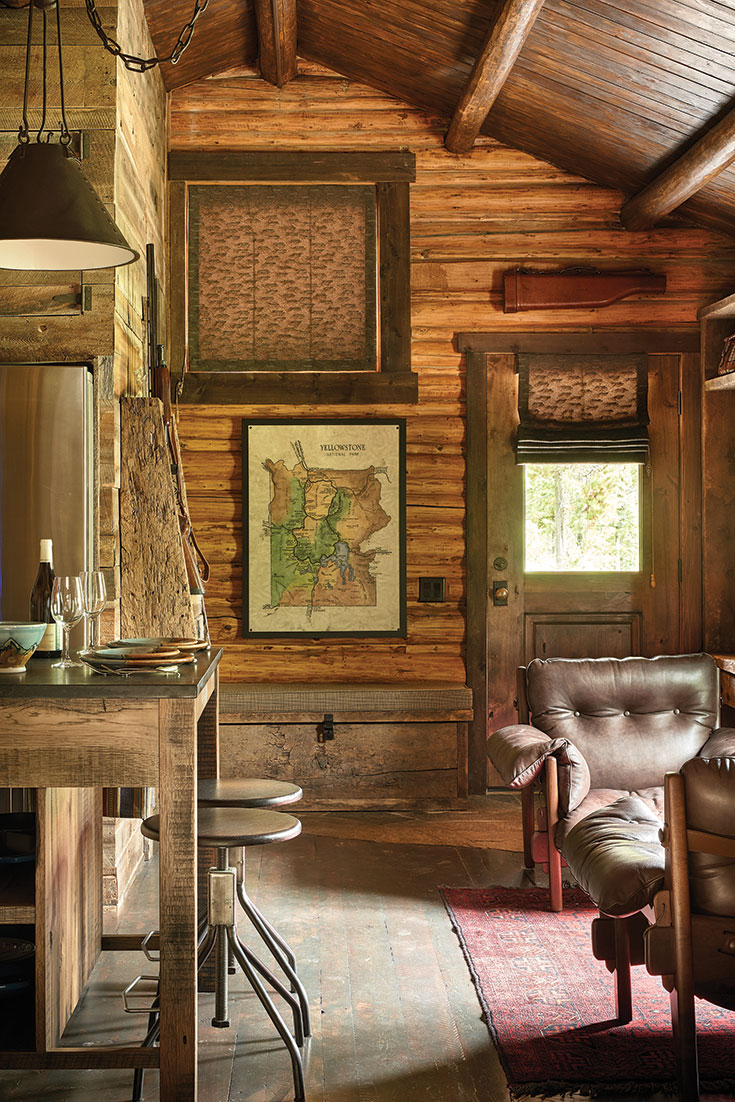
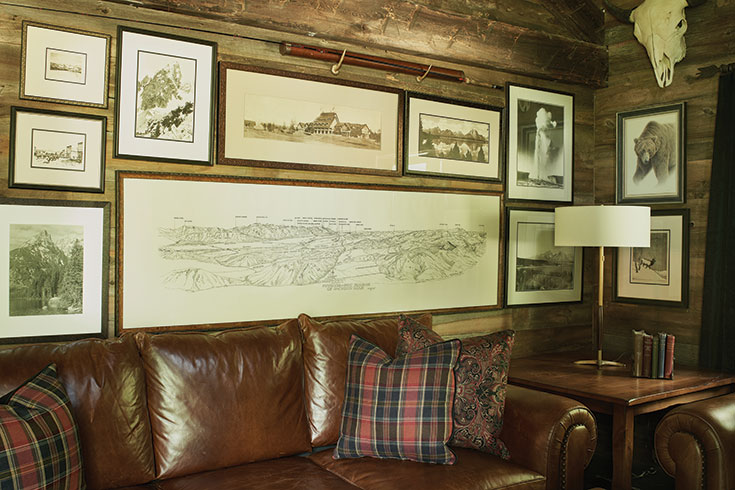
Working within the concise footprint, McFadden-Walls was able to create many character-rich vignettes. A pair of leather sling club chairs atop a crimson Oriental rug invite repose. Metal stools allow for perching beside the kitchen island. And the barnwood cubbies flanking the front door make a ritual of disrobing after outdoor adventures. For the pièce de résistance, the designer curated a gallery wall in the living room featuring antique area maps and vintage Yellowstone and Jackson Hole landscape and wildlife photography. Scouring many sources, she amassed pieces conveying personality of place and anchoring the project in historical memory.
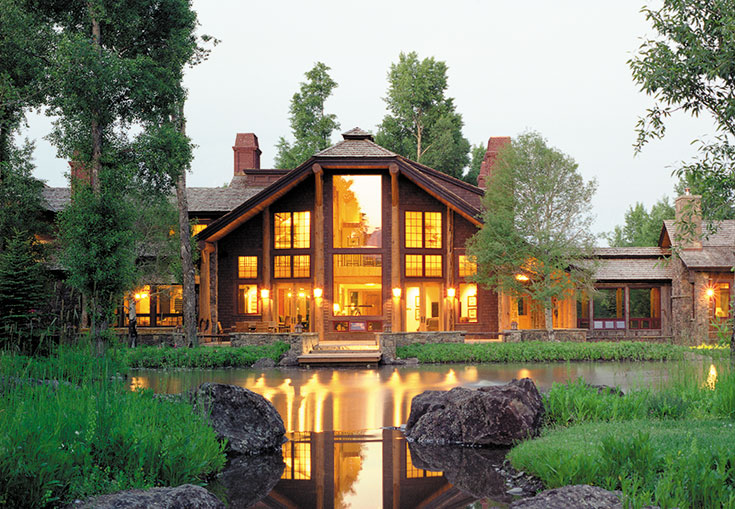
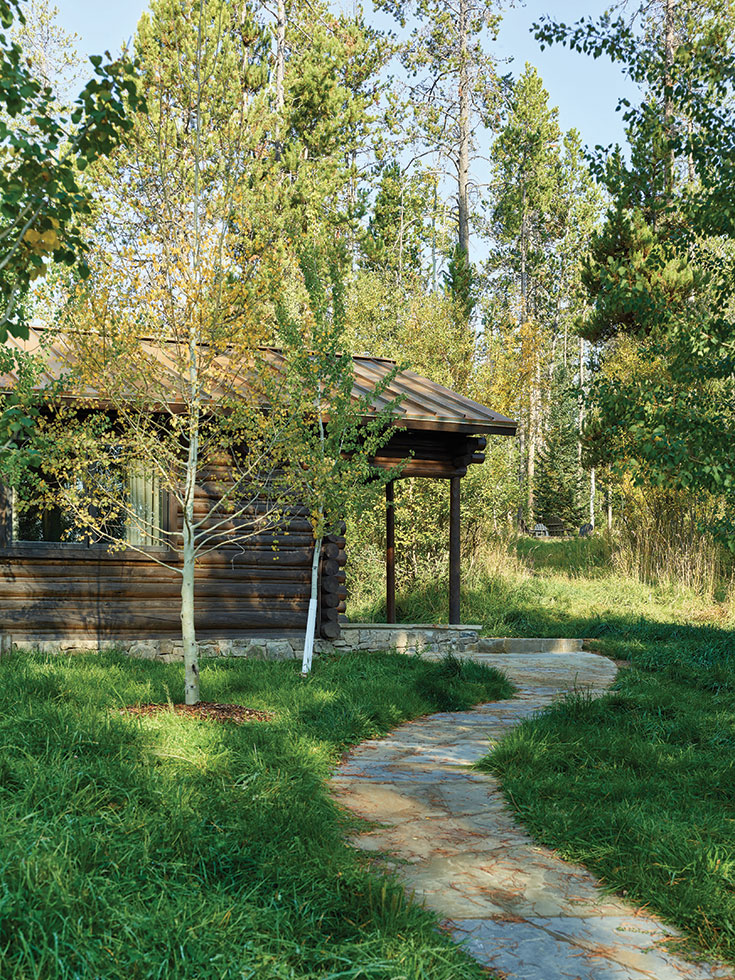
The landscape design echoes the rustic authenticity of the interiors with stones and native grasses guiding visitors to the cabin.

Untethered to a signature aesthetic, McFadden-Walls loved embracing a style
so different from the pack—a design scene she knows well, having owned Willow Creek Home Furnishing on the Town Square for 25 years. Since retiring from retail, she has partnered with senior designer Renee Crawford. Together, they launched Willow Creek Design Group. True to her philosophy as a designer, McFadden-Walls sees her role as helping her clients’ visions come to fruition. “I listen to my clients’ wishes and take them in that direction as best I can,” she says. “The Ranses described and defined their goals very well, and I helped them get there.”

To evoke place and history, interior designer Colleen McFadden-Walls created a gallery wall of vintage local photography and maps.

Stuchal underscored the clear direction given by the Ranses and their bestowal of trust-based free rein to realize their vision as the team saw fit. “Ryan would send us a picture and say, ‘This is what I want the cabin to look like, with a fishing net on the wall and a custom gun rack out of barnwood,’” the builder recalls. While some people may say they want a “rustic” cabin, that image often falls short of the conveniences they ultimately desire. Not so with this client. Stuchal appreciated his unwavering commitment to the concept, which spilled beyond the interior to inform the exterior as well. For instance, Rans deemed the original standing-seam metal roof to be too contemporary, requesting instead a rusted version. And when parts of the foundation surfaced, Stuchal sourced Montana moss rock to patch over it, dousing the rocks in beer to activate the moss—the epitome of “no stone left unturned” in the team’s quest for rustic authenticity.
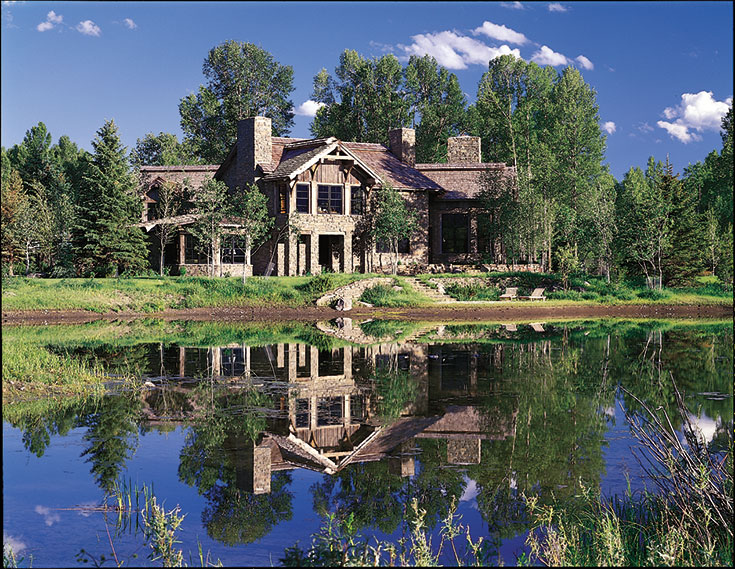
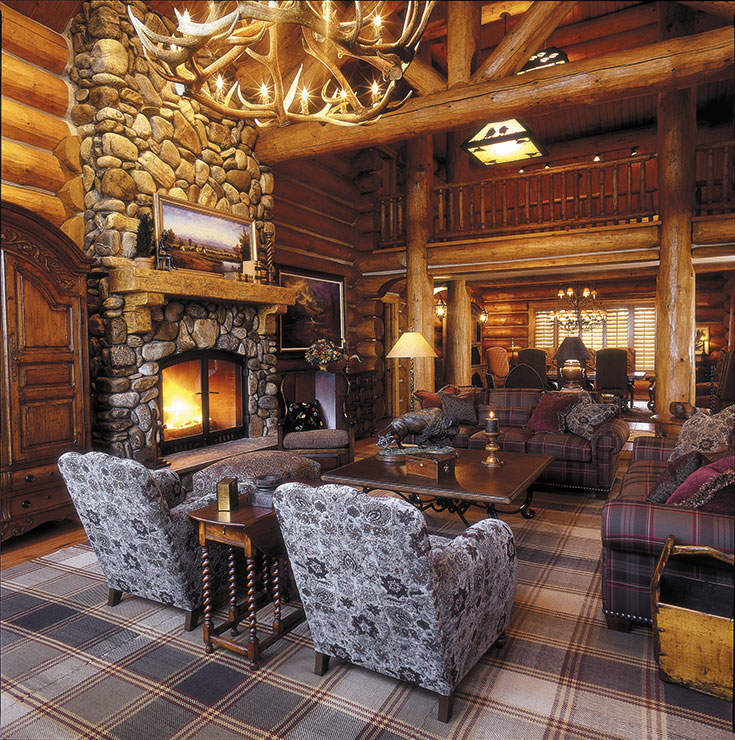
McFadden-Walls and Stuchal teamed up to make each room’s timber application subtly distinct and adjusted the floor stain to provide a warmer backdrop for the rich furnishings.

Wellness is the New Wealth

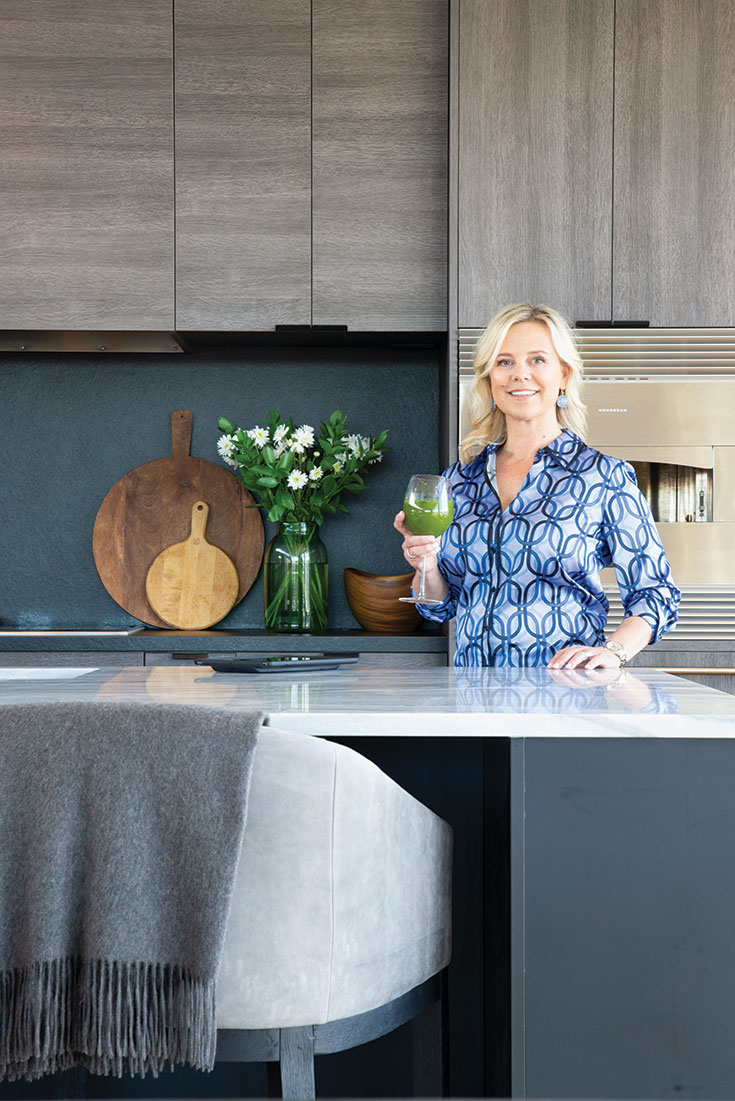
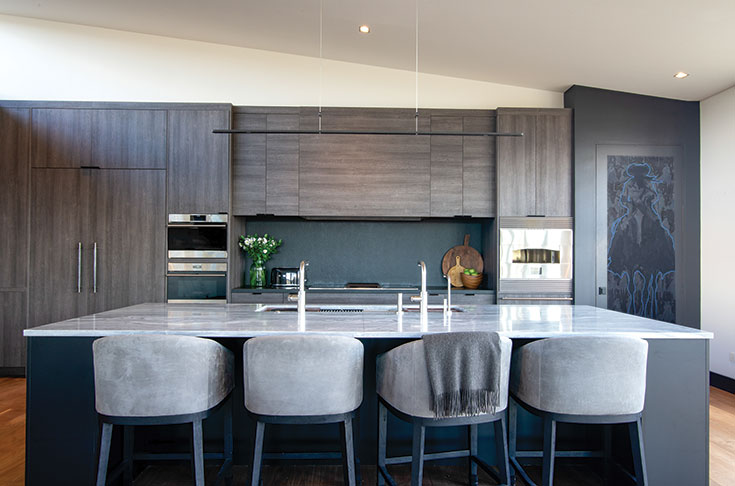
The sustainable, biophilic and accessible kitchen, shown here with Principal Designer Patricia Kennedy, features an integrated juicing station, vegetal refrigerator drawers and an organic herb garden for wellness cuisine. Lighting, shading, music, climate and security are all controlled from the Smart Home iPad, increasing quality of comfort at home.


Story By
PATRICIA KENNEDY
Photos By
MELINDA DUQUETTE

INTERIOR DESIGN
RENDEZVOUS DESIGN
RENDEZVOUSDESIGN.COM

CONSTRUCTION
TETON HERITAGE BUILDERS
TETONHERITAGEBUILDERS.COM

ARCHITECTURE
NORTHWORKS
NWKS.COM

We spend more time at home than ever before. For an interior designer, this significant shift requires an existential analysis of our fundamental ways of living, with emphasis on “wellness” in design. So, what is “wellness design”? There are three main aspects: physical, emotional and visual. The physical aspect encompasses climate, cuisine, comfort, cleanliness and security. The emotional aspect welcomes relaxation and rejuvenation through spa, sleep and sport. The visual aspect connects to nature through sustainability, biophilia (nature-inspired patterns) and neuroaesthetics (impact of positive psycho-physiological design).

Rendezvous Design has developed a methodology called Interiors for WellnessTM—wellness design for interiors increasing quality of life at home.

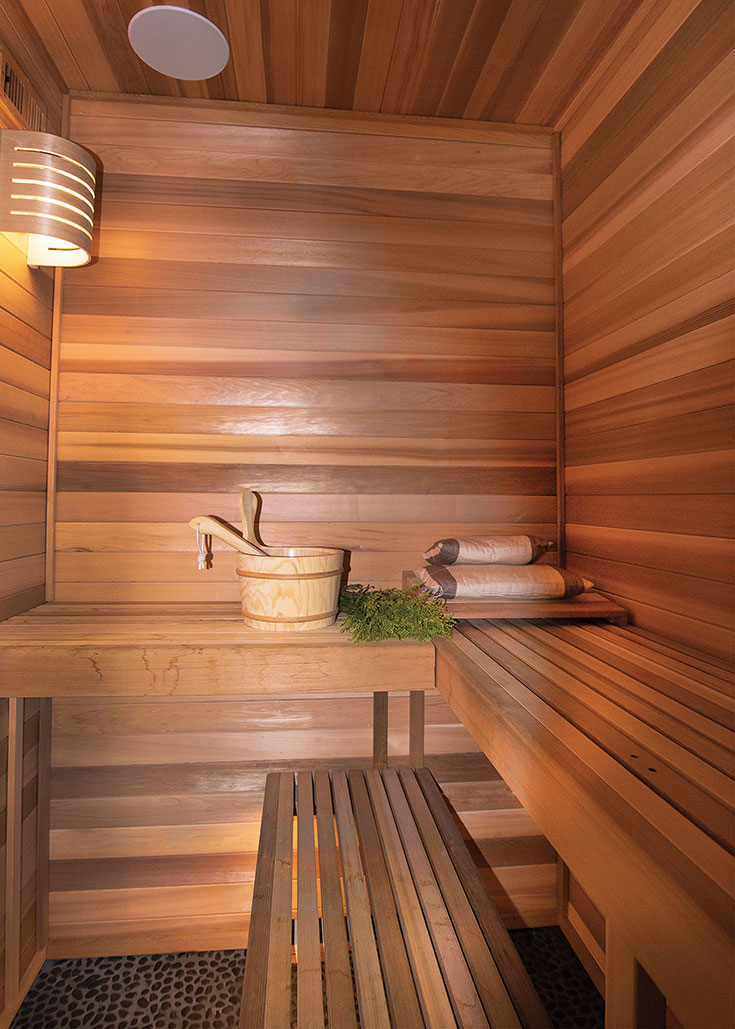
Relaxation and rejuvenation abound in this Finnish sauna. Multisensory design is achieved through aromatic cedar-clad walls, eucalyptus-infused water poured over hot coals, pebbled flooring that induces reflexology, nature music streaming from an integrated speaker and soft-glowing LED lighting.

The studio recently completed the design and build of a meditative mountain modern home incorporating Interiors for WellnessTM methodology. The spectacular site parallels the Teton mountain range and is perched 500 feet above the valley, where eagles soar. The home’s design was inspired by renowned architect Ludwig Mies van der Rohe’s Farnsworth House, famous for its seamless connection to nature. Rendezvous Design’s principal designer, Patricia Kennedy, envisioned an open-plan glass pavilion to serve as an observatory for the ever- changing light, seasons in the valley below and migrating wildlife. The sustainable materials, biophilic accents, panoramic and clerestory glazing, and flanking outdoor decks effortlessly connect the home to the natural surroundings.

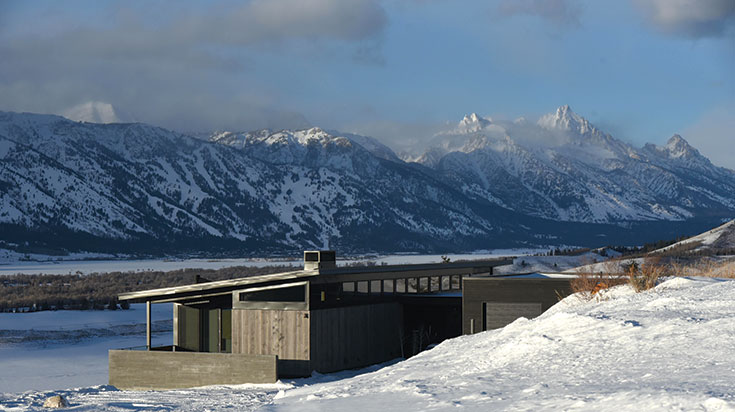
PEACE OF JACKSON Mountain modern home merges with The Grand in this dreamy snowscape. Sustainable reclaimed barnwood, wire-brushed Accoya, metal and board-formed concrete envelop the exterior.
This wellness-designed home will be featured in Homestead magazine’s Jackson Hole Showcase of Homes on September 17, 2021, from 10 a.m. to 4 p.m. Please come visit to see how this future-forward home design embraces nature and essential well-being.

Kennedy took a deeper dive into wellness through multisensory design by addressing all five senses to transcend the daily living experience: LED light layers and shading induce circadian rhythm, which improves sleep; sound attenuation in building materials and furnishings controls acoustics for improved concentration; aromatherapy infused throughout the home physiologically lifts mood.

The open-plan kitchen functions as a social hub: The enlarged, honed-marble island includes a Ruvati 5’ Workstation sink and bar stools that stand ready for serving up pizza. Wolf induction, grill and teppanyaki modules encourage flexible and fun cooking. The neuroaesthetic addition of Duke Beardsley contemporary cowboy art ties to Wyoming’s Wild West.

The gourmet kitchen features the latest technology for new modes of cooking, including an electric pizza oven that serves up pizza in 20 minutes! Wellness spa features like the Finnish sauna, eucalyptus-infused steam shower, chromatherapy (color therapy) soaking tub and 10-person outdoor hot tub with waterfall soothe mind, body and soul. Integration of Aging-In-Place upgrades and accessibility welcomes multigenerational living, increasing the home’s usability and long-term benefits. Overall, the residence’s connection to nature and serene experience truly inspire well- being, living up to its name, Peace of Jackson.

Leading with Integrity & Attention

Shooting Star’s Cirque View Homestead embodies thought- ful living inspired by place, cared for with the expertise of The Clear Creek Group.


Story By
JENN REIN
Photos By
KRAFTY PHOTOS + GORDON GREGORY

PROPERTY MANAGEMENT
THE CLEAR CREEK GROUP
THECLEARCREEKGROUP.COM

FURNISHINGS
WILD WEST DESIGNS
NEWWESTFURNITURE.COM

The draw that beckons all walks of life to Jackson Hole is the surrounding landscape, abundant with nature’s beauty. To some, this atmosphere is seen through the high-caliber luxury rental market and the partnerships that exist to best serve that experience. Discerning travelers who are able to revel in this special view of Teton life rely on the legacy of The Clear Creek Group to make their visits memorable.

The Clear Creek Group’s founder, Morgan Bruemmer, and his staff foster integral relationships with second homeowners in order to deliver consistency, whether for caretaking or villa rental services. “The property owners who generously share their spaces make our mission worthwhile,” he says, “and
the level of trust we establish in caring for these homes gives visitors the opportunity to enjoy what might be a once-in-a-lifetime experience.”

The heart of the home is illuminated at The Clear Creek Group’s Aspenglow property, located at Jackson Hole Golf & Tennis.

This trusted foundation is critical to the success of the firm. In business for nearly two decades, The Clear Creek Group is considered a true pioneer in a competitive market that shows no signs of slowing. The enduring commitment to excellence and the level of care offered by this team speak to the niche they have carved out as experts in upscale property management.

The loyalty of the homeowners who shape The Clear Creek Group’s villa rental portfolio is a testament to the specialized treatment they enjoy. “We take pride in our responsiveness to the needs of our homeowners and their properties,” Bruemmer says. It is this respectful consideration that breeds an ongoing commitment between the firm and the property owners, who know with certainty that their homes are in reliable hands.

Maintaining the rental properties within its portfolio with great care, The Clear Creek Group is poised to take the outdoor living experience in the Tetons to luxurious heights.

The Clear Creek Group’s reputation has established a space for the firm that is unique and exclusive. Elevating the experience in one of the most spectacular locations in the U.S. means leading with integrity. The quality of this leadership continues to set this team apart, and those second homeowners who engage their services gratefully reap the benefits.

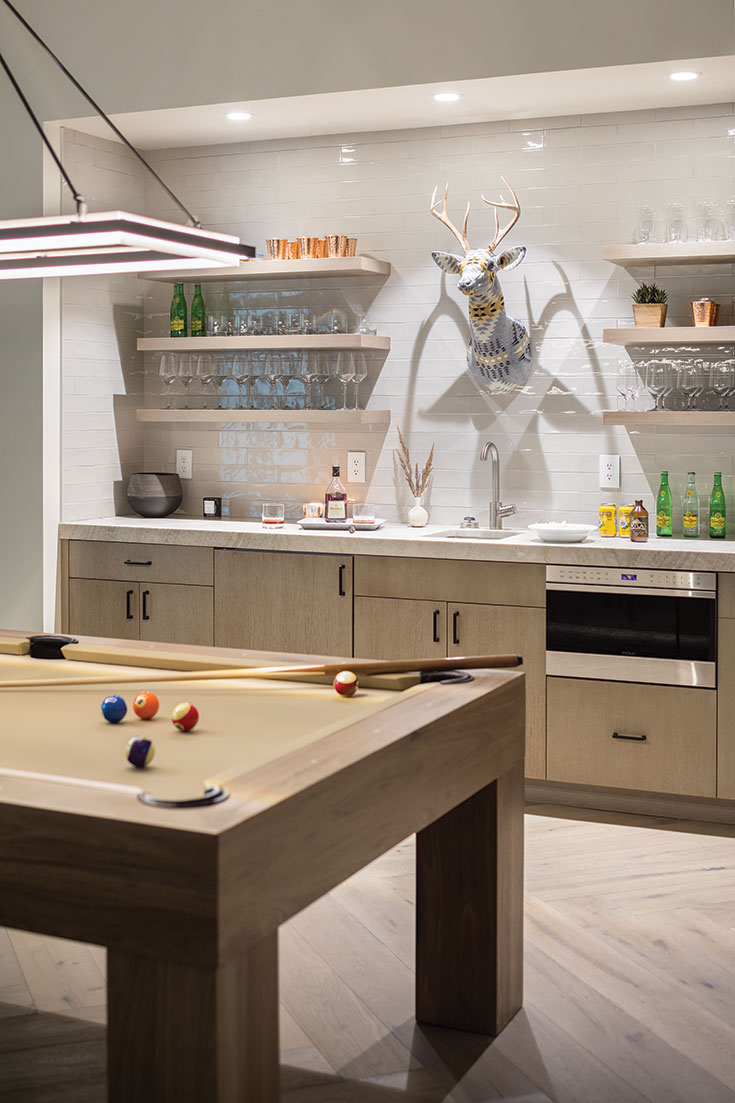
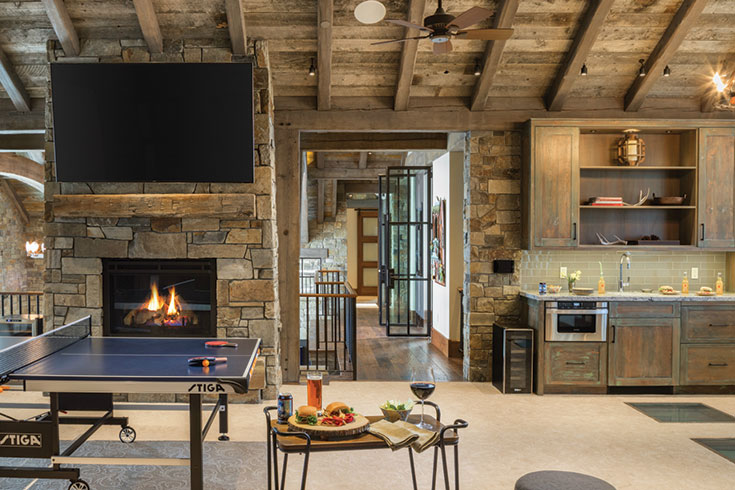
The game room at Cirque View Homestead reflects the abundance of choice and comfort that can be found when choosing one of The Clear Creek Group’s properties for your Teton experience.

20 Years Of Reflection + Inspiration


Story By
ZACHARY DYMOND BARNETT
+ ELIZABETH CLAIR FLOOD

Since Homestead’s inception in 2001, homebuilding design in Jackson Hole has evolved significantly. And yet, some goals and challenges have remained the same. For this special anniversary issue, we interviewed a wide range of our valley’s top design experts to get a sense of where we were then as a community and how far we’ve come in the ensuing two decades.

WESTERN STYLE | THE EARLY 2000s

When this magazine launched in 2001, the large log home still dominated the Jackson Hole landscape, while a new wave of architects was looking for opportunities to employ a more progressive take on Western design. The ’90s had already experienced a few memorable splashes of “modern,” such as Will Bruder’s Riddell Building, Mad River Boat Trips’ wedge structure and Ward + Blake’s integrated designs. And though some of these had set off skirmishes in the press, they’d also bumped the needle toward a more expansive narrative about the future of Jackson Hole design. Recalls architect John Carney, “Steve Dynia and I were always talking about what Jackson would be. Would it be a Disney version of a frontier town? You couldn’t be a complete modernist because you wouldn’t get any jobs. I’d say, ‘Steve, you can’t do that kind of work here, you need gable roofs.’”

Fighting Bear Antiques

Meanwhile, a multitude of second-home buyers, gentleman ranchers and Wall Street moguls were now arriving with hopes of realizing their frontier dreams. As their modern sensibilities combined with a traditional, rustic homage to early Jackson Hole days, a new, more complex Western style emerged.

Architects willing to fulfill the more traditional ranch dreams at that time, such as Danny Williams, Roger Strout and Ellis Nunn, along with talented “log dogs” like Callum Mackay and Steve Leonard (now of Wilson Timber and Log), were experiencing a boom. Our Homestead issues then celebrated log lodges appointed with early 20th-century furniture, Navajo rugs and elk mounts displayed over large, stone fireplaces. Paintings by landscape and wildlife masters, like Carl Rungius and Conrad Schwiering, as well as work by local maverick and pop artist Bill Schenck, hung on cabin walls. Keeping up with the demand, Jackson interior designers like Elisa Chambers, of Snake River Interiors, Terry Trauner, now with Trauner Fay Designs, Pamela Stockton, of Stockton & Shirk Interior Designs, and others created nostalgic, iconic interiors with bold browns and reds and cowboy imagery.

Ellis Nunn + Associates and Teton Heritage Builders

A WALK THROUGH TIME …

LEFT The Red Chair
MIDDLE Gallinger Trauner Designs
RIGHT Ellis Nunn + Associates

Residents often come to an architect with predetermined ideas—a rugged log home, a rustic, elegant timber- frame lodge, or lately, a contemporary blending of new technology and traditional materials.
—HOMESTEAD 2001

Dan Schou Construction
Berlin Architects
Harker Design

“In 2000, we were replicating what happened here in the 1920s, ’30s and ’40s,” says antique dealer, stylist and leading vendor of the area’s primitive furniture Terry Winchell, of Fighting Bear Antiques. “The way that I saw it was that I should be selling the stuff that was in a Wyoming lodge in the 1920s, whether it was a Charlie Russell painting, a Navajo rug or a Thomas Molesworth club chair.” Jackson was originally a poor town of one-room cabins, sheds and metal Quonset huts. In the early years, it didn’t boast a significant architectural or interior style, except for the sophisticated Western look at local dude ranches like the Rockefellers’ JY Ranch and Struthers Burt’s Bar BC, and lodges like the Old Faithful Inn. These homegrown interiors blended local art with Indian blankets and baskets, simple cowboy pole chairs and tables, and Arts and Crafts furniture by nationally renowned artists Gustav Stickley and Charles Limbert.

LEFT Roger Strout Architects
MIDDLE Bontecou Construction
RIGHT Dembergh Construction

One of the most influential architects of the early 2000s, Jonathan Foote created fashionable, rustic retreats in keeping with this historic culture to accommodate the gentleman rancher’s desire for a larger, yet more efficient space. Captivated by the local ranch and dude ranch vernacular, Foote used authentic cabins and barns and essentially linked them together to create larger homes that were in keeping with the wide-open, rugged landscape.

Danny Williams Architect

“When invading this scenery with a house, one of the first concerns I had was how it was going to live in that scenery without spoiling it,” Foote says. By using rustic materials, he invented a successful model for romantics seeking a classic Western hideaway.
“The romance with the West at that time really drove our sensibility around place,” says Foote’s then partner, Paul Bertelli. “We felt these buildings needed to look and feel like they belonged in the West.”

Laurie Waterhouse Interiors
LEFT Wild West Designs
MIDDLE Kismet Fine Rugs
RIGHT Strout Achitects

It was the contrast of building modern buildings in a rural area. It was almost like a dare.
—STEPHEN DYNIA, DYNIA ARCHITECTS

MOUNTAIN MODERN | 2008 – 2020

In the following decade, contemporary homes gained traction as newcomers craved picture windows framing extraordinary landscapes, lighter rooms and more energy- efficient buildings. This was in contrast to the perception of log homes as inherently dark, heavy, cumbersome and out of proportion—exaggerated versions of the old homestead, hence the popular jab, “log cabins on steroids.” Commenting on these cowboy interiors at the time, The New York Times style writer Patricia Beard admonished, “The style makes a bow-legged cowgirl shake in her knees.” People were ready for something new.

“The log home ended with the crash of 2008,” says Peter Lee, of Teton Heritage Builders. “Log homes haven’t completely gone away, but pre-2008 was the era when people were weaned on John Wayne, and they liked that rustic feel and the idea of the Jackson Hole cabin. There was a transition after the 2008 crash to mountain modern, mountain contemporary. There was timber frame, then timber, then steel eventually. Seventy percent of our business today is steel structures.”

E/Ye Design and Henderson Construction

“Once styles started to open up and become more contemporary, we felt the lid come off,” says Toby Grohne, of TKG Construction. “The style was partly driven by aesthetics, and I think a lot of it was driven by zoning changes.” In certain neighborhoods, restrictions on roof heights called for lower buildings. Flatter, less gabled roofs helped clients achieve comfortable, two-story homes within the rules.

“We started to see the use of reclaimed wood as accents in interiors; spaces were a little bit brighter rather than heavy timbers with exposed fasteners and large trusses,” says Jed Mixter, of Two Ocean Builders.

Hoyt + Harger/CTA Architects
LEFT Dwelling
MIDDLE Grace Home Design
RIGHT Snake River Interiors and Hoyt + Harger/CTA Architects

During this time, Dynia continued to challenge the norm with rusted steel, flatter roofs and modern shapes. Ward + Blake was integrating structures into the landscape with flat or butterfly roofs, while Carney and others expanded on this conversation, meeting a demand for even more modern- style buildings. “We were all working toward abstract interpretations of the classical West,” Carney says, “all of us moving in our own way to push this thing forward.”

Dan Schou Construction and Mountainscapes

As we moved through the 2000s, this transition continued to be peppered with resistance. When Dynia and Carney finished the theater for the Center for the Arts in 2007, an old-timer questioned Carney: “Where are the logs?” Others received similar pushback.

“When we started with sod roofs, people thought we’d lost our minds,” recalls Tom Ward, of Ward + Blake Architects. “It was Mitch and Tom naked and barking in the woods. Now people are more open to the concept. They’ve gone from ultra-conservative to conservative to much more open-minded.”

E/Ye Design and Henderson Construction

As contemporary visionaries stepped forward, the question persisted: Were these buildings in keeping with place? Did they fit into the natural landscape and connect in a cultural context? This has to be asked about how “boxy” things have become in east Jackson, for example, where older homes are being torn down and hauled away at what some locals consider an alarming rate.

“I think modern architecture gets a bad rap in that it is agnostic to place,” says Danny Wicke, Carney’s partner at their new enterprise, Prospect Studio. “I don’t necessarily think that is true. You can do a lot of contemporary design that still harkens back to place and the context and can have a relationship with past and present.”

LEFT Carney Logan Burke Architects
MIDDLE Berlin Architects and Bontecou Construction
RIGHT Dynia Architects and CLB Architects

Now, as before, this valley provides evolving opportunities for designers. “Jackson is a very young town, and there really isn’t much of an architectural style here,” says Adam Janak, of Northworks Architects, who enjoys exploring many different styles. Recently, with a nod to the past, but also a distinctly modern aesthetic, Janak updated the classic farmhouse style with large windows and simple cedar siding painted black, creating a classic, yet original modern home.

WRJ Design

Meanwhile, interiors have also evolved. Bertelli, of JLF Architects, continues to create highly sought-after homes that “look like they were built 100 years ago.” He updates these rugged classics with large, European windows, steel, stone and reclaimed timbers, and a more efficient and contemporary sensibility. When paired with the subtle, muted tones and luxury styles of interior designers Rush Jenkins and Klaus Baer, of WRJ Design, authors of Natural Elegance, and Jane Schwab, author of The Welcoming House, these homes exude a serene, timeless quality.

ARE WE SUSTAINABLE?

Looking to the future, on everyone’s minds is how we can create sustainable buildings and live more lightly on the land. Our new structures are more energy-efficient than log homes, but are we doing enough? Veronica Dembergh Construction and Dynia Architects Schreibeis, of Vera Iconica Architecture, notices a change in her clients’ mindsets. “There’s a paradigm shift in our society on a massive scale. And as we move into this new era, we’ve all been trained for this. Every single architect has some green knowledge. Our clients are asking, ‘How will the environment serve and sustain us?’ They are more than ever in the self- realization stage.”

Dembergh Construction and Dynia Architects

Others notice little change at all. “After the crash, we thought that maybe we’d see behavior toward a little smaller, a little greener,” Lee says. “I even started a side business 10 years ago, called THB Energy Solutions, to retrofit homes with geothermal heat and solar panels. And it was a lackluster business. I’d show clients how they’d get a 14 percent return on their business, and they’d say, ‘Meh!’ I don’t know if I’m going to be here in seven years.”

That said, green building materials, renewable woods like bamboo, and recycled materials are being used now more than ever. “The county also holds us to a high standard of constructing energy-efficient buildings,” says Mixter, of Two Ocean Builders. “And, because we’ve now got all these great European windows with their triple glazing, we’re meeting county codes for energy efficiency with bigger glass.”

“Building science has evolved toward green across the board,” says Andrew Miller, of JH Builders. “We are using better materials and processes, so everything is greener. We went to D.C. and got our PHIUS (Passive House Institute U.S.) certification, but there is really only one architect in the valley who is pushing it. But, generally speaking, insulation and materials perform so much better.”

LEFT Dwelling and Mill Iron Timberworks
MIDDLE Kinsey Architects
MID-RIGHT Jacque Jenkins-Stireman Interior Design
RIGHT Will Bruder Architects

Clients are asking about green, “but they don’t always want to make a sacrifice to do it,” says Chris Lee, of Design Associates Architects. “That said, we can build a house that is going to be here a long time, a happier and healthier house, without giving anything up, and they like that.”

Grohne notes that, in an effort to minimize waste, more people are remodeling. Others—architects and contractors—report that clients are downsizing. But, while smaller homes under 10,000 square feet are popping up, Bertelli and Peter Lee confirm that they are still building grand family compounds. Just recently, Lee’s company finished an 18,000-square-foot home on the iconic Puzzleface Ranch property. An anomaly, yes, this project stirred controversy and challenged county codes, then surprised our community when the family put their multimillion-dollar home up for sale.

Today, our highly talented pool of valley architects and designers feels responsible for building environmentally friendly, enduring homes. “One of the best green things you can do is keep what you are building out of the landfill,” says Mitch Blake, of Ward + Blake Architects.

WHERE ARE WE NOW?

Today, with all of us turned upside down by the COVID-19 pandemic, it is challenging to imagine where current design trends may lead. Clearly, we are seeing a change in the demographics of homeowners as a wave of wealthy 30- and 40-year-olds moves into Jackson Hole.

“It’s a younger demographic, and more female,” notes Grohne. “They want to see the Tetons, but they don’t necessarily want to be cowboys or live out in the wild.” These newcomers are more interested in living downtown, where they can find a growing offering of amenities and cultural attractions.

This new generation, for the most part, doesn’t necessarily connect to the cowboy myth that dominated the style here 20 years ago. Cowboy accoutrements, fur pillows, skulls and Indian artifacts now seem politically incorrect, says Mary Schmitt, owner of Cayuse Western Americana. “My clients are more interested in historical photographs of this place now than they are in cowboy spurs or wooly chaps,” she says.

Carney Logan Burke Associates, Two Ocean Builders, Dwelling and Mountainscapes

The trend away from the traditional log cabin continues as well, says Jenkins. “I grew up in the West, but when we moved back, we had a desire to move beyond the heavy log look. What we saw was an opportunity in our designs to embrace the rugged landscape around us, what we call ‘interroir.’ It is our signature approach. And yes, we see the clientele changing. We’re having to travel a lot more because you need a rich, deep well to draw from when meeting the needs of an evermore sophisticated taste.”

LEFT WRJ Design
MIDDLE Dynia Architects and Mill Iron Timberworks
RIGHT Ellis Nunn Architects, Two Ocean Builders, Willow Creek Interior Design and Mountainscapes

Giving life to the hopes and dreams that people have for their homes requires a designer to have empathy, a true love of helping others, and a solid understanding of people’s values and how they want to live and express their most authentic selves through their home.
—ELISA CHAMBERS, SNAKE RIVER INTERIORS

Other designers, like Kate Binger, of Dwelling, Jacque Jenkins-Stireman, of Jacque Jenkins-Stireman Design, and Colleen Walls of Colleen McFadden- Walls Interior Design, find clients seeking more original designs with color and contemporary furniture. “We are seeing a trend to incorporate traditional elements, but with a current update,” says Jenkins-Stireman. “Now you can find wools, cashmeres and linens with colorways that are lighter and have more open patterns, so the plaids feel lighter and fresher.”

Design Associates and Snake River Interiors

Says Binger, “Current trends are always the driving force of design in any community, but I like to lean heavily on our environment for inspiration for form and function.”

JH Builders and Trauner Fay Designs

For the most part, today’s homeowners want more than what is readily available in town. “We are cursed by Pinterest and all the beautiful visions of the world’s showrooms, but with very little in stock,” Grohne says, laughing but obviously thrilled with the challenge. At the time of this issue’s publication, he was trying to help Californian clients choose a white from six different whites over Zoom calls.

LEFT Teton Heritage Builders and GYDE Architects
MIDDLE Dynia Architects, Jacque Jenkins-Stireman Interior Design and Mill Iron Timberworks
RIGHT Vera Iconica Architecture

Emily Janak, of Emily Janak Interiors, says she enjoys collaborating with Jackson Hole clients because they are well-traveled, enthusiastic about living here and open to more eclectic interiors, rather than following trends. Janak references past traditions and established designers in their heyday. “It’s always my goal to create interiors that are relevant for years to come. I really think as a designer you have to push yourself to create things that are not in a catalog, to push it to the next level, to create something more original,” she says. “It’s about striking that balance. You are never going to create a legacy if you create something that is expected.”

Willow Creek Woodworks

The enthusiasm and joy that come with building a new home in Jackson Hole exist in balance with the community’s commitment to the valley’s heritage. Recently, young people were moved to save the Cafe? Genevieve block in downtown Jackson, which involved protecting historic buildings and creating space for the community to gather.

Ward + Blake Architects

“We have a lot of talent in this valley, and a lot of high-caliber work is being done here,” Mixter says. What started with the old guard continues. Young designers want to create beautiful, relevant homes, but also an enduring community.

LEFT Dubbe Moulder Architects
MIDDLE Stockton & Shirk Interior Design
RIGHT Howells Architecture + Design, Dembergh Construction, Dwelling and Willow Creek Woodworks

THE FUTURE

With all of this, the elephant in the room remains: Will we eventually run out of buildable space? Answers Peter Lee, “Totally. From the day I started in ’96, I’d hear that refrain. Except that every job I’d do I’d drive up to a green field and dig a hole. That isn’t true anymore. Now, our jobs are typically starting with teardowns of houses from the ’90s and before. Houses are getting stripped down and built again for the 21st century. Now we’re seeing build sites with a 25 percent grade, on the cusp of unbuildable. It’s officially happened.”
“I think we’ll see more vertical construction and transportation hubs,” says Jamie Farmer, of Farmer Payne Architects. “We’ll see a transfer of density from the outskirts of the county into town to keep us from overflowing.”

“As the number of high-end lots with spectacular views decreases, homeowners are focusing more on landscaping,” says Mixter. “It really complements the architecture of a house and reflects the success of the comprehensive project.”

Farmer Payne Architects and New West Building Co.

Miller says that, “going forward, our vision is possibly 50 percent renovation. We’re seeing a lot of it already, because of the limited availability of land. Homeowners are liking the locations of existing homes, so we expect this to increase in the next 10 years.”

“Yes,” agrees Ward, “there’s a pervasive sense we’re running out of land. Smart landowners aren’t developing right now. It’s going to get harder and harder to live here, which is a privilege, not a right. Everyone wants it all: no density but plenty of living space.”

Gilday Architects

Such dilemmas are beyond the solutions that these design experts have to offer, he adds. “History has proven that architects are bad social engineers. We respond to the times; we don’t decide them. A lot of architects think it’s part of their mission to decide their times. That’s not our mission. Our job is to make incredible houses that people love. That’s all we do—make their underwear ride up when they walk in the door.”

LEFT WRJ Design
MIDDLE Dembergh Construction and Dubbe Moulder Architects
RIGHT Jacque Jenkins-Stireman Interior Design

Dembergh is grateful. We have been allowed to become the craftsmen that most craftsmen dream of becoming because our clients have allowed us to grow, to learn and become masters of refined vision and design. We thank them.
—DON FRANK, DEMBERGH CONSTRUCTION

Some of Jackson Hole’s experts are looking outside the valley for new inspiration. “I was in Bozeman last fall,” recounts Larry Berlin, of Berlin Architects. “I
was so impressed with what I saw there on those back streets: lots of renovations and buildings done in such a way that they respected traditional architecture while adding some wonderful twists, with interesting colors and forms that all blended together really nicely. They had real soul.”

WRJ Design and JLF Architects

As home design here has continued to evolve, the ever-expanding collection of visions and voices has gelled into a vibrant, thoughtful, caring community. “Every project that we get, I am over the moon for the opportunity to work with people here,” says Nona Yehia, of GYDE Architects. “With the quality of this community, you consistently feel gratitude to have that conversation with people who care about design.”

Berlin Architects
LEFT Iris Designs
MIDDLE Forsyth + Brown Interior Design
MID-RIGHT Couloir Construction and A43 Architecture
RIGHT Colleen McFadden-Walls Interior Design

20 Years Of Dream Homes

CELEBRATING 20 YEARS OF HOMESTEAD MAGAZINE

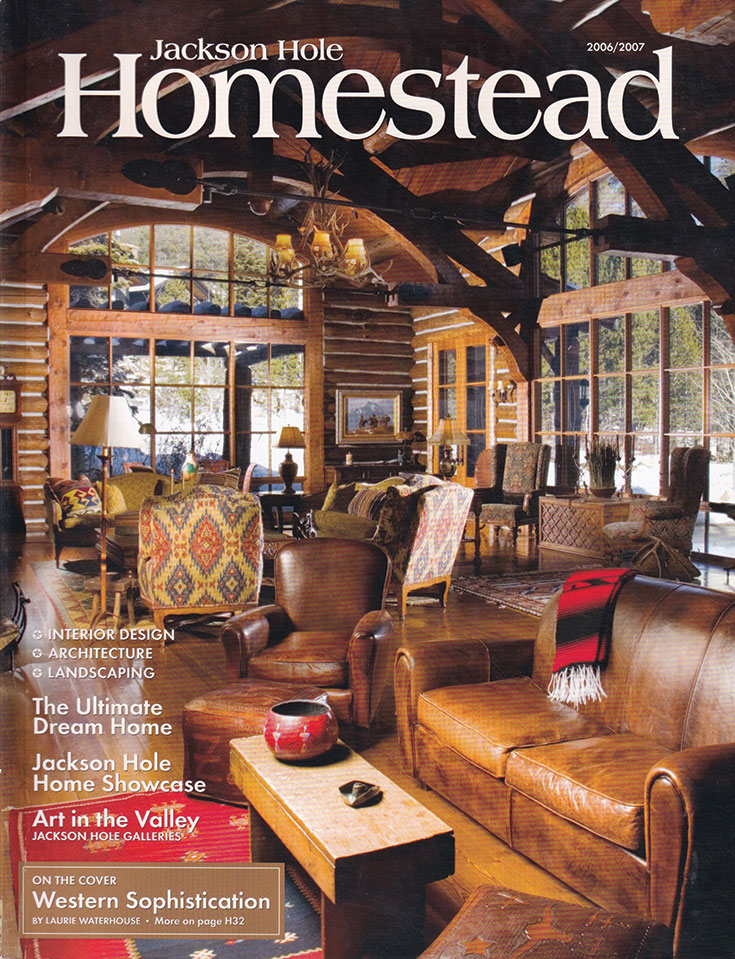
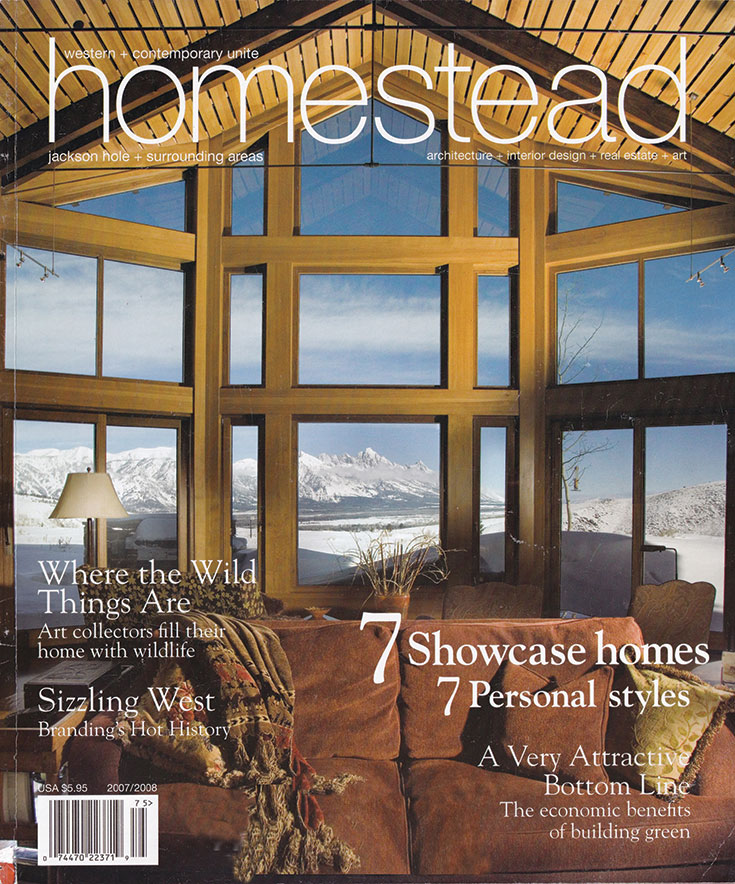
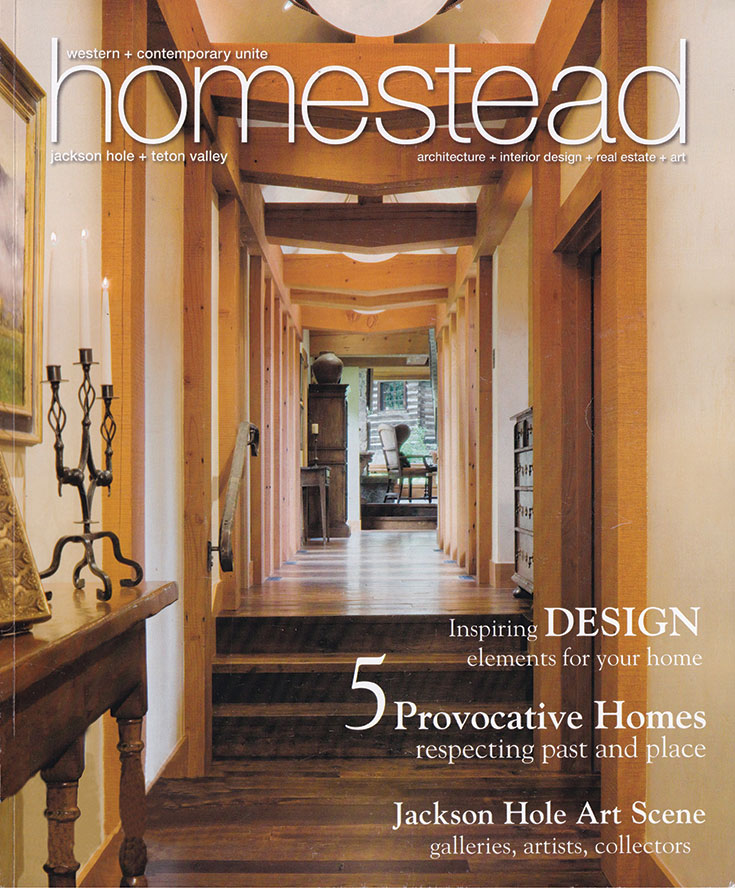
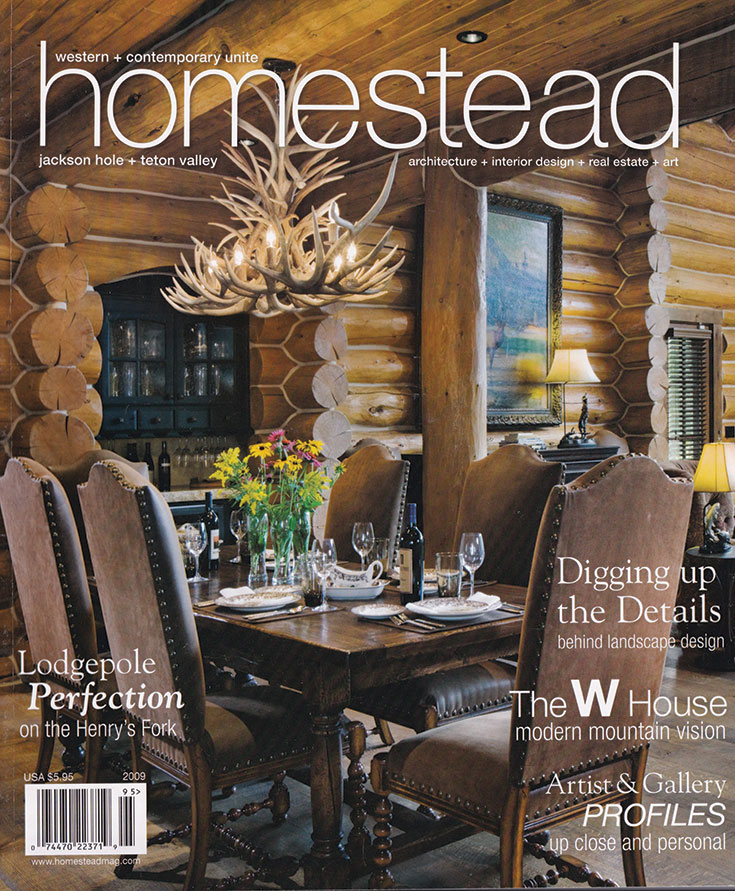
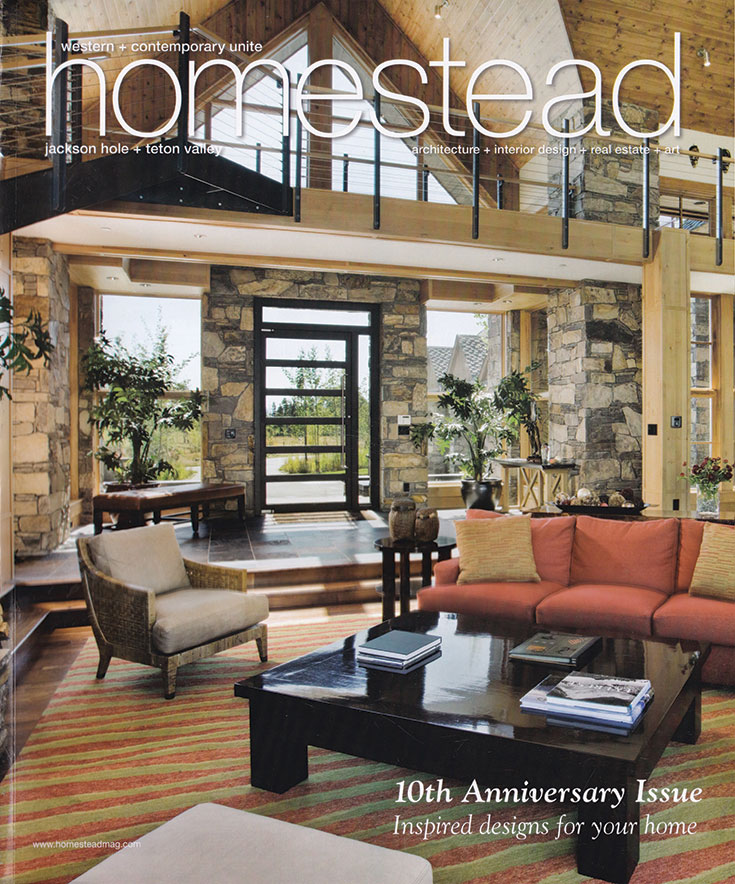
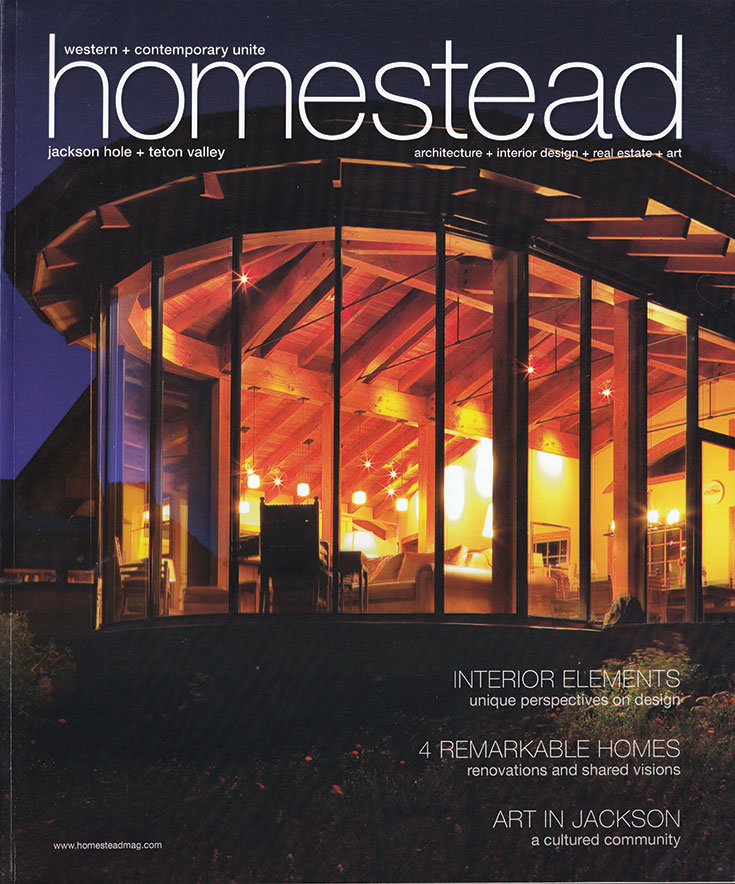
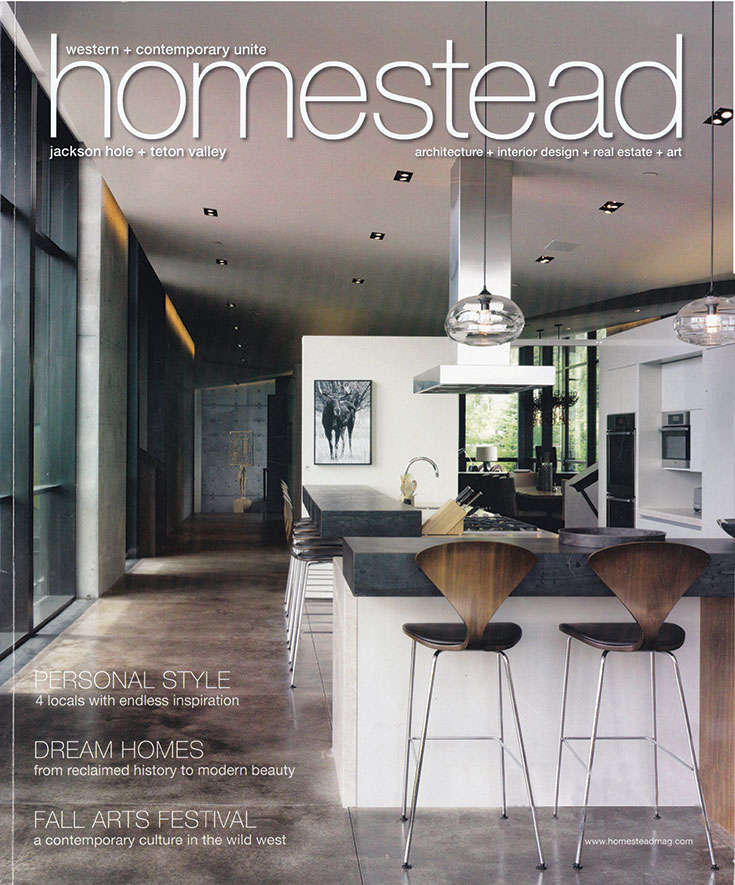
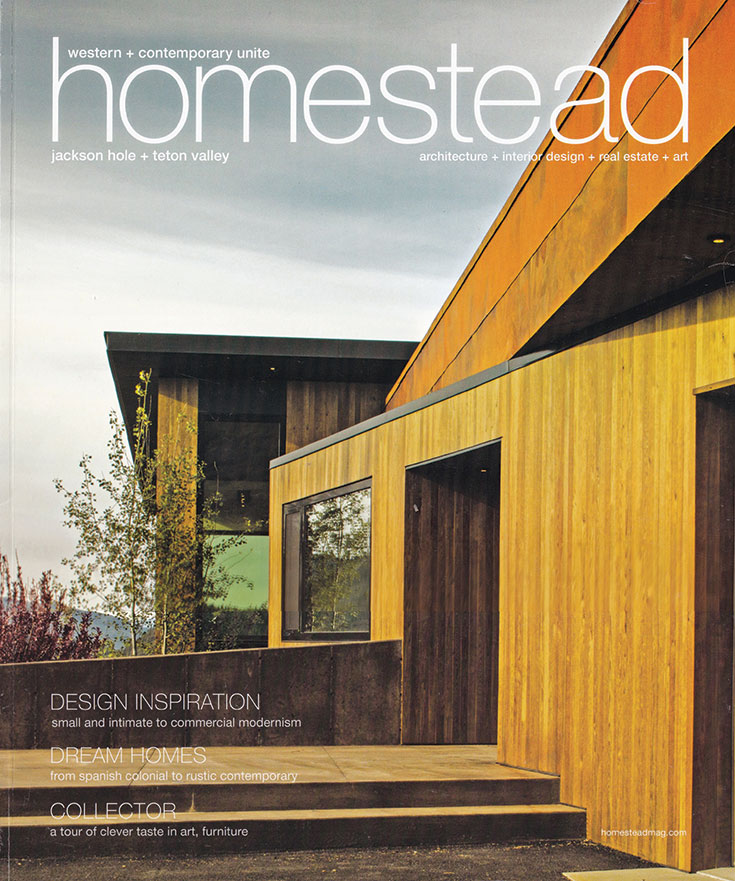
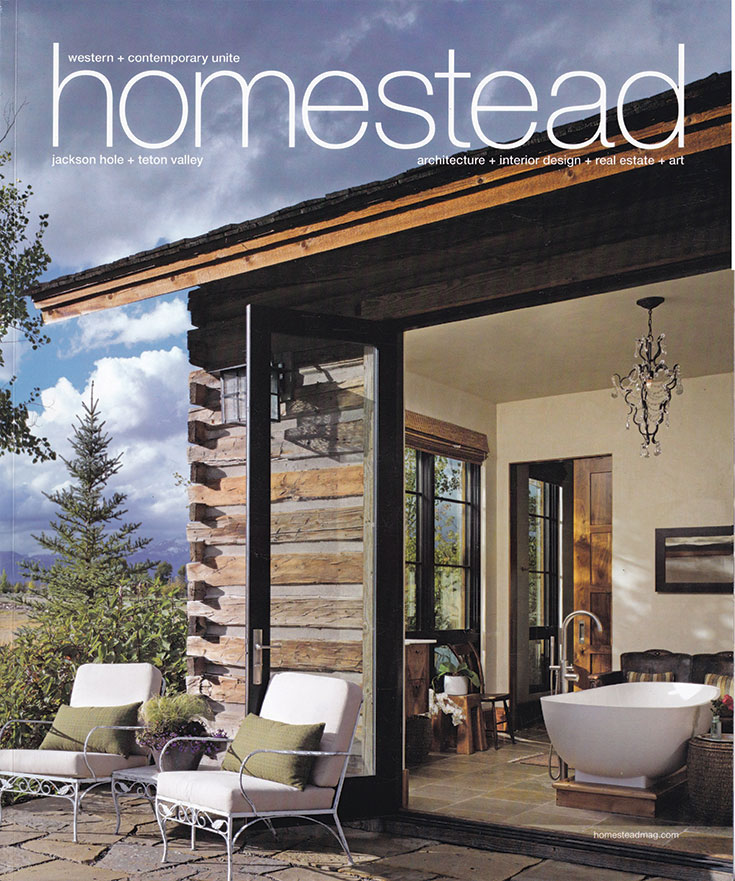
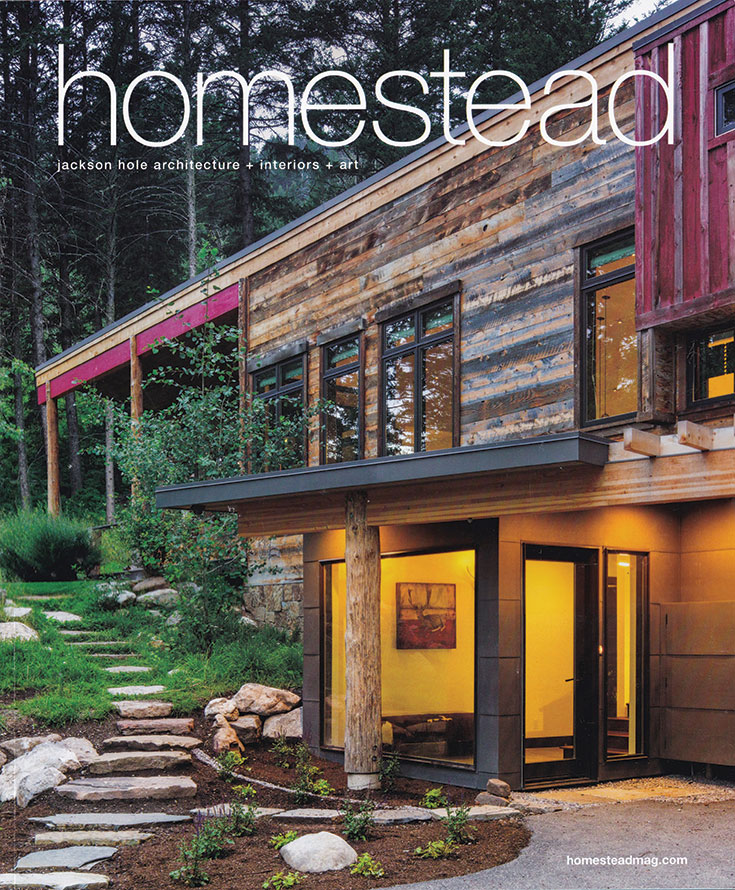
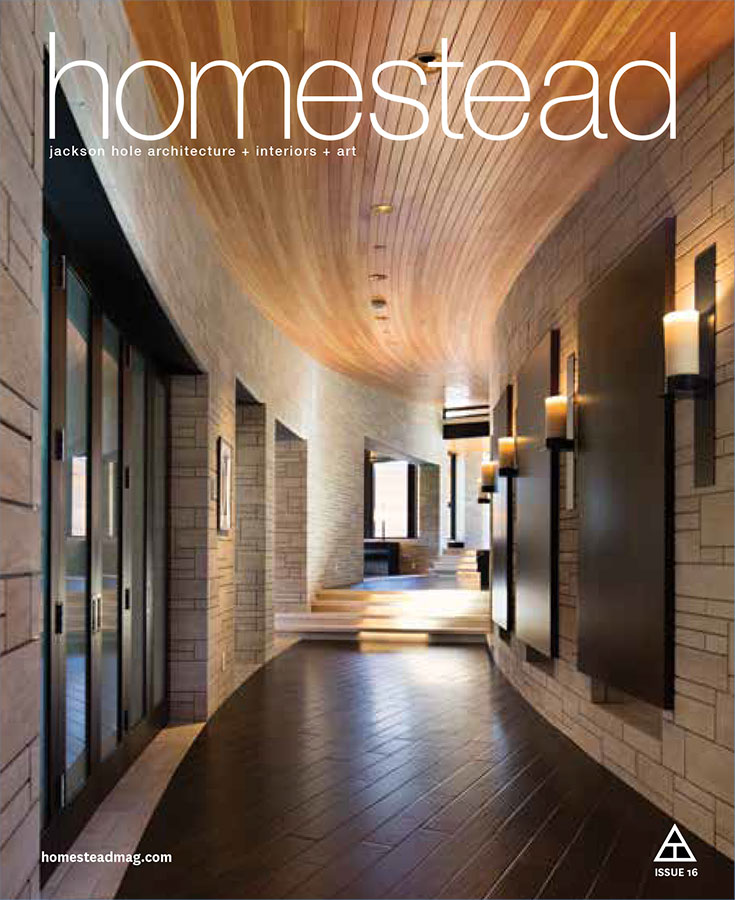
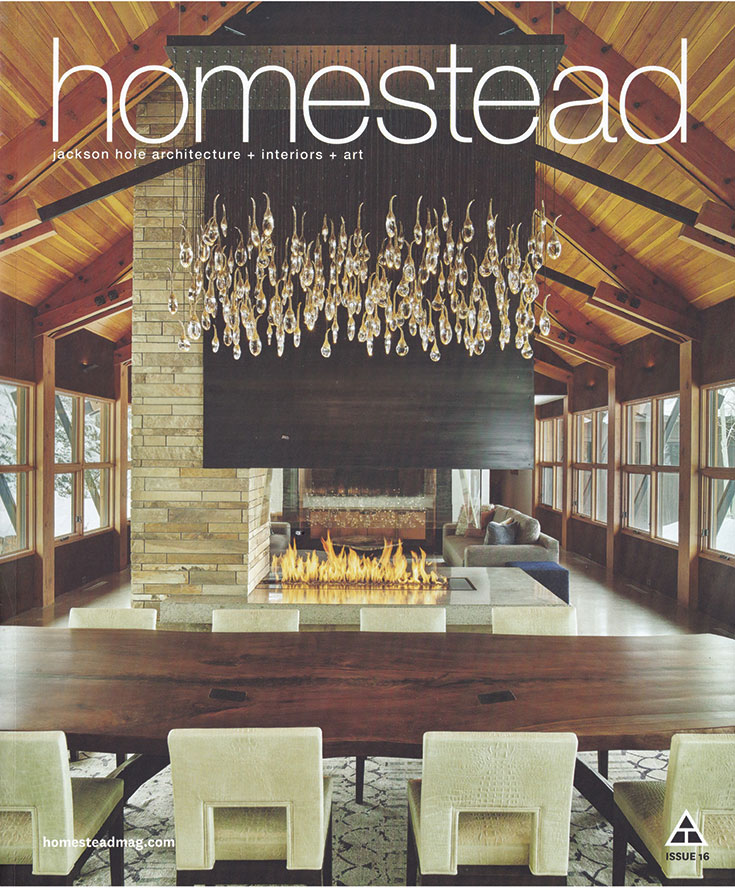
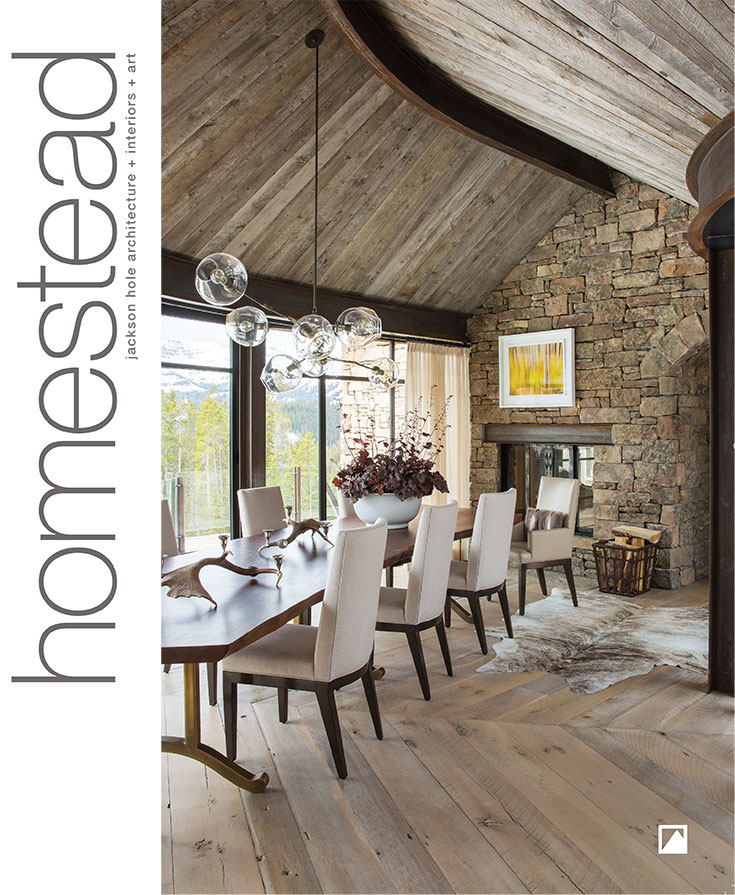
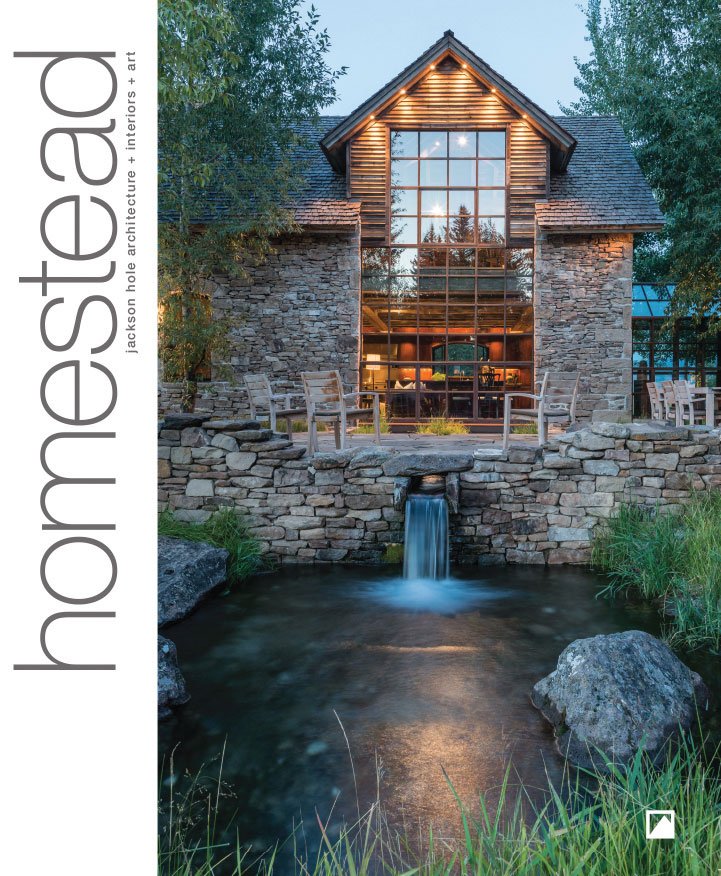
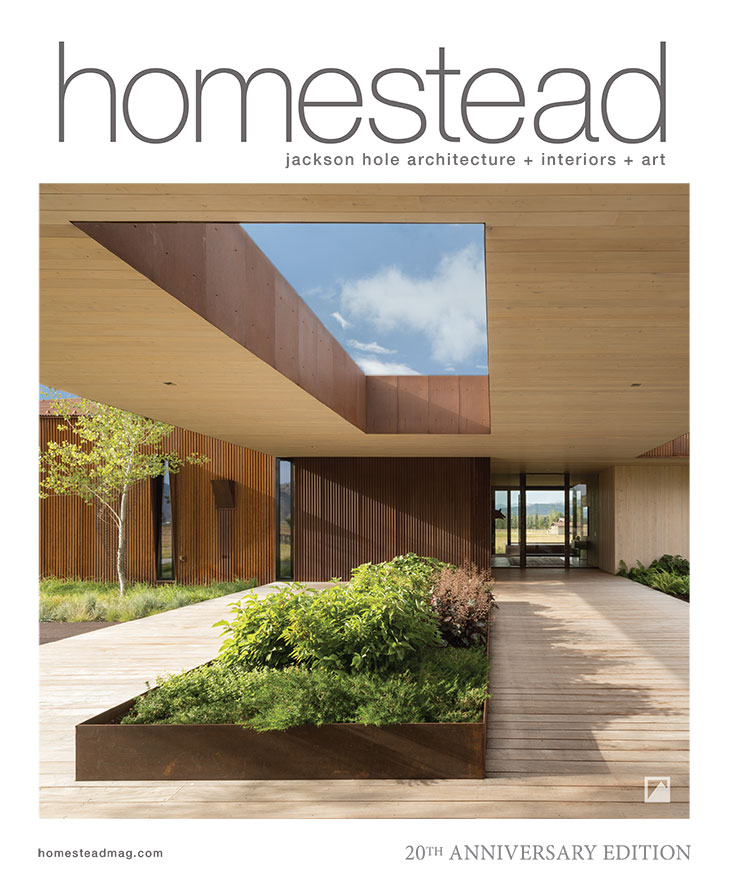
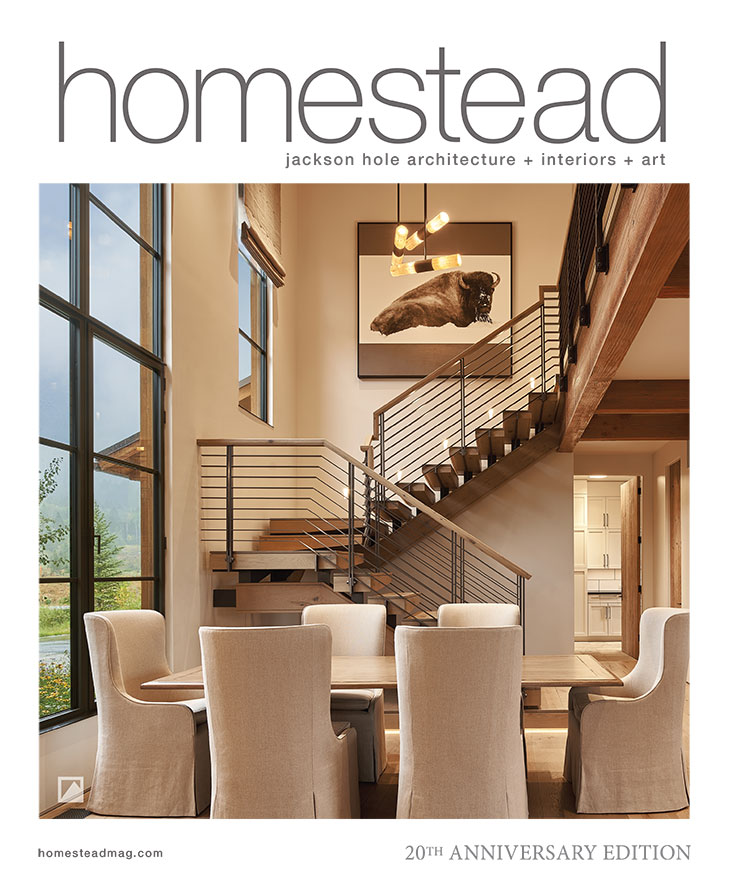
Leafing through Homestead’s 20 years of covers is like taking a walk back in time. When I started this magazine in 2001, my vision was to showcase these works of art, which are rarely seen by those who have an appreciation for great design. It was also to create a resource guide for those looking to build or redesign, a platform for professionals to share their work from year to year.

Jackson Hole brings out the artist in us all, generating a desire to capture, frame and share our inspirations in many mediums and, in this case, our living spaces. Our valley attracts a tremendous talent pool of designers that unite together in each home project to assure that the shape, forms, lines, colors and textures all materialize into another work of art on our landscape.
From the beginning, we hired local salespeople, writers, photographers and designers. (Four of the original Homestead members—Mindy Duquette, Martha Vorel, my wife, Megan, and I—still make up the core of today’s team.) Then, as now, our dream was to produce elegant, sophisticated, coffee table-worthy keepsakes that also serve as invaluable resources, offering local insights, ideas and information to help Jackson Hole residents pursue their own home design dreams.

As you peruse the following pages, we hope you’ll enjoy walking down memory lane with us.

Be Well,
Latham Jenkins
Founder & Publisher

2001

2001 The timber frame construction of this home by Strout Architects creates an elegant living space. Reclaimed hand-hewn timbers are used to articulate the dramatic grand hall, and to frame the more intimate spaces.
PHOTO: CONRAD JOHNSON

2002

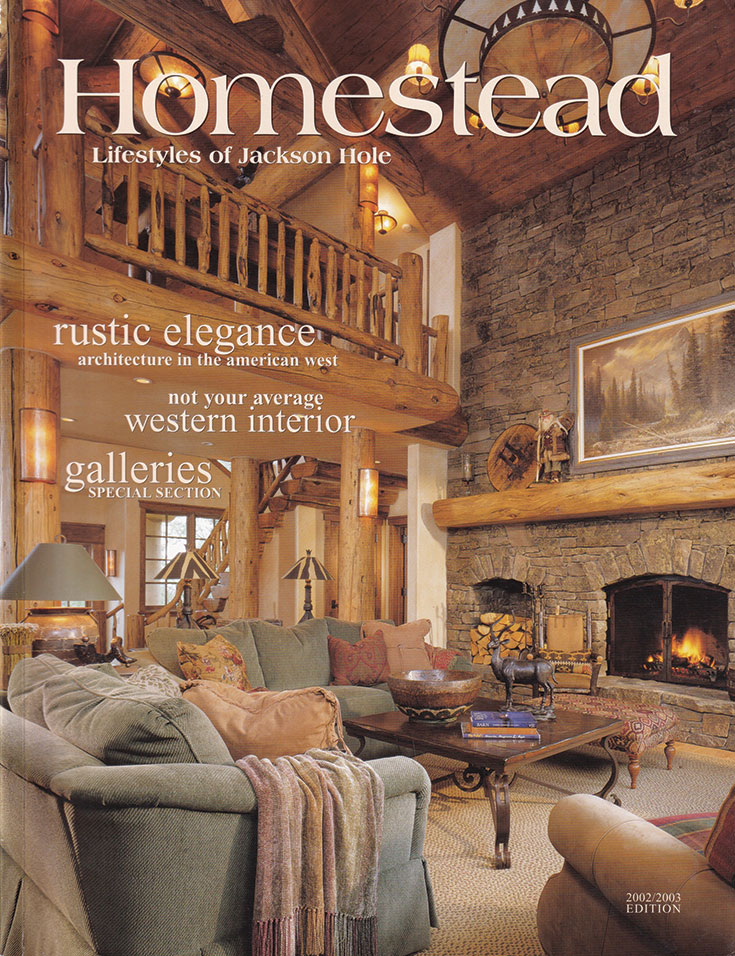
2002 Harker Design: The magnificent stone and log fireplace enhanced by generously proportioned chenille sofas and rich hand-rubbed woods creates a timeless casual elegance in this mountain residence.
PHOTO: ROGER WADE

2003

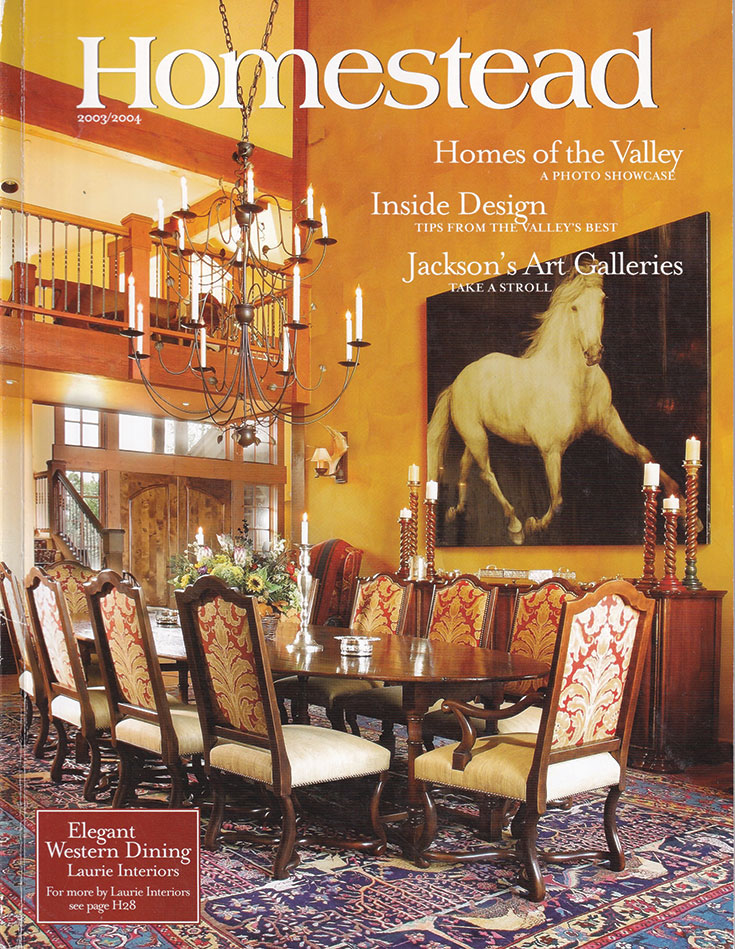
2003 For this dramatic Tucker Ranch dining room, Laurie Interiors started with an antique Bijar carpet from Kismet Rug Gallery and a custom-made oak drop-leaf table. Gold wallpaper laid in from torn strips is the perfect backdrop for White Horse IV by Kiki Martinez.
PHOTO: DAVID SWIFT

2004

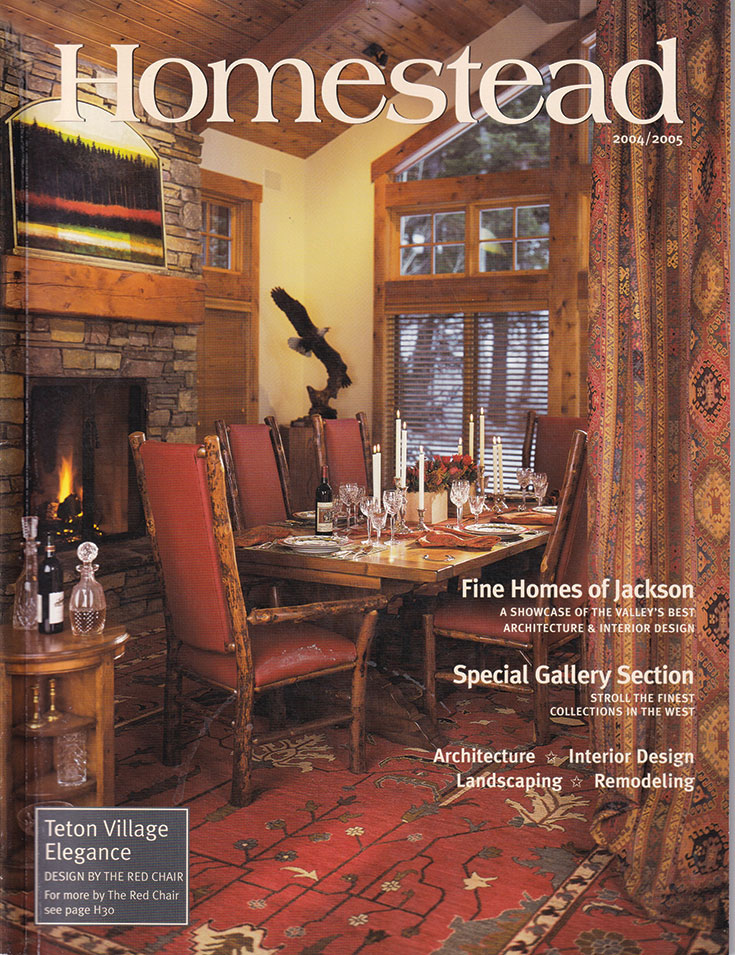
2004 This beautiful Teton Village home demonstrates that elegance, sophistication and Western style can coexist. The Red Chair designers have expertly blended polished and rustic textures. The mantel features the work of Tal Walton from the Legacy Gallery.
PHOTO: LARK SMOTHERMON

2005

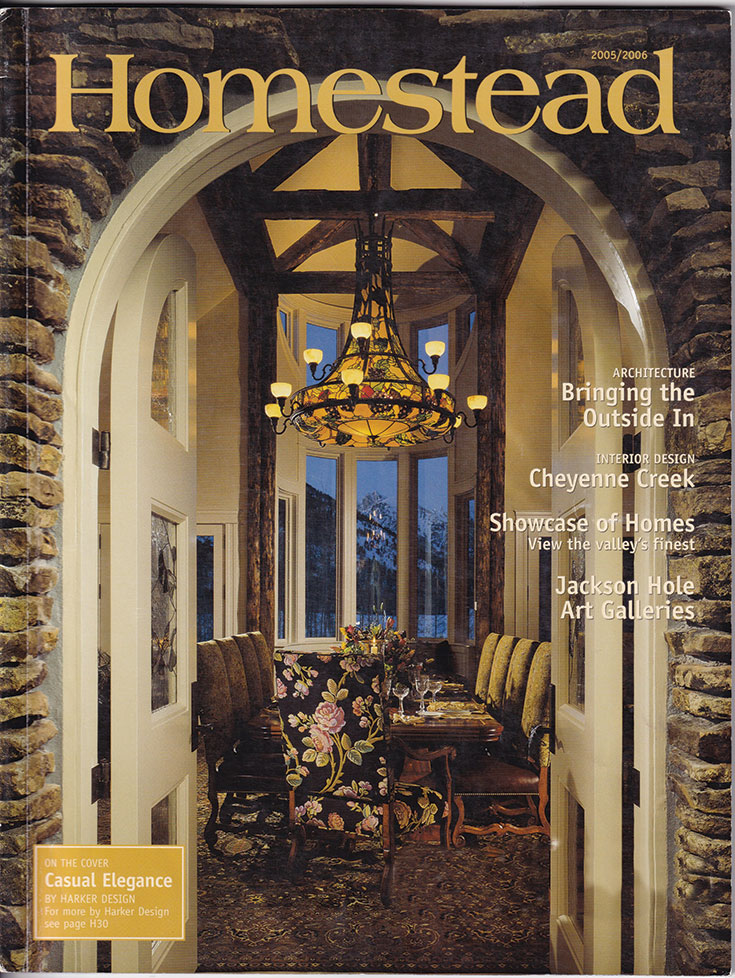
2005 Harker Design approaches each home and each room with the goal of creating spaces that are uniquely suited to the client, now and well into the future. From antique furniture to custom- designed pieces, Harker designers blend styles, colors and textures.
PHOTO: ROGER WADE

2006

2006 From the rich colors and textures of fabrics and paint to custom-designed lighting and unique accessories, Laurie Waterhouse and her experienced team of designers aim to create a room that showcases each client’s singular personal style.
PHOTO: DAVID SWIFT

2007

2007 Strout Architects and Harker Design create an unequaled and extraordinary, livable Western vacation home atop Gros Ventre Butte, combining traditional materials with contemporary design in a quiet, hospitable way.
PHOTO: DAVID SWIFT

2008

2008 Respect for place and a desire to create a timeless home that leaves a lasting impression drives Dan Schou Construction, Harker Design and MD Nursery to complete the dream that is Ellen Creek.
PHOTO: CAMERON NIELSON

2009

2009 Ellis Nunn & Associates and Pioneer Log Homes take tradition to a whole new level. Two families. One Dream. And nothing but lodgepole pine.
PHOTO: ROGER WADE STUDIO

2010

2010 An airy and captivating floor plan is the key to this Western contemporary design by Teton Heritage Builders. Three Rivers Stone, expansive windows and exposed steelwork create an atmosphere that’s both Western and contemporary.
PHOTO: ROGER WADE STUDIO

2011

2011 Pocket Ranch, a home designed to be one with the environment, is a collaboration between Strout Architects, Teton Heritage Builders and Laurie Waterhouse Interiors. It offers a glimpse at how a dwelling becomes part of the ecosystem.
PHOTO: DAVID SWIFT

2012

2012 Clean lines and a blend of textural elements come together in this home designed by Stephen Dynia in collaboration with Dynamic Custom Homes. This masterpiece displays an ever-evolving play of space, light, unusual angles and dynamic views.
PHOTO: CAMERON NIELSON

2013

2013 Embracing Stephen Dynia’s portfolio of innovative design, this treasure is open yet intimate. Interior designer Jacque Jenkins- Stireman used natural colors and textures that speak to the outdoors, while John Walker, of Mill Iron Timberworks, made it all come together.
PHOTO: DAVID AGNELLO

2014

2014 Snake River Interiors owner Elisa Chambers gives a personal tour of her home. A mix of grand and intimate spaces showcases the family’s lifelong collection of exquisite works. The home is a warm living environment for the family of six— functional yet aesthetic.
PHOTO: CAMERON NIELSON

2015

2015 Grace Home Design and Jackson Hole Contracting take us through a complete home remodel. Our cover home opens up to a vivid canvas of confident choices, ingenious renovations and picture-perfect detailing.
PHOTO: DAVID AGNELLO

2016 Spring/Summer

2016 Spring/Summer After the retreat of a wildfire, a property is renewed by an extraordinary home, its roofing melding with the landscape. Despite its modern design and size, the home’s profile fits into the contours of the property. Ward + Blake Architects, Cox Construction, ek Reedy Interiors.
PHOTO: PAUL WARCHOL

2016 Fall/Winter

2016 Fall/Winter An exquisite chandelier and sleek steel fireplace anchor this complete interior remodel, bringing city style—with a twist—to Jackson Hole. Expertly executed by Howells Architecture + Design, Dembergh Construction, Kate Binger, of Dwelling, and Willow Creek Woodworks.
PHOTO: DAVID AGNELLO

2017 Spring/Summer

2017 Spring/Summer This hillside residence blends mountain lodge with urban convenience. A hand-selected team including New West Building Company, Enclosure Architecture, Trauner Fay Designs and Frederick Landscaping contributed to produce this meticulously-crafted home.
PHOTO: DAVID AGNELLO

2017 Fall/Winter

2017 Fall/Winter A striking home designed by Richard Keating issued a challenge to all involved—spurring the new owners to embrace contemporary and their designers, WRJ Design, to achieve warmth amid the angularity.
PHOTO: ED RIDDELL

2018 Spring/Summer

2018 Spring/Summer Simple lines, clean details and walls of windows. Chris Lee, of Design Associates, captures incredible Teton views from every room in this stunning residence, which feels as though it is entirely made of glass.
PHOTO: KRAFTY PHOTOS

2018 Fall/Winter

2018 Fall/Winter If every house speaks a different language, the latest design by Berlin Architects is fluent in the echoes of the Tetons. This home embodies rustic turned contemporary. The interior space resounds with natural light and views.
PHOTO: JIM FAIRCHILD

2019 Spring/Summer

2019 Spring/Summer WRJ Design. Expert sourcing leads to an interior design rich in history, culture, craftsmanship and nature in a majestic mountain home.
PHOTO: WILLIAM ABRANOWICZ

2019 Fall/Winter

2019 Fall/Winter JLF Architects, Big-D Signature and Verdone Landscape Architects transform an 1890s dairy barn into a contemporary home on the range.
PHOTO: AUDREY HALL

2020 Spring/Summer

2020 Spring/Summer MountainScapes, Clearwater Restoration and Agrostis Inc. combine natural materials with geometric designs to surround this modern home with inventive, enjoyable exterior spaces.
PHOTO: KRAFTY PHOTOS

2020 Fall/Winter

2020 Fall/Winter Jacque Jenkins-Stireman, Berlin Architects and Two Ocean Builders paired modern materials with traditional treatments in a home designed to suit both the unique site and the clients’ extended family.
PHOTO: DAVID AGNELLO

The Grandeur of Simplicity

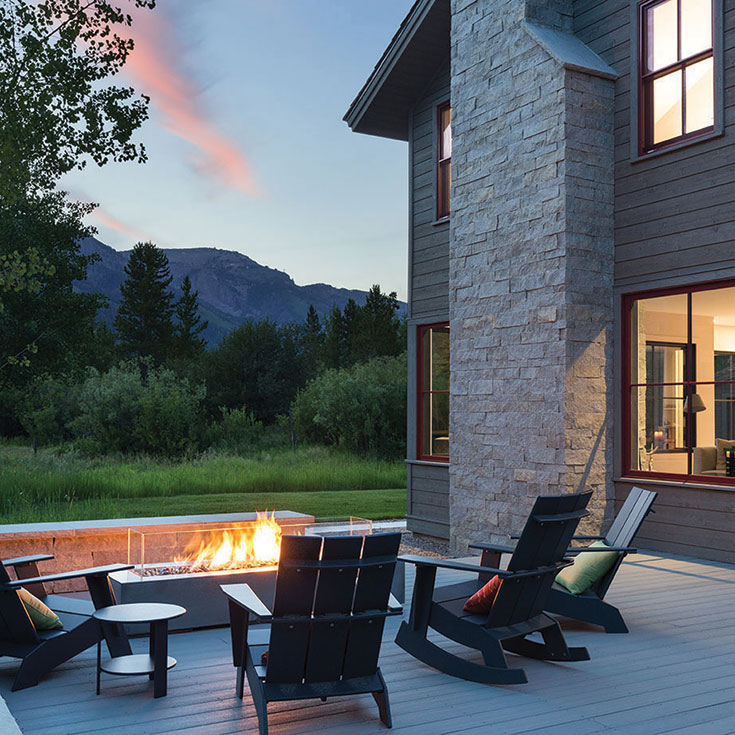
In the shadow of the Teton range, ample outdoor space flows seamlessly into the warmth of the indoor space in this Platt Dana Aspens home.


ARCHITECT
PLATT DANA ARCHITECTS
PLATTDANA.COM

CONSTRUCTION
SEVEN GENERATIONS CONSTRUCTION
7GCONSTRUCTION.COM

Story By
MELISSA THOMASMA
Photos By
KRAFTY PHOTOS/em>

For an architect accustomed to orchestrating renovations on New York City brownstones, designing and building a home in The Aspens in Jackson Hole was a welcome departure from the norm. Hope Dana—principal architect at the award-winning Platt Dana Architects, based in New York—collaborated with Seven Generations Construction to build this sleek, effortlessly welcoming house as her family’s own mountain getaway.

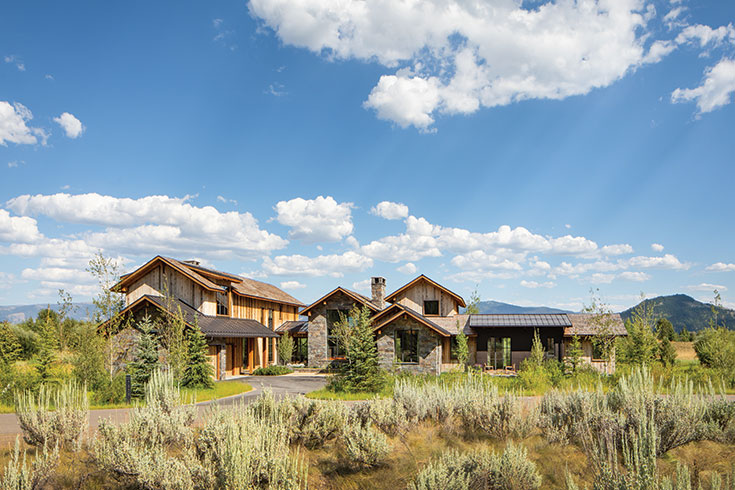
Constructed in a neighborhood with strict architectural guidelines, the exterior of the four-bedroom, three-bathroom home is clad in rough-hewn cedar and rust-toned window frames. Its appearance meshes gracefully with both the neighborhood and the wooded landscape surrounding it. “The more of the outside that you can bring in, the better,” explains Dana, describing her approach to designing the 3,000-square-foot house. Framing window views in the heart of New York City, she adds, is driven by a balance between showcasing beauty and maintaining privacy, but, in Jackson Hole, it’s much more focused on celebrating the spectacular natural panorama of the valley.
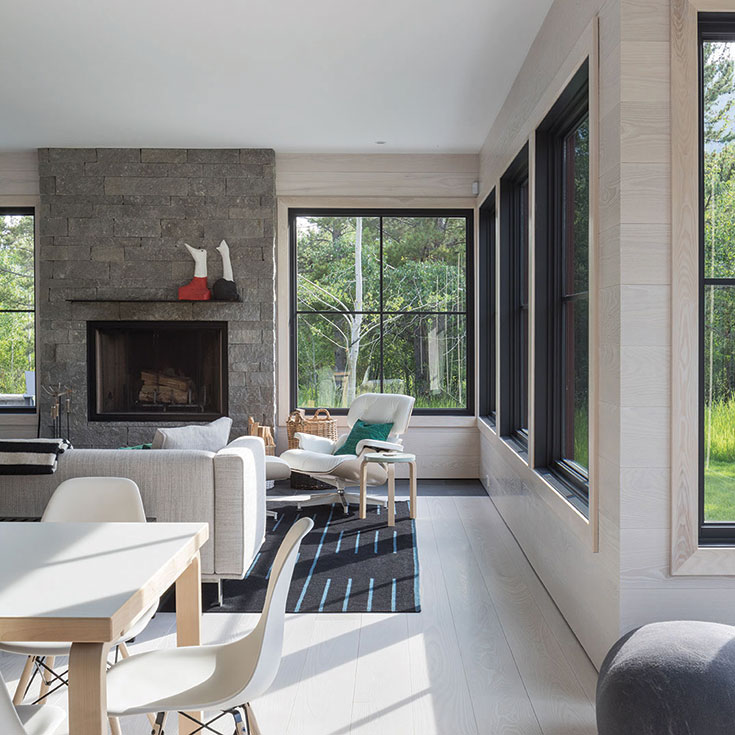
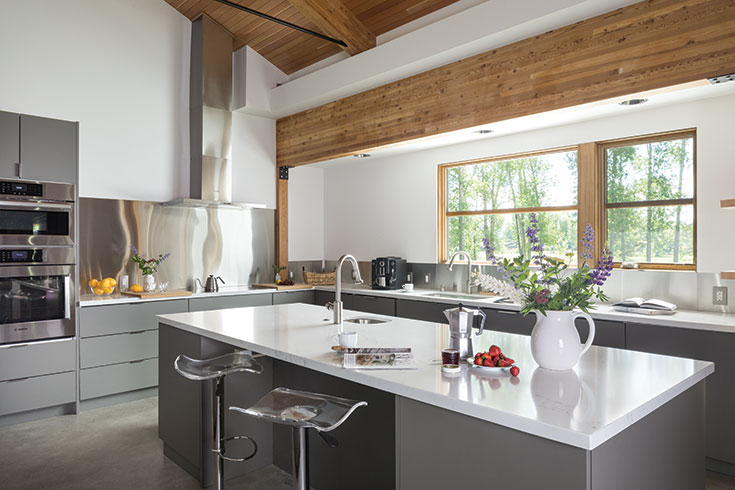
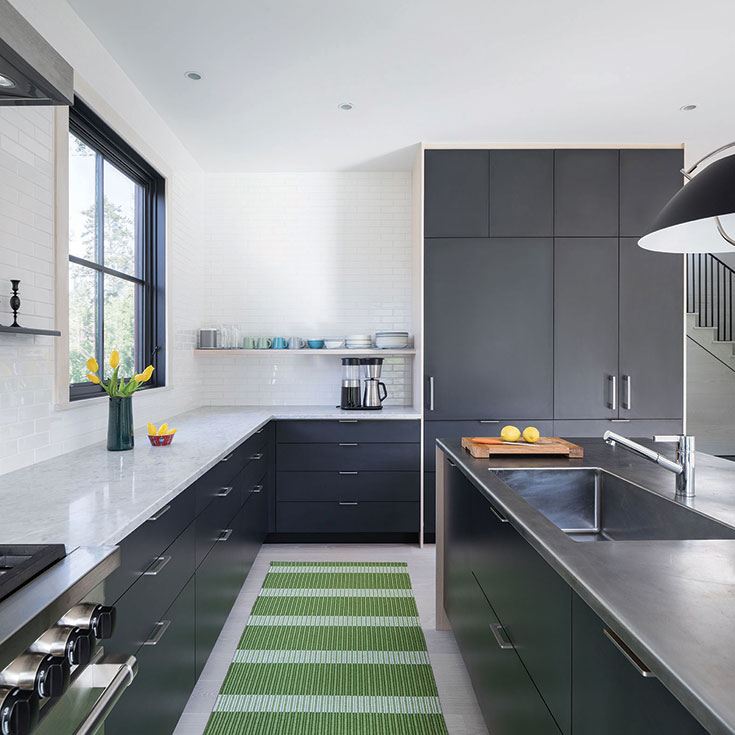
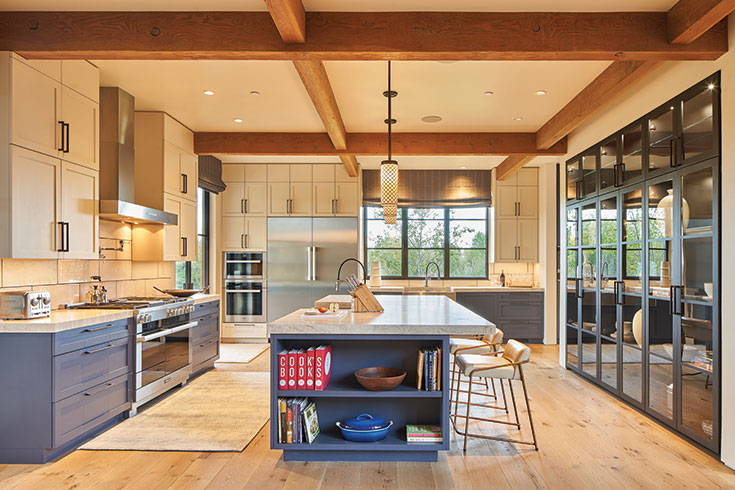
The elegant, contemporary kitchen by HenryBuilt includes custom millwork. The clean lines and simple palette seem to create frames through which the color and vibrancy of the natural world outside pour in.

“As a small, boutique firm, every project is a labor of love,” she says. “But part of the joy of this project is that there was no client to answer to.” Her collaboration with Seven Generations Construction—a local, full-service building company with a focus on sustainability and efficiency—brought her vision to life.

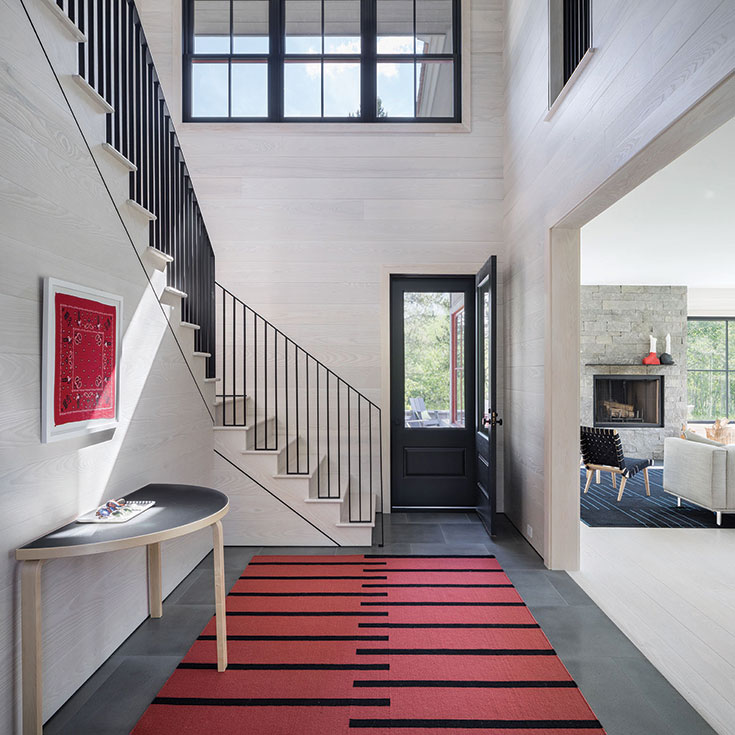
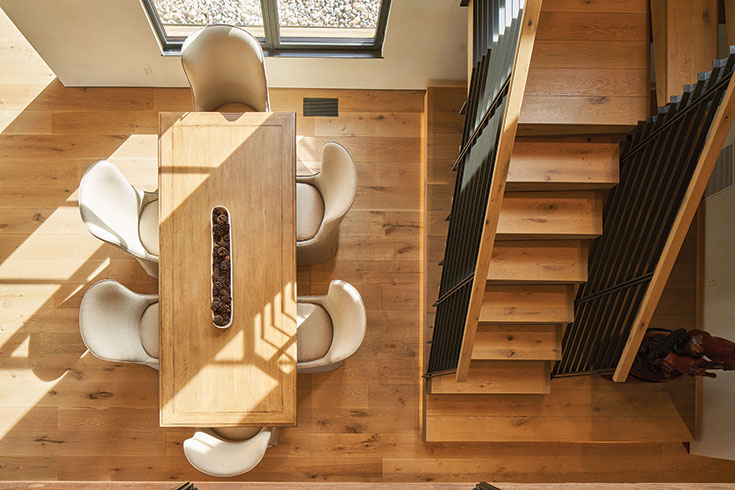
Flanked by a striking staircase with black steel balusters and handrails, the double- height entryway embodies the ambiance of the home: at once classic and modern, made to feel spacious through efficiency and functionality.

Matt Somers, owner of Seven Generations Construction, built the house according to Dana’s drawings and specifications. “The process reflects how thoughtful she was in the design,” he observes. “It’s not just a bunch of canned details. In this environment, you’re able to open things up to bring nature in, and this house shows that really well.”

Somers reflects that the deeply unique nature of Dana’s design made for an intriguing and rewarding building process. “As each room finished, you could stand in the doorway and see the vision come to life. And you’d think, ‘This is going to be so cool.’” Ultimately, the home became a unique feather in Seven Generations’ cap. “In the end, I feel a lot of pride in this project— in the way it looks, the quality of construction. This is one of the more contemporary interiors that we have built, but it’s still warm, comfortable and inviting,” Somers says.

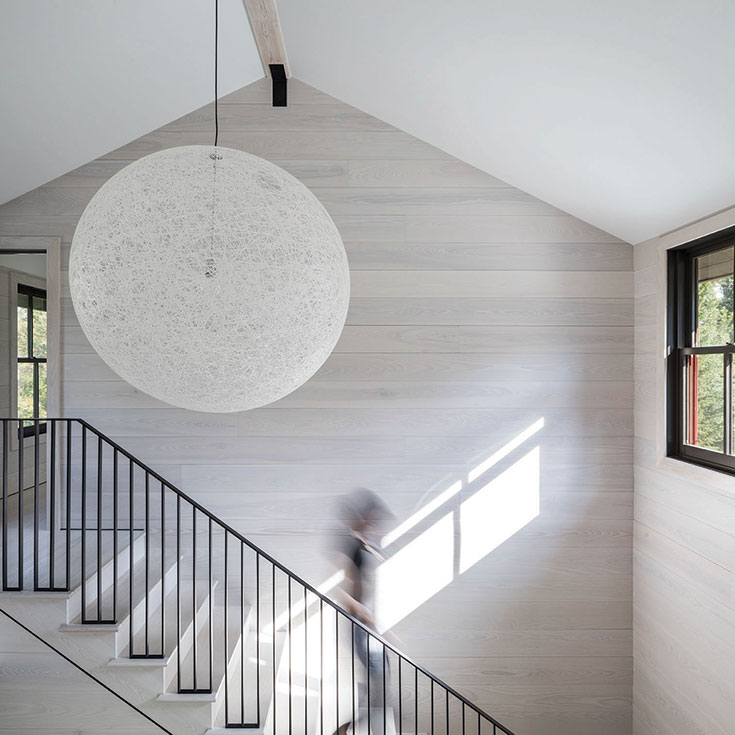
Eight-inch horizontal ash wall boards and floorboards, accented with the whimsical Random Pendant Light from Moooi, create an open, bright feeling even in a small home, a contemporary reflection of the forest and mountain peaks that surround it.

The palette of the home is calm and understated, and, though the square footage is minimal, the efficiency of design lends it an elegance and grandeur. Pale ash wall boards and floorboards contribute to the spacious ambiance and offer sophisticated contrast to the dark accents throughout the home. The combination is evocative of the community’s namesake—the aspen—a compelling contrast of light and dark, long lines and intuitive punctuation.

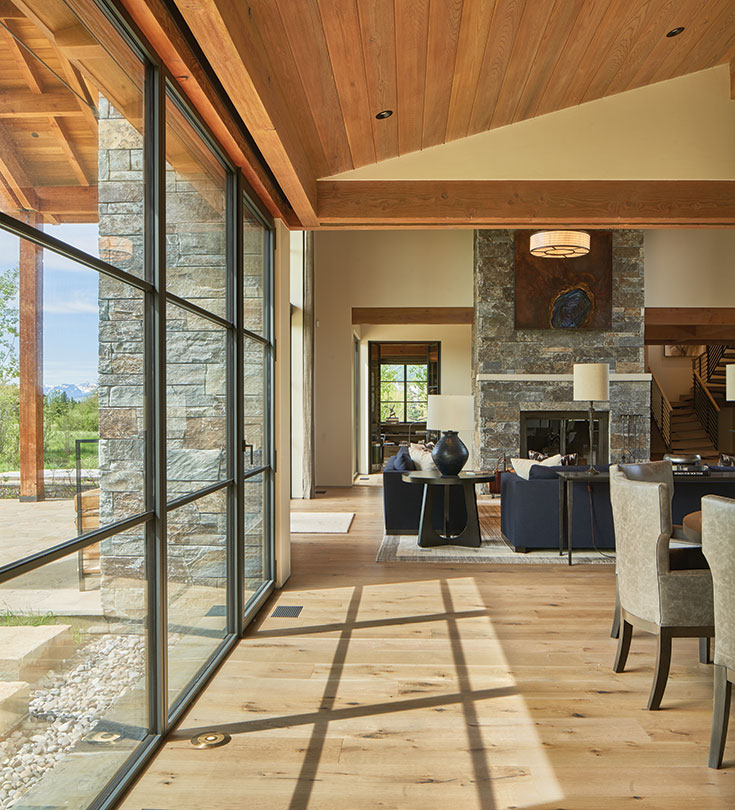
“I wanted it to feel easy,” says Dana. “The term hygge” [pronounced “HUE- guh”]—a Danish word embodying feelings of peace and contentment—“was trending when I was selecting materials, so I aimed to bring that into the space. It’s quiet, but lush and in deference to the outdoors.” From the moment one steps through the front door, the home feels as Dana describes, easy. The double-height entry hall with large-format porcelain tile feels at once classic and modern: peaceful, contemporary energy with a subtle Western flourish. The open living, dining and cooking space is anchored by a wood-burning fireplace, clad in cleft-faced bluestone.

The focal point of the living room, the stone fireplace is an echo of a classically Western space. Offering a textural contrast to the sleek, modern paneling and interior design, it creates a visually compelling anchor to the open-plan living, dining and kitchen space.

With the balance of wood and stone cast against the backdrop of the Tetons, immersed in the woodlands of the valley, Dana has created a space that thoughtfully pays homage to the timeless natural beauty of the land.

The Aspens home is a stunning representation of how Platt Dana Architects approaches each of its projects, whether a turn-of-the- century brownstone on a busy metropolitan avenue or a modest mountain retreat. “We always take a deeply personalized approach to designing houses. Our work reflects the personality and needs of our clients, with equal attention to the smallest details and to the overall house design,” says Dana.

With limited square footage, designer Hope Dana utilized efficiency, simplicity and functionality to create a sense of elegance and grandeur. Even small rooms in the Aspens home seem spacious and inviting.

This house has inspired Dana, and she is enthusiastic to explore more design projects in the area. Her intuitive perception of space, timeless style and dedication to understanding each client’s distinct vision create stunning results: homes that are visually breathtaking and yet wholly welcoming. And if that doesn’t represent the spirit of Jackson Hole, what does?

Trusses Of Trust

A singular yet shallow site in Shooting Star presented as many opportunities as it did challenges. For instance, architect Larry Berlin had to devise a driveway and parking area that did not distract from the mountain views beyond the entrance. “The fun part was designing a really livable plan that fit the site and still created a sense of entry,” he says.


INTERIOR DESIGN
JACQUE JENKINS-STIREMAN DESIGN
JJSTIREMANDESIGN.COM

ARCHITECTURE
BERLIN ARCHITECTS
BERLINARCHITECTS.COM

CONSTRUCTION
TWO OCEAN BUILDERS
TWOOCEANBUILDERS.COM

Story By
KATY NINER
Photos By
DAVID AGNELLO + TUCK FAUNTLEROY

Trust braided together every aspect of this standout residence in Shooting Star: the clients’ trust in the crew, assembled by interior designer Jacque Jenkins-Stireman, and the trust among team members as they confronted site-specific challenges with creativity, reimagining traditional elements through contemporary treatments. Woven together, these strands of trust made anything and everything possible within the amiable yet ambitious family home.

The project rose from the working foundation laid during the clients’ first commission of Jenkins-Stireman’s boutique firm: a cabin within the same development, renovated to suit their large clan. Thrilled with that first foray, the family engaged Jenkins-Stireman in their search for a new homesite. With a lot secured, they charged her with assembling a team of Berlin Architects and Two Ocean Builders.

“I was their emissary,” she says. “They were clear in their objectives, not directive about the outcome. They knew how they wanted to use the house, how they wanted to live. It was a seamless conversation that started with the clients telling me to explore my wildest dreams: ‘You know what we love,’ they said. ‘Live it out.’”

Impeccable materials were used throughout the house, epitomized by the Brombal windows manufactured in Italy. “The windows and exterior doors are truly unmatched in quality and appearance,” says Sam Sehnert, of Two Ocean Builders. “You can absolutely feel the difference when you see and operate the units. They feel uniquely substantial yet look uniquely elegant.”

This invitation to dream—most often issued to, not from, clients—empowered the team to envision fresh adaptations to the distinctive site. Crescent-shaped and shallow, the lot is bordered by creeks, which offer a feeling of remoteness amid the residential development. Also a boon: abundant views in all directions—of the Teton foothills, across the valley to Sleeping Indian, and through the willows to Fish Creek. Jenkins-Stireman thrived in the face of the site’s strictures. Solutions became features, like the fire wall encircling the front fac?ade, screening the parking court.

Characteristic of the entire aesthetic, the kitchen marries traditional elements with contemporary treatments. The drawers and shelves, painted a rich blue (Mysterious by Benjamin Moore) reminiscent of a farmhouse palette, complement the sleek custom china cabinet artfully displaying the owner’s ceramic collection.

“That’s the fun of it all,” says architect Larry Berlin, “having a challenging site with great views and great light, as well as privacy, water and trees—and then designing the house to be part of the site.”

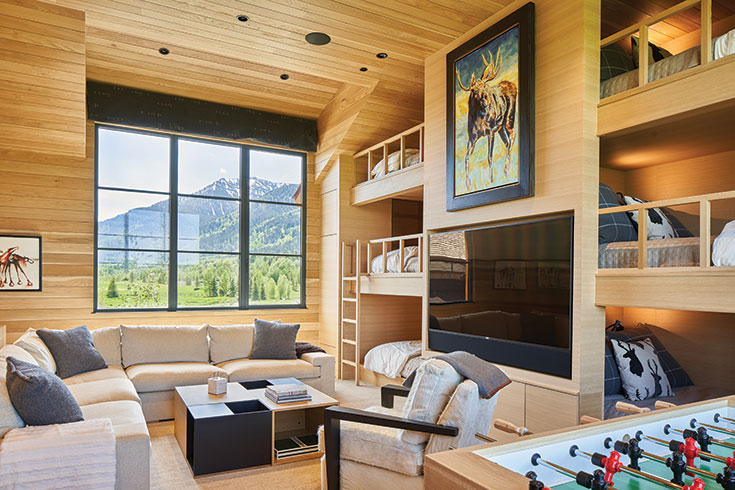
At every turn, the team considered the clients’ extended family. Take the bunk room above the garage—an expansive space that could have assumed utilitarian traits. Instead, the vaulted area exudes play, with two sets of triple-high bunk beds facing a wide sectional sofa, snack bar and custom foosball and pool tables. Each niche serves as its own bedroom replete with shelving, lights and outlets. Dormer windows flood the playroom with light. Oak paneling sheathes the walls and ceiling, creating a clean, continuous embrace.

Form surpasses function in the staircase, designed by Berlin to exist as a sculptural element floating between floors and laced by steel.
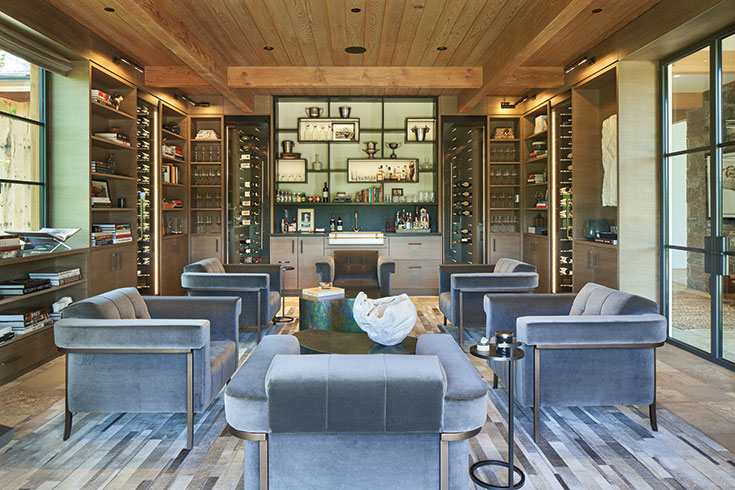
“The drinking library was completely custom, down to the refrigeration units used to cool the insulated wine storage cabinets,” Sehnert says. “This was described as the most important room in the house by the homeowner, so everything underwent an extra level of scrutiny, from lighting to sound to temperature and, finally, furnishings.”

The adults have their own special “play” space. Winemakers and connoisseurs, the clients wanted a bar that felt both cozy and commodious. Thus inspired, the team brainstormed, building on a design idea of a classic gentleman’s lounge. A hybrid haunt took shape, spacious enough for a large wine tasting yet still intimate enough for two. Every element is custom, down to the refrigerated cabinets cooling the varietals—meticulous details that meld into an overall ambiance of gracious hospitality, reflective of the owners themselves, Jenkins-Stireman says.

Epitomizing the family ethos, the kitchen welcomes all with its warm blue cabinetry, wide island and upholstered stools. It opens onto adjoining casual dining and family rooms. In an elegant twist on the classic china cabinet, a built-in steel case displays a ceramic serving collection under soft spotlights, simultaneously evoking an art gallery, farmhouse pantry and the casements of the surrounding windows.

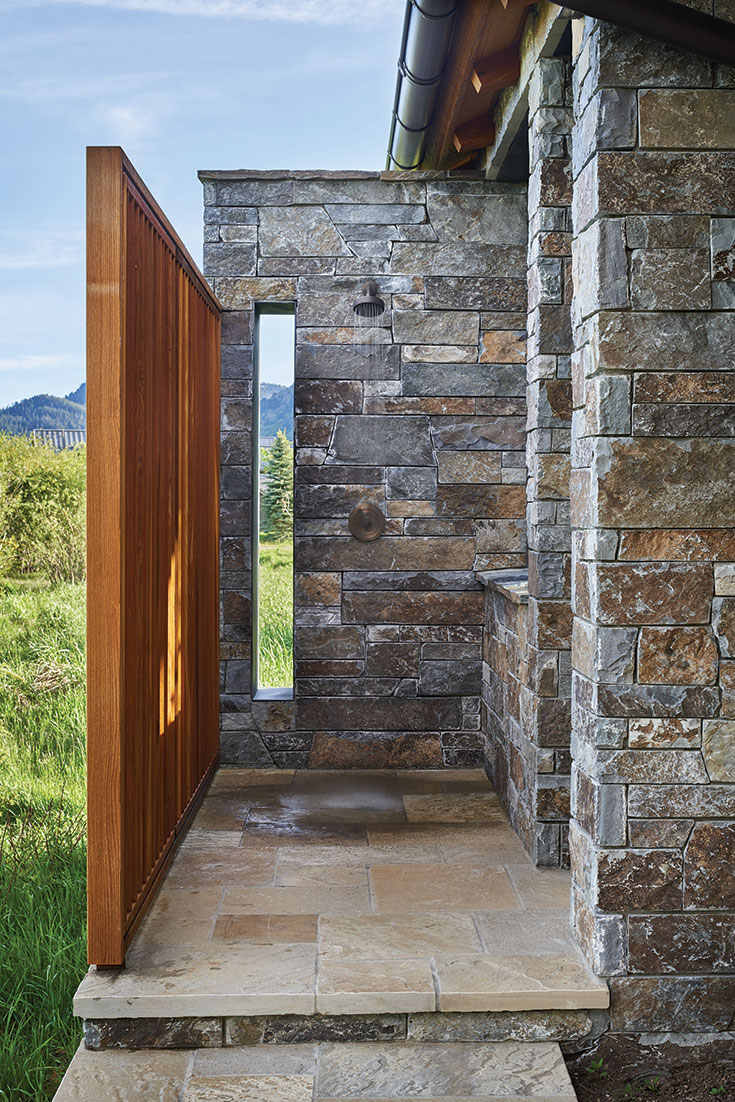
Berlin delighted in tackling the design conundrum of the outdoor shower, succinctly described by Sehnert: “The challenge was creating a space that felt open and outdoorsy but still private.”

Showcasing the views throughout the house became paramount, particularly in the front hall, which could have taken on grandiose proportions considering the scale of the house at six bedrooms and bathrooms (plus two half-baths). A typecast formal entry would have detracted from the mountain sightline, so the team created an intimate but elaborate vestibule defined by exquisite juxtapositions of materials: a steel door accented by glass, opening onto a beloved piece of art. Set to the side of the house, the foyer greets visitors with a view corridor of the Tetons framed by interior glass walls.

“In the bunk room, integrating the two sets of triple-high bunk beds and floor- to-ceiling white oak paneling took a lot of thought and planning with the cabinet company, carpenters and design team,” Sehnert says.
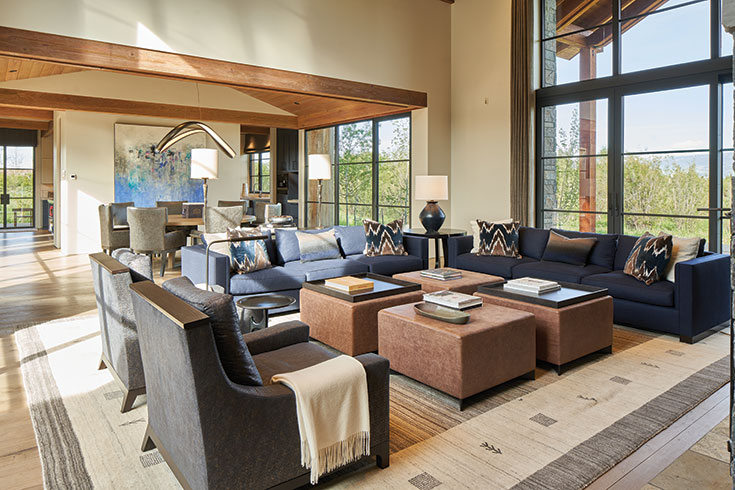
When designing a residence, Berlin strives to create a balance between “a variety of spaces: ones that are warm and cozy, and others that are more dramatic and transparent to the outside.” The great room epitomizes the latter with its panoramic views and ample seating.

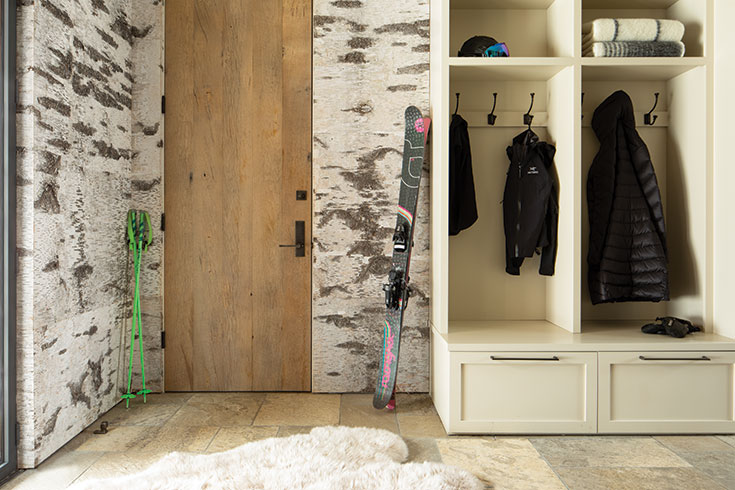
Modern pairings of materials continue throughout the interior. Brombal windows—minimalist steel-framed panes from Italy—set an Old World-meets-contemporary tone. “They allowed the rest of the architecture to shine,” Jenkins-Stireman says. Inventive interpretations of traditional treatments abound. Instead of rote barnwood paneling, white oak was milled to perfection, and plaster takes on sleek effect sans trim or baseboards. Organic accents—pendant clusters custom-made by a New York artist—transform stairwells into sculptural passages, replete with floating treads. Even the mudroom suggests singularity with a real, forest-perfumed birch veneer.

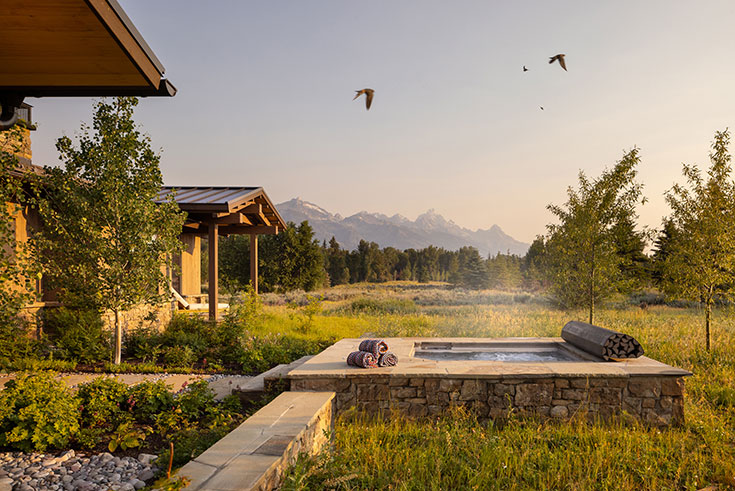
A dining terrace extends the great room, nearly doubling the expanse. And a second deck does the same to the kitchen and family room, allowing for casual grilling and indoor/outdoor living. In a final stroke of knife-edge genius, an outdoor shower strikes the delicate balance between feeling both open to nature and private, by way of stone-and-slatted walls. Hot tubs and fire pits, attached to suites, make for quiet moments in situ.
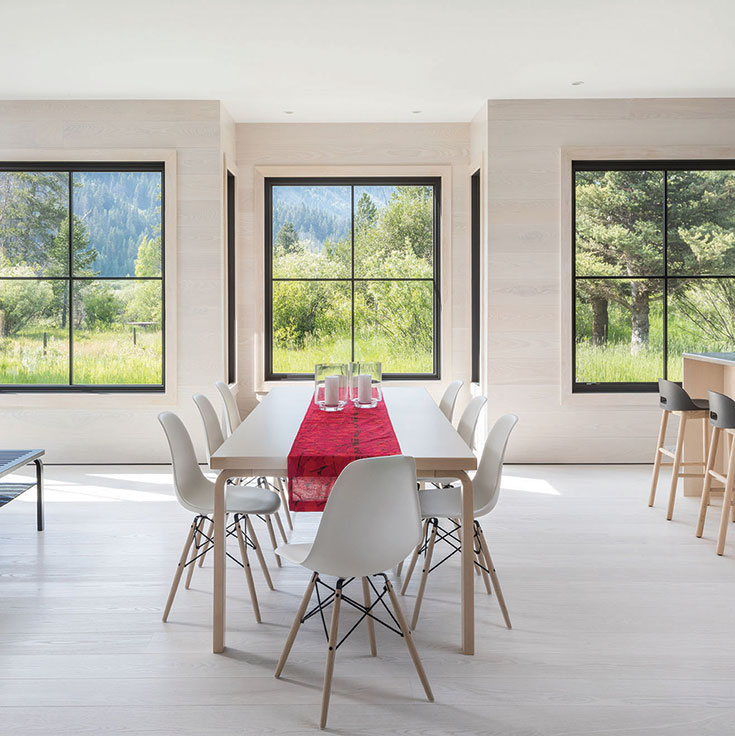
No interior detail escaped the imagination of Jacque Jenkins-Stireman. Real birch veneer lines the walls of the mudroom, lending woodsy aromatics to the functional threshold space.
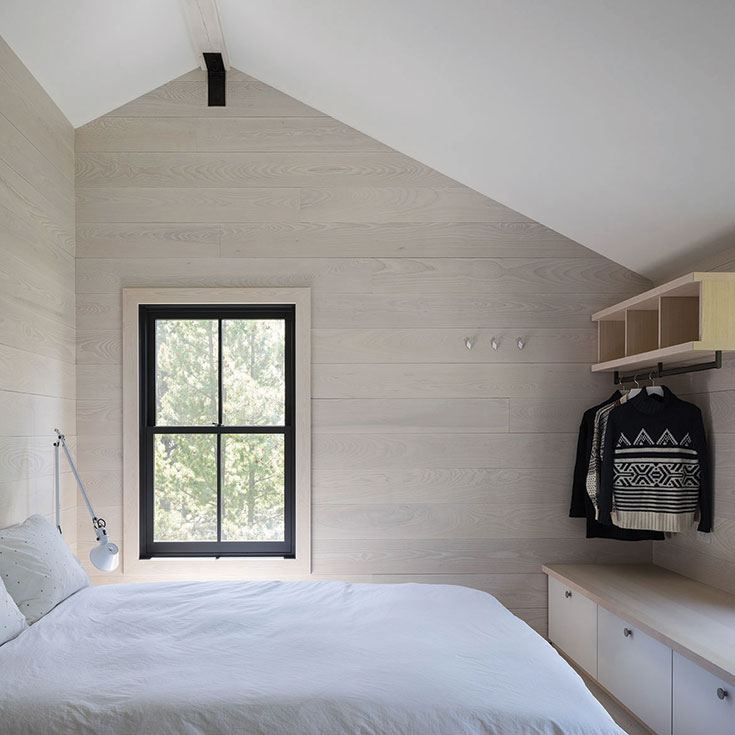
“We are always exploring ways in which finish materials can interact,” says Sam Sehnert, of Two Ocean Builders. “Those details take a collaborative effort to work through successfully, and we had an outstanding team to do that on this project. The owners played a key role as well by encouraging us to explore unique solutions in design and assembly.” A dream come true from every exquisite angle, including the perspective of every party involved.