
2025 Homestead Magazine

FREE

Homestead Magazine

ORDER NOW

Search Results for: living with nature

Less Ego, More Nature

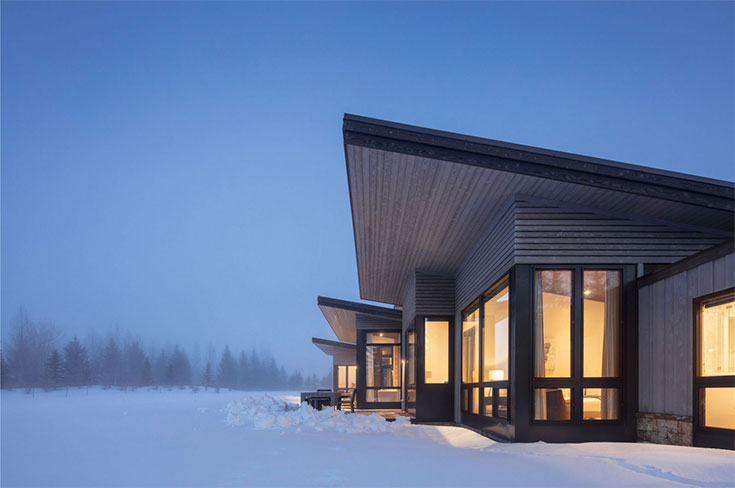
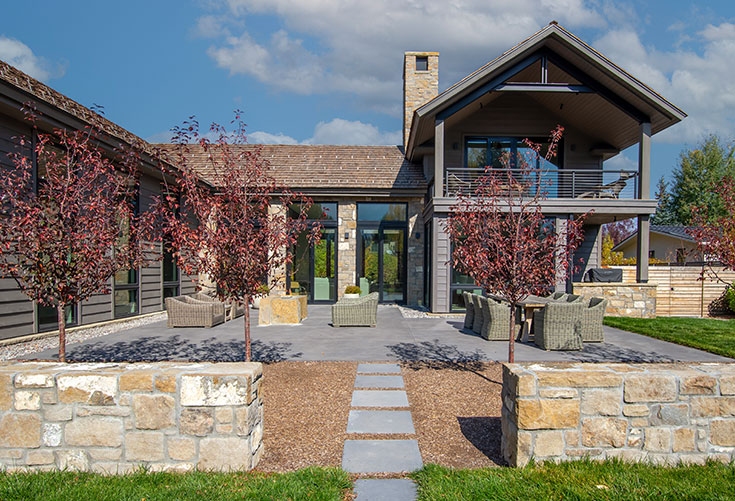
Berlin Architects and Cairn Landscape Architects worked diligently and intelligently to create a home that sits softly on the landscape.
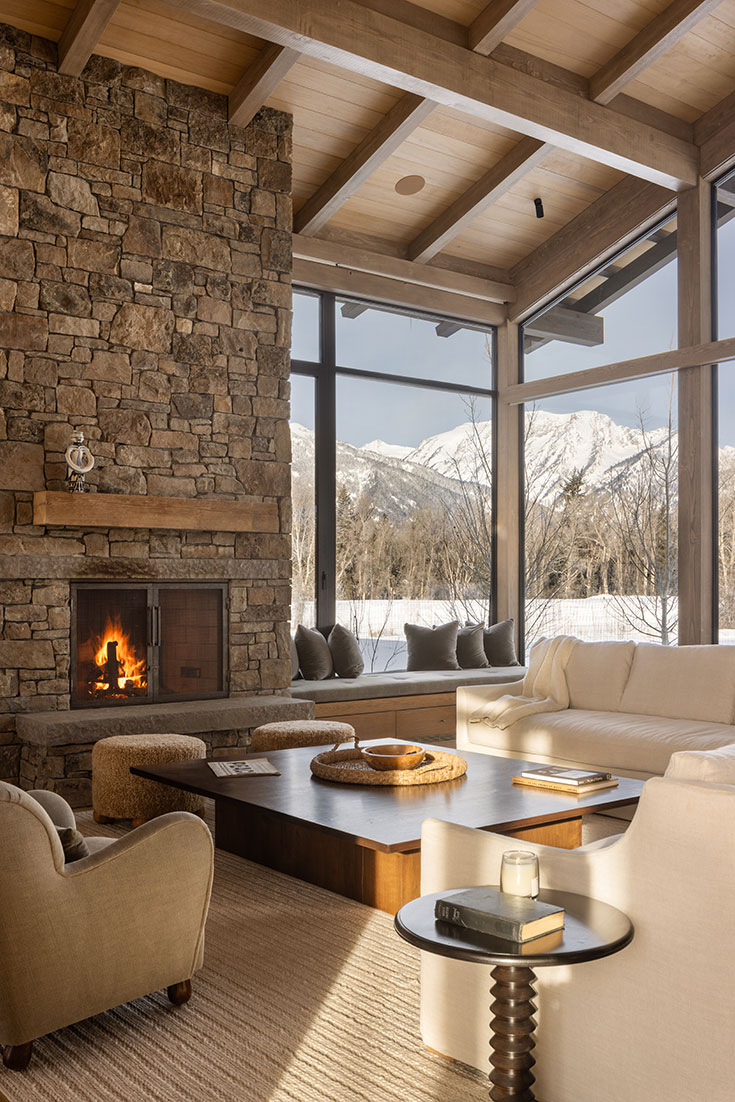
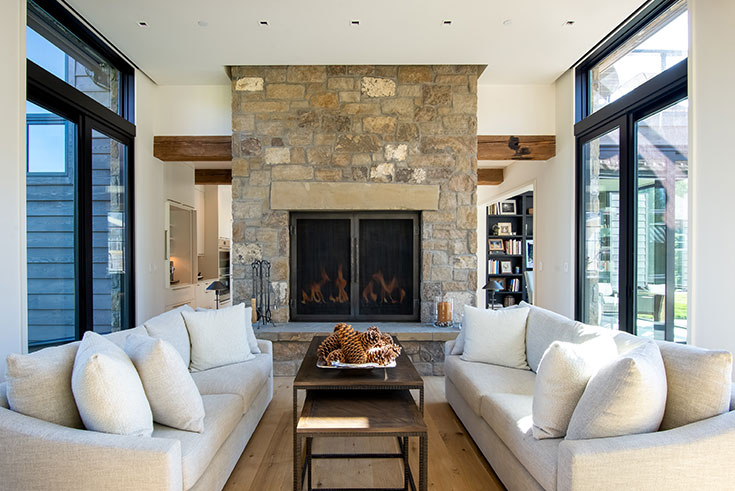
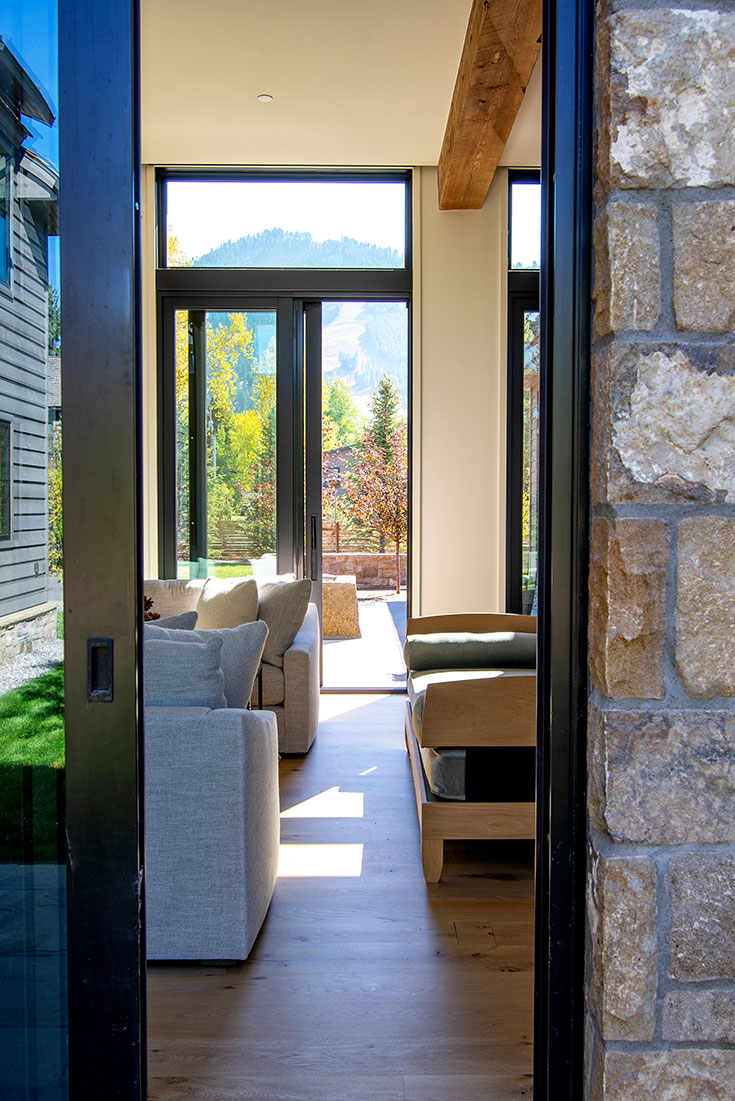
One of the home’s most impactful moments is the large custom window seat upholstered in silk mohair. The green-hued fabric harmonizes perfectly with the living room fireplace’s Montana moss rock, custom bronze doors, and reclaimed wood mantle. 

Story
Helen Olsson
Photos
Aaron Kraft

Berlin Architects
ARCHITECTURE
berlinarchitects.com

Cairn Landscape Architects
LANDSCAPE ARCHITECTURE
cairnla.com

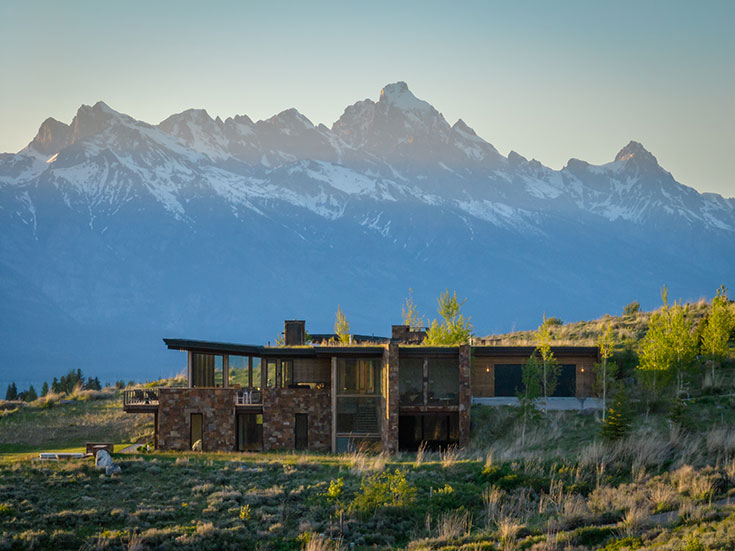
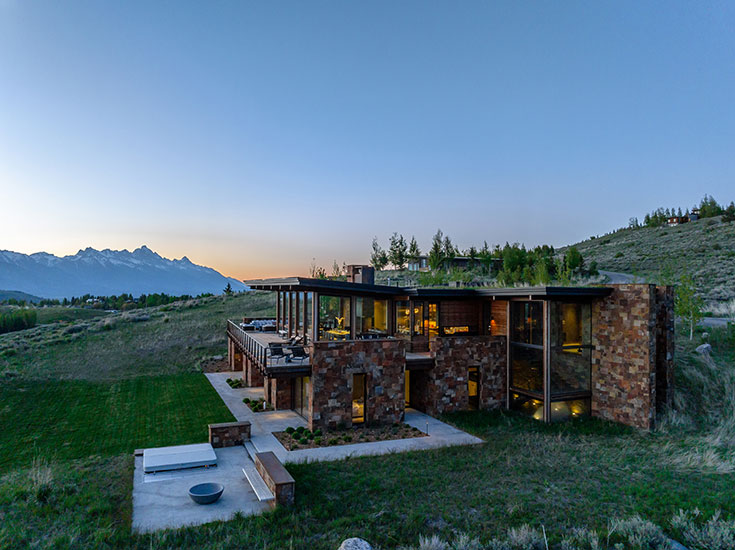
Set on a parcel of land shaped by a younger and wilder Snake River, this unassuming mountain-modern home integrates seamlessly into the surrounding sagebrush meadows. The erstwhile riverbank rises sharply above the property’s site, while a seasonal creek reflects the grandeur of the Teton Range.

Originally based in Washington D.C., the homeowners—she’s a renowned writer; he’s an attorney—had been visiting Jackson for 25 years and wanted a permanent family retreat and legacy home that embraced the landscape. “The house is intentionally modest, respecting and honoring this awe-inspiring place,” says Scott Zabriskie, senior project manager at Berlin Architects, which collaborated with Cairn Landscape Architects and interior designer Julia Leibowitz on the 5,947-square-foot, 5-bed, 5.5-bath home in the northern part of Jackson Hole. “It’s a quieter architecture with less ego and more nature,” Zabriskie says. The simple expression of the landscape architecture and the interior design’s minimalist aesthetic aligns with the overall architecture. “It all feels very pure and of the same yarn,” Zabriskie says.

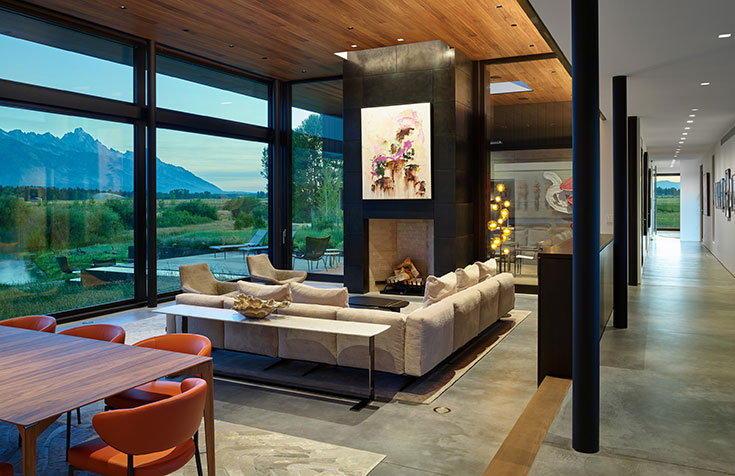
The architecture embraces the land with long, low roof eaves rising subtly but distinctively, expressing their layered timber structure and echoing the horizon’s mountain profile. Large openings amplify the home’s transparency, where living spaces become open pavilions full of light and views. Maximizing the Teton panoramas was a guiding principle, and the team even employed a drone to establish the optimal height to capture the Gros Ventre Range’s iconic Sheep Mountain from the home’s second-story deck.
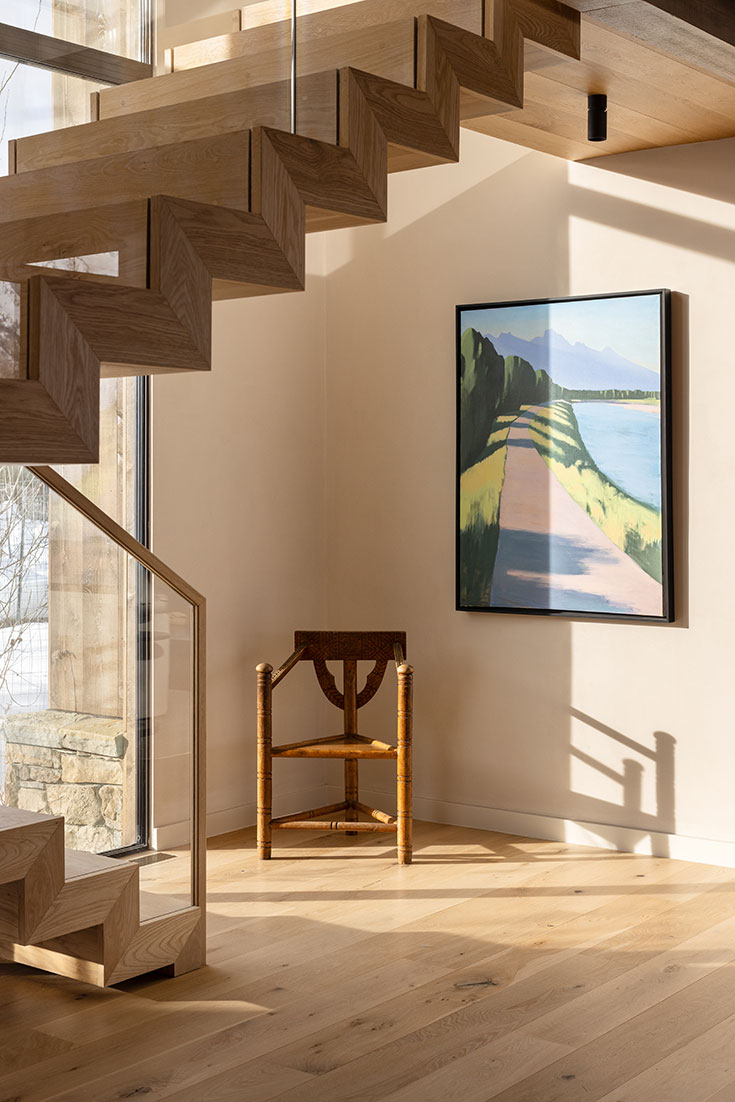
Because of the scale of the home, interior designer Julia Leibowitz selected mostly new or custom furniture, but she also added character with vintage and antique pieces, like the 1930s Art Deco Swedish Monk Chair that sits in the corner of the stair hall.

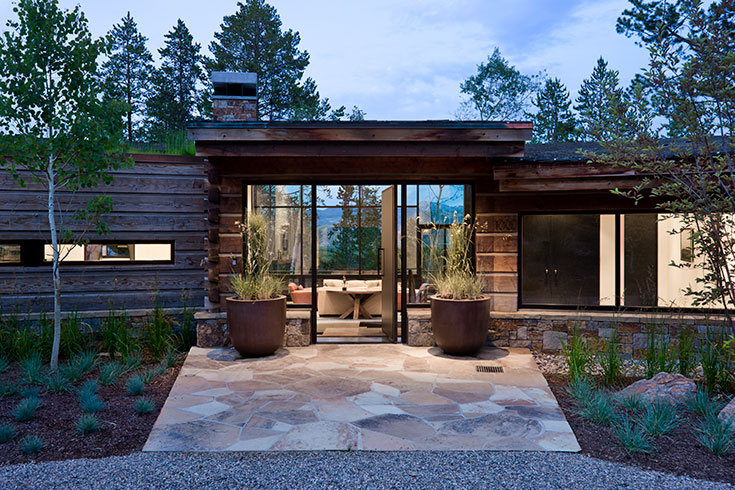
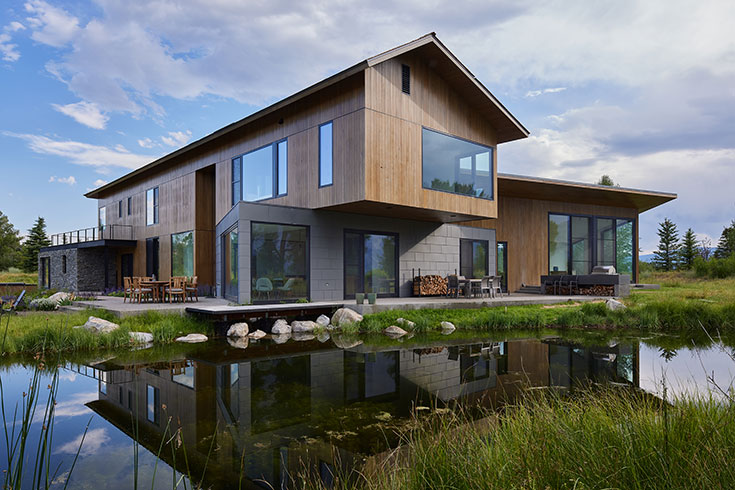
The design prioritizes clean lines and forms created with rough textures and raw materials like tight-knot, tongue-and-groove cedar siding; painted sheet steel; Montana moss rock; and standing seam metal roofs. Berlin composed an intentionally understated entry, but with an oversized reclaimed timber door that opens to frame the Tetons straight ahead, again making nature the focus.
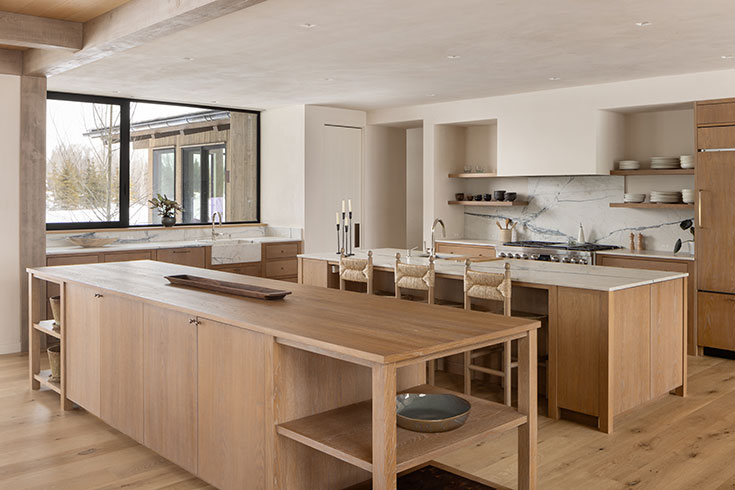
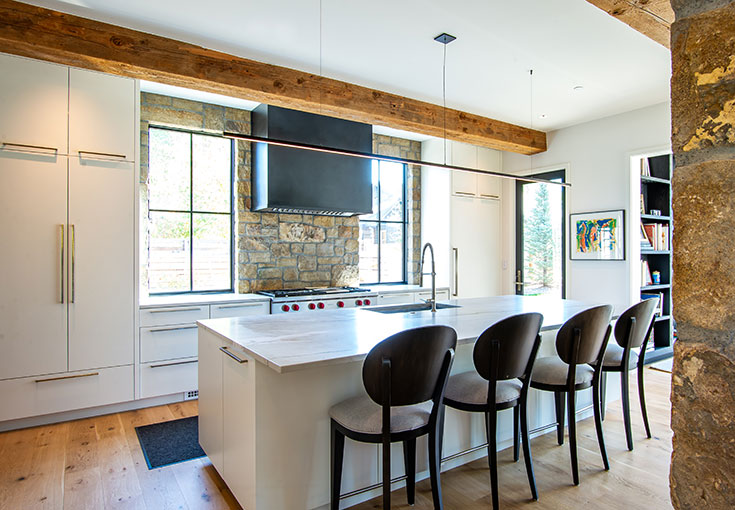
The homeowner is a prolific cook and baker who was wary of marble’s upkeep, so Leibowitz chose a slab of marble-esque quartzite with subtle green veining for the kitchen countertops, the statement backsplash behind the stove, and the apron front of the custom-fabricated farmhouse sink.

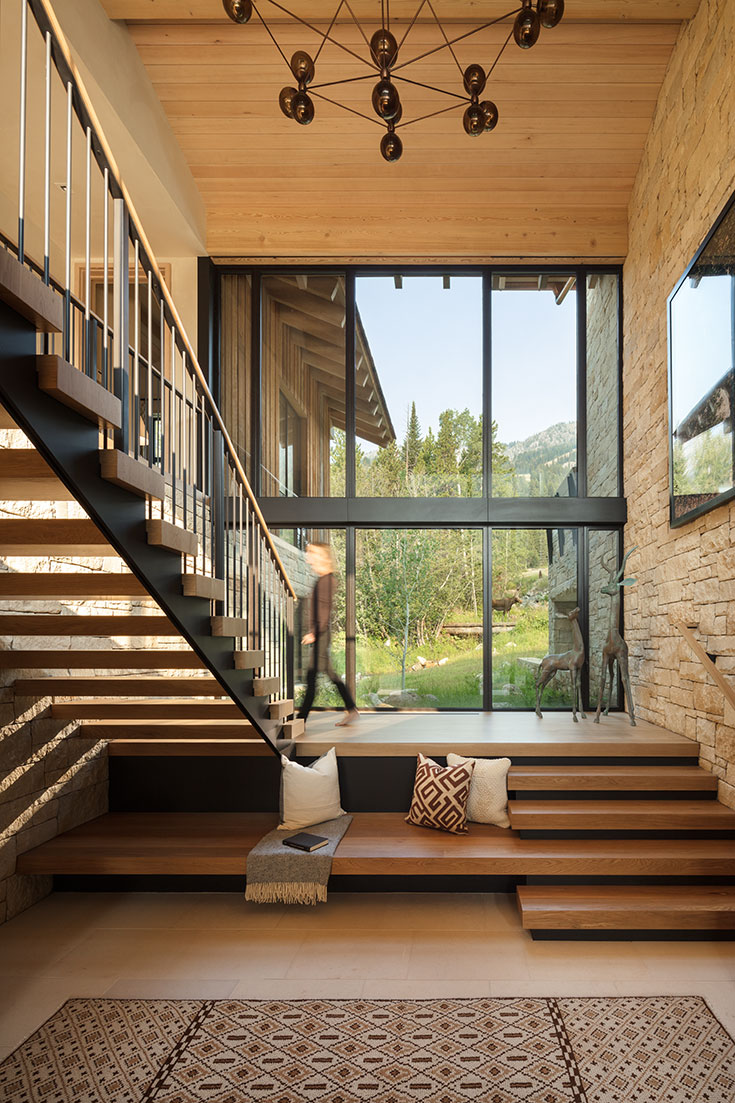
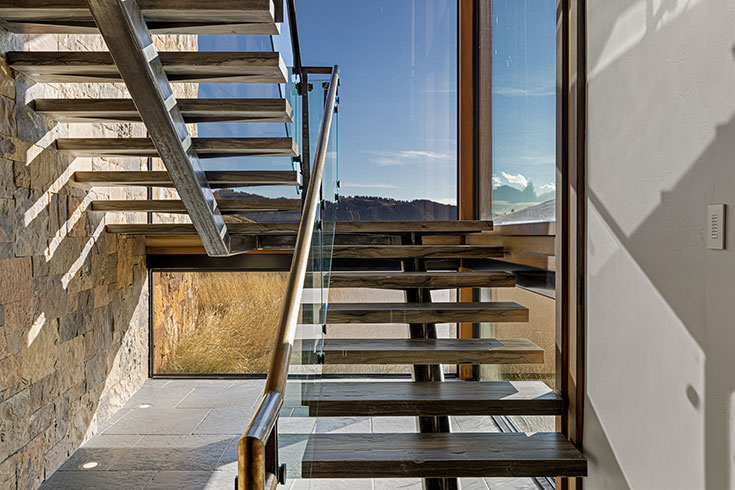
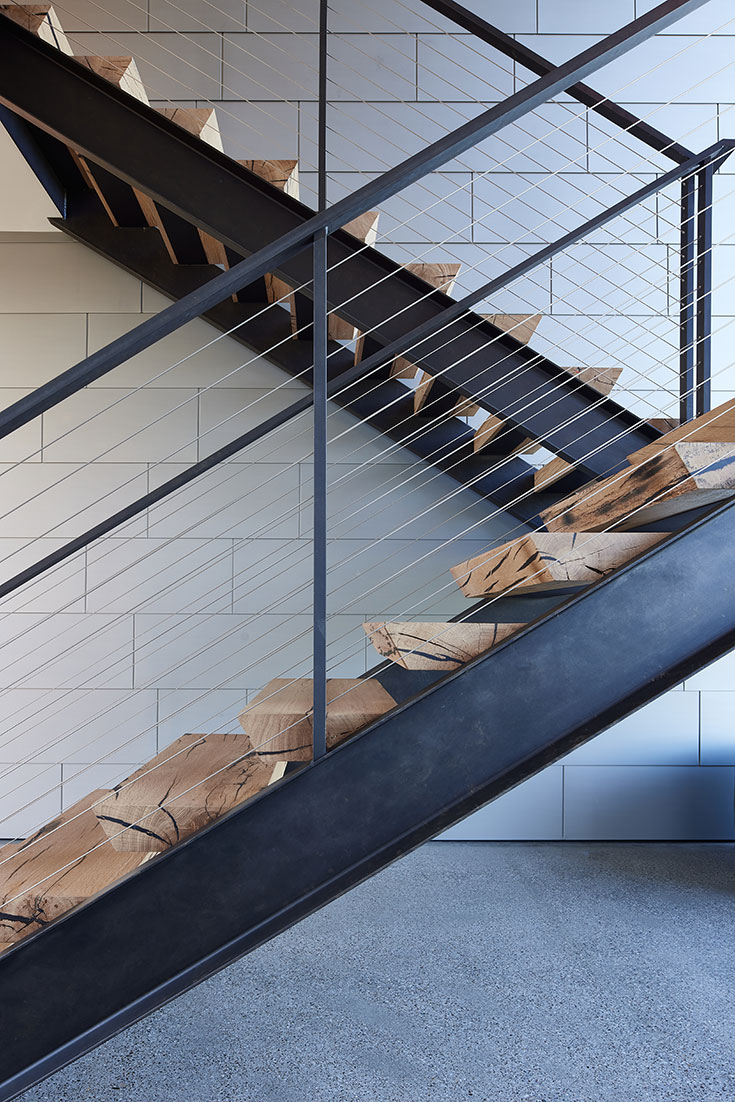
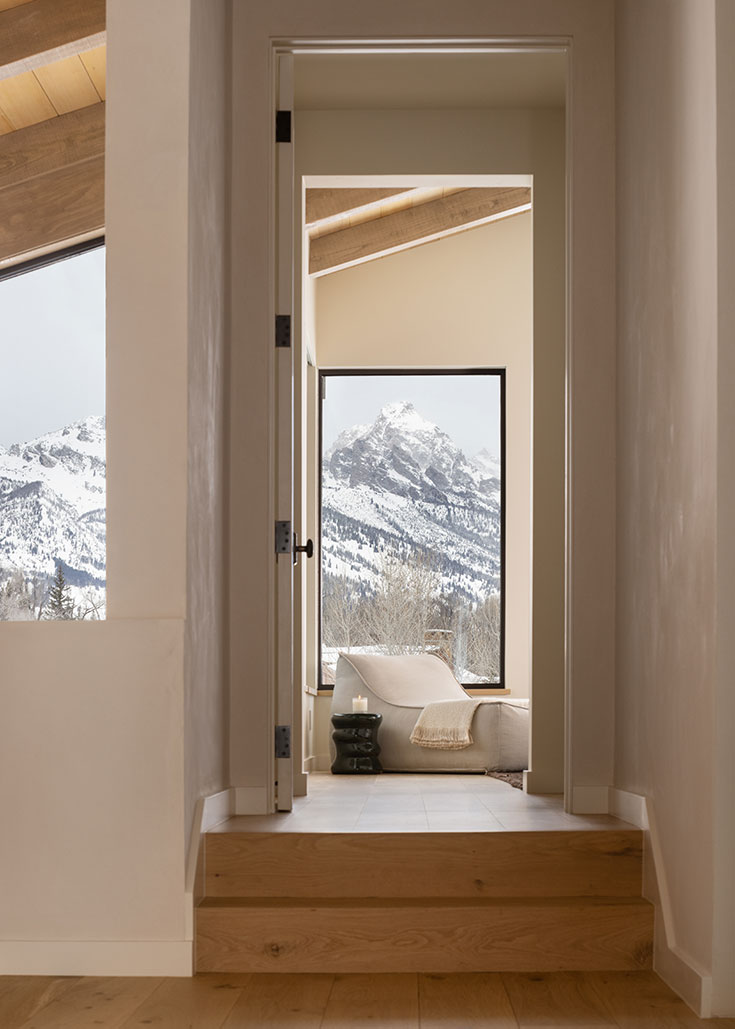
The layout features public spaces on the ground floor flanked by a guest wing and the primary suite with a statement-making stairway to a lofted second floor with guest bedrooms, an office, and a sun deck. Framed by a two-story window, the articulated sculptural staircase is a focal point—from inside and out. At night, the multi-tiered lighting installation hovering above creates a breathtaking design moment. Construction was an engineering feat: steel stringers were laser-cut from one-inch-thick plate steel and then clad in wood. The resulting impression is of delicate steps floating in space. “The stairs have the appearance of lightness, but the concealed support is substantial,” Zabriskie says.
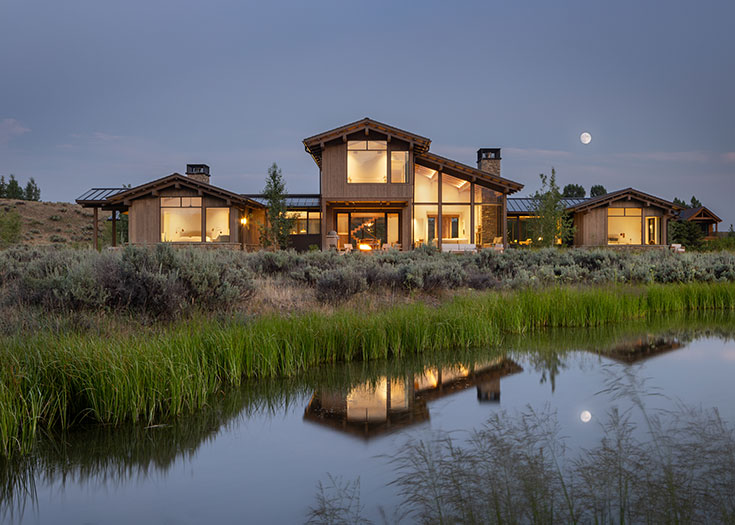
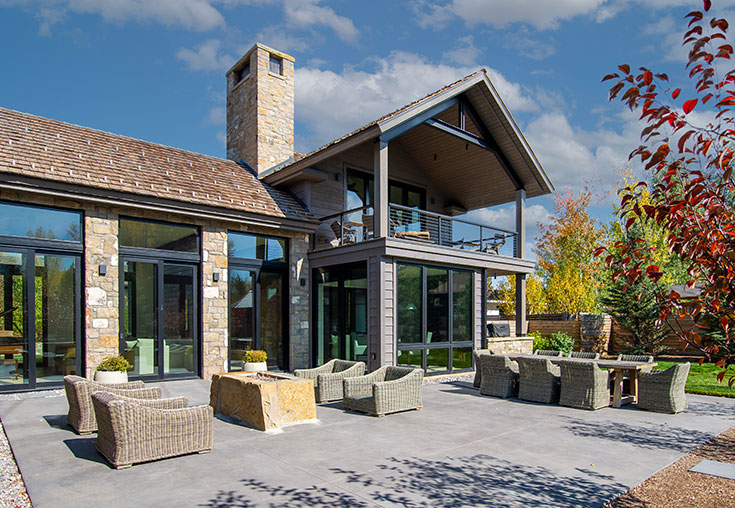
Three distinct and simple gables maximize the glass, capitalizing on nature, light, and views and allowing the architecture to breathe and interact in its environment.

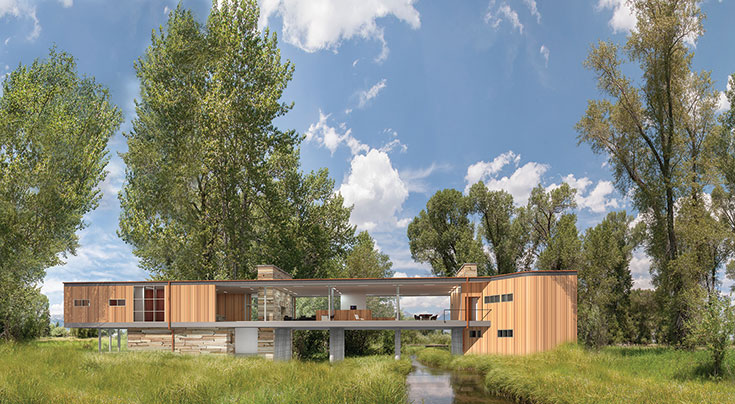
The stream that flows through the property, swelling to a pond in spring, was a prominent feature that Cairn Landscape Architects incorporated into the entry experience. “The clients loved the idea of connecting to the surrounding riparian ecosystem,” says Cairn Landscape Architects founder Hans Flinch. Instead of building a simple culvert, Cairn designed a wooden auto bridge over the creek. “Ecologically, this connects the stream better, and experientially you feel the wooden texture as you drive across. It gives it this whole feeling of entrance,” Flinch says.

“The house is intentionally modest, respecting and honoring this awe-inspiring place.”
—scott zabriskie, Berlin Architects
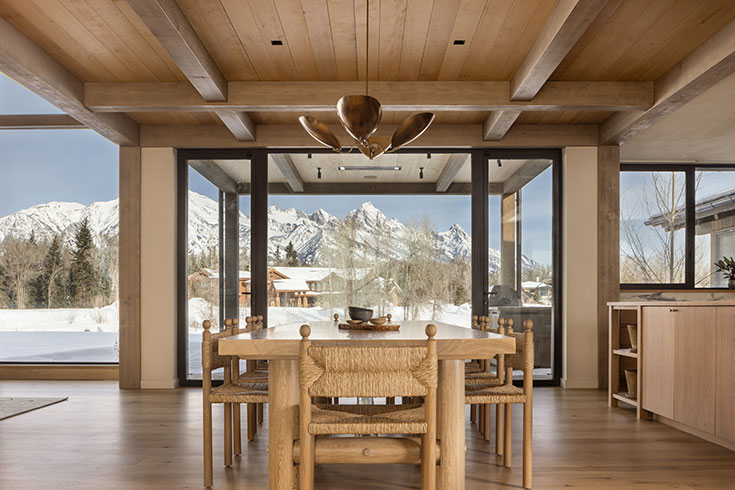
To achieve a rustic contemporary minimalism, designers employed matte finishes, from the natural white oak flooring to the hemlock wood ceilings to the flat-sawn white oak cabinetry, which was stained, cerused, and wire brushed. 

“The clients wanted outdoor living spaces to feel like an extension of the indoors,” Flinch says. “Each wing has its own distinct, contemplative garden that relates to the interior.” Flinch used a palette of primarily native plants, including aspen, spruce, and flowering shrubs for restoration and screening. The homeowners especially love the breakfast terrace situated near the entryway. “The home was originally conceived as a writing retreat, and the client wanted these intimate meditative spaces,” Flinch says. Cairn designed the space with low stone walls, custom-built recycled aluminum planters, and large-format frontier stone pavers. They filled out the garden with colorful pollinator-friendly perennials like catmint, columbine, and yarrow. “The major elements like terraces and trees were carefully aligned with elements on the building, creating a clear sense of rhythm and sense of ease, while the perennials were allowed to be a little wilder,” Flinch says.
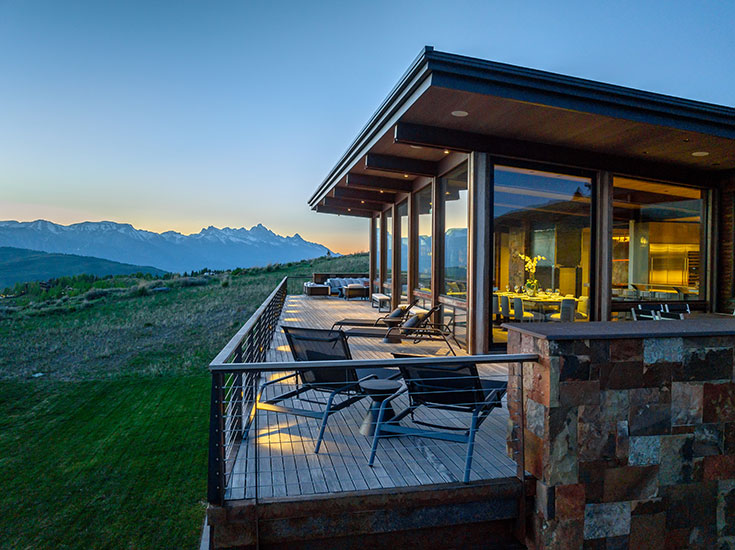
On the north side, Cairn imagined an outdoor extension of the great room with expansive views of the Grand Teton. They collaborated with Berlin to design a covered outdoor kitchen, a series of terraces, and a thoughtfully sized lawn with a gas-burning firepit. “Wherever possible, we used the same materials used on the building,” Flinch says. The spa tub, for example, is wrapped in the same Montana moss rock as the exterior wainscotting and the great room fireplace. “We wanted it to feel cohesive.”

Julia Leibowitz headed the project’s interior design. She chose natural white oak flooring and hemlock wood on the ceilings. The kitchen’s cabinetry features a flat-sawn white oak that’s been stained, cerused, and wire brushed. The textural American clay plaster on the walls reflects natural light throughout the day. “It was important to me that finishes were matte to fit the rustic minimalist aesthetic,” Leibowitz says. “We wanted to mimic what was going on in the landscape—and there’s nothing really shiny in nature.”
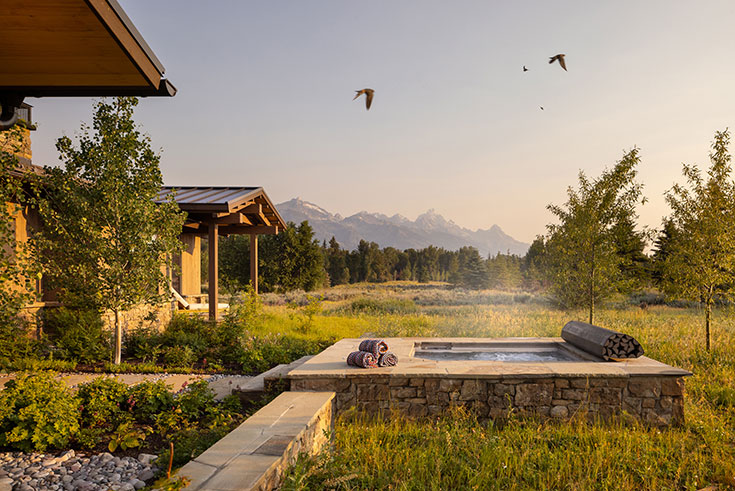
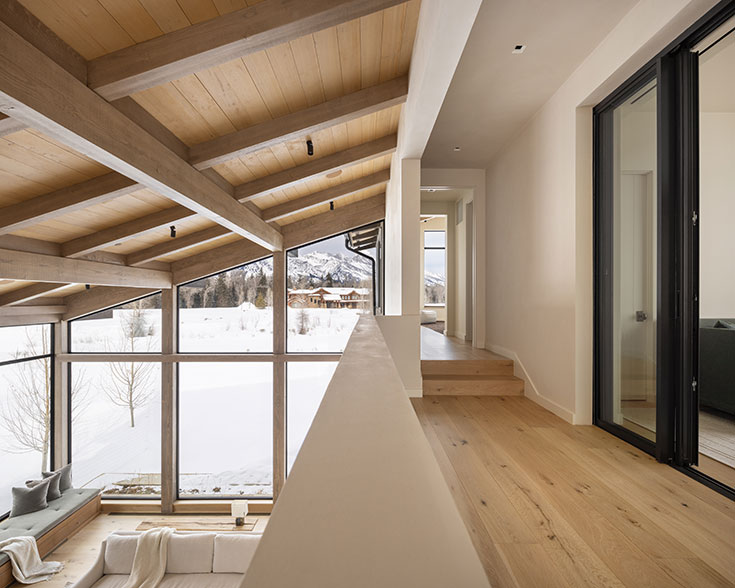
The outdoor spa terrace, wrapped in Montana moss rock and topped with a frontier sandstone coping, sits in full view of the Grand Teton. Native shade-loving perennials soften the sharp edges of the hardscape while offering a sense of enclosure.

The home’s second floor, lofted above the great room, features guest bedrooms, an office, and a sun deck.

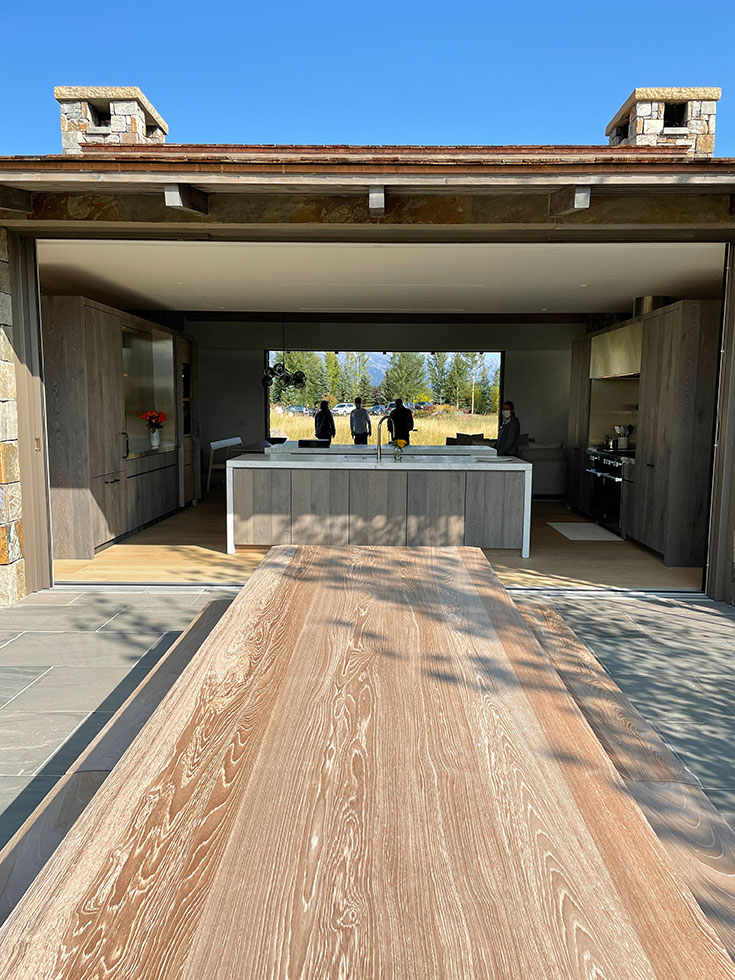
Furnishings are a mix of new, custom, and antique, including a 1930s Swedish monk chair and a 1920s Jacques Adnet table lamp. The custom 11-foot cerused-oak dining table, with its weighty timber base, counterbalances the futuristic patinated brass light fixture above. “I tried to pay tasteful homage to the Western setting while offsetting it with more modern elements,” Liebowitz says.

She also employed a serene, muted color palette inspired by nature, with pops of green that evoke the sagebrush. She upholstered the cushions of the great room’s window seat in a green Rogers & Goffigon silk mohair. Tucked next to the grand fireplace, it’s become a favorite perch—to pause, to write, to soak in the Teton views.
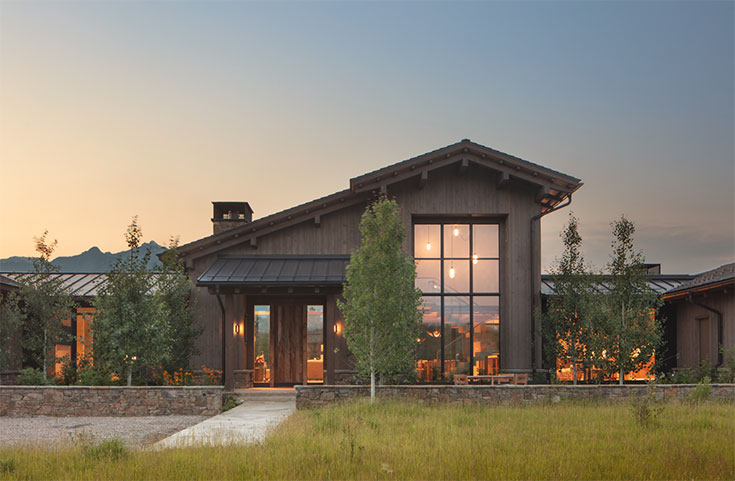
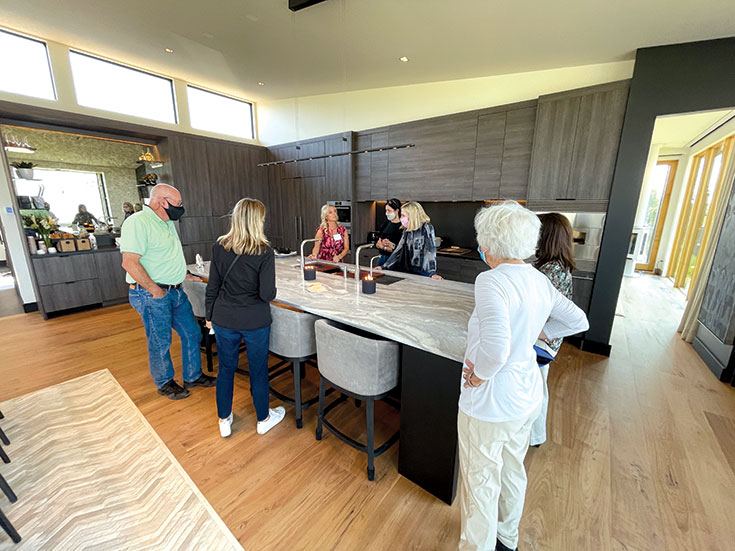
The main entryway is designed as a subtle prelude, allowing the home’s floating sculptural staircase, framed by a two-story front window, to take center stage.

THE ART OF LIVING

THE JACKSON HOLE SHOWCASE OF HOMES


Story
JENN REIN
Photos
LATHAM JENKINS

COMMUNITY FUNDRAISER
HOSTED BY HOMESTEAD MAGAZINE
JACKSONHOLESHOWCASE.COM

Simultaneously expressive and communicative, art and architecture work together to grace our world with beauty in form and function. During the Jackson Hole Fall Arts Festival, architecture, building and interior design get
their due with the annual Jackson Hole Showcase of Homes tour, hosted by Homestead magazine. A local fundraiser for charities of the homeowners choices, it is a one-day, self-guided tour. A home in this outpost of the West, when thoughtfully executed, can be an ode to nature and living the aesthetic life. To take in what might be possible with the Jackson Hole Showcase of Homes is to take in a whole separate genre of art that is embodied using space and location.

Architects, builders, designers and the myriad of craftsmen who come together to create these masterpieces join the homeowners who generously open their doors to the public, setting this Showcase of Homes apart from others. Once on the property, a walk-through is made special with the input of the professionals who brought the home to life. More than a simple home tour, this is an immersive experience.

During the Showcase of Homes, Patricia Kennedy is on hand to offer the brilliant details of how Interiors for WellnessTM accentuates the home environment.

Getting into the finer details of home design can lay bare a multitude of questions, and how often do we get to ask those questions of the architect responsible? Architect Brian Messana of the New York City firm Messana O’Rorke was present to discuss his design during the most recent Showcase, “We wanted to site the home toward the view of the Tetons, but we also have Sleeping Indian to consider. We wanted to create something that felt like it was always here, so the scale and materials needed to feel organic. The vocabulary of the exterior is very basic and echoes the simplicity of those early settlers here. Back then it was all about best use.”

The home in question is a study in minimalism, and the way the lines are affected by this aesthetic brings forth a clean and simple elegance. The space can be shared by the occupants with options for private and communal moments. This is the Western modern movement on display at its finest.

Touring through each piece of the home with the architect serving as docent gives the exploration memorable value.
Touring through each piece of the home with the architect serving as docent gives the exploration memorable value. “The space unfolds before you, with surprises that makes the home feel larger than it is,” says Messana. The lines of the home echo a stylized consistency that becomes instantly familiar, never distracting from the view that compelled the homeowner to select the location.

Located on a bluff 500 feet above the valley floor, featuring sweeping views of the Tetons, the Peace of Jackson home was designed with a wellness focus. Implementing a biophilic design concept means establishing connectivity to the natural environment using space and place. Local firm Rendezvous Design’s principal, Patricia Kennedy, has used the biophilic philosophy as inspiration for her Interiors for WellnessTM approach. With Interiors for WellnessTM, Kennedy elevates the daily living experience by bringing touchpoints for our five senses into the fold.

During the time in which summer morphs into fall, Jackson Hole comes alive with art and a celebration of the town’s Western lifestyle. By participating in the Jackson Hole Showcase of Homes, the guest gains access into private residences that are a result of careful design considerations.

Living “In” the Landscape

living-in-the-landscape-1
Benchmark Builders has expertly blended a wide range of materials on the exterior of this modern home.

Architect
Dynia Architects

Story By
Genevieve Hicks

Photos By
David Agnello
Cameron Neilson
Roger Wade

Creating Intimacy Among Majestic Mountains with Stephen Dynia, FAIA

“The spirit of Jackson Hole is the connection of its people with the exceptional natural environment. The phenomenon of transformative natural light; the power of seasonal change and a climate that has a profound effect on daily life; topographical contour that contrasts rocky peaks with flat valley floors—all interact to profound, poetic effect.” – Stephen Dynia, FAIA

“Modern residences uniquely connect daily life with the exterior landscape by not being bound by the limitations of traditional architecture,” says architect Stephen Dynia, FAIA, whose work creates a dialogue with nature that defies the stereotypes of mountain communities.

“Architecture that is responsive to time, place, and purpose offers a richer relationship with the landscape than the ‘pioneer nostalgia’ of 10,000-plus-square-foot log cabins. What I brought when I moved from New York City in 1993—and what our firm continues to cultivate— is an understanding of something deeper in the culture of a place.”

living-in-the-landscape-2
Virtual representation of the unbuilt Resor house designed by Mies van der Rohe in 1939, rendering by Dynia Architects.

Dynia received his architecture degree from the Rhode Island School of Design, an institution dedicated to art, design, and culture. This educational foundation and his perpetual support of the arts in all disciplines strongly influence the Dynia aesthetic. He says, “Watching true brilliance in any form of artistic expression inspires me to elevate my art—architecture.” His designs reflect the organic movement of modern dance, the complexity of classical music, and the paradox of jazz.

“We realize that, for our clients, creating a home is a singular, momentous event—substantial in their lifetime. We strive to create dynamic, innovative living environments—unique for each family and not subject to stylistic labels.” The firm’s mission is to create homes that genuinely reflect their clients’ needs while relating to the surrounding landscape. The work is not reduced to the superficiality of a singular style; each project is a new expression of spatial proportion, contrasting intimacy with openness.

living-in-the-landscape-3

One of the firm’s first residences in Kelly, designed for a Jackson-based family, is part glass pavilion, part intimate cabin. Inspired by one of the earliest examples of modern architecture in Jackson—a Mies van der Rohe design for the Resor family—the home connects to nature while bringing sophistication to living in the Tetons.

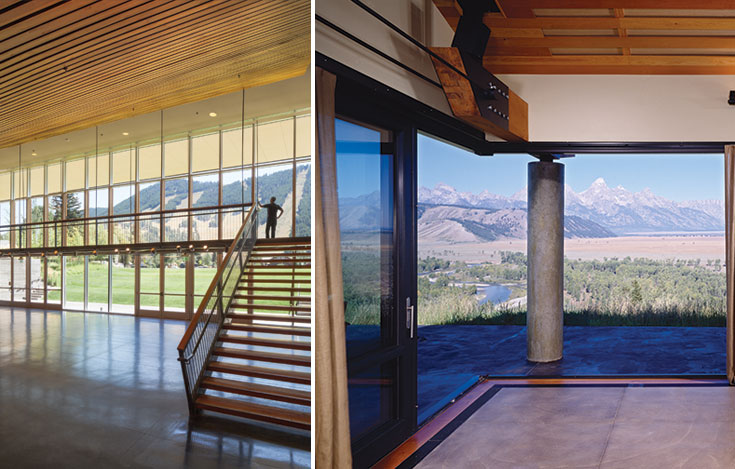
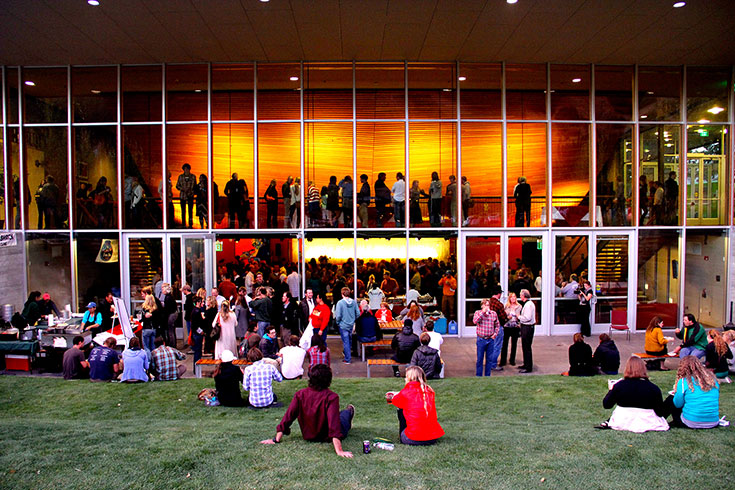
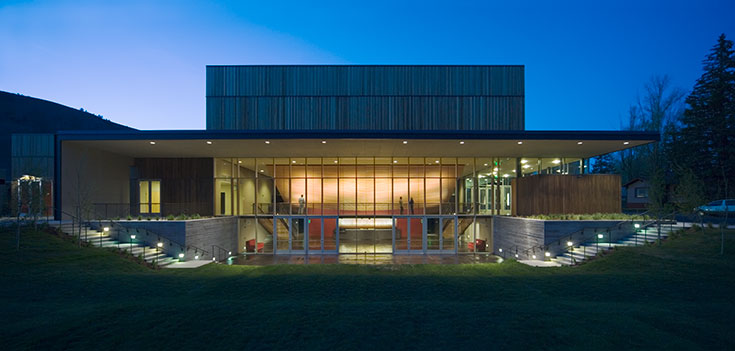
Dynia and his team focus on the quality of the experiences their buildings carry. One of the firm’s most recognizable public projects in town is the Center for the Arts Performing Arts Pavilion, where the use of glass in the central spaces connects visitors to the neighboring, iconic Snow King slopes. This building brings together everything that Dynia Architects is about: the arts, architecture, and a dialogue with the natural environment.

Watching true brilliance in any form of artistic expression inspires me to elevate my art—architecture.”
– Stephen Dynia, FAIA

“Our best work is ahead of us,” says Dynia when describing the firm and his design team. Principals Lisa Carranza, Karen Parent, and Doug Staker—each having 10 or more years with Dynia Architects—are engaged in continuing the legacy that Dynia is creating. At its roots, the firm will always be a design shop that focuses on the process of creating innovative spaces. As Dynia says, “It’s about the quality of an experience, not just the look of the building.”

Dual-Level Living

> Story by Richard Anderson
> Photography by David Agnello and David Swift

agnello_140531_2429


ARCHITECTURE
Dynia Architects

Interior Design
Jacque Jenkins-Stireman Design Studio

BUILDER
Mill Iron Timberworks

The north face of Snow King Mountain offers wondrous views of the National Elk Refuge, Grand Teton National Park and, on clear days, the southern reaches of Yellowstone—with the added embellishment of downtown Jackson’s dynamic urban center in the foreground.

However, the north face of Snow King is also dark. Between the shadow of the mountain peak and the shade of the dense forest, getting light into living spaces is a challenge that requires creative solutions.

For a recent residence project on Snow King, Dynia Architects addressed this challenge with a three-story, vertically organized scheme that placed the primary spaces—living, dining, kitchen, and master suite—at the top, and secondary spaces—studies, library and guest rooms—on the middle level below. The ground floor, carved deep into the slope and devoid of daylight, became the ideal location for garage and utility functions.

The challenge to this approach, as Stephen Dynia, the project’s designer, points out, is “to create a compelling vertical circulation space that will entice you to the top floor and, once there, a living space that powerfully connects with the magnificent landscape, a place that makes the journey worthwhile.”


JY-residence-wall01
Setting: Snow King residences face two basic challenges: the steep hillside building site and the shadowy, north-facing aspects.
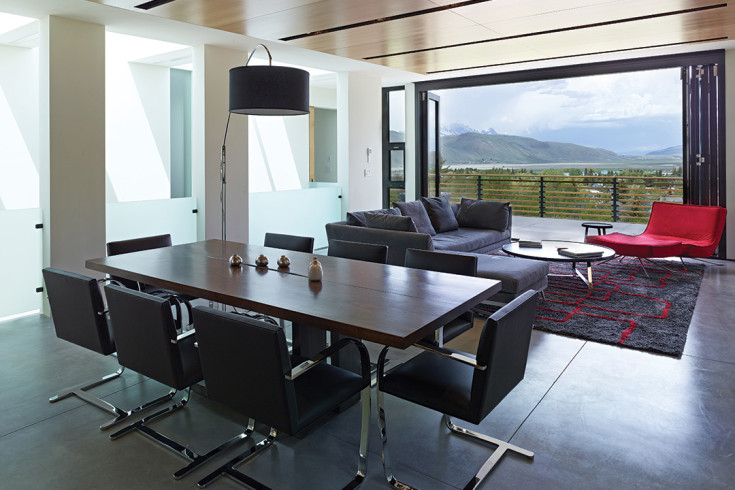
Life 360: The living-dining-kitchen space allows for views straight through from south to north, making the most of natural light and the ever-changing view to the north.
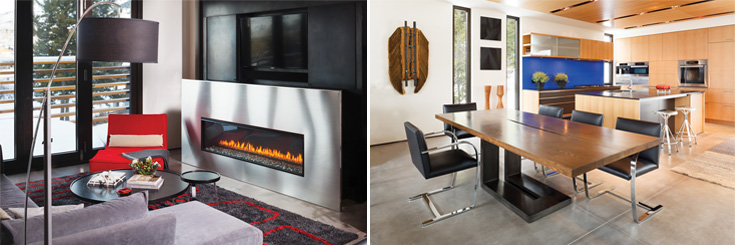
Clean Angles: The dimensions of the stainless-steel, gas-burning fireplace in the living room mimic the wide, panoramic vista afforded by the north-facing wall of glass looking out over the town of Jackson, the National Elk Refuge, and endless Wyoming sky.
Interior Equilibrium: “The finishes and furnishings are a wonderful balance of the Mountain West paired with the homeowners’ urban roots,” Jacque Jenkins-Stireman says of her design approach.

The first goal is achieved in the form of a generously sky-lit stair atrium that draws people toward ever-changing daylight animated by the boughs of pine trees above. The two runs of stairs are shifted to ease their visual length, with the upper stair more directly connecting the two elevated living floors, and the lower stair serving the entry.

One arrives at the uphill end of the top floor and turns 180 degrees to face an infinite, iconic landscape. The layout—an open plan that includes kitchen, dining and living areas—blends with nature as you approach the bi-fold glass wall that opens to extend the living environment onto a deep terrace across the face of the house, further integrating interior space with nature. The terrace, also accessed from the master suite, includes a central gas fireplace and is ideal for outdoor sleeping. Inside, the master suite is separated from the common area by the day-lit atrium, which filters light to all spaces.

Karen Parent, senior project architect from Dynia Architects, managed the process through completion, working closely with the homeowners to develop a palette of texture and color to enhance the architecture—both outside and inside. The objective, Parent adds, “is to fully understand the owners’ sensibilities when selecting things like wood species for the siding, ceiling, and cabinets; the exact tone of the concrete walls and floor; paint color; and lighting.”


JY-residence-wall
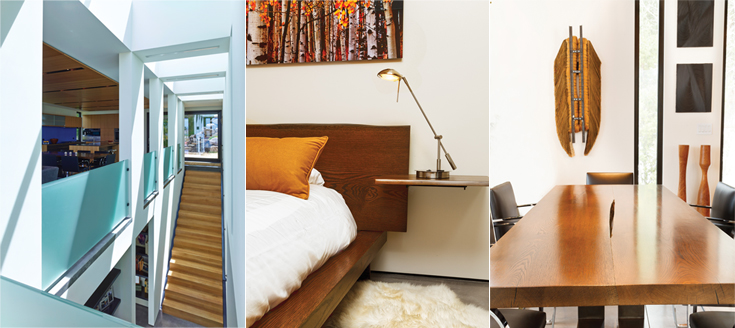
Ascent: Direct sunlight pours through skylights over the staircase, luring visitors up from darker nether floors and suffusing the uppermost floor with warmth.
Custom Furniture: The dining room table, built by contractor John Walker, consists of a vast mass of wood magically suspended by a single support, reinforcing the effortless flow of light and air through the space.
Raised Rest: Walker also built the bed platform in the guest room, which, while in the darker, rear side of the home, still feels bright and airy thanks to a wall of glass opening onto the woods.

One highlight that came from this owner-architect relationship is a wall of black pebbles in the shower that is illuminated obliquely by a skylight above to stunning textural effect. “We as architects do not draw a line between the exterior and interior of a house. It is a holistic endeavor that results in a unified environment, and furthers the owners’ connection to this beautiful, natural environment,” Dynia says.

The carefully considered design approach also made for an exciting construction project, says John Walker, owner of Mill Iron Timberworks, who has been working with Dynia since 1997. “The small, steep site, the spatial divide on each level, and the simplicity of the finished details required thoughtful planning and close collaboration with the architect,” Walker says of the project he and his crew began in the summer of 2012.

“Modern homes must be constructed with incredible precision because you can’t cover up joints with superfluous elements like molding and trim. I enjoy working through these challenges with the architect,” Walker elaborates. The challenge is similar when it comes to furnishing interiors, Jacque Jenkins-Stireman, the project’s interior designer, concurs. “You have to be mindful of absolutely everything that goes into the space,” she says. “Everything has to be very clean. The objective for me was to provide beautiful, functional furnishings and finishes that support the architecture and the landscape alike.”

That meant a lot of custom work—much of it done by Walker—including the solid-oak dining room table that Stireman declares “an engineering feat.” A solid, 3-inch-thick slab of wood seems magically suspended by a single metal support. “There’s no heavy base, no chunky legs, no carving,” Stireman says. “It’s spectacular. It’s a very functional piece that doesn’t take away from the architecture. You see through the table allowing the light to continue through the space, maintaining the flow from the inside to the outside.”

The guest bedrooms provide another example. Of modest size and simply furnished—there’s really just one piece of furniture, the sleeping platform, also crafted by Walker in his Thayne cabinet shop—they contain walls of glass looking into the woods of the backyard. “You feel like you’re sleeping outside,” Stireman says.

At 4,200 square feet, it’s a generously sized home that balances openness and intimacy. “The homeowners didn’t want enormous spaces,” says Dynia. “They wanted it integrated, fairly compact.”

And with the entirety of Jackson Hole right outside their plentiful windows, they got the best of both worlds.


Linus-Ling-Ling_4529
Home Sweet Home: The owners’ adored dogs, Linus and Lingling, enjoy easy access to the outdoors through the rear of the home, which opens onto a spacious terrace and the natural landscape of Snow King Mountain.

Modern Living the Dynia Way

A Canvas for LivingDuring Homestead Magazine’s Showcase of Homes, many patrons had the same response to one of the residences—a modernist masterwork located on Gros Ventre Butte. As they sauntered through the wide, airy rooms with chestnut-hued cement floors and black steel accents, they blurted out, “I could live in this house!”

But why had the sentiment taken them by surprise?

We sat down for a chat with Stephen Dynia of Stephen Dynia Architects to discuss his history of pushing the design envelope in Jackson Hole, and how the “surprise” of modern architecture may actually exist in its perfect harmony with our landscape.

Stephen Dynia’s work is well-known throughout Jackson Hole. Chances are, if you’ve encountered a spare, clean construction with light truss work and sparkling glass, you’ve come across a home or commercial space with the Dynia stamp. Notably, the firm designed the local Center for the Arts building, which opened in 2004, as well as multiple other buildings in the valley. Dynia himself surveys the town from what he affectionately dubs his “plateau”: an unexpected mixed-use development reached by veering up the bluff right after the 89/22 Junction. There, Stephen Dynia Architects works from an open, multi-level structure, and a series of metal-sided work/live spaces next door beckon with glass entries and bright doors.

Innovative AnglesIt’s true that modern architectural work such as this plateau and the showcased Gros Ventre residence often stand out in a sea of traditionally “western” homes, including the nouveau lodge aesthetic favored by homeowners who build to impress. However, Dynia’s take is that much of this architecture is “based on a romance with something that doesn’t quite exist in this time.” He points out that the original log buildings of this valley were built within the constraints of the materials available, and were intended to keep the environment out, rather than let it in. If current Jackson Hole home ownership is all about views, then homesteader values were about warmth, protection, and barricades from snowdrifts and curious wildlife.

Dynia considers newer homes built in the log tradition to be theatrical—theirs is a style that swerves away from the path of history and the actual materials of modern building. In his own design work, he “tries to transcend something that is merely stylistic” to find a more contemporaneous mode of expression.

“My mission is that architecture should be relevant to the era that it’s built in.”

A Site to BeholdDynia strives to make history with his designs, rather than invoke nostalgia for a vanished place and time. To this end, his firm is rigorous about relating every structure to its place, and thereby interpreting the place via architectural elements.

Dynia’s is a design philosophy hewn among the soaring glass and steel structures of New York City, where he got his start at a large firm that specialized in a corporate Modernist aesthetic. These are buildings that, in the truest interpretation of Modernism, are “consistent with [their] method of construction.” Once transplanted to Jackson Hole, Dynia sought out the trace of a Mies van der Rohe-designed home at the Snake River Ranch, a mostly-scrapped project that nevertheless represented the first U.S. design by the modern architecture giant during the 1930’s. In this Dynia saw encouragement–Jackson Hole had already begun incubating the cosmopolitan leanings that could lead to an embrace of modern style.Detail

In conversation, Dynia references other notable architects who have added immeasurably to the recognizable architecture of the valley. Mentioning the Teton County Library and Mad River’s flagship headquarters south of Jackson, he is the first to acknowledge that the wave of modern building is multifarious. Rather than limit building concepts to “abide by look rather than experience,” the unique qualities of our valley require “the freedom of a more expressive building form.”

For Dynia’s firm–particularly in regards to local residences–this experience begins in the sequence of how one enters a home. He likes adding drama to this approach by at first denying expansive views, only to re-introduce them. This sudden reveal draws a gasp and a significant pause. In moments like these, we are truly inside a space—participating in its interaction with a setting. Hallways and stairwells opening to glimpses of sweeping Gros Ventre views surely contributed to the same alchemy during Homestead’s Showcase.

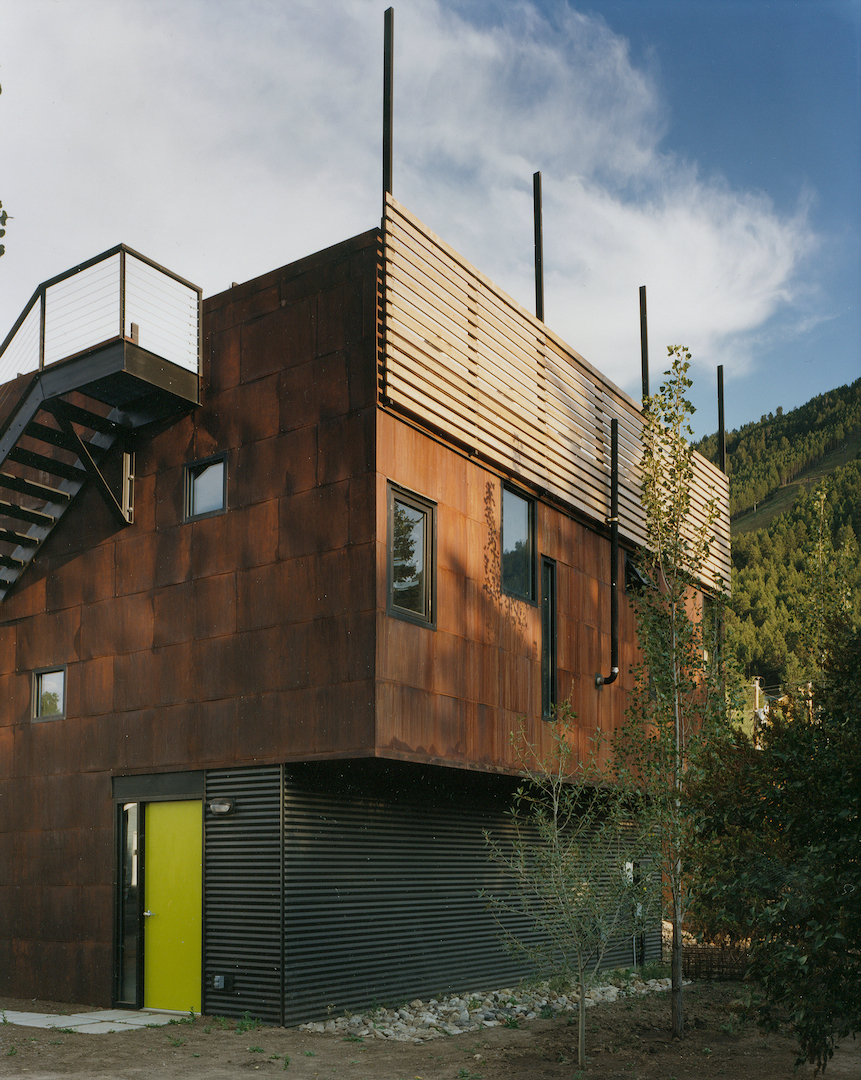
In these award-winning 28x28x28 cubes in downtown Jackson, three levels of living culminate in 360 degree views from the uppermost roof deck. Eschewing the urge to build outwards, these cubes interpret “ how you can live in a place differently” and “literally heighten the experience of landscape” as you climb up to see the whole valley laid below you.

In these award-winning 28x28x28 cubes in downtown Jackson, three levels of living culminate in 360 degree views from the uppermost roof deck. Eschewing the urge to build outwards, these cubes interpret“ how you can live in a place differently” and “literally heighten the experience of landscape” as you climb up to see the whole valley laid below you.

Dynia speculates that our occasional resistance to the stripped down and simplified lines of modern building wells from discomfort. “Psychologically, people are afraid of simplicity.” At the same time, the more restrained the space in its embellishments, the more soothing and reflective it becomes. The clean, uncluttered architectural canvas asks to be completed by the personality of its residents, while more “fluid and sculptural” lines imbue the home with a sense of serenity.

“My work always incorporates somes kind of innovation and inspiration from nature,” Dynia says. He plays with elements like light to mimic the act of walking in the woods, and is always seeking new ways to pay homage to the texture of a landscape.

Dynia Architects currently splits its efforts between Jackson Hole and a number of exciting projects in Denver. Recently, a former truck terminal-turned-urban-office-hotspot known as Drive earned the firm a prestigious AIA Award. These new projects indulge Dynia’s long-held passion for contributing to the culture of community, just as in his home designs, he favors open, centralized spaces that corral loved ones together to bolster the attendant “culture of a family.” In the firm’s sustainable new projects, the existing infrastructure (truck terminals and iron foundries) are recycled into energetic community spaces that are meant to bridge our contemporary mode of detachment living—i.e. live in one zone, work and play in another. To this end, Drive, and the under-construction Drive 2 all contain a shared conference room or lounge, with garage-style doors on every floor that dispel separation from the outdoors with a simple lift upwards.Roof Garden 022

This vision is the same one Dynia has for Jackson, which has been his design laboratory for decades. “Do you want a town that simply preserves itself?” Dynia asks. Of course, his answer is a resounding “No.” Rather, he is encouraged by the current balance being struck in downtown Jackson between conservation and human habitation. In his opinion, the “town is getting healthier” as it continues to embrace mixed use zoning and greater urban-style density. This is the modus operandi behind his own work-live zone on the “plateau.”

So, back to the reactions of those Showcase attendees. Surprise, Dynia thinks, is a hallmark of what his firm is doing here. Viewers will always react to light and the experience of a space, and Dynia’s architecture is intended to capitalize on just that. The austere lines of a modern home may intimidate from the curb, but once inside, an unexpected warmth and peace take hold. In sum, “leadership in design is about leading.” It is about creating bold, benchmark projects and presenting new modes of lived experience, whether in the great room of a home or in the lobby of the Center for the Arts, a glass-framed Snow King beyond.

That surprise is, in fact, “the story of my time here. That’s the payoff.”

Bigger Is Better

Advancements in window technology allow for more glass and smaller frames.

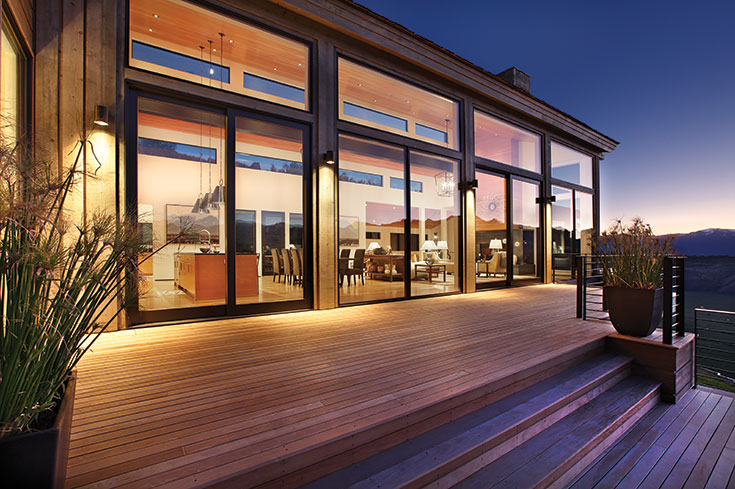
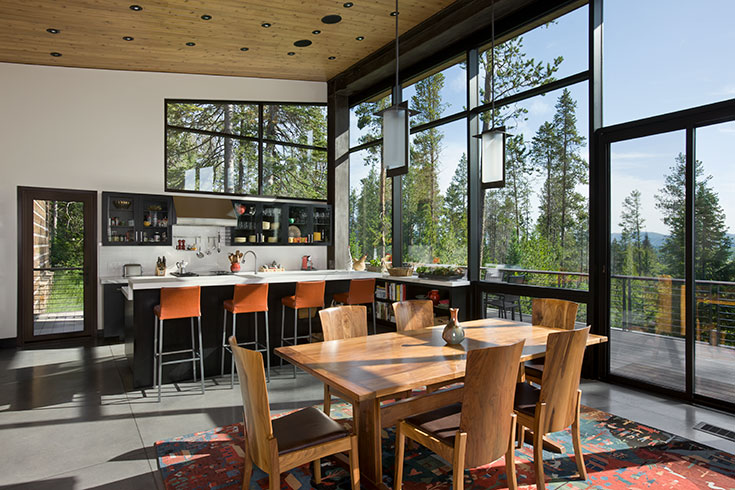
In this 2018 Dream Home by Berlin Architects, windows and sliding doors combine to create a wall of glass in the combined kitchen-dining-living room.

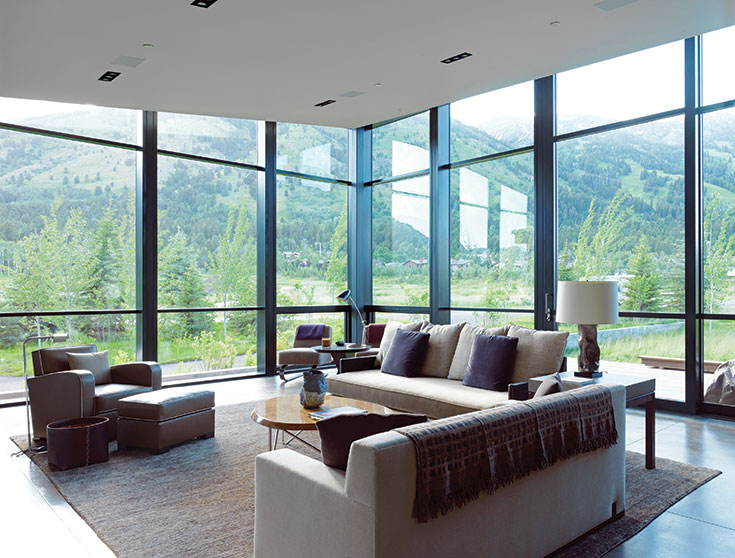
If you think there are more and bigger windows in homes today—in Jackson Hole and beyond—you’re right. “We were having a hard time meeting energy codes in the 1990s,” says Paul Bertelli, principal at JLF Architects, which has offices in Bozeman, Montana, and Jackson Hole. “Especially in Teton County, we couldn’t do things like an entire living room wall of glass because the heat loss was radical. But now, even as energy codes have gotten stricter, we have developments in glass technology and frame and steel and bronze technology that give such improvements in heat loss that we can do whole walls of glass in Teton County.”

“Windows today have thermal properties that are much more enhanced even than 10 years ago,” says Mitch Blake, a founding principal at Jackson-based Ward | Blake Architects.

Of course, bigger windows mean more and bigger views, but that’s not all they do. The more glass in a home, the more connected to the outside it feels, which is a good thing. A 2020 article in the American Psychological Association’s Monitor on Psychology reveals that exposure to nature has been linked to many benefits, including improved attention, lower stress, better mood, reduced risk of psychiatric disorders, and even upticks in empathy and cooperation. “Natural light is critical to the quality of spaces in environments like ours with long winters—light is so important,” says JLF Architects’ Bertelli. “The advancements in glass help solve that problem.”

“I think creating glazing that has a higher R value is one of the most significant advancements in buildings in the 21st century.”
—JLF Architects principal Paul Bertelli

Chris Jaubert, founder and principal at A43 Architecture, says his firm is always trying to blur the lines between interior and exterior spaces. “If you live in a place where you’re looking out at neighbors all the time, maybe this kind of home is less appealing. But in Jackson Hole, we’ve shifted from prototypical rustic log structures, which could be described as introverted, to structures that embrace the environment.” Shawn Ankeny, founder and principal at Jackson’s Ankeny Architecture and Design, says, “It’s really cool to be inside surrounded by lots of windows and light and for it to be blustery and cold outside—you feel like you’re in the elements, but you’re protected.”

A JLF Architects home with big views.
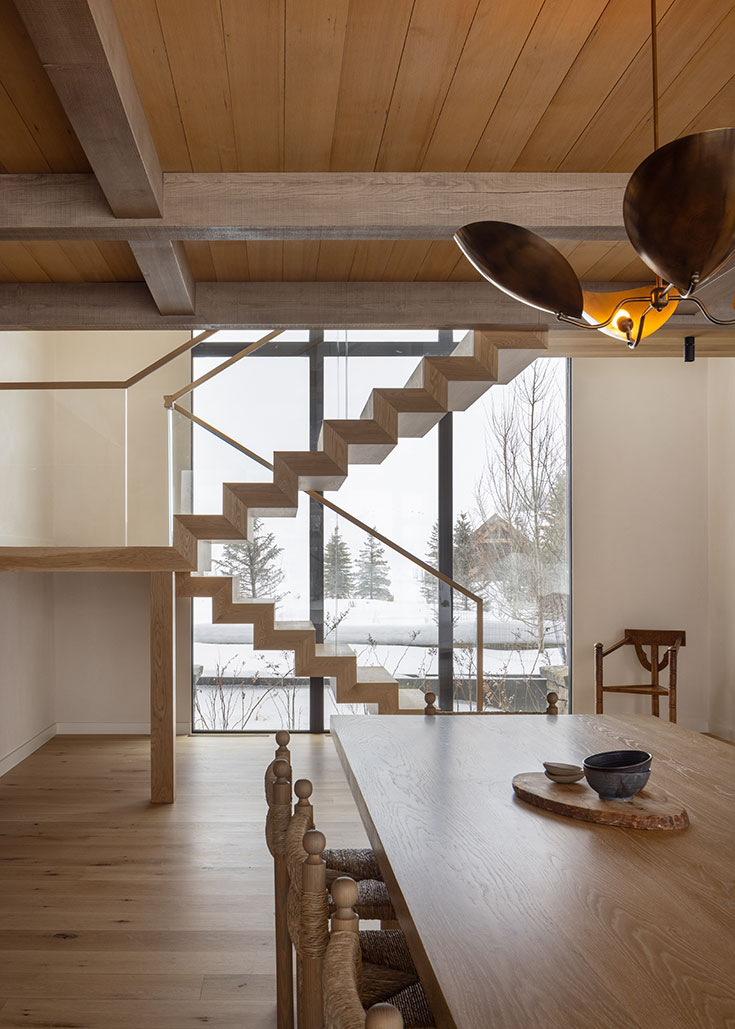
So, what are the advancements that make energy-efficient walls of glass possible? In the 1980s, window manufacturers began inserting a thermal break—whether a polyamide-based material or argon, krypton, or xenon gas—in double-pane windows. (Note: At elevations as high as Jackson Hole’s, gas-filled windows are unsuitable. Most windows are manufactured at elevations below 1,000 feet; when they’re brought up to 6,000 feet, the gas will expand, which can cause structural problems that include pane cracks or shattering, warped frames, broken window seals, and compromised structural integrity.) The impracticability of gas-filled windows at higher elevations was one reason engineers developed low-e (low-emissivity) window coatings. These are usually applied to both sides of double-pane windows and minimize the amount of ultraviolet and infrared light that can pass through the glass.

Substantial glass in a 2024 Dream Home by Farmer Payne Architects.

Another improvement came from European window manufacturers, who began making windows out of bronze and steel (wood was the traditional material). “Bronze is one of the most stable and durable materials out there,” Bertelli says. And triple-pane windows, which are even more resistant to heat loss than double-pane windows, also became a thing.

Simultaneously, the installation of windows improved. “It was really hard to seal a window in the past,” Bertelli says. “The process was pretty rudimentary. But now there are great products where you can seal windows with waterproof membranes applied to a building substrate. There have been huge improvements in the weather- and moisture-resistance of actually applying a window to a building. Several things have slowly evolved over time—hinges, locking mechanisms, and weatherstripping are also better now—that, together, have gotten us to where we are now—where it’s extraordinary what you can do with glass windows and doors. It’s unlimited.”

While today’s windows and how they are applied to buildings are more energy efficient, that’s not the only way they have improved.

Aesthetics

A wall of windows makes the landing in this CLB Architects home a major moment.

About the walls of windows used in their Ridge at Spring Creek home featured on page 76, Ward | Blake Architects says the visible components are crisp and thin. “We’d done this much glass before, but with beefier components,” founding principal Tom Ward says. “I think this might be the first time we did triple glazing in a super thin frame. The Bauhaus architects were always talking about this expression of glass and mass but didn’t have the technology at hand to do it. It took until now to execute their theories and ideas in the way they envisioned.”

A floating staircase in front of a glass wall designed by Berlin Architects.

“Now, smaller components can make bigger windows,” Bertelli says. Steel and bronze window frames are strong and stable enough to support large segments of glass, which traditional wood window frames couldn’t do. “Steel and bronze allowed for thin sight lines and durability.” And now engineered wood can do the same. “You don’t have to go to Europe for thin sight lines and durability anymore,” Bertelli says, calling out Wisconsin-based Kolbe’s VistaLuxe Collection, which is made from engineered lumber.

For the Birds

A 2014 Smithsonian study estimated that between 365 million and 988 million birds are killed annually in the U.S. because they fly into windows. As high as this range sounds, a 2024 Audubon Society study published in the journal PLOS ONE revealed that this estimate is likely low. Audubon researchers concluded that collisions with buildings could kill more than 1 billion birds per year in the U.S. alone, making bird-window collisions an even greater factor than was previously thought in the estimated loss of one-quarter of North America’s bird population over the last 50 years. Birds are most likely to crash into windows that reflect the sky or nearby greenery, aka what we see out our windows in Jackson Hole.

Bird-building collisions are not new—they were first documented in the 19th century—but bird-friendly glass is. “The technology to prevent bird strikes has really improved,” Bertelli says. Windows are now available with patterns etched or applied to them. The patterns don’t block human views, but signal to birds that the space is not open. “If you have these windows, when you look through them close up, the patterns really don’t block anything,” Bertelli says. The patterns are usually horizontal or vertical lines or a grid of dots, but Bertelli says they are not obvious.

There are window films that can be applied to existing windows (or to styles of windows that aren’t available with bird-friendly glass) to make them bird-friendly. In Chicago, on the night of October 4, 2023, approximately 1,000 migrating birds fatally collided with McCormick Place’s Lakeside Center. Before the next year’s migration, bird-friendly window film was added to all of that building’s windows. There haven’t been any mass-fatality bird strikes on the building since.

Smart Windows

The term “smart window” was first used in the 1980s. Introduced by Claes-Göran Granqvist, a Swedish material physicist at Chalmers University of Technology, the term was used to describe a responsive window capable of dynamically changing its tint.

Smart technology seems to be built into everything today—from TVs to cars and refrigerators. Windows are no exception. “There’s dynamic glass and electronic glass and electrochromic glass, and thermochromic and photochromic,” Bertelli says. “These are all ways of changing the transparency or the density of glass to either reduce sun or reduce heat loss. It’s amazing.”

As recently as two decades ago, it was difficult, if not impossible, to do entire walls of glass and still meet Teton County’s energy-efficiency codes. Today though, as seen in these two JLF Architects images (left and top right), advances in glass and frame technology allow for very large expanses of glass.

Although it is still in early development, researchers at Michigan State University have created a transparent luminescent solar concentrator that creates solar energy while keeping the window clear. “This isn’t yet developed enough for use, but when it is, it will be a game changer,” Bertelli says. “Imagine a 50-story building producing enough energy to run half of the apartments in it, or a home producing its own energy.”

Electrochromic Windows in Action

Boeing 787 Dreamliners, which are part of the fleets of United Airlines, American Airlines, British Airways, Lufthansa, and Emirates, among others—worldwide there are about 1,200 Dreamliners in service—feature electrochromic windows. Passengers in window seats no longer need to pull down (or raise) a window shade. The electrochromic windows do what’s needed automatically.

At the Washington Monument in Washington D.C., elevators have smart glass sides to allow riders to see the commemorative stones inside the monument.

In Tokyo, Japan, public bathrooms have at least one smart glass wall. If the bathroom is empty, the smart glass is clear and you can see that it’s unoccupied. Once you enter and lock the door, the smart glass becomes opaque.

This 2017 WRJ Design Dream Home designed by architect Richard Keating features an expanse of glass on one side of the home.

Electrochromic windows are the most widespread smart windows currently in use. Electrochromic glass changes from clear to opaque with the push of a button (that applies an electrical voltage across the glass). These windows can be used to improve energy efficiency and also provide privacy or visibility in a space; electrochromic windows can eliminate the need for blinds or window treatments.

Noise Reduction

A truly soundproof window has not yet been invented, but there are windows that effectively reduce sound. Material and insulation both play a role in reducing (or not) sound, but the glass itself is the biggest determinant of how much sound a window blocks.

Measuring Sound Performance

A common measure of sound performance is Sound Transmission Class (STC). The higher this number, the better a window’s sound absorption.

With windows with an STC rating of 25–30, you can hear and understand a loud conversation happening outside. With windows with an STC between 30 and 35, you might hear that a loud conversation happening outside, but not be able to follow it. If you’ve got windows with an STC between 36 and 40, loud conversation outside sounds like a low hum. An STC between 42 and 45 means that loud voices, and even music, are blocked, minus the bass tones. A 10-inch masonry wall has an STC of 50.

A standard double-pane window has an STC of about 28. Standard triple-pane windows have an STC between 28 and 34. An STC rating of 38–42 is considered good soundproofing for residential windows.

Of course, the thicker the glass, the better it blocks sounds. But the number of panes, each pane’s thickness, the presence of inserts, and the space between panes also make a difference in a window’s ability to dampen noise. Today’s windows are available with acrylic inserts, thicker panes, and with panes of different thicknesses. When one pane is thicker than the other, it is more difficult for sound to travel through a window because the panes will vibrate at different frequencies. (Panes of the same thickness vibrate at the same frequency, which helps sound pass through more easily.)

A double-pane window with an acrylic insert between the panes reduces loud talking outside to a low hum inside. Acrylic absorbs and resists sound better than glass, and the insert creates an additional air pocket within the window that insulates against sound.

The Forever House

Ankeny Architecture and Design and Helius Lighting Group collaborate on an East Jackson home informed by the clients’ deep understanding of what they want.


Story
Dina Mishev
Photos
Melinda Duquette

Ankeny Architecture and Design
ARCHITECTURE
ankenyarchitecture.com

Willow Creek Woodworks, Inc.
WOODWORK
willowcw.com

Helius Lighting Group
LIGHTING
heliuslighting.com

A couple living in East Jackson’s Gill Addition, a cozy and family-friendly neighborhood tucked between Broadway Avenue and the National Elk Refuge, came to architect Shawn Ankeny of Ankeny Architecture and Design looking to design and build their forever house. While they wanted a new house, they didn’t want a new neighborhood; they had purchased a double lot close to their existing home. “They knew where they wanted to be, and, from prior renovations and new builds they had done, they knew what they needed and wanted in the home they planned to spend the rest of their lives in,” says Ankeny, who founded her eponymous firm in 2005.

While the couple knew what they wanted, “it was a challenging site,” the architect says. “It faced three streets, including busy Broadway.” Siting the more private entrance side of the house up against the Gill Addition neighborhood and orienting the larger back windows out toward Broadway Avenue and Snow King views was an easy choice. “And then we’d have a nice buffer of landscaping between the back of the house and Broadway,” Ankeny says.

While the clients wanted a fireplace, they did not want a double-sided fireplace. “The client didn’t want the fireplace coming into the kitchen,” architect Shawn Ankeny says. “She preferred to have more space and more display space, so we came up with the built-in piece that Willow Creek Woodworks’ Jaxon Ching made on the back of the fireplace stone volume.”
The stone in the great room—on the fireplace and the wall opposite it—is the same stone as on parts of the home’s exterior. “Natural stone, white oak floors, painted trim to match the walls, and strategically placed reclaimed ceiling beams—a limited materials palette is easy on the eyes and has a very warm, zen feeling,” Ankeny says.

Inside, the couple knew they wanted the kitchen, great room (with a wood-burning fireplace), and primary suite on the first floor. They wanted the latter to have an oversize walk-in closet and his-and-hers bathrooms that opened to each other. The second floor has a sitting room with a covered terrace and a guest suite. Ankeny devised the house as two staggered “bars”—one with the one-story primary suite and the other with the two-story guest suite—connected by a one-story great room and entry. “The building itself is not symmetrical, but it is balanced, and elements inside of it, like the great room, are symmetrical,” Ankeny says. “The home has clean lines, lots of natural light, and a limited and natural materials palette.”


“The home has clean lines, lots of natural light, and a limited and natural materials palette.”
—shawn ankeny, ankeny architecture and Design

The Heart of the House

Early in the design process, there was no doubt that the heart of this home would be the great room, even if the clients instructed Ankeny not to make it “too big.” Anchored by stone-clad walls at either end—one of these is the requested fireplace—the long sides are glass. Each of these glass walls is three doors that slide open. “The permeable sides let the landscape in, but in winter you can keep the doors closed and feel cozy,” Ankeny says. Helius Lighting Group’s program in this space emphasizes the twin stone-clad walls. “The lighting is focused on the two key end walls. This emphasizes this architectural element while allowing the rest of the room to remain soft and cozy,” says Jarron Pew, a partner at Utah-based Helius Lighting Group. Auto shades with integrated pockets line the glass sides.

Adjacent to the great room is a bar. “The clients love entertaining,” Ankeny says. “A bar where they could do this was an important space, and it serves as a connection between the great room and more private sitting room.”


Although based in Utah, Helius Lighting Group does the majority of its work, which is primarily in luxury residential and commercial spaces, in Jackson Hole. “We’re really focused on serving architects and interior designers,” Pew says. “Everything is geared around helping the architecture come to life the way the architect wants it to while also reflecting the client’s priorities.”

High Ceilings

“The clients really wanted 12-foot ceilings everywhere,” says Ankeny, who had never done that in a project before. (“Usually I have step-down halls and lower ceilings in bedrooms,” the architect says.) “It gives the house a very grand feeling and just lets in so much light.” Scaled to match the ceiling height, a 12-inch-tall baseboard was used throughout the home. All of the natural light worked well with the client’s ask that there be minimal recessed and architectural lighting. “This was a unique project because the client really loves table lamps and is comfortable with them providing most lighting,” Pew says. “Recessed lighting was kept to a minimum to provide simple accents, or to focus on needed tasks. Generally, this project has less recessed lighting, which provides a softer feel.”

There is one area with nine-foot ceilings, the breakfast nook. “It’s not that the ceilings here are low, but the difference between this space and the rest of the house just makes this space that much more intimate,” Ankeny says.

The path to the house in both the front and back yards is not linear, but has a jog in it. “I like the feeling of not walking straight into the house. It’s a small move, but it makes it feel like you’re exploring as you go in,” Ankeny says.

For the Dogs

A fun, and not a wholly unusual, request in Jackson Hole where homeowners really love their dogs was for all of the rooms on the main floor to open to the outside and for windows to go down to the floor. “The house had to open to the outside from the primary suite, the great room, the kitchen, and the dining room for the dogs,” Ankeny says. “And they wanted a big backyard for the dogs, which was nice because it also put the house farther from Broadway, which is a busy street.” Why windows to the floor? “So the dogs can see out,” Ankeny says.

Hidden in Plain Sight

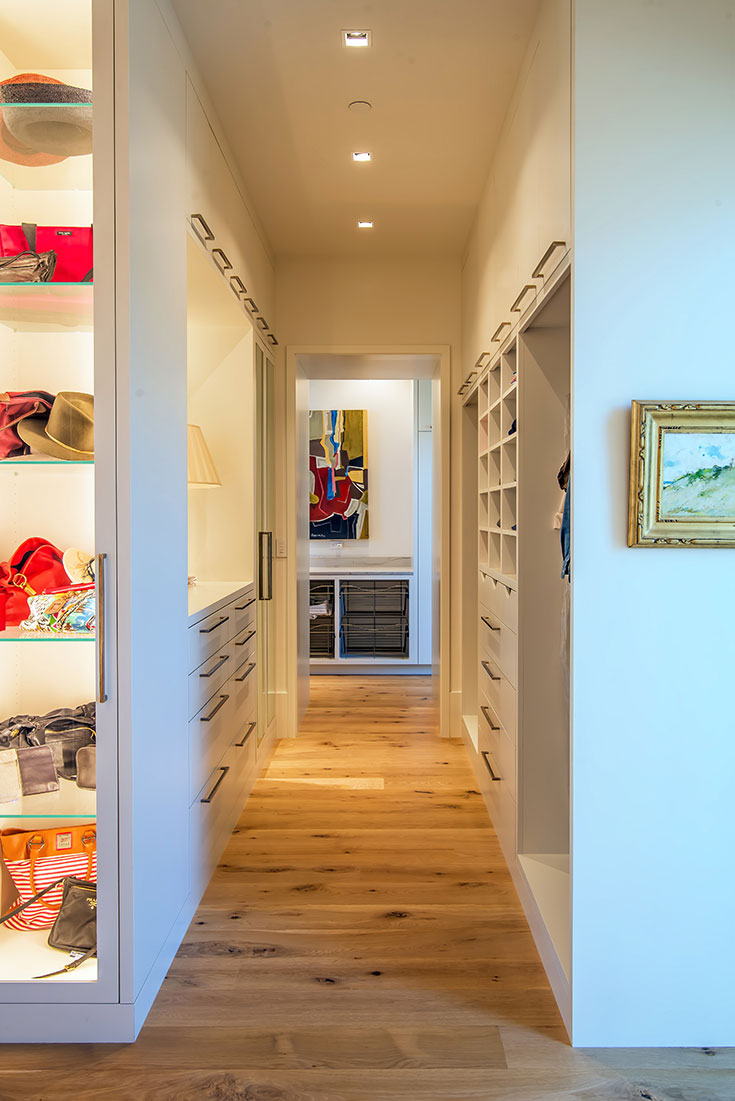
The clients wanted most things built-in. “There are cabinets in almost every room,” Ankeny says. “And they really contribute to the contemporary nature of the house. Everything can be hidden behind flush cabinets.” Even lights are hidden in the cabinets. “In the primary closet, Jaxon [Ching, of Willow Creek Woodworks] built lights into the millwork instead of us planning for fixtures on the outside aimed in,” Pew says. In the kitchen, lighting in the display case makes it a decorative feature of what Pew says could have been a dark hole. “The integral cabinet lighting brings depth to the room instead of it being a cabinet wall that is a light void. [Jaxon] did a great job,” Ankeny says.

Harmonic Respect


Story
Homestead Team
Photos
Drew Orlando

Ward | Blake
ARCHITECTURE
wardblake.com

The starting point for this new build on the ridgetop of East Gros Ventre Butte, in the exclusive Ridge at Spring Creek neighborhood, was promising. “The client likes architecture and was up for doing something interesting,” says Ward | Blake cofounder Mitch Blake. The client liked the look of the nearby luxury resort Amangani but didn’t want to copy it. “He liked its simplicity and how it felt tranquil and subdued,” Blake says. The client’s vision dovetailed perfectly with Ward | Blake’s vision: be provocative in thought, flexible in nature, and disciplined in execution.

More empirical asks included three bedroom suites similar in size and views—the client has three daughters—a primary suite detached from the family and guest rooms; accessory rooms including a library, billiard room, and exercise room; a combined kitchen/dining/living space; a bunk room for guests; and a “hidden garage,” Blake says. “He liked the way we had hidden garages in other projects and wanted to do that here.” And the client wanted views. From the site, you can see the entire expanse of the Teton Range and, hundreds of feet below on the valley floor, some of the valley’s historic (and still working) cattle ranches.
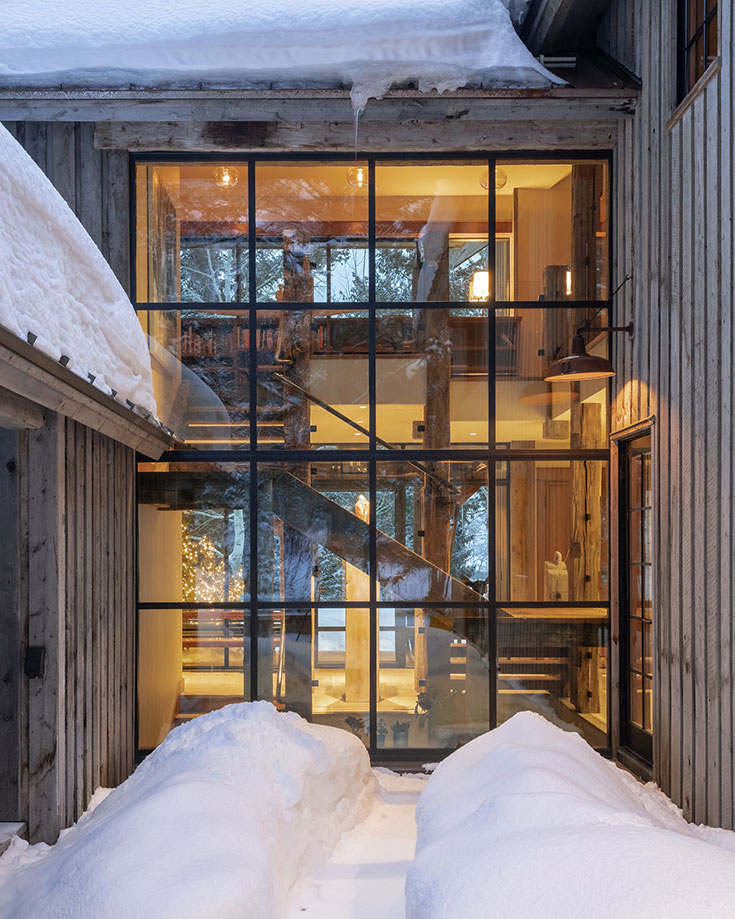
An award-winning Ward | Blake home on the Ridge at Spring Creek is a light-filled, organic extension of East Gros Ventre Butte.

Because the home would be on a ridge, Teton County’s “skylining” regulations also factored into siting and design. Put in place to preserve the valley’s topographical ecosystem, these land development regulations state that a ridgeline home must be sited and designed in a way that preserves the view of that ridgeline when seen from any county road.

And then there were the features that Jackson-based Ward | Blake brings into all of its projects: a connection between the inside and out; energy efficiency; natural light; and a thoughtful, measured, and meaningful materials palette. All this was a tall order, but “this project and site were a good fit for us,” says firm cofounder Tom Ward.

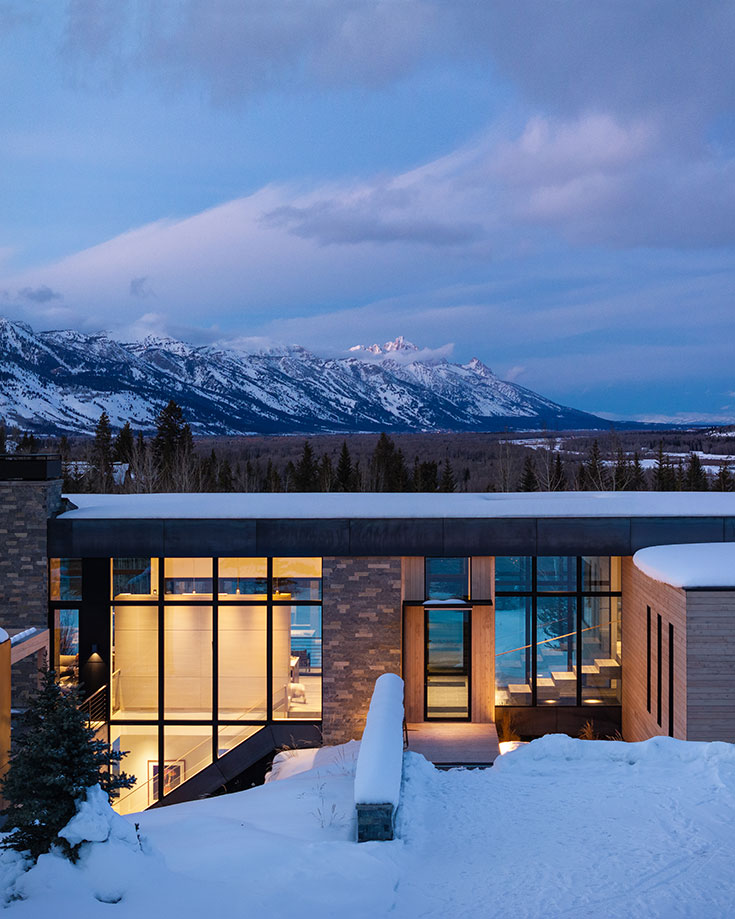
“Visually, the house is transparent—the massing is a combination of stone and glass with thin steel components that provide delicacy to the detailing. The heavy stone forms are visually lightened by the large glass openings while they connect seamlessly to the site like a natural outcropping,” says Blake. “It’s a real juxtaposition to the stone and steel and is a good manifestation of something we always try to do—articulate massing and materials. In this instance, the distinction is razor sharp.”

Initial Thoughts

“Because it is a hillside lot, we immediately thought about ‘slicing’ the house into the hillside to make it fit the natural contours,” Blake says. The client had asked only for a hidden garage, but Blake and Ward’s design integrated most of the home into the hillside. “It looks like it is emerging out of the slope, capturing big views and the sky and sunlight,” Blake says.

While big walls of glass can decrease a home’s energy efficiency, these windows are triple glazed. “The thermal properties of these windows are much more enhanced than even what was available just 10 years ago,” Tom Ward says.

Ward and Blake also had ideas about using the exterior materials palette to articulate function and reinforce massing, proportions, and rhythm. “Arbitrary and meaningless changes in materials proliferate in bad modern architecture,” Ward says. “In this project, changing materials respond to the floor plan and/or are a direct response to us trying to enhance or connect with the site.”

Big Views with Big Benefits


Much of the house that opens up from its “slice” within the hillside is glass. The views are stunning—from any room, you can see the entirety of the Teton range. But all of this glass is not only about the views. “Windows bring in natural light, which makes a house pleasant and brings a passive solar aspect,” Ward says. Blake adds, “They create a connection to nature. With a lot of windows, you are very aware of what’s happening outside.” Windows and natural light also create a dialogue between inside and outside. “When there’s low light, snow on the ground, and sub-zero temps in the winter, the house feels one way,” Ward says. “In summer, when everything is green, it’s a very different feel.”
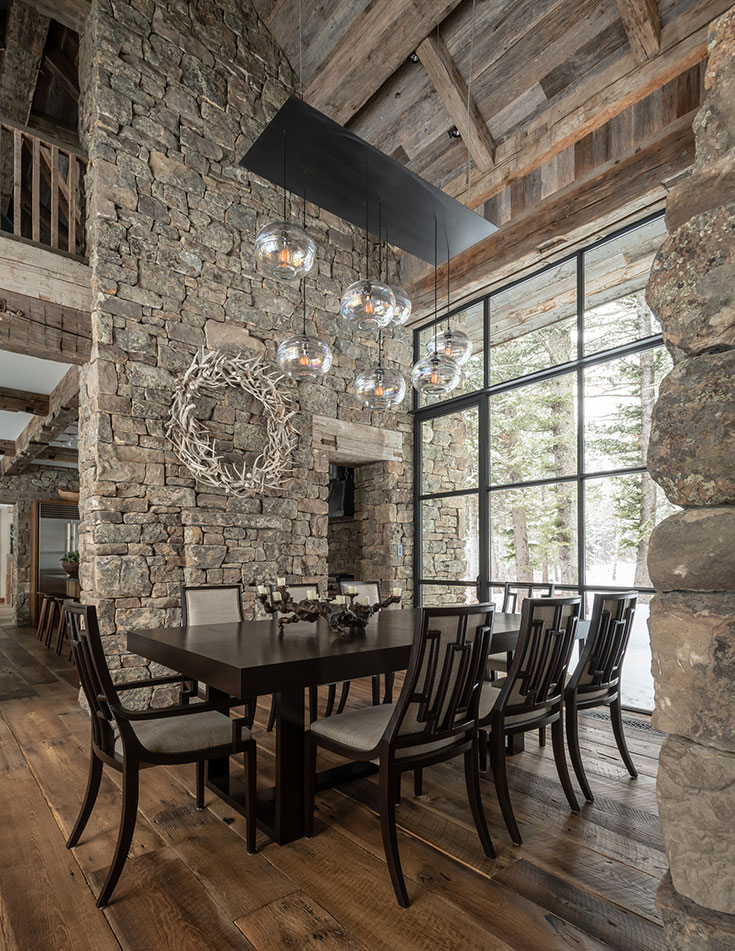
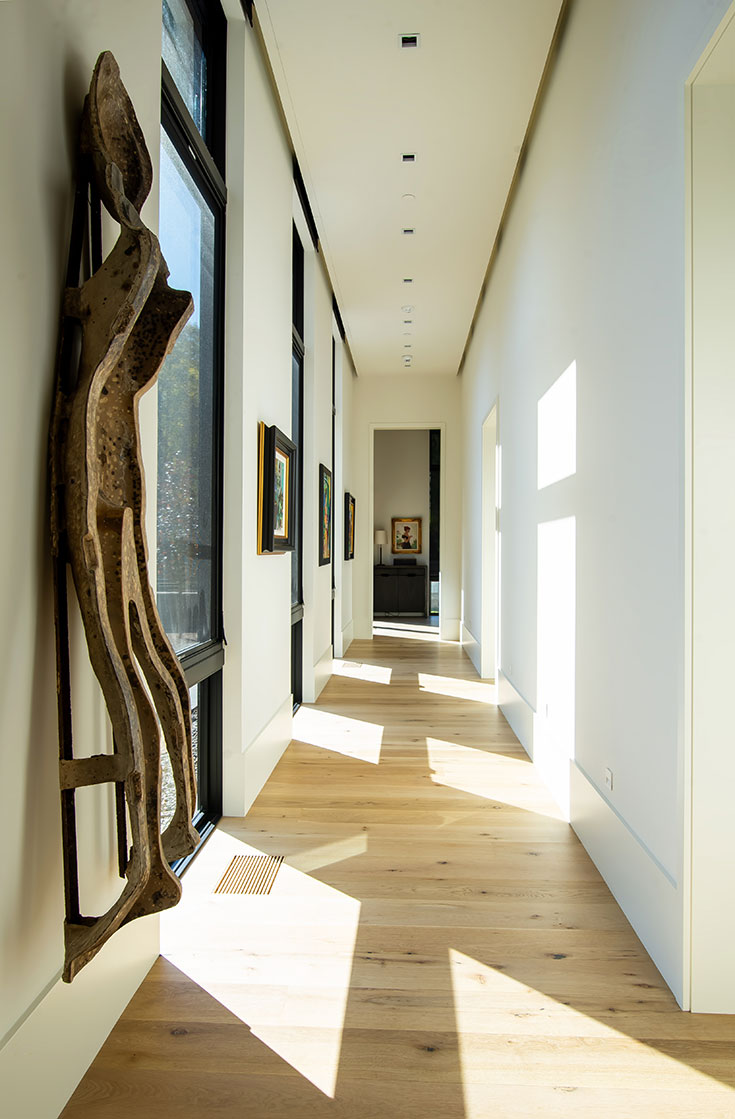
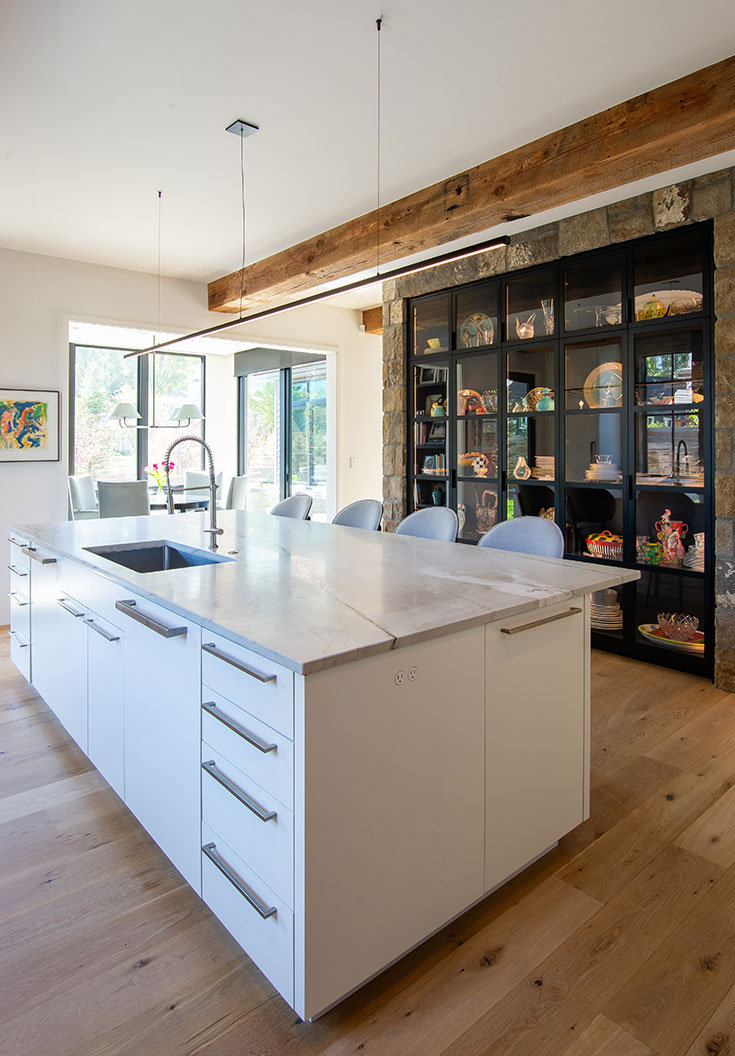
This connection to the outside from inside is an increasingly popular concept in architecture and is called biophilic design. (Biophilic design was on Ward’s and Blake’s radars long before it was a thing, though.) According to ArchDaily, “The main principle behind biophilia is rather simple: connecting humans with nature to improve well-being.” Biophilic design creates spaces that connect humans with nature. “In this house, you’re never wondering what it’s like outside,” Ward says. “You can’t help but feel connected to it.”

Vignettes and Details

Biophilic design is a type of architecture that connects humans with nature to increase well-being. This can be achieved in many ways, including large windows, green roofs, a natural materials palette, and materiality flowing from inside to out.

The Ridge 52 Residence won a 2023 BLT Built Design Award
– Architectural Design/Residential

While the wall of windows facing the Tetons offers the most dramatic views, “We wanted it to be a fun and interesting experience to move through the house and have it open up in different ways,” Blake says. “You catch glimpses as you travel up and down stairs and as you walk down hallways.” All of the home’s main corridors have large glass windows at their end, including on the basement level. (We wonder if there are any other homes in the valley in which a basement hallway ends with a view of the Grand Teton?) “There are no dead-end corridors,” Ward says.

Low-slope shed roofs reach beyond the house to protect exterior spaces on the outdoor terraces and also provide solar control for interior spaces.

When you tear your gaze from outside, you might notice the interior’s intricate steel detailing. “Instead of using wood trim, we used metal trim,” Blake says. “We expressed exposed steel all over the house, which we had done with components or furniture before, but this was the first time we applied it as a part of the language of the house.” This required a level of exacting precision from the builder. “In a conventional house with wood trim, there is a fair amount of margin for error—you can cover up a lot with trim, but in this house, there’s no trim behind which to hide,” Ward says.

Architectural Inspiration in Jackson Hole


Story + Edit
DYNIA ARCHITECTS

Dynia Architects
ARCHITECTURE
dynia.com

Although known for her cleanly elegant and timelessly luxe interiors around New York City, Peña easily evolved to create her client’s dream Jackson Hole vacation home. A challenge was that the client wanted the space transformed but didn’t want the hassle or time of any construction. “The only work we did was paint, furniture, fabrics, art—it was purely decorative—and we succeeded in transforming it,” she says.

The client also asked Peña to stay away from antlers and Western stereotypes. “She wanted the space to feel unique and true to her personal style.” Peña mostly obliged. You won’t find any antler chandeliers, but a bronze mirror in the entry has what the designer describes as “abstracted antlers,” which she says are “not obvious.” Similarly abstract, and very literally Wyoming, was Peña’s curated use of color. “The colors my client sees in her backyard, we brought those inside in different shades,” she says. To create deeper dialogue with the natural world, Peña also used a nature-inspired materials palette, including coffee tables in the den made from lava rock.

Interior designer Valerie Peña expertly crafted a warm and sophisticated vacation home, guided by her client’s vision. Eschewing typical Western or rustic design tropes, she achieved a refined yet inviting space.

Dynia’s modern influence helped change the architectural landscape of Jackson Hole.

For architect Stephen Dynia, founding Dynia Architects in Jackson Hole was an unexpected yet pivotal step in his career. After spending a decade working on large-scale corporate architectural projects in New York City, he found himself drawn to a vastly different environment—one defined not by towering skyscrapers, but by open landscapes, shifting light, and the dramatic beauty of the American West.

“As an urban dweller unfamiliar with this region, I was overwhelmed by the sheer natural beauty of Jackson Hole,” Dynia recalls of his first encounter with the area. “The thought of designing architecture that is influenced by the phenomena of natural light, seasonal changes, and the landscape’s impact on daily life—both poetically and practically—was incredibly compelling.”

Contrast and coexistance of modern and rustic design features are evident in this Stone Creek residence’s staircase.
This Stone Creek home expresses the combination of modern design elements with references to traditional forms.

Beyond the stunning scenery, Dynia saw something else: opportunity. At the time, few architects in the region were embracing a design philosophy that fully engaged with the landscape in a modern way. “All this potential for creating architecture that integrates with its surroundings—and the absence of practitioners pursuing these aims—made Jackson Hole the perfect place to begin my practice.”

“The thought of designing architecture that is influenced by the phenomena of natural light, seasonal changes, and the landscape’s impact on daily life—both poetically and practically—was incredibly compelling,” says Dynia.

In the mid-1990s, when Dynia established his firm in the valley, Jackson Hole’s architectural landscape was largely defined by “pioneer nostalgia”—a prevailing aesthetic that romanticized the past. Rustic log cabins, traditional ranch houses, and historic Western motifs were the dominant architectural language. While Dynia appreciated the region’s heritage, he believed that architecture should evolve in response to its setting rather than simply replicate the past.

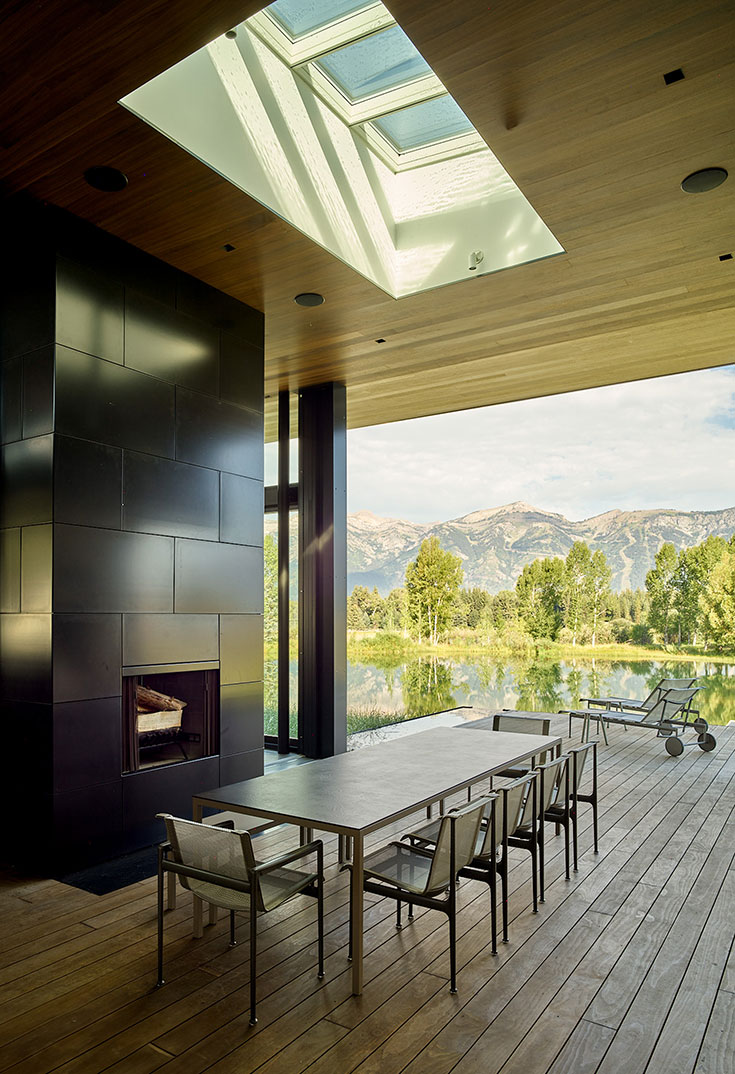
This “outdoor room” connects the interior with the landscape via a three-season space for dining.

Dynia’s first significant private residence in the Teton Valley to embody his architectural philosophy was Frame House, an innovative project that pushed structural boundaries. Designed in the late 1990s for Derek and Sophie Craighead and their family, the home is positioned to take full advantage of sweeping views of the Teton Range. The surrounding landscape, both vast and dramatic, called for an equally bold architectural approach.

Frame House’s independent external structural support system allows for maximum areas of glass in the exterior walls.

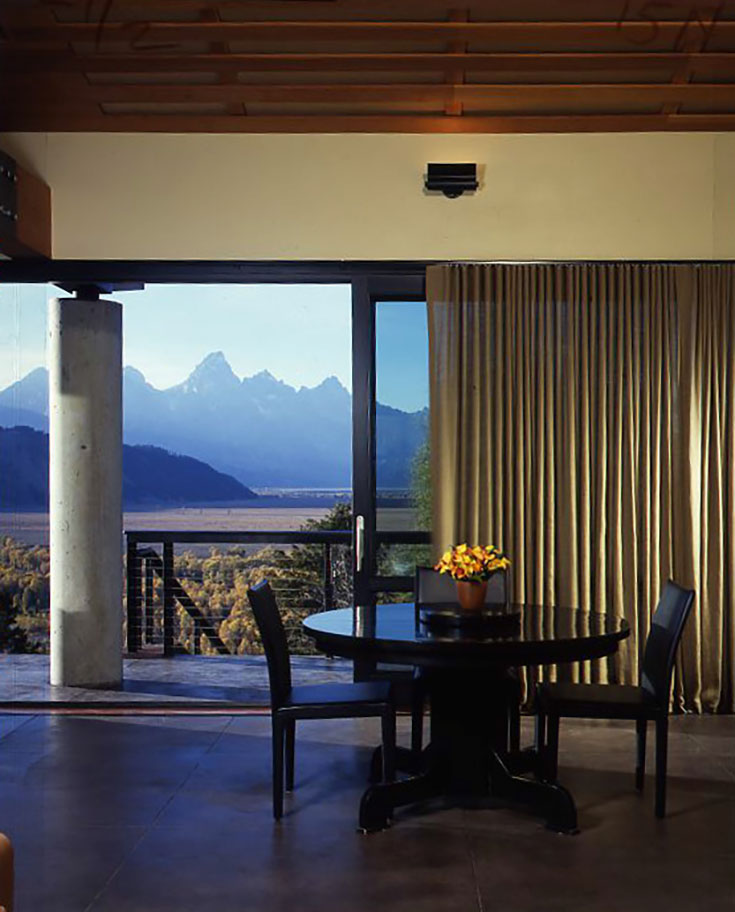
“The strong, ordered framework of concrete and timber not only provides structural integrity but also allows for unrestricted glass placement, seamlessly integrating the home with its surroundings,” Dynia explains. This framework serves as a visual and functional element, organizing the balance between communal and private spaces. Expansive floor-to-ceiling windows frame uninterrupted mountain views, while sliding and pivoting doors offer flexibility—allowing rooms to feel open and connected or enclosed for privacy as needed.

The home’s design prioritizes both grandeur and intimacy, achieved through a carefully considered layout and a continuous ceiling surface that unifies the spaces. The result is an open yet inviting environment, where the scale of the house never overwhelms but instead enhances the experience of living within such a striking natural setting.

“I came here as an outsider, but the landscape and the design challenges it presented quickly became deep sources of inspiration.”
—stephen dynIa, dynia architects

“Dynia Architects continues to push the boundaries of contemporary mountain architecture, blending innovation with a deep respect for the land.”
—stephen dynIa, dynia architects

“Though inspiration can certainly be drawn from history, I wanted to create something that felt more connected to the modern experience of living in this landscape,” he explains. “Rather than relying on ornamental Western elements, Dynia’s approach emphasizes raw materials, expressive forms, and structures’ interactions with their natural surroundings.”

The Center for the Arts building’s south facing glass wall connects interior activity with the iconic Snow King Mountain while serving as a window to community activity.

Having earned a design award shortly after its completion, Frame House has now been recognized with one of the highest honors in architecture—the Twenty-Five Year Award. This distinction celebrates the home’s enduring relevance and timeless design, reaffirming its place as a landmark example of architecture that harmonizes with the natural landscape while remaining functionally and aesthetically forward-thinking decades after its creation.

This perspective sets his word apart and, over time, has helped redefine the architectural identity of Jackson Hole. His designs embrace expansive glazing to frame the Tetons, open floor plans that dissolve the boundary between indoors and outdoors, and material palettes that complement the rugged yet refined character of the region.

Looking back, Dynia sees his move to Jackson Hole as a turning point in his career—one that allowed him to fully explore the intersection of architecture and nature in a way that hadn’t been done before in the region. “I came here as an outsider, but the landscape and the design challenges it presented quickly became deep sources of inspiration,” he reflects.

Today, Dynia Architects continues to push the boundaries of contemporary mountain architecture, blending innovation with a deep respect for the land. The firm’s work stands as a testament to the power of thoughtful, site-responsive design—and to the idea that architecture in Jackson Hole can be both timeless and forward-thinking.

Family Ties

Creating homes where multiple generations can—and want to—gather.

Story
HOMESTEAD TEAM

Covid didn’t create this desire, but it did amplify it,” says Kevin Burke, principal at CLB Architects, about clients wanting legacy homes that are gathering places for their families. Paul Bertelli, principal designer at JLF Architects says, “people started thinking in more depth about changing their lifestyle and raising and gathering their families in places that are less encumbered with all the world’s noise. They come to us looking to build homes where multiple generations can converge.”

Jackson Hole makes sense for such a gathering place because it has so many amenities and experiences that there will be something everyone will love, according to Latham Jenkins, a broker with Live Water Properties who has twice been recognized by Real Trends as a top individual sales agent in Wyoming. “It is attractive to multiple generations,” he says. “You wake up here and there is something to do for everyone.”

Collin Vaughn, an associate broker at Sotheby’s International Realty Jackson Hole, says, “The majority of families looking at legacy homes in Jackson Hole could do anything in the world, at any time. How do they coordinate that? When there’s a home base in Jackson, where the family spends every July or August, there’s no planning around schedules. The whole family just knows that is their time.” Vaughn has clients with 20-plus-member families that gather like this annually. “It is a significant event for them,” he says. “The kids and grandkids grew up spending time and having experiences, so the significance, unique nature of the property, and of this area is passed down through the generations. Family time in Jackson Hole is religious for them.”

Legacy homes don’t have to be ski-in/ski-out, but such a location is almost certain to appeal to younger generations.

But, as amazing as Jackson Hole is—with two ski areas, two national parks, the 3.4-million-acre Bridger-Teton National Forest, rafting and fishing on the Snake River, and wildlife often wandering through the backyard—legacy properties aren’t only about the location. Clients want homes that are comfortable for the entire family. “We’re always trying to right-size a house so that it can function for two people but accommodate the 20-person gathering,” CLB’s Burke says.

Designing for Connection

Legacy homes in the Greater Yellowstone Ecosystem are not only about families connecting with each other, but often also about inspiring families to connect with the outdoors.


Smaller bedrooms make for more family time. So do open and public spaces. “We often shrink the size of the bedrooms—realizing that you’re only sleeping in that room—and put more space into public spaces,” Bertelli says. “In terms of what those public spaces look like, it’s specific to the family. We do game rooms, libraries, movie rooms, exercise rooms, wine cellars, and the occasional billiard room.” In a legacy home near the Snake River, JLF did some of these and also substantial outdoor living spaces that include a full outdoor kitchen and a hidden observation deck. “Outdoor rooms are a component we increasingly see on wish lists of public spaces,” Bertelli says. “These are two- or three-season outdoor spaces, usually for dining, but also with barbecues and fireplaces.”

In a 7,500-square-foot project, CLB designed modestly sized bedrooms on the home’s lower level as a way of encouraging family members to congregate in the main living areas. In turn, these main living areas were designed to feel—and be—connected to the outdoors. “The clients wanted a legacy home that would get their three kids outside, so the design emphasizes a link to nature from every room,” Burke says. Indoor entertaining areas directly connect to outdoor spaces. CLB even created a network of trails on the 20-acre property. “The client had vivid childhood memories of spending time on his grandfather’s tree farm in western New Hampshire and wanted to create the opportunity for his own kids to experience the outdoors as they grow up and to create their own memories,” Burke says. The result is a home that encourages the family to connect to nature and each other.

Open indoor spaces also bring families together. “We haven’t done formal dining rooms in more than three houses in 15 years,” Bertelli says. Instead, the firm does dining areas that are open to kitchens and great rooms. “The concept of people cooking, dining, and enjoying a multi-use living room is a consistent and successful combination of spaces,” he says. “And it is a way of bringing the whole family together—some can be in the living room reading a book, but others are cooking, and they’re still connected.”

The Long View

You can’t put a price on bringing the family together.
—Latham Jenkins,
Broker with Live Water Properties

From the beginning of a multigeneration project, Bertelli works up masterplans that include where an addition or guest house(s) might be built in 15 or 20 years when the kids who are now in high school are married with kids of their own. “We really consider the ‘what-if’ components and what a program would look like for them.” For example, for a family with two kids that might each have kids of their own in 15 years, he might plan an addition that is a separate bedroom wing with at least two bedrooms and bathrooms that would be attached to the main house. “It’s not built until it’s needed, but from the beginning, we already know where it would go,” Bertelli says. A guest house can also serve this purpose. “About 75 percent of our clients build a guest house, and that guest house works very well for the second and third generations,” Bertelli says.


The long view isn’t only about planning, but also design and construction. “We’re trying to think beyond 20 or 30 years and design and build for permanence,” says Burke. Of course, a family dreams that a legacy home will be loved and used by many generations to come. “I see families buying these properties to serve as a nucleus for the extended family for generations,” Jenkins says. CLB’s Burke says, “We think of these homes as a 100- or 200-year residence that will last the test of time. We design in a way that is timeless and that doesn’t get dated.”


More than an Asset

Every site is a little different, and every family unit is different, but they’re all planning for the next generation.
—Kevin Burke,
Principal, CLB Architects

Any home in Jackson Hole is an asset, but a legacy home is more. It doesn’t just build wealth, but meaningful value for your family. Grandkids get to fish, hike, or ski with their grandparents. They see their first moose or bear. They camp with their siblings. Families even climb the Grand Teton together or hike the Teton Crest Trail. And then there are also quieter moments—watching a sunset over the Tetons while making s’mores at the outdoor fire pit, star gazing and marveling at the Milky Way from the observation deck, cooking dinner together using produce bought that morning at the Jackson Hole Farmer’s Market. “Ultimately these homes give parents what they all long for—the ability to spend more time with their adult children and grandchildren,” Jenkins says. “A legacy home in Jackson Hole is very experiential-based, and that’s how deep bonds and memories are created.”

A large lawn to play on, a pond in which to practice casting, an outdoor terrace for evening cocktails—all hallmarks of a home designed for multiple generations of a family.

Vaughn says, “Grandparents or parents know that if they don’t have something like this, it is hard to get everyone together, and more often than not, the home does very well as an asset, too.”

Comfy seating areas and game rooms are a must in homes designed to bring a family together.